Huawei convicted of fraud, IP theft, but not organised crime

By Ray Le Maistre
Nov 25, 2026
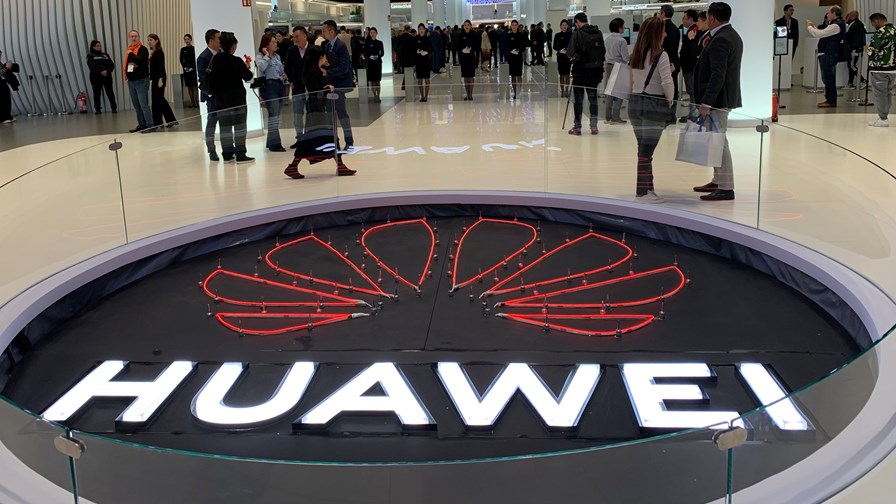
- Jury in US court finds Huawei guilty of multiple counts of fraud, conspiracy to steal trade secrets and sanctions violations
- Sentencing is not until September 2027
- Chinese vendor found not guilty of the most serious charge levelled against it – that of racketeering (organised crime)
- Huawei, still by far the largest supplier of telecom technology in the world, is set to appeal
Following a three-month hearing, a federal jury in the US District Court for the Eastern District of New York found Chinese telecom and enterprise technology giant Huawei Technologies and three of its subsidiaries guilty of multiple cases of fraud, theft and sanctions violations, but not guilty of racketeering (organised crime) or obstructing justice.
The company, which is currently on the US Covered List and thus “deemed to pose an unacceptable risk to the national security of the United States,” was convicted of multiple counts of conspiracy to steal trade secrets from companies including Cisco, T-Mobile US and Fujitsu, as well as conspiracy to commit wire and bank fraud, wire fraud, bank fraud, conspiracy to defraud the United States, conspiracy to violate the International Emergency Economic Powers Act (IEEPA), substantive violations of IEEPA, and money laundering conspiracy, noted the US Justice Department (more details below).
Sentencing by a federal district court judge has been set for 14 September 2027, when Huawei and its representatives “face financial penalties including criminal fines, forfeiture and restitution.”
But it looks likely that Huawei will appeal against the guilty verdicts. “We will thoroughly review the relevant verdicts and take all necessary legal actions to defend our rights and interests,” noted Huawei in this statement.
The vendor, though, was cleared of the most serious charges brought against it, namely those related to the Racketeer Influenced and Corrupt Organizations (RICO) Act, which targets organised criminal groups and criminal enterprises, and Huawei is using this as the springboard for its ongoing claims that it is unfairly targeted, despite the evidence brought against it related to the other charges.
The jury “acquitted Huawei of the government’s RICO charge. Huawei welcomes this decision. It confirms that these allegations lack factual basis and vindicates our consistent position over the past eight years,” the vendor stated. “We believe the government’s remaining charges are equally without legal or factual merit. The five trade secret-related disputes cited by the government were all civil matters that were resolved over the past two decades. No court ever found Huawei liable for willful intellectual property misappropriation, and the company was never ordered to pay damages for trade secret misappropriation. We will thoroughly review the relevant verdicts and take all necessary legal actions to defend our rights and interests.”
But the fact is that Huawei has been found guilty of multiple charges, as the Justice Department and FBI stressed in its announcement.
“Huawei and its subsidiaries engaged in a long-running conspiracy to steal intellectual property of US companies, including Huawei’s competitors and some purported business partners. The misappropriated intellectual property included trade secret information and copyrighted works, such as source code and user manuals for internet routers, antenna technology and robot testing technology,” it noted. It went on to detail how Huawei stole proprietary information relating to a testing robot (called Tappy) used by T-Mobile US to assess the responsiveness of touchscreens by mimicking a human touch, copied the source code used on Cisco routers, was caught photographing the internal workings of proprietary Fujitsu optical transport technology, and misused information provided under an NDA by a US antenna company to file for a patent.
Separately, Huawei and its subsidiaries contravened international trade sanctions by providing the Iranian government and its intelligence services with technology and professional services. “Huawei conducted its business in Iran under the name ‘Skycom.’ Huawei repeatedly lied about the nature of its business in Iran, falsely telling banks, journalists and the US government that it did not assist Iran’s government, military or intelligence community; that it began restricting its business in Iran in 2011; that Skycom was a business partner, rather than a wholly owned subsidiary; and that Huawei complied with all applicable sanctions. Huawei knew that all of those statements were materially false and misleading. Huawei lied about its activities in Iran to banks to obtain billions of US dollars and access to US-dollar clearing services, which enabled Huawei to be a sophisticated participant in a global marketplace for telecommunications services – in part because of its lies,” added the Justice Department.
US attorney general Todd Blanche stated: “No person or company is above the law. For decades, Huawei and three of its subsidiaries conducted their business in the United States on the basis of lies and theft. Thanks to the work of the FBI and our federal prosecutors, those who engaged in these criminal activities will be held accountable.”
Assistant attorney general Tysen A. Duva of the Justice Department’s Criminal Division added: “For over two decades, Huawei built its global empire on a foundation of fraud, theft and deception. Huawei’s crimes threatened the US financial system, took advantage of American companies that compete honestly in the global telecommunications market, and undermined our national security. Today’s verdict sends an unmistakable message: America will defend its businesses, protect its workers and safeguard its national security against corrupt foreign corporations that lie, cheat and steal to get ahead.”
Huawei, as you would expect, has a different view, claiming in its statement, and therefore seemingly in all seriousness, that it “has always adhered to integrity in business, upheld business ethics, respected intellectual property and remained committed to complying with all applicable laws and regulations.”
Despite all of this, and having faced trade restrictions in multiple markets, Huawei is still the largest telecom tech vendor in the world and that position doesn’t look like it will change any time soon – see Huawei still the one to catch in global telco tech sector.
For the full year 2025, Huawei reported revenues of 880.9bn Chinese yuan ($132bn), up by 2.2%, while its operating profit grew by 22.1% to 96.9bn yuan ($14.5bn), giving it an operating margin of 11% compared with 9.2% in 2024.
The vendor continues to invest heavily in research and development too as it looks to break into new markets and develop new products and services: According to its latest annual report, the vendor spent 192.3bn yuan ($28.8bn) on R&D in 2025, equivalent to 21.8% of its total revenues, and it claims to have had 114,000 staff, about 53% of its total headcount, working in R&D at the end of 2025.
- Ray Le Maistre, Editorial Director, TelecomTV
Email Newsletters
Sign up to receive TelecomTV's top news and videos, plus exclusive subscriber-only content direct to your inbox.