HPE on telco cloud capabilities and distributed AI inference

By James Pearce
Nov 19, 2026
To embed our video on your website copy and paste the code below:
<iframe src="https://www.youtube.com/embed/cyuqgYXjZD8?modestbranding=1&rel=0" width="970" height="546" frameborder="0" scrolling="auto" allowfullscreen></iframe>
James Pearce, TelecomTV (00:05):
Hello and welcome to TelecomTV. I'm James Pearce and I'm in Vienna for Network X, and I'm delighted to be joined today by Steve Daigle, who's from HPE. Steve, welcome. AI-native telco is a term that's being used everywhere, but what does it actually mean to you?
Steve Daigle, HPE (00:20):
So when we use the term AI-native, and especially applied to telcos, it's usually used singularly. But in fact, and in practice, it means really three things. There's AI for networks, there's networks for AI, and there's AI for services. But let's take the first one. AI for networks is the AI operations and the capabilities that the service providers and the telcos are providing and are availing themselves of by consuming data from the network, machine-consumable data from the network. And that part is really important. And then they can run their AIOps and run their networks more on intelligence than running them on data. The second part, the networks for AI, that's where the operators build their networks to carry someone else's AI workloads and then they get paid for it. And then the third, the AI for services is where they can actually go out and possibly offer AI-as-a-service, GPU-as-a-service.
(01:20):
And that's where they're competing sometimes with their own customers, but very well-capitalised competitors. But the idea is many of the operators are doing the first one because it's an internal risk and an internal business case and the risk is contained. The second one, fewer are doing and fewer still are doing the third, but the third is where there's a lot of revenue, a lot of risk, but there's a lot of margin as well.
James Pearce, TelecomTV (01:50):
So HPE recently introduced some new telco cloud capabilities. Break it down for me. What are they and what problems do they solve?
Steve Daigle, HPE (01:58):
Sure. It's an end-to-end automated hybrid telco cloud solution. If you think of it as in layers, there's an infrastructure layer that we provide, an application layer where your workloads run, and then an automation layer on top of that. And the key things about what we've released is that it's multi-tenant, it's multi-vendor because most operators are running this across multiple vendors and multiple vendors within their stacks. And it also provides multi-domain observability and assurance. And what customers were asking us for, and the problems that we solve, is that we're providing all this with a public cloud-like consumption model and a public cloud-like experience so that customers can have the same experience that they use with a public cloud in AWS, for example, but they're getting it with our solution and it's across not only their own cloud, but across public clouds and hybrid clouds as well.
James Pearce, TelecomTV (03:01):
Let's talk about inference. Why does inference need to be distributed and what does that mean for the network?
Steve Daigle, HPE (03:07):
Yeah, it's very interesting. The way that AI has evolved, it began with training and training is centralised. It takes place in these massive AI data centres, these massive AI factories where the training sets are run and we create these models and we train the models. But inferencing is the opposite. Inferencing is distributed. Inferencing goes out to where the data is, where the data lives and where the intelligence is actually consumed. It's also distributed because of power. Power is not located in the quantities that you need everywhere. So you put workloads where the inferencing can happen closer to the end user, and this is a real opportunity for telcos by the way. And it also allows a redesign of the network; it implies a redesign of the network. We can't simply design everything around these massive training AI centres, but we have to use the parts of the network that telcos have, operators have distributed, and putting the inferencing and the workloads out at the edge nearer to their end users.
James Pearce, TelecomTV (04:14):
The enterprise sector is obviously really important for operators as well, but what is it the enterprises are actually asking operators for?
Steve Daigle, HPE (04:20):
So they're not asking for more bandwidth. They're not asking for more capacity. They're not asking for a lower price per meg in this case. They're asking for determinism, deterministic networks, high availability and personalised services. And deterministic networks, why is that the case? Because there's machines consuming this AI, machines consuming this data. And if you're running a personalised service like an AI voice, then 200 milliseconds of deterministic latency is part of the service. If it's variable, then it turns from a service into a trouble ticket. High availability, let's look at that one. Just a few weeks ago, we had three frontier models all go down within hours on the same day. Agents don't sleep and customers or enterprises are starting to ask who's underwriting the high availability so that the agentic systems can work all the time, right? Personalised services, I mentioned that a second ago, but AI voice services that are personalised, personalised agents are becoming more and more incredibly popular.
(05:33):
There are press releases about them all the time. And again, it goes back to a deterministic network that can provide the capabilities that that personalised service can run on.
James Pearce, TelecomTV (05:43):
So where should an operator actually start? Does everyone need to build GPU clouds?
Steve Daigle, HPE (05:48):
There are many places where the operator can start. And the first one is augmenting their networks to handle the traffic because the traffic's going to be changing. They'll be moving from more asymmetric as it is today because people are downloading things, people are downloading video. It's going to move from that to more of a symmetric traffic pattern because people will be uploading things and machines will be uploading things, ingressing information into our AI models. So that's one place to start is augment the network to adapt to that new traffic paradigm. The next is to provide assured AI connectivity, take the best bits of part one and then provide a secure wrapper around it and also provide SLAs around the availability of bandwidth and around latency and provide that secure AI-assured connectivity. And then I think that's the place where it's the best risk-adjusted play for most operators.
(06:48):
The third way to look at it is you offer as a telco the space, the power, the fibre and the proximity, and then you partner with someone who provides the GPUs and then you can go into say a revenue-share model. And then the fourth is the telco, the operator themselves can offer GPU-as-a-service or AI-as-a-service. It's probably the riskiest move, but Gartner has a very interesting take on these four pillars and what they've come out and said is that it could be a risky move, but the bigger risk is not taking any action.
James Pearce, TelecomTV (07:25):
I mean that's kind of the point, right? What is actually holding the operators back and how can the architecture de-risk that?
Steve Daigle, HPE (07:33):
So I don't think that the operators today are held back by technology, to be honest. I think they're held back by access to capital and the interest rates are going up. So vendor financing can become more attractive. You don't have to buy the end state day one. You don't even have to pay for it day one. There's flexible terms that allow you to pay for it as you consume it and as you consume it, you can pay for it. The next is power. The power consumption and access to power. That's really setting a lot of the architecture today because the workloads are living where power is available. The third one is time, just time to market. The CFO starts the clock when the operator cuts the cheque to the vendor, not when the service is turned on. And then the fourth is around the complexity of the multimodal orchestration, the multi-domain orchestration and all the complexities inherent there.
(08:35):
And one way around that is to solution it around what exists today, what can you insert? And then you have an overarching API-driven orchestration that'll handle inputs and even handle agents within each of the domains and orchestrate it from there.
James Pearce, TelecomTV (08:54):
So if an operator watching this does one next thing, what should it be?
Steve Daigle, HPE (08:59):
Avail yourselves of an upgrade and a refresh of the technology. Today's technology will give you thousands of Layer 3 VPNs that can segment these AI workloads. We provide SLAs around this that are real and you can provide also to your customer. And they're validated designs that take a lot of the risk out of deploying this at scale and have been now done many times before. But at the end of the day, I think we're at a pivotal point in our industry. We've been monetising movement for 30 years. We move voice, we move packets, we move messages, we move applications into and out of the cloud. The opportunity now is to move intelligence. And some telcos will just provide the transport, but some of them will monitor it, assure it and meter it. And those are the ones that I think will become the real AI-native telcos at the end of the day.
James Pearce, TelecomTV (10:03):
That's sage advice. Steve, thank you for joining us today on TelecomTV.
Steve Daigle, HPE (10:08):
Thank you.
Hello and welcome to TelecomTV. I'm James Pearce and I'm in Vienna for Network X, and I'm delighted to be joined today by Steve Daigle, who's from HPE. Steve, welcome. AI-native telco is a term that's being used everywhere, but what does it actually mean to you?
Steve Daigle, HPE (00:20):
So when we use the term AI-native, and especially applied to telcos, it's usually used singularly. But in fact, and in practice, it means really three things. There's AI for networks, there's networks for AI, and there's AI for services. But let's take the first one. AI for networks is the AI operations and the capabilities that the service providers and the telcos are providing and are availing themselves of by consuming data from the network, machine-consumable data from the network. And that part is really important. And then they can run their AIOps and run their networks more on intelligence than running them on data. The second part, the networks for AI, that's where the operators build their networks to carry someone else's AI workloads and then they get paid for it. And then the third, the AI for services is where they can actually go out and possibly offer AI-as-a-service, GPU-as-a-service.
(01:20):
And that's where they're competing sometimes with their own customers, but very well-capitalised competitors. But the idea is many of the operators are doing the first one because it's an internal risk and an internal business case and the risk is contained. The second one, fewer are doing and fewer still are doing the third, but the third is where there's a lot of revenue, a lot of risk, but there's a lot of margin as well.
James Pearce, TelecomTV (01:50):
So HPE recently introduced some new telco cloud capabilities. Break it down for me. What are they and what problems do they solve?
Steve Daigle, HPE (01:58):
Sure. It's an end-to-end automated hybrid telco cloud solution. If you think of it as in layers, there's an infrastructure layer that we provide, an application layer where your workloads run, and then an automation layer on top of that. And the key things about what we've released is that it's multi-tenant, it's multi-vendor because most operators are running this across multiple vendors and multiple vendors within their stacks. And it also provides multi-domain observability and assurance. And what customers were asking us for, and the problems that we solve, is that we're providing all this with a public cloud-like consumption model and a public cloud-like experience so that customers can have the same experience that they use with a public cloud in AWS, for example, but they're getting it with our solution and it's across not only their own cloud, but across public clouds and hybrid clouds as well.
James Pearce, TelecomTV (03:01):
Let's talk about inference. Why does inference need to be distributed and what does that mean for the network?
Steve Daigle, HPE (03:07):
Yeah, it's very interesting. The way that AI has evolved, it began with training and training is centralised. It takes place in these massive AI data centres, these massive AI factories where the training sets are run and we create these models and we train the models. But inferencing is the opposite. Inferencing is distributed. Inferencing goes out to where the data is, where the data lives and where the intelligence is actually consumed. It's also distributed because of power. Power is not located in the quantities that you need everywhere. So you put workloads where the inferencing can happen closer to the end user, and this is a real opportunity for telcos by the way. And it also allows a redesign of the network; it implies a redesign of the network. We can't simply design everything around these massive training AI centres, but we have to use the parts of the network that telcos have, operators have distributed, and putting the inferencing and the workloads out at the edge nearer to their end users.
James Pearce, TelecomTV (04:14):
The enterprise sector is obviously really important for operators as well, but what is it the enterprises are actually asking operators for?
Steve Daigle, HPE (04:20):
So they're not asking for more bandwidth. They're not asking for more capacity. They're not asking for a lower price per meg in this case. They're asking for determinism, deterministic networks, high availability and personalised services. And deterministic networks, why is that the case? Because there's machines consuming this AI, machines consuming this data. And if you're running a personalised service like an AI voice, then 200 milliseconds of deterministic latency is part of the service. If it's variable, then it turns from a service into a trouble ticket. High availability, let's look at that one. Just a few weeks ago, we had three frontier models all go down within hours on the same day. Agents don't sleep and customers or enterprises are starting to ask who's underwriting the high availability so that the agentic systems can work all the time, right? Personalised services, I mentioned that a second ago, but AI voice services that are personalised, personalised agents are becoming more and more incredibly popular.
(05:33):
There are press releases about them all the time. And again, it goes back to a deterministic network that can provide the capabilities that that personalised service can run on.
James Pearce, TelecomTV (05:43):
So where should an operator actually start? Does everyone need to build GPU clouds?
Steve Daigle, HPE (05:48):
There are many places where the operator can start. And the first one is augmenting their networks to handle the traffic because the traffic's going to be changing. They'll be moving from more asymmetric as it is today because people are downloading things, people are downloading video. It's going to move from that to more of a symmetric traffic pattern because people will be uploading things and machines will be uploading things, ingressing information into our AI models. So that's one place to start is augment the network to adapt to that new traffic paradigm. The next is to provide assured AI connectivity, take the best bits of part one and then provide a secure wrapper around it and also provide SLAs around the availability of bandwidth and around latency and provide that secure AI-assured connectivity. And then I think that's the place where it's the best risk-adjusted play for most operators.
(06:48):
The third way to look at it is you offer as a telco the space, the power, the fibre and the proximity, and then you partner with someone who provides the GPUs and then you can go into say a revenue-share model. And then the fourth is the telco, the operator themselves can offer GPU-as-a-service or AI-as-a-service. It's probably the riskiest move, but Gartner has a very interesting take on these four pillars and what they've come out and said is that it could be a risky move, but the bigger risk is not taking any action.
James Pearce, TelecomTV (07:25):
I mean that's kind of the point, right? What is actually holding the operators back and how can the architecture de-risk that?
Steve Daigle, HPE (07:33):
So I don't think that the operators today are held back by technology, to be honest. I think they're held back by access to capital and the interest rates are going up. So vendor financing can become more attractive. You don't have to buy the end state day one. You don't even have to pay for it day one. There's flexible terms that allow you to pay for it as you consume it and as you consume it, you can pay for it. The next is power. The power consumption and access to power. That's really setting a lot of the architecture today because the workloads are living where power is available. The third one is time, just time to market. The CFO starts the clock when the operator cuts the cheque to the vendor, not when the service is turned on. And then the fourth is around the complexity of the multimodal orchestration, the multi-domain orchestration and all the complexities inherent there.
(08:35):
And one way around that is to solution it around what exists today, what can you insert? And then you have an overarching API-driven orchestration that'll handle inputs and even handle agents within each of the domains and orchestrate it from there.
James Pearce, TelecomTV (08:54):
So if an operator watching this does one next thing, what should it be?
Steve Daigle, HPE (08:59):
Avail yourselves of an upgrade and a refresh of the technology. Today's technology will give you thousands of Layer 3 VPNs that can segment these AI workloads. We provide SLAs around this that are real and you can provide also to your customer. And they're validated designs that take a lot of the risk out of deploying this at scale and have been now done many times before. But at the end of the day, I think we're at a pivotal point in our industry. We've been monetising movement for 30 years. We move voice, we move packets, we move messages, we move applications into and out of the cloud. The opportunity now is to move intelligence. And some telcos will just provide the transport, but some of them will monitor it, assure it and meter it. And those are the ones that I think will become the real AI-native telcos at the end of the day.
James Pearce, TelecomTV (10:03):
That's sage advice. Steve, thank you for joining us today on TelecomTV.
Steve Daigle, HPE (10:08):
Thank you.
Please note that video transcripts are provided for reference only – content may vary from the published video or contain inaccuracies.
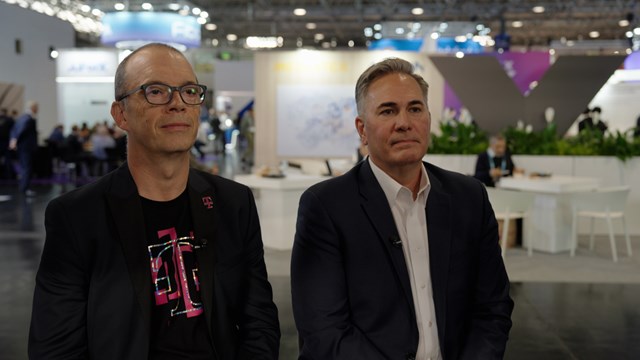
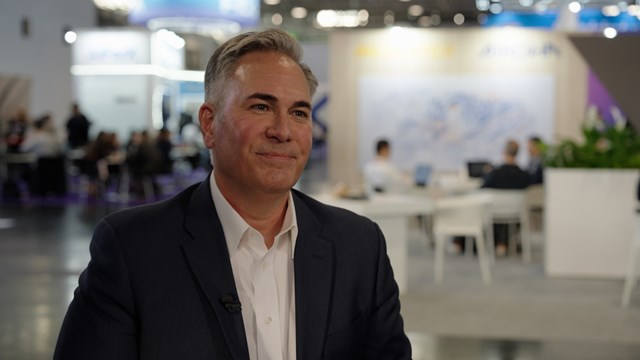
Steve Daigle, Global Head of Telco Systems Engineers, HPE
Steve Daigle, global head of telco systems engineers at HPE, discusses what becoming an AI-native telco entails, discusses HPE’s new telco cloud capabilities and the shift towards distributed edge inferencing, and explains how operators can meet the demand from enterprises for deterministic, high-availability networks without taking on excessive capital risk.
Recorded October 2026
Email Newsletters
Sign up to receive TelecomTV's top news and videos, plus exclusive subscriber-only content direct to your inbox.