To embed our video on your website copy and paste the code below:
<iframe src="https://www.youtube.com/embed/0qJeQo2tmuw?modestbranding=1&rel=0" width="970" height="546" frameborder="0" scrolling="auto" allowfullscreen></iframe>
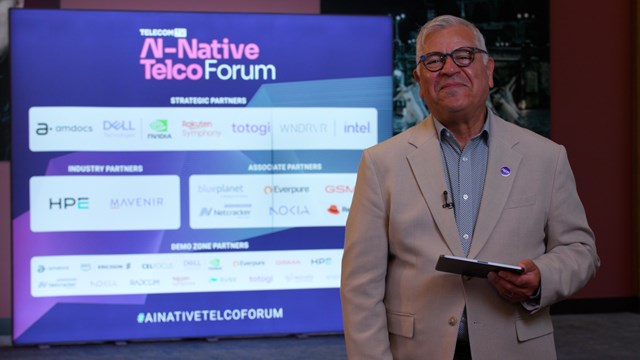
Hello and welcome to TelecomTV. I'm James Pearce. I'm in Amsterdam for CASA26. I'm delighted to be joined today by Ardian Atmaja, who is from Telin. Thank you so much for joining us today. Why don't you start by giving us a rundown as to what your role is at Telin?
Ardian Atmaja, Telin (00:20):
Thanks, James. So first of all, it is an honour for me to be here today. I'm Ardian Atmaja, VP of Product Innovation and Development, leading innovation and development covering CPaaS and also network APIs at Telin. So basically Telin is the international business of the Telkom Indonesia Group. We are working closely with Telkomsel as our sister company, leading the mobile network operator in Indonesia, which currently has 100 million active mobile subscribers and 10 million fixed internet subscribers.
James Pearce, TelecomTV (01:14):
Let's talk a little bit about APIs. Where do you see the biggest commercial opportunities emerging for network intelligence and network APIs?
Ardian Atmaja, Telin (01:23):
So basically when we talk about telco network APIs, how Telin sees this opportunity is how we are fairly close with the global industry in terms of network APIs. So first things first, we are not only trying to sell network APIs themselves, but the important thing is how we can leverage network intelligence to create business outcomes for the customer. So this is why it is important for Telin, why we now need to attack this market because we are capturing several major shifts in the market. The first shift we are capturing is that currently our traditional business, A2P SMS, is under pressure, with prices becoming much more expensive, not to mention AIT (artificially inflated traffic) and fraud. And the other thing is that there are several options of the channel. It is quite challenging in terms of the A2P business.
(03:01):
And the second driver is how currently the enterprises and digital platforms are looking for the next generation of authentication to deliver a more secure and seamless customer journey for the end customer. So that's part of how the strategy can serve our enterprise customers or digital platform providers with a solution we call Mobile Number Verification. So we have already launched the services Mobile Number Verification version one, which is IP-based, and version two, which is TS.43. So version one is more on how to validate and authenticate it based on the IP base and version two is more on how we validate based on the SIM card currently used by the user. So actually, with this service, I think Telin in terms of the whole ecosystem of the value chain for network APIs, we cannot go it alone to serve our customers because we need to collaborate with other ecosystem partners, especially in this case here, OTTs and hyperscalers are one of the important parts because they are the ones who have the real use cases.
(04:45):
Second thing, after the OTT, there are security and digital identity platforms. As a telco, we cannot build by ourselves because considering time to market, also we need to speed up delivering real use cases for customers. So in this case here, we are in collaboration with the applications to serve the several big giant OTT like Google and Meta to deliver Mobile Number Verification, version one and version two. So we learned from it, basically the readiness of the technology itself is only one part of the equation. So our homework next is how we make this business more scalable and also more sustainable in the next gen authentication.
James Pearce, TelecomTV (06:00):
So are you seeing a difference in demand for these capabilities from Asian markets when you compare them with say Europe or North America?
Ardian Atmaja, Telin (06:09):
Well, I think to answer your question, maybe my approach will be in terms of the journey of CPaaS. At the time, CPaaS 1.0 is more focused on the communication channel, and then 2.0 more focused on the omni-channel, not only voice and SMS, but including digital OTT channels. And then CPaaS 3.0 is more on intelligent engagement, then 4.0 is more on the network intelligence. So I would say in the Asia-Pacific market, I think what is different compared to Europe and North America, I think they are different only in the early stages of the services, meaning to say that during CPaaS 1.0, I think, yes, from my point of view, there are several differences because in Asia-Pacific the market depends more on messaging services compared to voice. But I still see in Europe and North Asia, there is still a balance between messaging and voice utilisation to serve enterprise customers.
(07:28):
But the destination, I think, is still the same, meaning to say that we are globally currently moving from traditional messaging, which is CPaaS 1.0, to become more network-intelligent, to become CPaaS 4.0. So that's the angle that we can see how to differentiate from the Asian market and also the European and North American market.
James Pearce, TelecomTV (08:00):
So there's definitely similarities, but differences as well. As AI becomes embedded throughout networks and communication services, where can international carriers such as Telin create new sources of value?
Ardian Atmaja, Telin (08:13):
That's an interesting question, James. So basically AI, we cannot avoid it in the current market landscape. But at Telin, how to leverage the AI technology is that we divide it into two main areas, which is first, because Telin has our own CPaaS capability and also network APIs. So the first that we can leverage is that how on top of CPaaS, we can leverage AI to deliver more personalised customer engagement to the customer. So with AI, we can deliver more advanced, not only the conversation between the brand and the customer, but how AI can orchestrate and deliver more autonomous answering customer services, to leverage the AI agent for sales. That's the first way we can utilise AI to deliver more automated, personalised engagement. And second thing, I think AI has to change our fundamental connectivity to serve our customers.
(09:40):
So in the context of network APIs, how AI can change our landscape is how Telin can provide telco network APIs, no longer just exposing APIs and signals, it cannot. Because with AI, our network needs to deliver more intelligence in this case. Meaning that it not only delivers one API and a second API, third API, but with AI can orchestrate and become one single API to serve more automation to the customer.
James Pearce, TelecomTV (10:27):
I'd like to finish by just looking forward a little bit. What is the single biggest change that you think AI will make to the telecom operator business model over the next say three years?
Ardian Atmaja, Telin (10:38):
Well, our telco DNA, basically how we monetise connectivity is usually more on the message base, more on the traffic base. But AI, again, I believe will change the fundamentals of the business model as well. Because again, the first use cases that I mentioned previously, how AI can deliver more automation to create the customer or call flow journey to the customer, meaning that we will deliver more solution-based messaging. When we deliver the solution-based, of course, we are trying not only to focus on the traffic base, not only focussing on the message base, but how later on the business model will be enhanced in this case. One is that how we can monetise managed services to provide solution-based communication, one. Second, also we can monetise how the token business model will be also be quite a game changer in terms of how we deliver to the customer, no longer the specific message base, but total solution with the more solution based.
(12:09):
So the business model is more on how we can craft the solution, then deliver real impact business value to the customer.
James Pearce, TelecomTV (12:22):
Brilliant. Thank you so much for joining us today.
Ardian Atmaja, Telin (12:25):
Thank you, James.
Please note that video transcripts are provided for reference only – content may vary from the published video or contain inaccuracies.
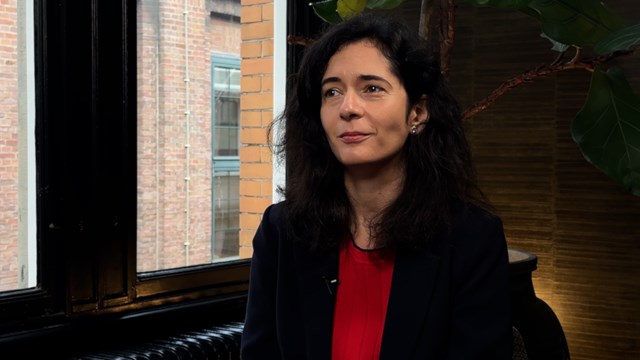
Ardian Atmaja, VP of Product Innovation, Telin
Ardian Atmaja, VP of product innovation at Telin, discusses using network intelligence to create business outcomes for enterprise customers. He also reveals how Telin’s number verification service is helping to tackle fraud and how the company is working with OTT and hyperscaler partners to identify use cases for APIs, and compares the differing CPaaS journeys in Europe and North America as opposed to Asia Pacific markets.
Recorded September 2026
Email Newsletters
Sign up to receive TelecomTV's top news and videos, plus exclusive subscriber-only content direct to your inbox.