To embed our video on your website copy and paste the code below:
<iframe src="https://www.youtube.com/embed/0Luz8QRhhP0?modestbranding=1&rel=0" width="970" height="546" frameborder="0" scrolling="auto" allowfullscreen></iframe>
Dean Bubley, Disruptive Analysis (00:07):
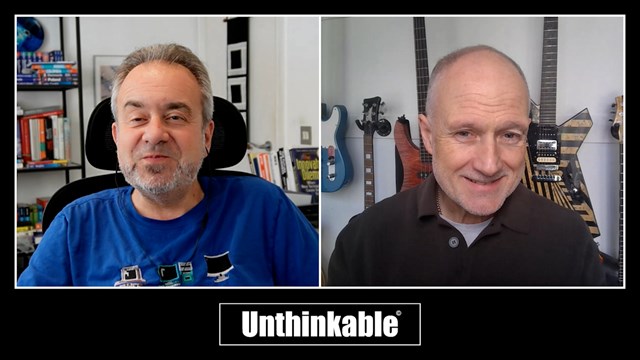
Hi, Andrew. Good to catch up with you. We are running another one of our Unthinkable labs, this time on AI voice for telcos again. You looking forward to it?
Andrew Collinson, Connective Insight (00:19):
I am, actually. Yeah, I'm really looking forward to it. They were so interesting and so much fun, good people. Since the mixture of opinions and experience is always so rich, it's really stimulating. So yeah.
Dean Bubley, Disruptive Analysis (00:35):
Yeah. No, it's a good format. And this time is our second time looking at AI voice and telephony, particularly the focus on the service provider opportunity. Our view is that of all of the AI opportunities for service providers, we think that AI voice should probably be at or near the top. Andrew, are you seeing that as well?
Andrew Collinson, Connective Insight (01:04):
I guess I'm seeing a lot of it from two sides, the operator side, but also the enterprise end of it and how the application of that goes. So that's a lot of the work that I've done with CPaaSAA, and I'm reinstigating that as a piece of work right now. So I'm starting to dig into what the new ecosystem looks like, who's doing what and where. And it all sort of smashes up together because I was thinking about it earlier, it all matters. You can't really decide what's going to happen in enterprise without understanding what's going to happen on the telephony side. And also you look at the LLMs, they're doing quite a lot in AI voice too. So there's an awful lot of movement and so many startups.
Dean Bubley, Disruptive Analysis (01:45):
And actually, to be honest, also both large telcos and smaller ISPs and MSPs, the last 12 months since we covered this last, there's been a huge number of launches aimed at both the consumer side and the business side. So there's a number of companies that talked about translation services, anti-spam and anti-scam using voice AI. And then on the enterprise, both for large business, and I've done quite a bit looking at the right to play of service providers in small business. And we'll come on to what that means in terms of the back end and also the regulatory aspects in a moment. But you're seeing that, I know you wrote a report on it recently.
Andrew Collinson, Connective Insight (02:28):
Yeah, I looked at it. I published a report in March about AI voice, and it uses this word that I know you don't particularly like, so I'll say it again. It's called runtime, this idea which I got out of the software community and it means essentially the environment in which the live call is managed and orchestrated. So it's where it's run from. And I think it's a really interesting point. I mean, I'm not particularly software or techie. I think where the report concluded the value was, bear in mind this was March, so it could be completely out of date by now on AI voice because it's moving so quickly, but probably not because what it's saying is that how that is managed is probably key to the equation, because to make an AI voice service work, you need to bring together lots of different elements, and that includes the governance and the context and a whole bunch of things.
(03:20):
And typically, an AI voice service isn't one thing. It's lots of bits of things working together to make something work in a holistic way. So that orchestration or coordination piece, which is another way of thinking about the runtime piece, looks pretty key. And the hypothesis I'm working on is that's still the right answer, but I like to reapproach things and just go, "Actually, am I sure that's still right?" and test it and see what's changed in that period. And I think what you're saying is also really interesting. The telcos really actually seem to be quite engaged in this and that's encouraging, but I don't know how real that is yet. I don't know what you're seeing.
Dean Bubley, Disruptive Analysis (04:05):
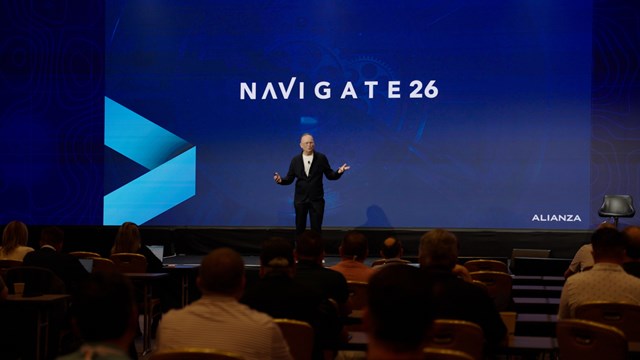
Well, and I'm going to pick out one word you used there, which is orchestration. And I spoke recently, I gave a keynote at our sponsor, Alianza's, their customer conference in the US, and they were launching a product around AI voice orchestration. And actually, the more I looked into it, the more I realised that you've got lots of disparate stakeholders involved in AI voice. Now, in some cases, there's some use cases where if it's a smart speaker or something like that, the telco's not really directly involved, but anything that relates to a phone call or a phone number or something that can be anchored either in a fixed voice infrastructure or potentially mobile IMS or other voice platforms like contact centres that are run by service providers—and this is both conventional telcos and maybe CPaaS players—there's a bunch of stuff they need to do. Some of it is around the acoustics and actually running the call, but they also need to manage identity, security, regulatory aspects that may apply. And particularly, imagine you're a small business and you want to have—so you're a baker's or a plumber's or something like that—and you want to have an AI assistant that maybe takes bookings or answers questions or this sort of thing.
(05:28):
You don't want to repaint the phone number on your van or on your shopfront and you probably don't want to mess around with weird bits of call forwarding and changing your number and stuff. So there's an anchor point of your business number, and the service provider is a good nexus for that orchestration to occur where you've got the regulatory aspects, the audio aspects, the multiple potentially AI models. It might go out for a particular translation task if its existing model doesn't do that. It's got to deal with ongoing changes in the market environment. It might be working with a vertical SaaS player for bakery software, bakery management software or whatever it is. And then it also has to do all the legal changes. And I think that you've got this really awkward intersection of AI policy and telecoms policy, which are changing on a weekly basis and vary between the US, the UK, bits of Europe, if you've got sovereignty involved, and having the ability to bring it all together at some orchestration point I think is going to be important. We'll certainly cover that.
Andrew Collinson, Connective Insight (06:45):
Yeah, you're right. That kind of complexity is a real thing. And I think when I step back from it, what I think about is the huge opportunity in my mind has always been you're turning all this voice into data. And previously, the voice was like an ephemeral thing. It was said on the call, someone might write it down, but they might as well have said, "It's gone. It's gone out into the air like your breath," and nobody's made a record of it. Suddenly it's become data and that changes the legal basis on which everybody looks at it because it's now a matter of record. And then so what rule applies to that? And of course, it's the rules of data apply to that. Privacy, security, sovereignty, all those things suddenly come into play. So you've got this great opportunity, but also this great sort of challenge related to understanding what do you need to do in order to be able to use it legitimately and fairly and compliantly.
(07:39):
And I know privacy and compliance is a big personal issue for you and I think most of us are pretty concerned about it in today's world. So I think it's a combination of a massive opportunity and there are brilliant things you can do with it and potentially some very bad things that can be done with it. And also the legislation and the technology, which are all complex, bringing it together. So it is a classic Unthinkable proposition. You've got all the complexity stirred up into a great big pot and chucked at you.
Dean Bubley, Disruptive Analysis (08:14):
And lots of questions.
Andrew Collinson, Connective Insight (08:16):
We'll make sense of it. That's the point. We'll make sense of it.
Dean Bubley, Disruptive Analysis (08:18):
And this is why I would tell people to sign up on the website attached. It's basically because these are the sorts of conversation we can have under Chatham House with not just us and other analysts, but with service providers, with vendors. There'll be regulators in the room, probably some industry associations. Under Chatham House, we'll write up a summary, but we can have an honest conversation of what's real, what's difficult, what's easy, what's valuable, where's the money? And also, who else is trying to do this? Is it the frontier AI labs? Is it the cloud companies? Are they partners? Are they competitors? That's the sort of thing we can explore.
Andrew Collinson, Connective Insight (09:02):
I think in a space like this where, as I say, it's all in a great big swirling melting pot at the moment, what you don't want to do is be stuck in your own silo because it's very easy to become obsessed with your own ideas and miss out completely all the other stuff that's happening because it's moving so fast and changing. So the benefit of the multi-stakeholder thing is that you're picking up signals from all over the place and you get a much more holistic picture and you might go, "Actually, I don't want to invest in that development effort now. I need to do this." Or, "Actually, this is a better opportunity than that." So I think it's really valuable in these kinds, and that's what we do this for. It's more interesting.
Dean Bubley, Disruptive Analysis (09:37):
Yeah, absolutely. Excellent. Well, I'll look forward to us catching up on the 29th and I'm sure it'll be an unexpected as well as enlightening day.
Andrew Collinson, Connective Insight (09:50):
Indeed. Unthinkable, unexpected, unpredictable. All of the above.
Dean Bubley, Disruptive Analysis (09:55):
Fantastic. Unprecedented. Right. Thank you very much. Cheers.
Andrew Collinson, Connective Insight (10:01):
Cheers, mate.
Hi, Andrew. Good to catch up with you. We are running another one of our Unthinkable labs, this time on AI voice for telcos again. You looking forward to it?
Andrew Collinson, Connective Insight (00:19):
I am, actually. Yeah, I'm really looking forward to it. They were so interesting and so much fun, good people. Since the mixture of opinions and experience is always so rich, it's really stimulating. So yeah.
Dean Bubley, Disruptive Analysis (00:35):
Yeah. No, it's a good format. And this time is our second time looking at AI voice and telephony, particularly the focus on the service provider opportunity. Our view is that of all of the AI opportunities for service providers, we think that AI voice should probably be at or near the top. Andrew, are you seeing that as well?
Andrew Collinson, Connective Insight (01:04):
I guess I'm seeing a lot of it from two sides, the operator side, but also the enterprise end of it and how the application of that goes. So that's a lot of the work that I've done with CPaaSAA, and I'm reinstigating that as a piece of work right now. So I'm starting to dig into what the new ecosystem looks like, who's doing what and where. And it all sort of smashes up together because I was thinking about it earlier, it all matters. You can't really decide what's going to happen in enterprise without understanding what's going to happen on the telephony side. And also you look at the LLMs, they're doing quite a lot in AI voice too. So there's an awful lot of movement and so many startups.
Dean Bubley, Disruptive Analysis (01:45):
And actually, to be honest, also both large telcos and smaller ISPs and MSPs, the last 12 months since we covered this last, there's been a huge number of launches aimed at both the consumer side and the business side. So there's a number of companies that talked about translation services, anti-spam and anti-scam using voice AI. And then on the enterprise, both for large business, and I've done quite a bit looking at the right to play of service providers in small business. And we'll come on to what that means in terms of the back end and also the regulatory aspects in a moment. But you're seeing that, I know you wrote a report on it recently.
Andrew Collinson, Connective Insight (02:28):
Yeah, I looked at it. I published a report in March about AI voice, and it uses this word that I know you don't particularly like, so I'll say it again. It's called runtime, this idea which I got out of the software community and it means essentially the environment in which the live call is managed and orchestrated. So it's where it's run from. And I think it's a really interesting point. I mean, I'm not particularly software or techie. I think where the report concluded the value was, bear in mind this was March, so it could be completely out of date by now on AI voice because it's moving so quickly, but probably not because what it's saying is that how that is managed is probably key to the equation, because to make an AI voice service work, you need to bring together lots of different elements, and that includes the governance and the context and a whole bunch of things.
(03:20):
And typically, an AI voice service isn't one thing. It's lots of bits of things working together to make something work in a holistic way. So that orchestration or coordination piece, which is another way of thinking about the runtime piece, looks pretty key. And the hypothesis I'm working on is that's still the right answer, but I like to reapproach things and just go, "Actually, am I sure that's still right?" and test it and see what's changed in that period. And I think what you're saying is also really interesting. The telcos really actually seem to be quite engaged in this and that's encouraging, but I don't know how real that is yet. I don't know what you're seeing.
Dean Bubley, Disruptive Analysis (04:05):
Well, and I'm going to pick out one word you used there, which is orchestration. And I spoke recently, I gave a keynote at our sponsor, Alianza's, their customer conference in the US, and they were launching a product around AI voice orchestration. And actually, the more I looked into it, the more I realised that you've got lots of disparate stakeholders involved in AI voice. Now, in some cases, there's some use cases where if it's a smart speaker or something like that, the telco's not really directly involved, but anything that relates to a phone call or a phone number or something that can be anchored either in a fixed voice infrastructure or potentially mobile IMS or other voice platforms like contact centres that are run by service providers—and this is both conventional telcos and maybe CPaaS players—there's a bunch of stuff they need to do. Some of it is around the acoustics and actually running the call, but they also need to manage identity, security, regulatory aspects that may apply. And particularly, imagine you're a small business and you want to have—so you're a baker's or a plumber's or something like that—and you want to have an AI assistant that maybe takes bookings or answers questions or this sort of thing.
(05:28):
You don't want to repaint the phone number on your van or on your shopfront and you probably don't want to mess around with weird bits of call forwarding and changing your number and stuff. So there's an anchor point of your business number, and the service provider is a good nexus for that orchestration to occur where you've got the regulatory aspects, the audio aspects, the multiple potentially AI models. It might go out for a particular translation task if its existing model doesn't do that. It's got to deal with ongoing changes in the market environment. It might be working with a vertical SaaS player for bakery software, bakery management software or whatever it is. And then it also has to do all the legal changes. And I think that you've got this really awkward intersection of AI policy and telecoms policy, which are changing on a weekly basis and vary between the US, the UK, bits of Europe, if you've got sovereignty involved, and having the ability to bring it all together at some orchestration point I think is going to be important. We'll certainly cover that.
Andrew Collinson, Connective Insight (06:45):
Yeah, you're right. That kind of complexity is a real thing. And I think when I step back from it, what I think about is the huge opportunity in my mind has always been you're turning all this voice into data. And previously, the voice was like an ephemeral thing. It was said on the call, someone might write it down, but they might as well have said, "It's gone. It's gone out into the air like your breath," and nobody's made a record of it. Suddenly it's become data and that changes the legal basis on which everybody looks at it because it's now a matter of record. And then so what rule applies to that? And of course, it's the rules of data apply to that. Privacy, security, sovereignty, all those things suddenly come into play. So you've got this great opportunity, but also this great sort of challenge related to understanding what do you need to do in order to be able to use it legitimately and fairly and compliantly.
(07:39):
And I know privacy and compliance is a big personal issue for you and I think most of us are pretty concerned about it in today's world. So I think it's a combination of a massive opportunity and there are brilliant things you can do with it and potentially some very bad things that can be done with it. And also the legislation and the technology, which are all complex, bringing it together. So it is a classic Unthinkable proposition. You've got all the complexity stirred up into a great big pot and chucked at you.
Dean Bubley, Disruptive Analysis (08:14):
And lots of questions.
Andrew Collinson, Connective Insight (08:16):
We'll make sense of it. That's the point. We'll make sense of it.
Dean Bubley, Disruptive Analysis (08:18):
And this is why I would tell people to sign up on the website attached. It's basically because these are the sorts of conversation we can have under Chatham House with not just us and other analysts, but with service providers, with vendors. There'll be regulators in the room, probably some industry associations. Under Chatham House, we'll write up a summary, but we can have an honest conversation of what's real, what's difficult, what's easy, what's valuable, where's the money? And also, who else is trying to do this? Is it the frontier AI labs? Is it the cloud companies? Are they partners? Are they competitors? That's the sort of thing we can explore.
Andrew Collinson, Connective Insight (09:02):
I think in a space like this where, as I say, it's all in a great big swirling melting pot at the moment, what you don't want to do is be stuck in your own silo because it's very easy to become obsessed with your own ideas and miss out completely all the other stuff that's happening because it's moving so fast and changing. So the benefit of the multi-stakeholder thing is that you're picking up signals from all over the place and you get a much more holistic picture and you might go, "Actually, I don't want to invest in that development effort now. I need to do this." Or, "Actually, this is a better opportunity than that." So I think it's really valuable in these kinds, and that's what we do this for. It's more interesting.
Dean Bubley, Disruptive Analysis (09:37):
Yeah, absolutely. Excellent. Well, I'll look forward to us catching up on the 29th and I'm sure it'll be an unexpected as well as enlightening day.
Andrew Collinson, Connective Insight (09:50):
Indeed. Unthinkable, unexpected, unpredictable. All of the above.
Dean Bubley, Disruptive Analysis (09:55):
Fantastic. Unprecedented. Right. Thank you very much. Cheers.
Andrew Collinson, Connective Insight (10:01):
Cheers, mate.
Please note that video transcripts are provided for reference only – content may vary from the published video or contain inaccuracies.
Unthinkable - coming soon!
Dean Bubley of Disruptive Analysis and Andrew Collinson of Connective Insight give a sneak peek of the next Unthinkable Labs session on AI voice for telcos, when they discuss why AI voice ranks near the top in terms of service provider AI opportunities, the role of orchestration and the “runtime” in bringing an AI voice service together. They also explore the opportunity and challenge of turning voice into data, the privacy, compliance and sovereignty questions involved, and much more.
Featuring:
- Dean Bubley, Founder and Director, Disruptive Analysis
- Andrew Collinson, Founder & Principal, Connective Insight
Recorded October 2025