Gamma on the AI paradigm shift and the resurgence of voice

By James Pearce
Oct 14, 2026
To embed our video on your website copy and paste the code below:
<iframe src="https://www.youtube.com/embed/AeoTeYnJhpQ?modestbranding=1&rel=0" width="970" height="546" frameborder="0" scrolling="auto" allowfullscreen></iframe>
James Pearce, TelecomTV (00:05):
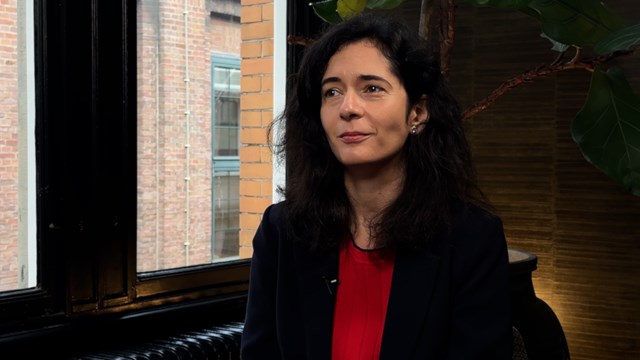
Hello and welcome to TelecomTV. I'm James Pearce. I'm in Amsterdam for CASA 2026, and I'm delighted to be joined today by Mike Mills from Gamma, who is the managing director of service providers. Thank you so much for joining us today, Mike. Let's start by talking about AI. As AI advances, how is this impacting enterprise customer demand from communication service providers?
Mike Mills, Gamma (00:27):
I think that's a really interesting question, and you see AI adoption in a whole bunch of areas. I think from an enterprise-specific perspective and comms perspective, we're seeing more and more people looking at how do they use AI in some of the more common communication areas. So I think CX is a really big area. How do you enhance CX capabilities, propositions using AI? I think that's definitely the one where we see the most uptake. And we're seeing quite an interesting paradigm shift actually where more and more is moving to the voice channel away from some of the more traditional messaging channels. I think that's a really interesting space to look. I think the area that's just beginning to interestingly develop as well though is the kind of AI into the smaller business space. So how can small businesses look at AI as a technology and then really leverage that for meaningful benefit?
James Pearce, TelecomTV (01:18):
Let's talk voice, because obviously that's an area of expertise for Gamma. How can voice regain strategic significance for the industry?
Mike Mills, Gamma (01:26):
Well, I think I made the point just before. If you think about how people communicate, humans communicate, voice is the first way everyone communicates. And I think what's happened with technology transition is it's gone from people communicating on email and keyboard, for want of a better word, but now more and more that kind of primary communication channel, which is voice, is coming to the forefront again. So when we look at some of the analysis within our customer segments, we're seeing that voice is actually a growing segment, not a declining segment.
James Pearce, TelecomTV (01:58):
And AI is obviously having an impact in there. What's your views on AI voice and how that's impacting the industry?
Mike Mills, Gamma (02:04):
Well, I think it's an interesting inflection point, because I think you've got people naturally wanting to converse using voice as the primary communication method. You've also got a highly regulated environment. So telco voice is not that different to things like financial services — it's highly regulated. So I think there's some interesting early life dynamics at play. How does a telco ensure it remains compliant whilst delivering value-added services? So you've got this constant rub of innovation from an AI point of view and governance and compliance and all of the things that telcos deliver as an inherent value proposition. I think the interesting balance is those that get that interaction right will be the ones that win.
James Pearce, TelecomTV (02:47):
You talked a little bit about the different types of communication and we're seeing a bit of a merging of those communication streams in unified solutions and contact centres and AI as we mentioned. How will service providers need to adapt to stay ahead of this transformation?
Mike Mills, Gamma (03:01):
Well, I think the principal area I think that they really need to adapt is the entire market's grown up selling features. The widget will do X, it'll do Y, it'll deliver this. And whilst everyone's now talking about outcomes, I think a lot of those outcomes are relatively simple. But getting a go-to-market motion and set of capability and tooling that means that you can with confidence tell a business it's going to save money, increase retention, drive greater ARPU out of its customers, they're the meaningful elements. So it's really moving from a features-benefits model to a model where you're delivering intrinsic value. And I think that step change is where telcos have got to look. I think the other area is really around innovation, and I think deciding where you do and don't innovate. I think for a long period of time, people tried to innovate at the platform layer, and you just look at the people playing in that game now.
(03:57):
They've got massive R&D budgets. So more and more, I think the innovation is in go-to-market, and it's in how you package the capabilities up and get them out to customers.
James Pearce, TelecomTV (04:06):
I think that's really, really an interesting way of looking at it. Let's look forward a little bit. What do you think is the single biggest change that AI will make to the telecom operating business model over the next, say, three years?
Mike Mills, Gamma (04:19):
I think fundamentally, so there's a lot of talk in the market right now about how businesses have to move, how customer outcomes have to move to a kind of usage-based model. I don't necessarily agree with that. I think that if you're an end business, you want your costs as fixed as possible. I think the challenge the telco's got is one aspect of that — the largest aspect of their costs will be variable. So I think the thing telcos have got to do is really figure out how to deliver the commercial model that enterprises and users want. No CFO wants a blank check irrespective of what it's going to cost. They want predictable financial outcomes. And I think figuring out how to go from a variable cost stack to a fixed outcome is, I think, one of the big things that telcos have got to figure out over the next few years because that's really the key to mass adoption.
(05:20):
I think the other area is really very much in how do you take a sales force that's used to selling a bundle or a package? How do you get them selling a much more complex, much more deeply integrated agentic capability when a lot of them are, "You can have X for Y"? And I think those challenges are really the two things that telcos have got to figure out that are pivotal on how they succeed with AI over the next few years.
James Pearce, TelecomTV (05:46):
Well, we will see whether you're right. Thank you so much for joining us.
Mike Mills, Gamma (05:49):
Thank you.
Hello and welcome to TelecomTV. I'm James Pearce. I'm in Amsterdam for CASA 2026, and I'm delighted to be joined today by Mike Mills from Gamma, who is the managing director of service providers. Thank you so much for joining us today, Mike. Let's start by talking about AI. As AI advances, how is this impacting enterprise customer demand from communication service providers?
Mike Mills, Gamma (00:27):
I think that's a really interesting question, and you see AI adoption in a whole bunch of areas. I think from an enterprise-specific perspective and comms perspective, we're seeing more and more people looking at how do they use AI in some of the more common communication areas. So I think CX is a really big area. How do you enhance CX capabilities, propositions using AI? I think that's definitely the one where we see the most uptake. And we're seeing quite an interesting paradigm shift actually where more and more is moving to the voice channel away from some of the more traditional messaging channels. I think that's a really interesting space to look. I think the area that's just beginning to interestingly develop as well though is the kind of AI into the smaller business space. So how can small businesses look at AI as a technology and then really leverage that for meaningful benefit?
James Pearce, TelecomTV (01:18):
Let's talk voice, because obviously that's an area of expertise for Gamma. How can voice regain strategic significance for the industry?
Mike Mills, Gamma (01:26):
Well, I think I made the point just before. If you think about how people communicate, humans communicate, voice is the first way everyone communicates. And I think what's happened with technology transition is it's gone from people communicating on email and keyboard, for want of a better word, but now more and more that kind of primary communication channel, which is voice, is coming to the forefront again. So when we look at some of the analysis within our customer segments, we're seeing that voice is actually a growing segment, not a declining segment.
James Pearce, TelecomTV (01:58):
And AI is obviously having an impact in there. What's your views on AI voice and how that's impacting the industry?
Mike Mills, Gamma (02:04):
Well, I think it's an interesting inflection point, because I think you've got people naturally wanting to converse using voice as the primary communication method. You've also got a highly regulated environment. So telco voice is not that different to things like financial services — it's highly regulated. So I think there's some interesting early life dynamics at play. How does a telco ensure it remains compliant whilst delivering value-added services? So you've got this constant rub of innovation from an AI point of view and governance and compliance and all of the things that telcos deliver as an inherent value proposition. I think the interesting balance is those that get that interaction right will be the ones that win.
James Pearce, TelecomTV (02:47):
You talked a little bit about the different types of communication and we're seeing a bit of a merging of those communication streams in unified solutions and contact centres and AI as we mentioned. How will service providers need to adapt to stay ahead of this transformation?
Mike Mills, Gamma (03:01):
Well, I think the principal area I think that they really need to adapt is the entire market's grown up selling features. The widget will do X, it'll do Y, it'll deliver this. And whilst everyone's now talking about outcomes, I think a lot of those outcomes are relatively simple. But getting a go-to-market motion and set of capability and tooling that means that you can with confidence tell a business it's going to save money, increase retention, drive greater ARPU out of its customers, they're the meaningful elements. So it's really moving from a features-benefits model to a model where you're delivering intrinsic value. And I think that step change is where telcos have got to look. I think the other area is really around innovation, and I think deciding where you do and don't innovate. I think for a long period of time, people tried to innovate at the platform layer, and you just look at the people playing in that game now.
(03:57):
They've got massive R&D budgets. So more and more, I think the innovation is in go-to-market, and it's in how you package the capabilities up and get them out to customers.
James Pearce, TelecomTV (04:06):
I think that's really, really an interesting way of looking at it. Let's look forward a little bit. What do you think is the single biggest change that AI will make to the telecom operating business model over the next, say, three years?
Mike Mills, Gamma (04:19):
I think fundamentally, so there's a lot of talk in the market right now about how businesses have to move, how customer outcomes have to move to a kind of usage-based model. I don't necessarily agree with that. I think that if you're an end business, you want your costs as fixed as possible. I think the challenge the telco's got is one aspect of that — the largest aspect of their costs will be variable. So I think the thing telcos have got to do is really figure out how to deliver the commercial model that enterprises and users want. No CFO wants a blank check irrespective of what it's going to cost. They want predictable financial outcomes. And I think figuring out how to go from a variable cost stack to a fixed outcome is, I think, one of the big things that telcos have got to figure out over the next few years because that's really the key to mass adoption.
(05:20):
I think the other area is really very much in how do you take a sales force that's used to selling a bundle or a package? How do you get them selling a much more complex, much more deeply integrated agentic capability when a lot of them are, "You can have X for Y"? And I think those challenges are really the two things that telcos have got to figure out that are pivotal on how they succeed with AI over the next few years.
James Pearce, TelecomTV (05:46):
Well, we will see whether you're right. Thank you so much for joining us.
Mike Mills, Gamma (05:49):
Thank you.
Please note that video transcripts are provided for reference only – content may vary from the published video or contain inaccuracies.
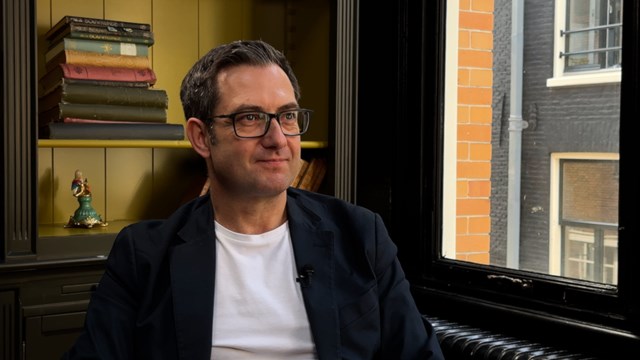
Mike Mills, Managing Director of Service Providers, Gamma
Mike Mills, managing director for service providers at Gamma, discusses the evolution of AI in communications such as customer services, the role AI is playing in the resurgence of voice and the convergence of communications streams. He also explores how to build a go-to-market product that delivers intrinsic value to enterprise customers.
Recorded September 2026
Email Newsletters
Sign up to receive TelecomTV's top news and videos, plus exclusive subscriber-only content direct to your inbox.