To embed our video on your website copy and paste the code below:
<iframe src="https://www.youtube.com/embed/GaeYCddg0Lg?modestbranding=1&rel=0" width="970" height="546" frameborder="0" scrolling="auto" allowfullscreen></iframe>
James Pearce, TelecomTV (00:05):
Hello and welcome to TelecomTV. I'm James Pearce and I'm in Amsterdam this week for CASA 2026. I'm delighted to be joined today by Daan De Wever, who is the CEO at dstny. Daan, thank you so much for joining us. One of the hottest topics in the industry right now is AI. Where do you think the real value from AI is actually going to land?
Daan De Wever, dstny (00:30):
It's not an easy question because even this morning during the event, you see that there are still a lot of opinions on where AI will land. From my perspective, AI is a very transformative wave. I think what will happen is voice, which was for probably the last 150 years a communication channel, will be used differently. And that means that if you look to our customers, telcos, they need to reinvent their business model. I think over the last decades they were not pushed to transform. So that means that... the biggest question of AI is not how transformative it will be, but the biggest question today, what I see happening when I speak with my customers, is how are we going to monetise this? But it's super clear that the definition of voice will be different. It'll be like an interface between human technology, a company, different angles.
James Pearce, TelecomTV (01:26):
One of the things I like to do is look back at previous technology waves where operators maybe haven't always been the best at capturing value. Do you see AI playing out the same way? And if not, how can telcos avoid that?
Daan De Wever, dstny (01:39):
Yeah, I think what you have seen is in the industry where we're coming from, call it voice as a communication channel, and on top of voice, we started to invent the PBX, and after the PBX we say, "Okay, we need to bring it to the cloud." And the next phase there, we speak about contact centre and CPaaS. If you see what is today the reality for a lot of these telcos, where did they capture the value is by combining this and by bundling this with their connectivity investments. Because these telcos, they invest heavily in spectrum, in infrastructure, and they have customers and they need to monetise. And what we have seen is in the last, at least in the UCaaS industry, UCaaS was for years and even today a protection layer for them on their existing ARPUs, knowing that ARPUs are under stress, but at least it captured the value by protecting it.
(02:35):
And that's the question with AI. I think the question is, do we still believe if this protection layer will hold? And I believe probably not. And my big belief is no. So we need to see. So the question will be, how can we now deliver a layer, call it a new protection layer, but not only a protection layer because protection could be negative to say we need to see that because every operator in the world is looking for growth. And I think my belief is that with AI and the application layer on top of it, taking around voice and intelligence, et cetera, there is a huge opportunity to drive new value streams to the operators. And at the end, it will also make that they are visible on their network because I think the big risk today for them is to be essential because their network will be consumed by AI. Traffic will be going through, but they need to be visible, and visible means that they have the customer, so they have the trust, they know how it works.
(03:36):
So how they will be capable to send the invoice at the end to the end user. I think that's the biggest challenge for them.
James Pearce, TelecomTV (03:44):
One of the areas that we're seeing a lot of growth in AI in particular is in customer services. But as this develops, it has an effect on the relationship between telcos and all the partners and the customer themselves. Who ends up owning that relationship?
Daan De Wever, dstny (03:59):
Yeah, I think that's where I think the biggest call it opportunity lies. We can see it as a threat, as a risk, if I look to telcos, it's like they manage the customer relationship today. And their biggest challenge today is how can we drive new value streams on top of this existing relationship coming from AI. And there is a speed dimension. I think the complexity of big telcos... I think what I always say, doing a POC with AI within a telco is easy, but bringing this into a product, on call it the way how a telco is looking to product and to launch, is a completely different animal. And there is a huge gap. That's a production gap between, let's call it, POC and at scale delivering this via where you do provisioning, where you do billing, where you do everything.
(04:59):
So that's the biggest challenge for me, what I see in the industry today.
James Pearce, TelecomTV (05:03):
Obviously, AI has major demands and implications for the network side as well. Given those demands, should operators be ripping out and replacing their infrastructure, or is there another path that they can take?
Daan De Wever, dstny (05:14):
I think what you see within telcos is they have a strong relationship and they have today built around their connectivity, but there is also an organisation where they have their call it estate. And that estate means that they have different call control systems, that they have networking, that they have complex IT systems, that you have decision matrix different, where you have 20 eyes who are in the middle of taking a decision. So you need to deal with that complexity. If we believe that the speed of call it an AI roadmap needs to be aligned with call it the network roadmap, my view is this will never work. So you need to find a way to make a distinction between both. And so for me, it's like migration they don't like because there is a risk — it's churn today. They have invested, sometimes even perpetual. It makes a lot of revenue, but they need to innovate.
(06:13):
So the whole play for me is don't try to convince them to do a migration because that's something where they don't like, but can we create an overlay layer where you really have the opportunity to drive new innovation, new applications on top of that existing call control system? That's where we need to play because that's also where we can help them innovate at a different pace as call it the network roadmap.
James Pearce, TelecomTV (06:41):
Another hot topic that's been going around the industry a lot recently is data sovereignty, and especially in Europe, we've seen a lot of conversations around that. What are your thoughts on it? Is it a big issue in the conversations that you are having with partners, customers and everyone else?
Daan De Wever, dstny (06:58):
If you take it from the European context, for sure it is. So when I speak as a CEO with call it colleague CEOs of big telcos, of ExCo members, you see that there is a lot... One of the first questions often is not like what is your technology or what is innovation, but a lot is going like, "Okay, if we speak about AI, from a compliance standpoint, on what kind of model?" I've learned even this morning that we have in Europe only two models: we are European and the rest are Asia or the US. On which type of bare metal, where are we going to have the data. But in my opinion, I think sovereignty is more than just speaking about that part. It's also about the way how you're going to operate this within your entire organisation. So is it a big thing? Yes.
(07:53):
And I think what I see within dstny, we really made a choice because we always say, "Okay, the power needs to be at the telco. We need to serve them at their terms." That means that we need to give them deployment models that work for them. Because if we just want to try to push them to our model, it will maybe work with a smaller service provider. But if you're in discussion with the big telcos in Europe, it will never work and you will miss the opportunity.
James Pearce, TelecomTV (08:22):
Now I want to end by talking a bit more about dstny and your approach. What's new compared to what's already out there and why have you brought it to the market at this particular moment?
Daan De Wever, dstny (08:33):
Yeah, I think it's a good question. I think what we have seen, if you look back to dstny with four years, we have a lot of experience in this call it existing call control systems where we are supporting a lot of telcos in building that protection layer, the existing protection layer on the connectivity. But then you have the new AI era. And so we started already back in the years to think, okay, if you look to the opportunity here, as I told before, we don't believe that you can ask them to do a migration and say, "Hey, you need to first change your call control and then we start to come with new innovation on top." So we invested for years in what we call an overlay. And that overlay was for us critical — that's the dstny moat, because this gives us the power to make that distinction between the existing call control and a new application layer where you can drive new innovation on top of it.
(09:27):
So that's what we invested. So what we say today is dstny is the AI commercialisation layer for telcos, where commercialisation means we have the right technology by having set this overlay layer. But second, it's also about operations because you need to help them. It's about security within the technology. It's about how do you embed this within their network services. How can you embed it? And if you have that layer ready, then there is still call it more the commercial layer where you say it's not only about technology, it's not only about provisioning, it's not only about delivering, but it's also about can you now deliver this at scale and can you build it at scale? And so that's what we call our third layer, where we say the digital enablement layer is a key one, where you need to support them in a joint effort. It's not dstny against them, it's we together with them in a joint effort say, "Okay, if we want to... the challenge is to create a new revenue line there, let's focus on these three dimensions, find a common roadmap and see that we can make them successful at the pace what is right for both companies and what drives value for both companies."
(10:43):
That's I think our biggest... that's the reason of why we exist as dstny.
James Pearce, TelecomTV (10:48):
That sounds like a really exciting proposition. That's all we have time for. So thank you for joining us today on TelecomTV.
Daan De Wever, dstny (10:54):
Thank you.
Hello and welcome to TelecomTV. I'm James Pearce and I'm in Amsterdam this week for CASA 2026. I'm delighted to be joined today by Daan De Wever, who is the CEO at dstny. Daan, thank you so much for joining us. One of the hottest topics in the industry right now is AI. Where do you think the real value from AI is actually going to land?
Daan De Wever, dstny (00:30):
It's not an easy question because even this morning during the event, you see that there are still a lot of opinions on where AI will land. From my perspective, AI is a very transformative wave. I think what will happen is voice, which was for probably the last 150 years a communication channel, will be used differently. And that means that if you look to our customers, telcos, they need to reinvent their business model. I think over the last decades they were not pushed to transform. So that means that... the biggest question of AI is not how transformative it will be, but the biggest question today, what I see happening when I speak with my customers, is how are we going to monetise this? But it's super clear that the definition of voice will be different. It'll be like an interface between human technology, a company, different angles.
James Pearce, TelecomTV (01:26):
One of the things I like to do is look back at previous technology waves where operators maybe haven't always been the best at capturing value. Do you see AI playing out the same way? And if not, how can telcos avoid that?
Daan De Wever, dstny (01:39):
Yeah, I think what you have seen is in the industry where we're coming from, call it voice as a communication channel, and on top of voice, we started to invent the PBX, and after the PBX we say, "Okay, we need to bring it to the cloud." And the next phase there, we speak about contact centre and CPaaS. If you see what is today the reality for a lot of these telcos, where did they capture the value is by combining this and by bundling this with their connectivity investments. Because these telcos, they invest heavily in spectrum, in infrastructure, and they have customers and they need to monetise. And what we have seen is in the last, at least in the UCaaS industry, UCaaS was for years and even today a protection layer for them on their existing ARPUs, knowing that ARPUs are under stress, but at least it captured the value by protecting it.
(02:35):
And that's the question with AI. I think the question is, do we still believe if this protection layer will hold? And I believe probably not. And my big belief is no. So we need to see. So the question will be, how can we now deliver a layer, call it a new protection layer, but not only a protection layer because protection could be negative to say we need to see that because every operator in the world is looking for growth. And I think my belief is that with AI and the application layer on top of it, taking around voice and intelligence, et cetera, there is a huge opportunity to drive new value streams to the operators. And at the end, it will also make that they are visible on their network because I think the big risk today for them is to be essential because their network will be consumed by AI. Traffic will be going through, but they need to be visible, and visible means that they have the customer, so they have the trust, they know how it works.
(03:36):
So how they will be capable to send the invoice at the end to the end user. I think that's the biggest challenge for them.
James Pearce, TelecomTV (03:44):
One of the areas that we're seeing a lot of growth in AI in particular is in customer services. But as this develops, it has an effect on the relationship between telcos and all the partners and the customer themselves. Who ends up owning that relationship?
Daan De Wever, dstny (03:59):
Yeah, I think that's where I think the biggest call it opportunity lies. We can see it as a threat, as a risk, if I look to telcos, it's like they manage the customer relationship today. And their biggest challenge today is how can we drive new value streams on top of this existing relationship coming from AI. And there is a speed dimension. I think the complexity of big telcos... I think what I always say, doing a POC with AI within a telco is easy, but bringing this into a product, on call it the way how a telco is looking to product and to launch, is a completely different animal. And there is a huge gap. That's a production gap between, let's call it, POC and at scale delivering this via where you do provisioning, where you do billing, where you do everything.
(04:59):
So that's the biggest challenge for me, what I see in the industry today.
James Pearce, TelecomTV (05:03):
Obviously, AI has major demands and implications for the network side as well. Given those demands, should operators be ripping out and replacing their infrastructure, or is there another path that they can take?
Daan De Wever, dstny (05:14):
I think what you see within telcos is they have a strong relationship and they have today built around their connectivity, but there is also an organisation where they have their call it estate. And that estate means that they have different call control systems, that they have networking, that they have complex IT systems, that you have decision matrix different, where you have 20 eyes who are in the middle of taking a decision. So you need to deal with that complexity. If we believe that the speed of call it an AI roadmap needs to be aligned with call it the network roadmap, my view is this will never work. So you need to find a way to make a distinction between both. And so for me, it's like migration they don't like because there is a risk — it's churn today. They have invested, sometimes even perpetual. It makes a lot of revenue, but they need to innovate.
(06:13):
So the whole play for me is don't try to convince them to do a migration because that's something where they don't like, but can we create an overlay layer where you really have the opportunity to drive new innovation, new applications on top of that existing call control system? That's where we need to play because that's also where we can help them innovate at a different pace as call it the network roadmap.
James Pearce, TelecomTV (06:41):
Another hot topic that's been going around the industry a lot recently is data sovereignty, and especially in Europe, we've seen a lot of conversations around that. What are your thoughts on it? Is it a big issue in the conversations that you are having with partners, customers and everyone else?
Daan De Wever, dstny (06:58):
If you take it from the European context, for sure it is. So when I speak as a CEO with call it colleague CEOs of big telcos, of ExCo members, you see that there is a lot... One of the first questions often is not like what is your technology or what is innovation, but a lot is going like, "Okay, if we speak about AI, from a compliance standpoint, on what kind of model?" I've learned even this morning that we have in Europe only two models: we are European and the rest are Asia or the US. On which type of bare metal, where are we going to have the data. But in my opinion, I think sovereignty is more than just speaking about that part. It's also about the way how you're going to operate this within your entire organisation. So is it a big thing? Yes.
(07:53):
And I think what I see within dstny, we really made a choice because we always say, "Okay, the power needs to be at the telco. We need to serve them at their terms." That means that we need to give them deployment models that work for them. Because if we just want to try to push them to our model, it will maybe work with a smaller service provider. But if you're in discussion with the big telcos in Europe, it will never work and you will miss the opportunity.
James Pearce, TelecomTV (08:22):
Now I want to end by talking a bit more about dstny and your approach. What's new compared to what's already out there and why have you brought it to the market at this particular moment?
Daan De Wever, dstny (08:33):
Yeah, I think it's a good question. I think what we have seen, if you look back to dstny with four years, we have a lot of experience in this call it existing call control systems where we are supporting a lot of telcos in building that protection layer, the existing protection layer on the connectivity. But then you have the new AI era. And so we started already back in the years to think, okay, if you look to the opportunity here, as I told before, we don't believe that you can ask them to do a migration and say, "Hey, you need to first change your call control and then we start to come with new innovation on top." So we invested for years in what we call an overlay. And that overlay was for us critical — that's the dstny moat, because this gives us the power to make that distinction between the existing call control and a new application layer where you can drive new innovation on top of it.
(09:27):
So that's what we invested. So what we say today is dstny is the AI commercialisation layer for telcos, where commercialisation means we have the right technology by having set this overlay layer. But second, it's also about operations because you need to help them. It's about security within the technology. It's about how do you embed this within their network services. How can you embed it? And if you have that layer ready, then there is still call it more the commercial layer where you say it's not only about technology, it's not only about provisioning, it's not only about delivering, but it's also about can you now deliver this at scale and can you build it at scale? And so that's what we call our third layer, where we say the digital enablement layer is a key one, where you need to support them in a joint effort. It's not dstny against them, it's we together with them in a joint effort say, "Okay, if we want to... the challenge is to create a new revenue line there, let's focus on these three dimensions, find a common roadmap and see that we can make them successful at the pace what is right for both companies and what drives value for both companies."
(10:43):
That's I think our biggest... that's the reason of why we exist as dstny.
James Pearce, TelecomTV (10:48):
That sounds like a really exciting proposition. That's all we have time for. So thank you for joining us today on TelecomTV.
Daan De Wever, dstny (10:54):
Thank you.
Please note that video transcripts are provided for reference only – content may vary from the published video or contain inaccuracies.
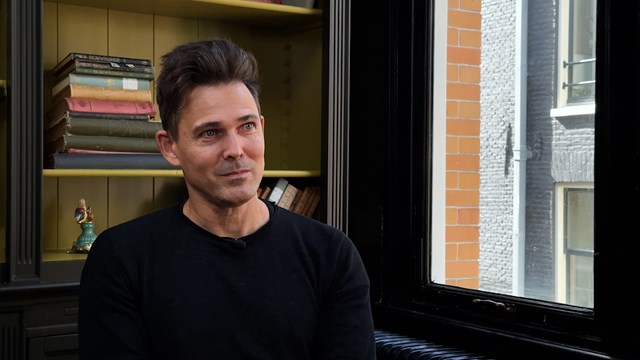
Daan De Wever, CEO, dstny
Daan De Wever, CEO of dstny, discusses why AI is a transformative wave that will redefine voice, how telcos can avoid missing value as they did in past technology cycles, owning the customer relationship in an age of AI agents, why an overlay rather than migration is the path for operators and how dstny positions itself as the AI commercialisation layer for telcos.
Recorded September 2026
Email Newsletters
Sign up to receive TelecomTV's top news and videos, plus exclusive subscriber-only content direct to your inbox.