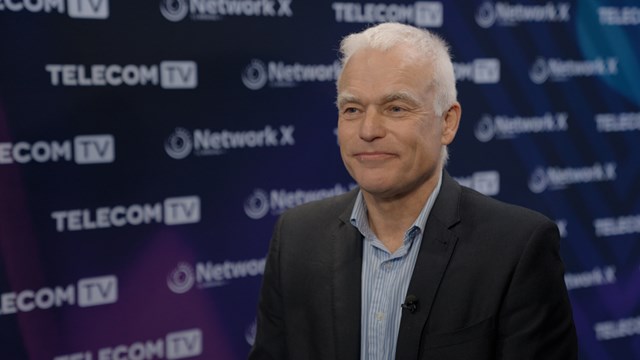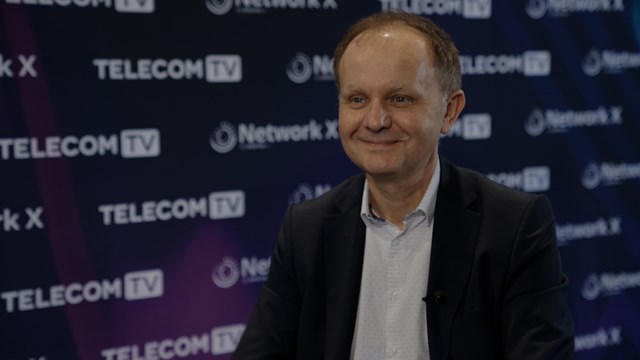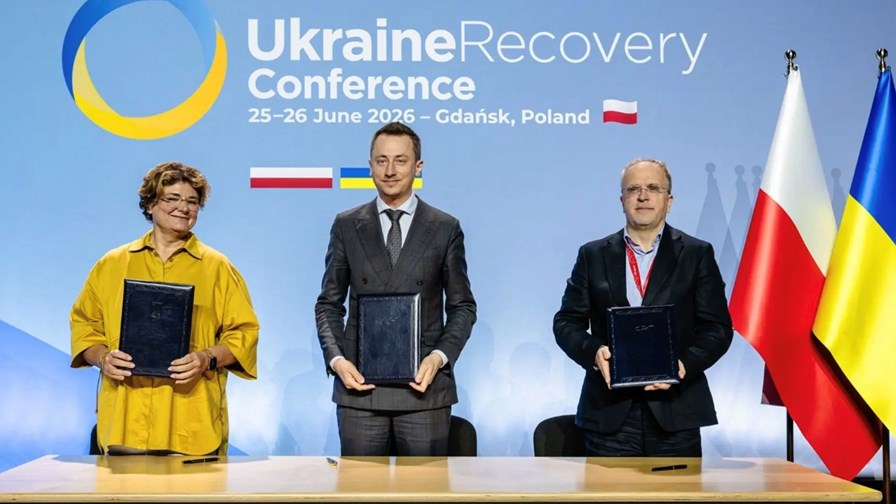
Left to right: Marine Babayan, chief corporate affairs officer at Veon; Oleksii Sobolev, Ukraine's minister of economy of Ukraine; and Oleksandr Komarov, president of Kyivstar Group.
- Veon’s Kyivstar plots sovereign AI datacentre in Ukraine
- Digi Spain heads for an IPO
- Verizon splashes $3.2bn on spectrum licences
In today’s industry news roundup: Veon’s Kyivstar is set to team up with the finance ministry in Ukraine to develop and build a sovereign AI datacentre in the country; the Spanish operation of pan-European telco Digi Communications is preparing to raise funds from an IPO; Verizon was by far the biggest spender in the FCC’s recent 5G spectrum auction; and much more!
Veon Group operation Kyivstar has signed a memorandum of understanding (MoU) with Ukraine’s Ministry of Economy to explore the establishment of a sovereign, AI-ready datacentre in the war-torn country. Veon noted in this announcement that it will support the implementation of the plans to advance Ukraine’s digital infrastructure through its financial backing and expertise. The MoU, which was signed at the 2026 Ukraine Recovery Conference held in Gdansk, Poland, aims to develop next-generation computing infrastructure that will strengthen Ukraine’s technological sovereignty. This includes building a sovereign AI datacentre in the country that would minimise data transmission latency and support the operation of AI solutions. Veon Group CEO Kaan Terzioglu stated: “Ukraine is showing the world what a digital economy built for resilience looks like. Sovereign AI infrastructure keeps a country’s most important data and capabilities at home, where they create the most value for its people and its economy. Through our AI1440 strategy, we are bringing augmented intelligence into everyday life across our markets, and supporting this datacentre is a natural extension of that commitment in Ukraine,” he noted. Oleksandr Komarov, president of Kyivstar Group, added: “The development of artificial intelligence is already creating a new level of demand for computing infrastructure, and its practical use is expanding rapidly in everyday services. This reinforces the need for countries to build local AI infrastructure to stay competitive globally, and we are focused on advancing this in Ukraine. Kyivstar has long partnered with the government to develop Ukraine’s digital infrastructure, consistently investing in networks, technologies and expertise. As we explore this project, Kyivstar [will] aim to fund and phase any investment within our existing capital expenditure plans, maintaining our capital allocation discipline.”
Romania’s Digi Communications has announced plans to launch an initial public offering (IPO) for its Spanish unit, Digi Spain Telecom, that could value the business at up to €1.7bn. The Spanish operation is growing rapidly and ended March this year with about 2.8 million broadband customers, making it the third-largest in Spain’s fibre broadband sector, and 7.6 million mobile customers, making it the number-four player in the country. Digi Spain is currently on course for an annual turnover of €1bn and earnings before interest, taxes, depreciation and amortisation (EBITDA) of more than €200m this year. The Romanian telco plans to offer newly issued shares valued at €150 million on the Spanish stock exchanges, while it is also mulling over a secondary offering that would see the parent company – which is currently the sole shareholder in Digi Spain – sell some of its existing stake, although it plans to retain at least a 75% stake in the company. Digi had already announced it was exploring an IPO and the latest news comes after Digi Spain secured a binding commitment from Global Portfolio Investments for a €100m investment into the IPO. However, Digi did not share a timeline for the IPO, saying it was “subject to market conditions” and approval of the prospectus by the Spanish Securities Market Commission.
Verizon was the biggest spender in the latest US spectrum auction, bidding nearly $3.2bn for licences in the Federal Communications Commission (FCC) advanced wireless services (AWS)-3 spectrum sale, the regulator announced last week. AT&T (which bid $278m), T-Mobile US ($121m) and SpaceX ($8.5m) were also among the successful bidders in the FCC’s auction, which raised around $3.5bn overall for service licences in the 1695-1710 MHz, 1755-1780 MHz, and 2155-2180 MHz bands. The FCC noted in this announcement that “up to $3.3bn of the auction’s proceeds will be used to cover amounts borrowed to support the FCC’s rip-and-replace programme [which compensates US network operators for swapping out Chinese network technology] and other Commerce Department programmes.” It was effectively a re-auction of licences initially auctioned to Dish Network (now part of Echostar) in 2014, that had been returned to the regulator, and bids were carried out over 72 rounds. Verizon secured licences in 82 markets, including key urban areas, such as New York, Chicago and Boston. T-Mobile US had winning bids in 102 markets, primarily across the rural US, while AT&T focused on just 10 markets. EchoStar also came away with licences in one market, costing it $1.22m, while SpaceX bid in two markets, amid speculation that Elon Musk’s space company could be planning to launch its own mobile operator under the Starlink brand.
Vodafone Germany has teamed up with public broadcaster ARD, and in particular its SWR operation, as well as the Baden-Württemberg Cooperative State University to trial the use of quantum key distribution (QKD) technology in order to improve data transmission security. The partners have “successfully transmitted a quantum-encrypted TV stream between the ARD headquarters in Frankfurt and the SWR broadcasting centre in Mainz for the first time,” noted Vodafone Germany in this announcement (in German).
The Swedish Police Authority is partnering with the Swedish Post and Telecom Agency (PTS) to launch a crackdown on fraudulent calls and texts in a move that will require telecom operators to track traffic patterns. The “criminal economy” in Sweden was valued at around 352bn krona ($36.2bn) in 2025, according to the Expert Group for Studies in Public Finance, and while the “criminal profits from telephone fraud” have fallen in value by about 60% since 2023, according to the PTS, the problem is still widespread and the regulator has been instructed by the government to work with the police authority to craft legislation that will force operators to stop calls and messages that appear to be used for fraud, and can be identified by deviating traffic patterns. “Through close cooperation between authorities and telecommunications operators, we can strengthen protection for users and make it more difficult for criminals,” the PTS director general Lena Nyberg noted on the regulator’s website.
Virgin Media O2 has revealed how it plans to achieve net-zero carbon emissions across its entire value chain by 2040. The UK operator’s Green Transition Plan is a long-term approach to becoming a low-carbon business and includes the goal of reducing Scope 1 and Scope 2 emissions by 90%, and Scope 3 emissions by 50% by 2030, before achieving complete net zero across its entire value chain by the end of 2040. VMO2 has pledged to support the UK’s energy transition by sourcing 100% carbon-free energy from the UK, as well as building more efficient and climate-resilient broadband and mobile networks. Another key aspect of its green goals is promoting the circular economy. VMO2 is aiming to double the number of people recycling unwanted devices through its O2 Recycle scheme by 2030 and will champion device reuse in 30 UK cities in the same timeframe.
The Trump administration has given AI firm Anthropic permission to release its newest model, Claude Mythos 5, to around 100 partners after the US authorities removed access last week citing security concerns. Anthropic has confirmed that the US Commerce Department has given it the thumbs up to allow a number of trusted partners, including US government departments, access to Mythos 5, although it will not be more widely released until the government has vetted and approved users, according to reports. In a tweet posted on Friday, Anthropic said it is continuing to work with the government to “expand access to Mythos 5 and make Fable 5 available for general use again”. Fable 5 is the general-release counterpart of Mythos 5 and was also cut off as part of a government order. The US reportedly had concerns that a potential jailbreak would allow the large language models (LLMs) to be misused, and the government had also reportedly expressed worries about Mythos being used by SK Telecom (as reported here).
– The staff, TelecomTV
Email Newsletters
Sign up to receive TelecomTV's top news and videos, plus exclusive subscriber-only content direct to your inbox.