- US mobile market speculation swirls around Starlink
- OpenAI and Broadcom spice up inference
- GSMA teams up to develop Telco Common Corpus
In today’s industry news roundup: Rumours suggest SpaceX’s Starlink has plans to enter the US cellular services sector via one route or another, including potential M&A activity; OpenAI has teamed up with Broadcom to develop an inference-optimised chip called Jalapeño; the GSMA and a French startup have collaborated on the development of a massive library of telecom knowledge that can be used to train AI models; and much more!
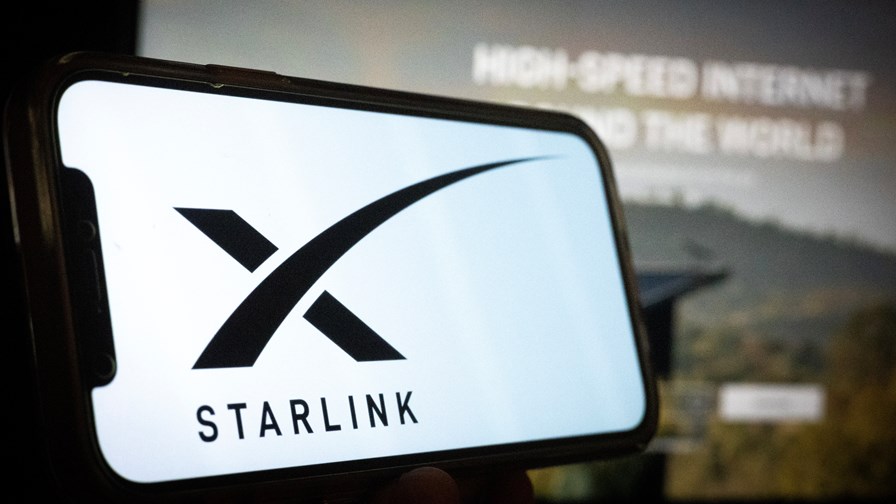
For several years, mobile operators have been partnering with SpaceX’s Starlink to add satellite connectivity to their portfolios but, according to reports, the Elon Musk-owned company may be planning to launch its own cellular offering for US consumers. The Financial Times (subscription required) claims that during recent talks ahead of SpaceX’s recent IPO, the company’s president and COO Gwynne Shotwell told investors it is considering launching a Starlink mobile service that would compete directly with AT&T, Verizon and T-Mobile US. The plans would potentially include building out its own terrestrial mobile network, the FT reports, citing four people familiar with the matter. Developing and providing its own mobile services would be a huge undertaking, especially if Starlink plans to build its own network, though of course that wouldn’t necessarily involve having to build out its own radio access network (a costly and lengthy undertaking): It could build its own mobile core platform and strike a mobile virtual network operator (MVNO) wholesale agreement with one of the existing operators to launch a Starlink-branded mobile offering instead. Starlink currently enables direct-to-device (D2D) mobile services for T-Mobile US, while rivals AT&T and Verizon have partnered with low-earth orbit (LEO) satellite network operator AST SpaceMobile, which is building a rival constellation to the D2D network run by Starlink. Rumours that Starlink might launch its own independent mobile service aren’t new – just last month, the US’s three main operators announced a new satellite joint venture aiming to pool spectrum and support D2D provisioning, which was seen partially as an effort to see off the threat of Musk’s company.
That’s not the limit of the mobile sector speculation swirling around SpaceX and Starlink, though. Some financial analysts are speculating that the space company could instead look to buy its way into the US mobile market, potentially acquiring T-Mobile US from Deutsche Telekom. TD Cowen analyst Gregory Williams wrote earlier this week that T-Mobile US would be the “clear choice” for SpaceX if it can’t sign a wholesale network deal or build its own service, given the existing relationship between the two companies. “Should SpaceX fail to reach a (wholesale network) deal,” or want to achieve network ownership scale at the fastest possible pace, “T-Mobile seems to us the clear choice given their momentum, maverick culture, pure-play wireless provider and existing Starlink partnership,” noted Williams in a report, according to Investor’s Business Daily. “Another thought would be to acquire AT&T. As for financing, SpaceX could theoretically execute a secondary offering for only modest dilution to its current substantial market cap.” But buying T-Mobile US would mean its majority owner, Deutsche Telekom, would have to sell, and that doesn’t appear to be a consideration for the German telco giant right now. In fact, reports earlier this year suggest DT, which owns a 53% stake in T-Mobile US, is mulling full ownership of the US operator, which is an important generator of revenues and corporate value for the German telco. In February, DT’s CEO Tim Höttges indicated that the German group is “continuously reviewing opportunities to further increase our stake” and does not plan to sell any T-Mobile US shares in 2026, casting doubt on the likelihood of any deal.
OpenAI has partnered with chip giant Broadcom to design its first custom-built inference processor, called Jalapeño, as it looks to boost the efficiency of its generative AI (GenAI) platform ChatGPT. According to OpenAI, Jalapeño is the first processor in a multi-generation compute platform being developed alongside Broadcom. It took nine months to take the chip from design to production, the AI company claimed, and has been architected specifically around the requirements of large language model (LLM) inference: OpenAI claims “the custom AI accelerator program represents what we believe to be the fastest ASIC development cycle ever achieved in high-performance advanced semiconductors”. The first chip is planned for deployment by the end of this year in custom servers made by Canada’s Celestica: Those servers will combine OpenAI-designed accelerators with Broadcom silicon implementation, networking, and connectivity technologies, along with Celestica’s board, rack, and system knowledge. OpenAI claims that creating an inference chip helps its strategy of developing a “full stack” that supports its models and products: What the company didn’t overtly state is that the move also makes it less reliant on the tech development roadmap of AI chip giant Nvidia. Inference at the edge of networks is one of the potential applications that telcos could potentially exploit to develop new AI-related business models.
As part of its Open Telco AI Initiative, which was launched at this year’s MWC in March, the GSMA has teamed up with French startup Pleias, which creates datasets for use by large language models (LLMs), to develop the Telco Common Corpus (TCC), which they describe as more than 10 billion tokens of “fully open, freely available telecommunications knowledge (scientific literature, patents, open data, and open-web projects) with licence and provenance verified at a document level”. The aim of the TCC, the first release of which is now available to access, is to provide “the open training data the industry needs to build performant models and open data infrastructure. This is the first time this body of public telecom knowledge has been assembled, verified and opened in one place at a large enough scale to supply powerful synthetic pipelines and support state-of-the-art model training lifecycles. The knowledge was always there but scattered across publishers, repositories and patent offices, never consolidated and never licence checked,” noted the GSMA in this blog. The trade body added: “TCC is for operators, vendors, research groups and regulators who want to build telecom-specialised models on a public foundation they can stand behind. As provenance becomes something asked about in procurement and, increasingly, in court, a foundation where every document’s right-to-use is provable is a different category of asset, and one private data can be layered on top of with confidence. It is also a living corpus. The source registry will grow as new releasable material is verified, and the methodology is open so the verification can be checked and extended. The standards are open. Now the public data underneath the models can be too, and it can carry its provenance with it.” There’s a lot more detail about what the TCC comprises and why it needs to be presented and treated in this fashion in the GSMA blog, which also includes details of how to engage with the GSMA – a founding member of the recently launched AI-native Telco Accelerator (ANTA) initiative.
Vodafone Spain is the latest European mobile operator to sign an agreement with Satellite Connect Europe for the provision of direct-to-device (D2D) services, it noted in this announcement (in Spanish). As a result of the deal with the wholesale satellite network operation, the operator, which is no longer part of the Vodafone Group empire following its €5bn disposal to Zegona Communications in 2024, is set to start offering D2D services to its enterprise and consumer customers in 2027, should regulators give all the necessary approvals. The operator is set to begin discussions with businesses and public administrations about potential use cases over the coming weeks, it said. Vodafone Spain will also leverage low-band spectrum freed up after its 3G switch-off to explore new services ahead of commercialisation. Satellite Connect Europe officially launched earlier this year and is a space joint venture between AST SpaceMobile and Vodafone Group.
Sticking with AST SpaceMobile, the satellite firm has announced plans to launch three new BlueBird satellites in the first half of August, as it continues to strengthen its space broadband fleet. AST has partnerships with nearly 60 mobile operators worldwide but has been hit by some delays, most notably a major setback when a rocket operated by Blue Origin (the Jeff Bezos-owned space company) exploded on its launch pad at the end of May while carrying several AST satellites. The BlueBird 11, 12 and 13 will launch from Cape Canaveral, Florida, in August, carrying commercial communications arrays measuring approximately 2,400 square feet, matching the scale of the BlueBird satellites currently operating in orbit. According to AST, the next-generation satellites will deliver nearly double the peak data speeds of the company’s initial block 1 BlueBird satellites, which achieved peak speeds of 98.9 Mbit/s.
Amazon plans to invest an additional $13bn to expand AI and cloud infrastructure in India, taking its total investment in the country to $48bn between 2026 and 2030. In 2025, Amazon announced a $35 bn investment across all its businesses in India. “This additional $13bn will expand AWS datacentre capacity in Mumbai and Hyderabad, giving startups, enterprises, and government organizations access to custom AI chips, managed AI services, secure and reliable cloud technologies, and developer tools to innovate faster, scale further, and serve customers globally,” noted Amazon in this announcement.
Monday 29 June looks like it will be a big day of tech investment announcements in South Korea, with local media reports suggesting that leaders from Samsung Electronics and SK Hynix, the world’s leading producers of all-important memory chips (with market shares of 38% and 29% respectively), set to attend a meeting with the country’s President Lee Jae Myung to announce major investment plans. According to Reuters, citing the Maeil Business Newspaper, Samsung will unveil a 10-year, 1tn South Korean won ($648bn) plan to invest in AI datacentres, chip factories and more. The news emerged shortly after Micron Technology, the world’s third largest memory chip vendor (22% share), reported a 346% year on year increase in fiscal third quarter revenues to $41.46bn.
– The staff, TelecomTV
Email Newsletters
Sign up to receive TelecomTV's top news and videos, plus exclusive subscriber-only content direct to your inbox.