- SpaceX taps Qualcomm for RAN tech
- SK Telecom reports modest AI revenue growth
- Jio Platforms is linked to US cableco deals
In today’s industry news roundup: Qualcomm is to provide SpaceX’s Starlink Mobile with radio access network (RAN) tech for its nationwide US terrestrial network rollout; SK Telecom’s AI-related revenues are growing but still relatively small; with its IPO completed, India’s Jio Platforms is forging ahead with its international expansion plans; and much more!
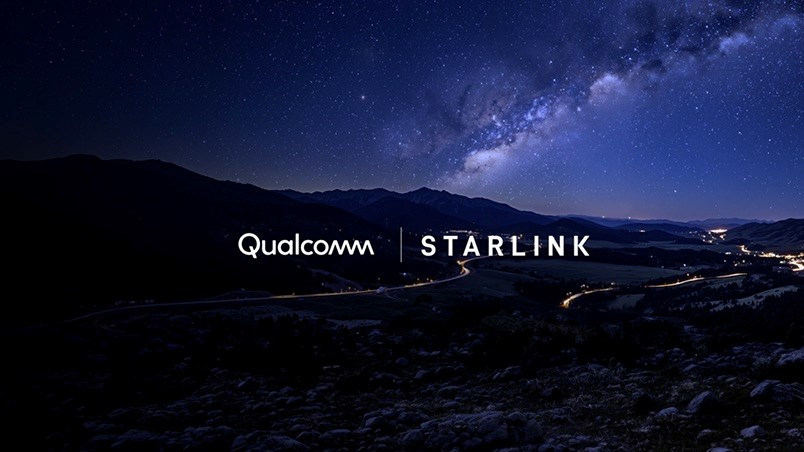
In the latest dramatic move by SpaceX to transform its Starlink Mobile business into a major, nationwide, infrastructure-based mobile operator in the US, Elon Musk’s company has selected Qualcomm’s Dragonwing Cellular Infrastructure platforms for its terrestrial 5G radio access network (RAN) rollout. In recent months, SpaceX has made a number of announcements and moves, including the acquisition of spectrum licences, that make it clear it has aspirations for Starlink Mobile – currently a provider of wholesale direct-to-device (D2D) connectivity from its low-earth orbit (LEO) satellite constellation – to compete with AT&T, T-Mobile US and Verizon for mobile customers. Now it has agreed to source Qualcomm’s Dragonwing QRU100 and QDU100 platforms and Layer 1 software to build out a network that will “combine high-capacity massive MIMO radio and baseband technology and power-efficient processing to support cellular base station deployment at scale,” noted Qualcomm in this announcement. “The collaboration represents a commercial step toward SpaceX and Qualcomm Technologies’ broader vision for AI-native 6G infrastructure,” the vendor added. Michael Nicolls, senior VP at Starlink, stated: “We shouldn’t live in a time where phone calls are still dropping whether you’re at home or on the go. Starlink is building the first fully integrated nationwide satellite and terrestrial network that will keep people connected no matter where they are. We’re excited to collaborate with Qualcomm Technologies and leverage their industry expertise and platform to accelerate our timeline to develop our base station end-to-end architecture.” Durga Malladi, EVP & GM for technology planning, edge solutions and datacentre at Qualcomm Technologies, added: “Building a nationwide network demands high performance and power efficiency at every site. Dragonwing Cellular Infrastructure platforms bring together advanced massive MIMO, purpose-built processing and commercial-grade Layer 1 software to help Starlink deliver an exceptional nationwide network. Together with SpaceX, we are building world-leading cellular infrastructure in the United States, advancing 5G today, with an opportunity to lay the foundation for AI-native 6G in the years ahead.” The news comes only weeks after reports suggested SpaceX has held talks to use Crown Castle’s tower infrastructure across the US and only days after reports that SpaceX is looking at how Echostar’s Boost Mobile might be a useful vehicle to accelerate its mobile plans.
SK Telecom (SKT), which has long described itself as an AI company, has reported its third-quarter results: The update includes figures for its AI-related revenues, which are growing, but not at breakneck speed. Total group revenues increased by 13.1% year on year to almost 4.5tn won ($3.36bn) “driven by growth in the company’s wireless and fixed-line telecommunications businesses”, while operating profit grew significantly to 552.3bn won ($410m) compared with the paltry profits reported last year when SKT was still reeling from a major cybersecurity incident. SKT’s AI datacentre (AIDC) unit reported third-quarter revenues of 126.1bn won ($94m), up by just 6.2% year on year, while the company’s consumer and enterprise AI service revenues grew by 27.3% to 70bn won ($52m). The operator noted that it is “on track in its AI services business. The company is expanding the use of its proprietary AI foundation model across its A. (A-DoT) AI assistant and workplace AI services. Through its participation in Korea’s ‘AI for All’ initiative, SKT aims to combine its telecommunications and AI capabilities to build the nation’s largest AI services ecosystem,” it added. The operator will be looking forward to much bigger returns in the future as its AI businesses matures: In August, SKT announced the spin off part of its SK Broadband subsidiary to form a new company, SK Horizon, that will focus on the management and development of AI datacentres in South Korea; and in July it formed its AI factory unit, SK Hyper, which will develop gigawatt-scale projects. On the company’s earnings call, CFO Park Jong-seok explained how SKT sees the telecom and AI parts of the company becoming integrated. “As AI technology advances and its range of applications expands, the relationship between telecommunications and AI is becoming even closer. Against this backdrop, we aim to implement a single growth strategy for both telecom business competitiveness and AI business development. We will apply AI technology to strengthen telecom services tailored to customers and improve network operation. While utilising our telecom customer base and network capabilities to expand the adoption of AI services across everyday life and industries, we will develop AI infrastructure not only as a foundation for AI technology but also as a key growth driver in the medium and long run. We will ensure that these achievements we have made in our telecom and AI domains will lead to bigger growth.” SKT ended September with 21.9 million mobile customers (of which 18.1 million are 5G users) and almost 7.4 million fixed broadband customers.
India’s Jio Platforms, which is seeking to sell the technology it has developed for its domestic market to overseas network operators, has reportedly held talks with US cable operators Comcast and Charter Communications about potential deals to licence its wireless broadband technology in exchange for equity. Reuters, citing unnamed sources familiar with the situation, reported that Jio Platforms – which recently completed a record-breaking $3.2bn IPO through which is still majority-owned by Mukesh Ambani’s Reliance Industries Ltd (RIL) conglomerate – held talks with the cable companies, and pan-African telco MTN Group, over licences for its unlicensed band radio (UBR) technology. The report says Jio Platforms isn’t working to any particular timetable, but talks with MTN have already fallen apart because the two parties disagreed over valuations and some licensing issues. Speaking during its recent earnings call, Jio Platforms managing director Akash Ambani said it could be seeking as many as 15 overseas partners for its proprietary UBR offering, which was developed as a way of overcoming some limitations of fixed wireless access (FWA) by using free, unlicensed spectrum to provide home connectivity. According to figures from Jio, around 6.5 million of the 30 million home broadband customers it connects in India via its telecom services business, Reliance Jio, are connected using UBR technology.
Orange has partnered with Algolia to deploy AI agents into regulated customer support conversations, with pre-selected guardrails defining what the agents can discuss. The French telco will use Algolia’s Agent Studio across its business-to-consumer (B2C) and business-to-business (B2B) support operations in more than 26 countries. The rollout builds on Orange’s existing Algolia search technology across 24 markets, where deployments have delivered a 63% increase in order rates. Algolia even shared some numbers, saying its search system had resulted in a more than 63% order rate, 14% click-through rate from its neural search system, and +7 points in net promoter score (NPS) for Orange’s customer support. Orange Group started with Algolia InstantSearch, then added further capabilities, including filters and facets, AI-driven synonyms, dynamic re-ranking, collections, query categorisation, AI recommendations and advanced personalisation. Its Agent Studio extends this into conversational and agentic experiences. Nicolas Coudert, digital factory director at Orange Group, said: “An effective search engine should do more than return a list of pages, it also should provide a direct and relevant answer. In a complex digital environment, responding instantly improves the customer experience, which drives higher satisfaction and stronger engagement. Algolia pairs reliable, high-performance services with a steady cadence of innovation, such as Agent Studio, that we can integrate quickly and put in front of customers immediately.”
Concerns are growing for big tech’s hidden AI debt addiction. The combined value of datacentre lease commitments and hardware purchase obligations made by Alphabet, Microsoft, Amazon, Meta and Oracle, and which doesn’t appear on their balance sheets, has grown by 90% over the past six months and is now worth a combined $3.2tn, according to this report from Nikkei Asia (subscription required).
– The staff, TelecomTV
Email Newsletters
Sign up to receive TelecomTV's top news and videos, plus exclusive subscriber-only content direct to your inbox.