To embed our video on your website copy and paste the code below:
<iframe src="https://www.youtube.com/embed/CRLlbu_hDjs?modestbranding=1&rel=0" width="970" height="546" frameborder="0" scrolling="auto" allowfullscreen></iframe>
Guy Daniels, TelecomTV (00:32):
Well, it does seem that agents and agentic AI are taking over much of the AI conversation. We've all discussed AI and agentic AI in some depth already, but Dmitrii, let me come across to you on this one first. How do you see this new model, this paradigm of agent-driven automation from the security point of view?
Dmitrii Krovnin, Ericsson (00:54):
And I think it's a very important topic these days, but the first thing to say - and I think Amy said this as well - is that agentic AI is still quite new in telecom, especially when we talk about real autonomous network operations at scale. Today, in many cases, we actually see gen AI systems or copilots, and for sure they help ourselves and engineers analyse network data, troubleshoot issues, even give some recommended actions, but humans make the final decision and execute the change. And I think for such AI systems or copilots, the security requirements are quite familiar to us as security specialists. We still need strong identity, access control, protection of data, least privilege, audit logging, vulnerability management, and so on. And I think the real agentic AI changes the game because agentic AI can actually act. As we know, an AI agent has a goal, it understands the environment, it can create a plan and execute actions even without a human in the loop.
(02:08):
And I think it will become increasingly important for telecom going forward, and we hear ambitions from our customers that they plan to move to higher levels of autonomous network operations. But I think to achieve that kind of autonomy, we need to move beyond AI as simple assistants to something more like agentic AI and closed-loop operations. And this will create a lot of challenges and risks and of course new demands from a security perspective. If an agent can change network configuration or optimise thousands of network nodes, it's not enough just to authenticate the agent and encrypt all communications. We need to control and validate what the agent is actually allowed to do. And if I connect it back to the SMO, I think the future role of SMO will be not only hosting and managing and interacting with agents, but also providing a trusted control layer for agent operations.
(03:17):
If I take a simple example - if we imagine an agent that can detect a capacity problem and decides the best action is to change configuration across several hundred sites or cells - the SMO shouldn't simply execute whatever the agent proposes. It should check whether the agent is authorised to perform this action, validate the proposed configuration change, and potentially test, dry run, or simulate the impact before execution. And I think this level of control should also be based on risk. So SMO should provide some framework to assess the risk of each and every operation. And if this is a small, reversible action from the agent, probably we can allow the agent to execute it autonomously. But if an agent wants to make a large-scale network change with thousands of nodes, cells and sites impacted, of course we need human approval.
(04:33):
And of course we need to apply all the security controls that we discussed before, like traceability, audit logging, and even identity propagation throughout the workflow - to know not only which agent performs the action, but also on whose behalf. So I think this will definitely change the nature of security. Security will evolve, since today we're mainly focusing on security of applications or static AI systems, but tomorrow we'll also need to secure AI as autonomous agents in the network.
Guy Daniels, TelecomTV (05:13):
Fantastic. Thanks very much, Dmitrii. And Amy, do you want to add any comments on agent-driven automation?
Amy Zwarico, AT&T (05:21):
Yes. I think that in order to have this agent-driven automation, what we have to have is the ability to execute the security controls at machine speed. We've got to really focus on defining guardrails on agents such as - and Dmitrii pointed it out, as did Scott - least privilege. We can't leave agents open to say, "Well, yeah, maybe they'll need to do this." Really define the least privilege, get those roles scoped out really tightly. We have to monitor agentic effects at the end points - so that would be the radios, the baseband units. Make sure that you know what's happening, and you've got the appropriate alarms in place to say, "This looks wrong." And then the final thing is, and this is going to probably be one of the most difficult things to do, is how do you strategically insert humans into the loop? Because what you're saying is, "I need to do all of this at machine speed, but yet I need humans there." Humans don't work at machine speed.
(06:30):
Part of what's going to happen with getting more and more automation is your pool of humans actually available to do the network operations is going to decrease. So we're going to have to strategically think about how you can put humans into the loop in a way that makes sense and can catch when things are going wrong, and also to be able to really understand how to take those humans and use them in a proactive way to prevent things from happening in the first place.
Guy Daniels, TelecomTV (07:09):
Ooh, there's a lot to think about here. Thanks very much, Amy. And Hans-Rudolf, I'll come to you as well. How do you see this model of agent-driven automation from the security perspective?
Hans-Rudolf Steiger, Swisscom (07:20):
Yeah, control and visibility become critical here, as has been mentioned quite a few times now. So we really need to understand what agents are doing and track their actions and make sure they operate within clearly defined boundaries. So I assume we will have some agent policies restricting them to the part which they should do in our network. And then of course we need this closed loop to continuously watch the changes and raise alarms if anything seems to be going in the wrong direction. As mentioned, with the human in the loop, we kind of lose all the speed and then of course the big benefit from agents.
Well, it does seem that agents and agentic AI are taking over much of the AI conversation. We've all discussed AI and agentic AI in some depth already, but Dmitrii, let me come across to you on this one first. How do you see this new model, this paradigm of agent-driven automation from the security point of view?
Dmitrii Krovnin, Ericsson (00:54):
And I think it's a very important topic these days, but the first thing to say - and I think Amy said this as well - is that agentic AI is still quite new in telecom, especially when we talk about real autonomous network operations at scale. Today, in many cases, we actually see gen AI systems or copilots, and for sure they help ourselves and engineers analyse network data, troubleshoot issues, even give some recommended actions, but humans make the final decision and execute the change. And I think for such AI systems or copilots, the security requirements are quite familiar to us as security specialists. We still need strong identity, access control, protection of data, least privilege, audit logging, vulnerability management, and so on. And I think the real agentic AI changes the game because agentic AI can actually act. As we know, an AI agent has a goal, it understands the environment, it can create a plan and execute actions even without a human in the loop.
(02:08):
And I think it will become increasingly important for telecom going forward, and we hear ambitions from our customers that they plan to move to higher levels of autonomous network operations. But I think to achieve that kind of autonomy, we need to move beyond AI as simple assistants to something more like agentic AI and closed-loop operations. And this will create a lot of challenges and risks and of course new demands from a security perspective. If an agent can change network configuration or optimise thousands of network nodes, it's not enough just to authenticate the agent and encrypt all communications. We need to control and validate what the agent is actually allowed to do. And if I connect it back to the SMO, I think the future role of SMO will be not only hosting and managing and interacting with agents, but also providing a trusted control layer for agent operations.
(03:17):
If I take a simple example - if we imagine an agent that can detect a capacity problem and decides the best action is to change configuration across several hundred sites or cells - the SMO shouldn't simply execute whatever the agent proposes. It should check whether the agent is authorised to perform this action, validate the proposed configuration change, and potentially test, dry run, or simulate the impact before execution. And I think this level of control should also be based on risk. So SMO should provide some framework to assess the risk of each and every operation. And if this is a small, reversible action from the agent, probably we can allow the agent to execute it autonomously. But if an agent wants to make a large-scale network change with thousands of nodes, cells and sites impacted, of course we need human approval.
(04:33):
And of course we need to apply all the security controls that we discussed before, like traceability, audit logging, and even identity propagation throughout the workflow - to know not only which agent performs the action, but also on whose behalf. So I think this will definitely change the nature of security. Security will evolve, since today we're mainly focusing on security of applications or static AI systems, but tomorrow we'll also need to secure AI as autonomous agents in the network.
Guy Daniels, TelecomTV (05:13):
Fantastic. Thanks very much, Dmitrii. And Amy, do you want to add any comments on agent-driven automation?
Amy Zwarico, AT&T (05:21):
Yes. I think that in order to have this agent-driven automation, what we have to have is the ability to execute the security controls at machine speed. We've got to really focus on defining guardrails on agents such as - and Dmitrii pointed it out, as did Scott - least privilege. We can't leave agents open to say, "Well, yeah, maybe they'll need to do this." Really define the least privilege, get those roles scoped out really tightly. We have to monitor agentic effects at the end points - so that would be the radios, the baseband units. Make sure that you know what's happening, and you've got the appropriate alarms in place to say, "This looks wrong." And then the final thing is, and this is going to probably be one of the most difficult things to do, is how do you strategically insert humans into the loop? Because what you're saying is, "I need to do all of this at machine speed, but yet I need humans there." Humans don't work at machine speed.
(06:30):
Part of what's going to happen with getting more and more automation is your pool of humans actually available to do the network operations is going to decrease. So we're going to have to strategically think about how you can put humans into the loop in a way that makes sense and can catch when things are going wrong, and also to be able to really understand how to take those humans and use them in a proactive way to prevent things from happening in the first place.
Guy Daniels, TelecomTV (07:09):
Ooh, there's a lot to think about here. Thanks very much, Amy. And Hans-Rudolf, I'll come to you as well. How do you see this model of agent-driven automation from the security perspective?
Hans-Rudolf Steiger, Swisscom (07:20):
Yeah, control and visibility become critical here, as has been mentioned quite a few times now. So we really need to understand what agents are doing and track their actions and make sure they operate within clearly defined boundaries. So I assume we will have some agent policies restricting them to the part which they should do in our network. And then of course we need this closed loop to continuously watch the changes and raise alarms if anything seems to be going in the wrong direction. As mentioned, with the human in the loop, we kind of lose all the speed and then of course the big benefit from agents.
Please note that video transcripts are provided for reference only – content may vary from the published video or contain inaccuracies.
Panel discussion
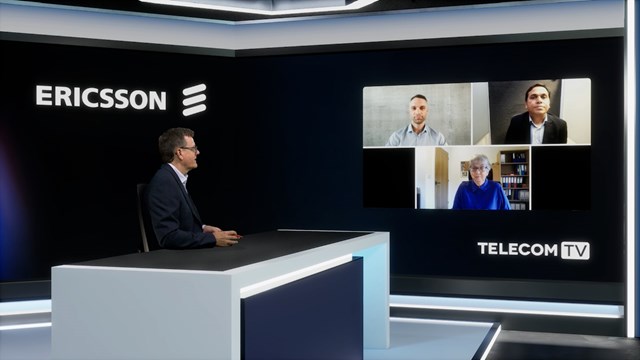
Experts from AT&T, Swisscom and Ericsson examine the critical role of the service management and orchestration (SMO) framework in secure RAN automation. They also discuss zero-trust architecture, multi-vendor security, emerging threats such as weaponised AI and post-quantum risks, O-RAN Alliance standards and balancing agent-driven, machine-speed operations with essential human oversight.
Featuring:
- Amy Zwarico, Expert, Cybersecurity, AT&T
- Dmitrii Krovnin, Security Product Manager, Ericsson
- Hans-Rudolf Steiger, System & Security Architect, Swisscom
- Scott Poretsky, Director of Security Policy and Standards, Ericsson
Recorded: October 2026