To embed our video on your website copy and paste the code below:
<iframe src="https://www.youtube.com/embed/-1Ze7BAlfUo?modestbranding=1&rel=0" width="970" height="546" frameborder="0" scrolling="auto" allowfullscreen></iframe>
Hello, you're watching TelecomTV. I'm Guy Daniels. And today we're looking at the critical architectural challenges and market opportunities surrounding the shift from cloud native to AI native RAN. And joining me now to share his views is Paul Miller, who's Chief Technology Officer for Wind River. Hello, Paul. Really good to see you again. Thanks for coming on the programme. Now we've spent years virtualising and cloudifying the RAN. What does it take to move from cloud native RAN to truly AI native RAN and what architectural challenges and changes are still missing?
Paul Miller, Wind River (00:52):
Boy, what a hot topic for today. The current technology we've seen come through the beginning of the year AI RAN get really, really hot. You probably saw Mobile World Congress a tremendous amount of activity on it. A lot of people are asking what exactly does this mean for the infrastructure that we've been building for years as Open RAN or vRAN? Our company has been involved in many major deployments of that technology. And the first thing I'd want to share with the audience is that moving from Cloud RAN or Open RAN to AI RAN is not a reset of the architecture. Similar to what we went through when we went from 4G to 5G and we moved to vRAN and eventually Open RAN, that was a pretty significant architectural shift. You moved from a bespoke appliance-based architecture provided by the players that we know in that market to a multi-vendor solution that was based on virtualisation and cloud native container technology.
(01:46):
That transformation caused us to move toward a cloud-based architecture based on Kubernetes with off-the-shelf servers at the far edge with a virtualisation stack such as the one our company provides from Wind River. And then the application layer was providing the telecom RAN functionality. That actually is retained as we move to AI RAN. You just add in the AI capabilities as applications on that infrastructure. Obviously for the inference-based applications, you may need accelerators like the types from NVIDIA and others that can enable you to have high performance inference-based applications running on those compute nodes. But fundamentally, the network architecture is still Open RAN and that's really important for people to understand, especially our telco customers, they're not going through a transformation here where they reset the whole universe again. We would not want to see that after so many years of effort putting into Open RAN. The other thing I'd say is that we're seeing not only the emergence of AI inference-based applications at the far edge where you're doing things like dynamic beamforming or other inference applications that can save power and energy, but also at the core of the network.
(02:54):
And we actually see this as one of the earliest adoption points where AI can be used operationally to help run such a complex and distributed architecture. So fundamentally, that's the first message. And the second, of course, is that AI itself is a bit of a different animal than running a conventional application. It involves the concepts of sense, think, act, and optimise. And the sense really implies that you're collecting data from the edge systems and allowing that to adjust your application and model and then driving change back to that system through an optimised layer that provides continuous lifecycle management and updates of those AI inference applications. So where data collection before was really driven by an operational need, now it's a true need to drive that AI application with a data source and many more things like this, but that's fundamentally what people should understand as we move from cloud native RAN to AI RAN.
Guy Daniels, TelecomTV (03:51):
Thanks very much, Paul. And you mentioned the inference applications running at the far edge and telcos often talk about edge AI for optimisation, but where do you see the first scalable revenue opportunities, particularly in the RAN domain?
Paul Miller, Wind River (04:06):
I think we're going to see what the RAN providers bring to the table for those applications that the service providers are most interested in. I think we're going to see some movement on the energy savings side of the world given that about 80% of the operational cost of a RAN is in running the antenna system. So if you have different time of day, day, week, beamforming mechanisms that can be used to optimise the power consumption of the RAN, that represents a potential incredible cost savings from an OpEx perspective to the service provider. So in this case, we'll see these things driven by financial considerations, right? What has the greatest benefit to the service provider and running their network? We may also, of course, see the emergence of new applications that can be used for monetisation. And we've been pursuing for many years now 5G not just being the next G, but being a path where B2B and commercial infrastructure can be used to monetise different applications above and beyond the regular consumer base that is connecting to the network.
(05:05):
So I think we'll see things like that happening as AI RAN comes into play.
Guy Daniels, TelecomTV (05:10):
Okay. Well, let's talk now about the deployment of AI models. And we know that RAN's one of the most latency sensitive environments in telecoms. So how close are we to deploying AI models that can meet the strict real-time SLAs at scale?
Paul Miller, Wind River (05:25):
It's interesting you asked that question. Wind River came from, geez, about seven, eight years now, relative unknown to one being the primary supplier of RAN virtualisation infrastructure. And the reason why that happened was Wind River's DNA in mission-critical real-time systems, doing high availability and high performance, low latency, these type of things are what we've done for over 45 years. And we brought that technology into the RAN and that made a pretty significant difference. And the reason for that is the RAN is really, as it became virtualised, a software defined radio. And that functionality requires real-time kernel performance AI and AI RAN and inference-based applications are no different. Of course, as we deploy AI models to the far edge, that real-time latency becomes a constraint for that application as well, just as it does for a vDU or software-defined radio function. And so that really means there's a burden on the infrastructure to support the characteristics that are necessary to support an AI application.
(06:24):
And we certainly think we do that better than anyone else, but we're really excited about meeting the SLAs that we have both for latency as well as uptime in excess of five and six nines in the network through that type of infrastructure.
Guy Daniels, TelecomTV (06:39):
And Paul, you spoke earlier about building on Open RAN for the development of AI RAN, but as Open RAN introduces more ecosystem players, how do you see platforms evolving to avoid fragmentation whilst also still enabling innovation, particularly for AI driven capabilities?
Paul Miller, Wind River (06:59):
I think what we're going to see is quite similar to what we went through with Open RAN itself. You've got the market moving from a single vendor source solution to a multi-vendor solution that is a distributed architecture and that involved vendors from the hardware layer, the infrastructure layer like ourselves providing the cloud technology and then the application layer providing the telecom applications. Each of those elements moves forward and tends to support AI in a different way. Obviously, our infrastructure layer starts to enable the hardware platforms and make that accessible to the applications and to support that in a high availability manner. We have a variety of partners in that space, whether we look at the platform vendors such as Dell and HPE, the silicon providers such as NVIDIA, AMD and Intel we've seen some evolution in the processor architectures that enable high performance supportive inference-based applications without even the need for a GPU.
(07:52):
And then of course the vendors that provide GPU technology enabling inference-based applications at a high performance level. So a mix of those processor vendors as well as accelerators will kind of enter the chat as it were and provide relevant technologies for the hardware platform. And then at the application layer, the partners that we typically deploy there, the software defined radio applications will now bring to bear AI based applications that control and manipulate that radio function. We talked about dynamic beamforming and power savings and that sort of thing. That's really the purview of that application layer. So each of the layers evolves in the multi-vendor ecosystem to support AI for AI RAN at that far edge. And then of course, as we mentioned at the core of the network from an operations perspective, we'll see changes there also.
Guy Daniels, TelecomTV (08:38):
Very interesting. And this is very exciting, Paul. This whole area opens up so many possibilities. Do you think that AI RAN is going to be primarily an operator driven transformation and progression, or could hyperscalers and other software players play a part in shaping the control point here?
Paul Miller, Wind River (08:57):
Yeah, I guess we're going to see some interesting things, right? One is that as we all know with 4G and LTE, it was a fully bespoke appliance-based architecture. In 5G now, which is an active deployment with many service providers, we have both an appliance-based architecture being deployed at some service providers and an Open RAN or virtual RAN architecture being deployed sometimes even at the same service provider. There's really a battle going on between what is the right way to deploy a modern RAN architecture. And it seems that Open RAN is kind of winning out and getting to scale as we move through the years here. The thing that's really interesting there is we're actually getting to the cusp, kind of the 2028 to 2030 timeframe. Well, we're going to start talking about 6G. And as we're talking about 6G, there's no choice, right? This is going to be a virtualised cloud-based architecture.
(09:45):
It will no longer be proprietary bare metal that we're running on. And what that really means is that the first fundamental rule here is you must move to a cloud native architecture. If you want to adopt AI RAN and you want the ability as a service provider to deploy these applications that provide benefit to you, whether that be energy savings or other functionality that we've talked about here today, you first must have a cloud native infrastructure. And so doing that in the 5G timeframe where you can kind of get your feet wet, train your staff on the different technology, obviously running Kubernetes and cloud technology is a bit different than the legacy architectures is really important. So that's one thing. Obviously you must move to the right infrastructure architecture in order to support moving to AI RAN both in the operations and at the far edge of the network.
(10:34):
To your question about hyperscalers, they've always tried to kind of enter this space and the way I'd characterise it is the vendors that are moving core to edge are having a harder time in the RAN than the vendors that are trying to move edge to core. And what do I mean by that? If you're starting as Wind River is inapt of a technology company that's involved in real-time edge systems, looking at a RAN architecture, it is a real-time system, right? It's pretty easy and conventional for us to think about solving those type of problems. As you look at us trying to move more towards a public cloud functionality, we would not provide that capability. It's not really in our core business. It's a similar but inverted picture coming from a public cloud provider trying to move to the far edge. They don't understand the economics of the real-time environment.
(11:21):
They can't get down to the low core count of overhead that's required. They have a difficult time achieving the right TCO for the service provider. So today we really don't have any deployments globally that are running from a public cloud provider at the far edge. Now, that may change as they continue to compete for that type of footprint, but largely right now what I see is the Open RAN stack provided by the vendors that we've been talking about on this show for many years continuing forward as an architecture and evolving to then support AI RAN as those functions start to enter the network.
Guy Daniels, TelecomTV (11:55):
Okay. Thanks, Paul. This has been a great discussion and I'd like to end it with a final question because Wind River with its cloud platform, its conductor and analytics tools, we know it's positioned as more than just infrastructure. So how do you see platforms like yours being able to leverage AI RAN and edge AI to differentiate in the market and also help your telco customers succeed?
Paul Miller, Wind River (12:18):
We talked earlier about sense, think, act, and optimise. That's really enabled by the platform elements that you described. The cloud platform itself is the Kubernetes architecture and deployed cast layer that's run as a geographically distributed cloud layer for RAN, right? That is Wind River Cloud Platform. Analytics in our portfolio represents that data collection entity, which to date has been used operationally to help run and perform day two operations in a RAN network, but as we move to AI RAN, we'll be the entity that's collecting data to help drive iteration of the AI models. And then the optimised piece or driving software updates out into the field and managing the deployed infrastructure and application is provided by Wind River Conductor. So that closed loop of collecting data, adjusting your AI model and redeploying it to the far edge is actually already supported in our applications. We do that sort of thing today.
(13:10):
And so we see that kind of evolving as a key portfolio solution to enable AI RAN. Then of course, the infrastructure evolves to support inference, the support of the accelerators and the different libraries and software elements that are used to actually run the AI applications, the inference applications typically that evolves on our cloud platform. And then on the analytics and conductor side, these evolve from an operation tools perspective where we add the Agentic AI implementations and automation that helps an operator run the environment leveraging AI. So we bring to the market both an inference-based cloud platform that's evolved to support AI as well as operational tools that are used to run the network supporting AI.
Guy Daniels, TelecomTV (13:51):
Great. Well, it's so encouraging to see this roadmap for the future evolution of the RAN, but we must leave it there. Paul, good talking with you as always and thanks so much for sharing your views with us today.
Paul Miller, Wind River (14:02):
Thanks, Guy.
Please note that video transcripts are provided for reference only – content may vary from the published video or contain inaccuracies.
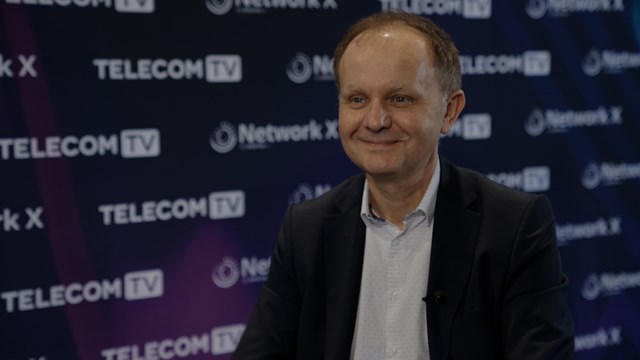
Paul Miller, CTO, Wind River
The transition from cloud-native to truly AI-native RAN requires significant architectural shifts to harness the full potential of AI at the edge. Paul Miller, CTO of Wind River, discusses the missing architectural pieces, the path to deploying real-time AI models that meet strict service-level agreements (SLAs), and where the first scalable revenue opportunities for edge AI lie in the RAN domain. He also addresses how platform providers, such as Wind River, are evolving their offerings to enable AI-driven capabilities within the Open RAN ecosystem while mitigating fragmentation.
Recorded May 2026
Email Newsletters
Sign up to receive TelecomTV's top news and videos, plus exclusive subscriber-only content direct to your inbox.