Nokia and NVIDIA collaboration accelerates AI-RAN deployment across global operators

By Guy Daniels
Apr 20, 2026
To embed our video on your website copy and paste the code below:
<iframe src="https://www.youtube.com/embed/QmzPdzU4H0s?modestbranding=1&rel=0" width="970" height="546" frameborder="0" scrolling="auto" allowfullscreen></iframe>
[01:00] Thank you, Guy. So if you look at the traditional RAN, it's all about connectivity. It's largely, if you look at it, fixed functions, hardware-centric, and designed around relatively predictable traffic patterns.
[01:12] But when it comes to AI-RAN, it is really a structural shift. It's software-defined, highly programmable, accelerated computing. And if you look at it from a design from outset to support both RAN workloads and AI workloads from the beginning. The key distinction here is whether it is AI-native or it's an AI-augmented. When I say AI-native, that means the compute, connectivity, control, all are co-designed, designed from the outset, designed from the outset to be added on top of the RAN. RAN itself becomes programmable compute platform. And this is the key difference. And this is essential for us to proceed into AI-native 6G network.
[02:01] Great. That's very clear. So there's a structural shift going on here. What are the benefits then of AI-RAN for a telco? Because there has to be a compelling reason for them to make the change.
[02:11] Of course, the key topics about AI-RAN are moving into three different buckets. If you look at the AI-for-RAN, AI-on-RAN, and AI-and-RAN. And AI-for-RAN, as the name implies, it's all about improving the efficiency of the network, improving the spectral efficiency.
[02:31] And how does it help with the GPU-accelerated computing? Yes, it helps in multiple different ways. Number one, if you look at the parallel computing capabilities of GPU, and GPUs are meant inherently for the parallel computing, and there are different algorithms what we can think of, beamforming, advanced beamforming, etc., which will have a lot of parallel computing possibilities which are helped by the GPUs. And second, we can also bring in machine learning model-based algorithms, channel estimations, multi-user MIMO pairing, and many more, carrier aggregation, and so on. So, these all feature sets, RAN functions, are helpful machine learning models, and these are inherently helped by the accelerated computing. And the third piece, it's about bringing new algorithms on top of the existing ones, like, for instance, RKHS. And this is a compute-intensive algorithm, and we can make use of GPUs, GPU-accelerated computing, for bringing such complex algorithms and getting the benefits for the RAN efficiency. And this is in the AI for RAN.
[03:48] And AI on RAN, it's about bringing the new use cases on top of RAN. For instance, we talk about physical AI, we talk about ISAC, integrated sensing and communications. These are some of the use cases where the compute capabilities of accelerated computing are used for these use cases and better suited for that.
[04:09] And the third bucket is AI and RAN, and this becomes AI architecture, AI RAN network becomes a multi-purpose cloud platform, multi-purpose platform where AI workloads and RAN workloads can coexist and work together in using the same infrastructure. It opens up a lot of new revenue opportunities for operators.
[04:31] So, as you say there, there's a lot of new revenue opportunities for operators. Can you go into some more detail now about the new business and monetisation models that AI RAN is creating?
[04:41] So, if you look back, so in case of 2G and 3G, a few decades ago, it started with voice, a little bit of data. Then when 4G came in, it's more about data consumption. And 5G, it became more video, video streaming applications. And now if you look at it, AI workload becomes a fourth workload of the telecom network. Networks are becoming the infrastructure for AI. And as you can imagine, AI workloads are highly sensitive to jitter, latency, and the worst case performance, the nature of the network. And at the same time, the traffic patterns are increasingly more dynamic and more uplink intensive. And all these enterprise customers expect the performance guarantees, the SLAs, automation, seamless cloud migrations, and all of these pieces.
[05:41] So, this AI RAN allows the operators to leverage their biggest asset. They have the distributed cell sites, distributed computing infrastructure, what they have today. And we call it as, we can call it as AI grid. And this will enable, with accelerated computing on distributed cell site and MSOs, switching centres, this enable the edge inferencing and token processing at the network edge. This really creates monetisation opportunities beyond connectivity, AI services, edge AI services, enterprise automation use cases, SLA-based enterprise offering, and many more. So, here, all of these cases, this AI RAN is going to be a catalyst for providing new opportunities for operators.
[06:32] So, this is a really interesting new use case here. So, can you give us some specific AI use cases that actually benefit from edge processing?
[06:39] Yeah, of course. I mean, if you look at the kind of AI traffic now, the scale of AI traffic is really enormous. It already justifies the edge processing now. I mean, if you look at the overall amount of AI interactions happening annual basis, it's more than trillion. And with all these leading platforms, they're generating tens of trillions of tokens per day. This significant share of generative AI usage is coming from already from the mobile.
[07:12] So, if you look at the different segments of AI use cases, generative AI or agentic AI, of course, edge processing helps to reduce the latency. But more importantly, this helps to offload the AI processing from centralised cloud data centres to the edge. And if you look at the physical AI, that is including the robotics, drones, and real-time machine control. So, edge processing is essential because it's extremely critical to less return, low latency, deterministic latency, and extremely reliable bidirectional communication. And all of these are enabled by edge inferencing either at the distributed cell site or at the MSO switching offices. So, it can always start from the switching office inferencing, which is closer to the user. Then if there is a need, of course, this platform, the beauty of this platform such that this will enable such inferencing capabilities already at distributed cell site, which can happen anytime in the future.
[08:16] Well, Aji, we know that AI developments move extremely fast. What's the latest progress on AI-RAN and what market momentum are you now seeing?
[08:26] Yeah, we are seeing a tremendous momentum with AI-RAN engagement with our customers, partners all across the world. When we launched the AI-RAN collaboration with NVIDIA back in October 2024. Since then, we have been working extremely closely with NVIDIA to really bring the new solutions. And if you see the events like MWC this year and the GTC in San Jose in March, they've demonstrated the real AI-RAN validation of this platform. And it's moving from the concept to execution. And we have the early customer trials, the ecosystem alignment is already happening. So this is really driving the evolution of 5G towards creating a foundation for AI-RAN.
[09:15] So the momentum across the global operators, again, it's again significant. We announced more than 10 new collaborations with operators around the world during MWC this year, including British Telecom, NTT DOCOMO in Japan, Elisa in Finland, Vodafone Group. This is all in addition to the real leading partners like the T-Mobile USA, SoftBank in Japan, and Ooredoo Hutchison in Indosat in Indonesia. So this leveraging the AI-RAN platform from NVIDIA and using our AnyRAN software built on top of it. And it's at the same time, we're also expanding the ecosystem partners because we strongly believe ecosystem is extremely crucial. And we are expanding the the likes of Quanta, Supermicro in the server infrastructure side, and also on the CaaS side with the Red Hat. So the momentum is great. We are now focused on the execution of AI-RAN, and we have clear plans in terms of bringing all these pieces together to our operators this year and next year in 2025.
[10:28] That's really good to hear. And I've got a final question for you. I'd love to know how the relationship is developing between Nokia and NVIDIA and how both companies are benefiting from working together.
[10:40] Yeah, so if you look at it, so we bring in two leading powerhouses. NVIDIA is an AI powerhouse and Nokia is a telecom powerhouse. So these two leading companies are coming together to change the AI native architecture for the telcos. So our collaboration with NVIDIA is advancing rapidly. As I already talked about, this is all about ecosystem creation. It's all about co-creation with our customers because we believe that it's not realised, AI-RAN is not realised by a single company. It's an ecosystem what is needed. So together with NVIDIA, we create an AI-RAN platform built on top of the Aerial compute platform and using our AnyRAN software. And we already successfully validated AnyRAN software on top of this platform. So this enables the faster innovation cycle. We can bring in the software features much faster than it was before. It is all based on a software driven architecture and it reduces the integration risk for our customers. And it creates a foundation for a broader ecosystem of developers and application providers and which they can use it to innovate further. So for operators, it means that they can stay ahead in this AI super cycle with the faster innovation cycles rather than just reacting to it.
[12:07] That's great to hear. We must leave it there though, Aji. Good talking with you as always. And thanks very much for sharing your expertise with us today. Thank you, Guy.
Please note that video transcripts are provided for reference only – content may vary from the published video or contain inaccuracies.
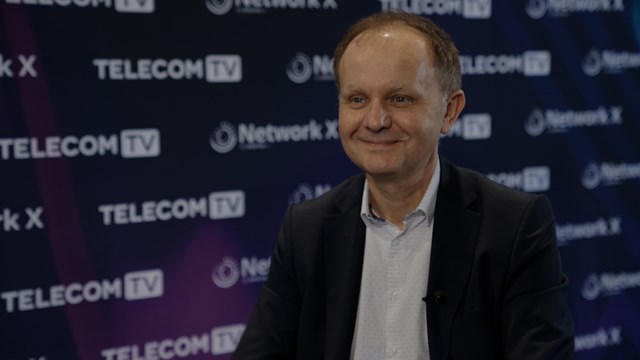
Aji Ed, VP, Head of AI RAN and Cloud RAN, Nokia
Nokia’s VP of AI-RAN and cloud RAN, Aji Ed, outlines the fundamental architectural differences between traditional RAN and AI-RAN, explaining how the shift to software-defined, GPU-accelerated computing creates new monetisation opportunities for operators. He discusses three categories of AI-RAN benefits: AI-for-RAN (improving network efficiency), AI-on-RAN (enabling new use cases like physical AI), and AI-and-RAN (creating multi-purpose cloud platforms). Ed also details Nokia’s collaboration with NVIDIA and partnerships with operators, including trials with BT, NTT Docomo, and T-Mobile US.
Recorded April 2026
Email Newsletters
Sign up to receive TelecomTV's top news and videos, plus exclusive subscriber-only content direct to your inbox.