To embed our video on your website copy and paste the code below:
<iframe src="https://www.youtube.com/embed/Lol2aqowpVE?modestbranding=1&rel=0" width="970" height="546" frameborder="0" scrolling="auto" allowfullscreen></iframe>
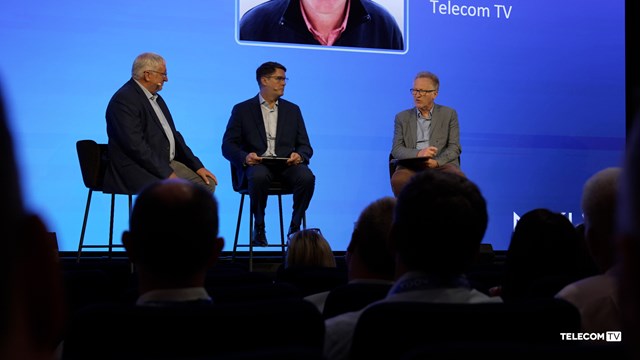
Hello, you're watching the future of RAN and our discussion on RAN architecture for the AI native 6G era. I'm Guy Daniels, and welcome to this year's RAN Summit. Now, there is every indication that 6G will be built around an AI native RAN infrastructure, the first native G for AI workloads. But what are the implications for operators? How can they prepare for this coming evolution? And what will it mean for their business strategies? Well, I'm delighted to say that joining me on the program to discuss the evolution of RAN architecture are Sami Komulainen, who is chief operating officer, EVP technology and operations at Finland-based operator Elisa and Warren Bayek, who is Vice President Intelligent Edge for Wind River. Hello, it's good to see both of you. Thanks so much for taking part today.This is such an important discussion to be having right now with 3GPP's RAN studies becoming clearer and a 6G standards timeline due in about just a couple of months time.
(01:37):
So first question I'd like to ask, and Warren, let me come to you first. What architectural changes are going to be required in RAN to support AI native networking and future planned 6G requirements?
Warren Bayek, Wind River (01:53):
Yeah, good question, guys. So the challenge here isn't just adding AI. It's doing it without compromising the deterministic behavior that we need for RAND deployments because in the end, let's be clear that the telco initiative will always be to provide RAN. The AI is a nice add-on that adds value, but their mission critical delivery is RAN. So being able to provide a deterministic solution that gives us AI and RAN together becomes an real architectural requirement. So RAN becomes part of this distributed AI system. It's not splitting DUCU in the way that we've been looking at it in the past. It's about sensing in the RAN, inferencing with edge AI, and then creating actionable control loops within the RAN. So having an architecture that builds all that together and doesn't bolt on AI as an add-on or bolt on GPUs as an add-on, that's the architectural requirement that we're staring down and that we have to deal with going forward.
(03:02):
So in order to do this, we have to consider that generic hardware that puts GPUs as part of the L1L2 evolution and part of these optimization loops, building that into the infrastructure and building the ability to automate the entire system from applications to workloads, to data, to inferencing, to infrastructure, those become the architectural requirements that are going to make this a successful transition to the next G.
Guy Daniels, TelecomTV (03:30):
Thanks so much, Warren. So obviously it needs to be more agile there as you were saying, and this whole GPU question is very interesting. Sami, let me come across to you. What do you see as an operator? Your challenge as you evolve the round to support AI native networking and moving towards 6G, what's going to be the important architectural changes that you foresee?
Sami Komulainen, Elisa (03:55):
Well, thanks for the good question. First of all, I see that it's changed from hardware to intelligence. And on the other hand, it's a kind of change from more stable traffic patterns to more kind of a dynamic ones, which of course kind of challenge our traditional way to thinking of the networks and the services. So it means in a way that more hardware heavy architecture will come, more software defined and AI orchestrated architecture. So that is the main shift. And behind that, how you could be prepared on that, you should think about that way that it's automated autonomous environment. So you can't handle it anymore manually. When you put your kind of thinking and thoughts to that kind of direction that you have to handle it autonomously, you have done the first step. The big thing behind this, of course, is that there is a change from the propriety black boxes to kind of open interfaces and distributed cloud compute where RAN not only serve the kind of radio signals and radio such, but simultaneously could kind of handle as well the AI inference traffic.
(05:22):
So kind of multiple roles when it comes to kind of a platforms, when it's kind of open and cloud-based, like I said. And when we think about the 106G, it's more or less sensing and computing grid if we compare to kind of a current one. That's the direction. And like I said, traffic pattern will change. It's more kind of a dynamic. It's not so easily predictable, so you have to have autonomousy place that you could handle it and respond to those changes. So those maybe are the building blocks when we think about the change when it comes to architecture and way to operate the network in the future.
Guy Daniels, TelecomTV (06:14):
Thanks very much, Sami. The sensing side of things certainly does seem to be more prevalent and getting a lot of traction at the moment. But you also mentioned inference there, which brings me very nicely to the next question I'd like to ask. So Sami, I'm going to stay with you for a moment. How will edge inference and distributed compute and tighter RAN core coordination, how will all these aspects change network design?
Sami Komulainen, Elisa (06:40):
Well, I would put it so that we will witnessing a data of distance here. So distributed compute moves so- called brains near the customer, near the places where we really need it. In a way, we don't complement any more optimal places to hardware. We complement that. Where is the place to use that? And that means that we have to bring it closer to the end user and those points where we use the computing power. And that's the kind of quite practical reality for us in the future. So what it means in practice, we actually, as we speak, has implemented with the Wind River environment where we have a local breakouts and distributed architecture. So that is the major shift then. And the kind of building blocks, how to make it happen is programability, orchestration, where we can move workloads between edge and cloud, and of course, open data layers that we can break the silos.
(07:56):
So if we put it in a short, we think that this tighter coordination turns to network in the programmable platform, allowing us to launch services much, much faster in minutes instead of the weeks or months. So faster time to market. That's the one kind of angle in the future stage of the networks.
Guy Daniels, TelecomTV (08:23):
Thanks very much, Sami. Warren, I'm going to come across to you. I know you've been closely involved with Elisa in some of this work, but Sam, you mentioned there the distance debt. I think that's a nice way of putting it. How do you see this impact of edge inference and distributed compute or changing network design?
Warren Bayek, Wind River (08:43):
Yeah. Yeah. Great points brought up by Sammy there. And we agree that what we're seeing is a move to treating the data where it needs to be treated. And as the AI part of the RAN network becomes more and more important, what we do with the data and where is the critical aspect, right? That the data that is going to be acted upon at the edge, it needs to be inferenced and used at the edge. So in some of these future use cases, and we have a few, hopefully we'll get into maybe talking about some of them here, we displayed a few at the Windover booth at MWC. You need, as I mentioned, this deterministic, very low latency applications, AI applications that can manage the data at the edge. So it never leaves the edge, right? So, and as Sammy said, the ability to orchestrate the workloads into the correct place in this distributed architecture becomes a very important part of building an AI centric RAN network so that the data that is collected, and there's a tremendous amount of data now coming in from all these systems that are hooking up to the RAN network.
(09:55):
It's not just cell phones anymore, right? A lot of devices are sending data through these networks. And to be able to tease out the data that matters to the AI applications at the edge and use that data locally with the inferencing applications, how to put the right applications in the right place and use the data locally, very important. Equally important is how to make sure the correct data gets passed up into the higher levels, into the higher parts of the architecture, into the core for more intense AI applications. So being able to do that in real time and in a way that we can quickly move the workloads to the right place and put the data to the right place, that's a really important part of what we're seeing and what we're with Elisa's help, what we're currently even implementing. And that will become more and more important as more of these non-human kind of devices get connected to the networks.
(10:51):
Because if you can't, essentially, if you can't inference the data directly and affect the RAN, you're really not creating value, right? And that's what we have to do with this next stage. The promise of 5G, frankly, was not better, faster, stronger internet service to my phone. It was advanced services that we could monetize. And I think we've largely missed in that place in a lot of cases. So I think as the next gen comes through and that we build these architectures and we build these inferencing capabilities at the edge, it will just open up more and more monetizable service capabilities at the edge.
Guy Daniels, TelecomTV (11:30):
Thanks very much, Warren. Well, let me come across to Sami and to pick up on what you were saying there, Sarmi.
Sami Komulainen, Elisa (11:36):
And if I build on that, what Warren has said is when the traffic is the driver that we should kind of move the brains or intelligence on the edge, that is a good driver because then it actually opens different kind of paths to monetize even more for the operator because then there is a reason why to build GPU and compute power to the edge. We can use that as well the other kind of needs, other computing what AI needs in the future. For example, we can think about, for example, distribute the data center that we could kind of use a bigger amount of the pay stations where we have the CPU power for other kind of computing needs. So that is the opportunity which opens through this kind of architectural change.
Guy Daniels, TelecomTV (12:35):
Thanks very much, Sami. And I'll come onto my next question, and I'll put this to you. As you were just saying there, this creates flexibility. We know that every operator is cost constrained. They're looking where to get maximum value for their investments. So which technology decisions that are made today will have the biggest impact on long-term RAN flexibility and cost?
Sami Komulainen, Elisa (12:59):
Well, I think that today's decision define our economics DNA in the longer run. So we move from the hardware assets, buying hardware assets to more kind of building innovation ecosystems, if I may. And there is a couple of strategic choices, but what we at least thinking is one is that how things software defined networks. So we believe that openness is the key when we may be choosing to choosing a future architecture or the propriety vertical stacks and other different kind of lock-ins. So software defined openness is the key in the network architecture. The second thing is that GPU based hardware, like I described, it opens possibilities when it comes to use the computing something else as well than only radio signals and radio mobile operations. Then the third one is what we see is the strategic partnership. So like our partnership with Google and Nokia, we believe that you can win 6G alone.
(14:19):
So you win through the kind of vertical class ecosystems and inside of those, you can monetize more when it comes to those gaps what we are building.
Guy Daniels, TelecomTV (14:33):
Great. Three clear points there. Thanks very much. And Warren, I'll ask the same question to you because earlier you just spoke there creating value. So which are the technology decisions being made now that will have the biggest impact as we look at long-term flexibility?
Warren Bayek, Wind River (14:50):
Yeah. I'm actually going to talk about a few things that I think we need to avoid and traps I think that are there that are often looked at as places that we maybe spend money that we need to rethink how to save money there. So one thing that I think would be a major problem with this architectural shift is that while at one level AI applications and AI itself is really a new workload, it really needs to be treated differently in this new architecture and this new networking model. It really isn't just part of, it's not just a new workload, it's really an integral part of the architecture. So building AI as part of the architecture, and Sam, you touched on this with, it's not just bolt on GPUs, right? It's building the GPU capabilities right into the network capabilities, very important part of saving costs as we build these autonomous networks.
(15:44):
Another part of this that's really important, and it was mentioned earlier again by Sammy, that the ability to life cycle automate this entire process becomes a really critical part of saving money. Looking forward, the biggest cost really isn't going to be the hardware, in my opinion. It's going to be the operational complexities. We've already introduced a tremendous amount of complexity with the Open RAN initiative that we, as we have disaggregated the network, one of the expected, frankly, offshoots of that is operational complexity. So automation becomes more important. Well, if you feather AI into this entire architecture, it becomes even more important, right? So how we automate this and how we create lifecycle automation and the capability of managing all of these systems, not just the AI, not just the RAN, not just the infrastructure, but all of it together from one place becomes a really important cost saver in the way we build these autonomous networks.
(16:48):
And then another is, as I think I touched on this earlier, the isolation of RAN and other workloads, not having a clear strategy in how you build your architectures and your networks going into this new network architecture, if we don't have a clear strategy to keep the networks isolated and the workloads isolated, we're going to have performance instabilities, SLA violations, incoherent behavior, and that has something to be avoided. So really, as we abstract this infrastructure, and I agree, it's not a hardware question anymore. It's building a software centric system. The ability to run the workloads together and isolate them, the ability to move them around without redesigning anything, having deterministic control at every level, being able to lifecycle manage these, all of these are the things that are going to save the most money, I think, as we move forward into the fully autonomous AI centric RAN architecture.
Guy Daniels, TelecomTV (17:46):
Great. Thanks very much, Warren. Sammy, let's come back to you and some additional thoughts on this whole question about the decisions that we make today that have biggest impact going forward.
Sami Komulainen, Elisa (17:59):
Yeah, I can more agree with Warren. So isn't about the CBS hardware today? It's about autonomous operations. I really want to underline autonomous operations. If your network can tune and heal itself using AI, your operational cost will become unsustainable. So where the focus is the autonomous environment, autonomous architecture, and that's the path of the future.
Guy Daniels, TelecomTV (18:29):
Great. Nice and clear. Good message. Thanks very much. And Warren, you spoke there about pitfalls and areas to avoid. So when operators start looking at their RAN roadmaps, how should they plan them now to avoid making these mistakes, to avoid expensive redesigns when we eventually know about 6G capabilities and when we start to see these emerge 2030 and right the way through to 2040?
Warren Bayek, Wind River (18:56):
So I'll start with, we keep saying it over and over again, saying I mentioned again, design for distributed consistency in automation from the start that has to be kind of, in my opinion, that's job one, two, three, and four if I had to prioritize them. The adding of new services can't cause any kind of automation hiccup or a redesign of any type because that will just continue to slow down the ability to roll out the services and it frankly will break the cost model. So building for the ability to automate everything from day one is very important. Treating the AI and Rent again as one platform and not adding AI as a separate entity later is a critical piece, kind of obvious, but goes, we really need to think that through that it's not just about the hardware and as Sammy said, not just about finding and deploying the cheapest hardware, but about designing hardware that can become part of the autonomous network and that can play a part in this network healing and network operations and automation platform from the beginning.
(20:11):
Building modular, but composable architectures, again, another sort of obvious one, but one that we often overlook as we try to put things together as quickly and easily as possible and inexpensively as possible. Again, I think the critical message here is that original hardware cost is not the key driver to the cost or the eventual success of the next G and the ability to roll out services. It's all of these other operational ideas that are going to be the most important part that make it viable for operators to go to this NextG, that make it possible for them to actually start delivering the services and creating new use cases that we frankly don't understand them all yet. We're going to be building this open architecture, this open platform and these open capabilities. And just like the cell phone revolution so many years ago, they built a platform.
(21:11):
How it ended up getting used was not at all like the original authors intended it or frankly could even have envisioned it would be used. I think the same lesson is going to be learned in the next gen and the next revolution of RAN.
(21:31):
The operators have built this incredible real estate empire, this edge empire where they have access to the entire world at the far edge. And as the physical AI domain becomes more and more important, the world is going to change in a dramatic way. So we need to build an architecture that lets the operators play a big part in monetizing that. How exactly that's going to play out, I can't tell you, I don't think anyone in this entire audience can, but if we build the right architectures now for this distributed economy and the ability to automate and bring in new services without redesigning networks, that's going to give the operators a real leg up in making sure that they're a huge part of the revenue potential of what everyone's talking about in this AI, physical AI space.
Guy Daniels, TelecomTV (22:20):
Great. Thanks very much for that, Warren. And Sami, this is the big problem, isn't it? When we talk about 6G, we haven't even completed the study work yet, let alone started actually defining specifications, let alone put it into commercial use and seeing what use cases emerge. So how on earth does an operator plan their RAN roadmap now to avoid having any potential expensive redesigns later when these unknown capabilities finally come to market?
Sami Komulainen, Elisa (22:50):
Well, yeah, excellent question. I would put it so that we should treat 60 as a destination. We should think that and treat it as a culmination of the AI native foundation, what we are building as we speak. So in a way, more evolution, not so much revolution, if I may. So if you start to wait for 60 standards and to modernize after that, you will be late. So we should think about so that we built already now that kind of environment, what we need in 6G and that is the culmination like I said. And it's good to start to take so- called no recruit moves. So first of all, 5C standalone and cloud native environment start to build your understanding and build the architecture to the right direction.
(23:57):
What we will need and what do you need when you build the kind of readiness for the AI network and operations, it's a digital win. So you have to kind of build a digital win and digital master where you really can handle and understand what happens in a network. You can use the agents there, which are kind of all the time planning what is the next change, what do you have to do in network, and then the other agents will test it and then we intend to direct it to the network and provisioning in it. Maybe the third one is kind of a converged platform. So it's good to stop buying single purpose hardware and think about it that kind of multipurposes like what we discussed earlier today. So those are the main building blocks and the kind of no record moves when we kind of build an evolution toward six Sierra.
Guy Daniels, TelecomTV (24:55):
Thanks, Sarmi. And Warren, did you have additional insights you want to add here?
Warren Bayek, Wind River (25:00):
Yeah, I'll just piggyback and maybe corroborate some points that I agree completely that a lot of what we're doing in the current virtualized 5G space fits in very well. And if we wait, I think that's the lesson we've learned in all of these Gs is if we wait until we're finished getting all our ducks in order for the next G to really start thinking and making sure that our plans and architectures fit it, we will be late. And AI makes that even more serious, right? The ability to stay on top of this obviates that we start today. In the virtualized 5G space, much of what you need to do, all the things we've talked about here and all of the things that the eventual next G will require, a lot of that is possible, certainly from an architectural sense in the virtualized 5G space. So as we look at moving more and more away from the dedicated hardware and more into the virtualized space, a lot of the requirements of 6G can be worked out today and that we can start thinking about using them today.
(26:16):
And as Sammy said, the digital twin idea is obviously very important because all of these things need to be tested and verified before they get rolled out into the real networks. But much of the capabilities required will exist if we built these virtualized 5G environments today. So a lot of what we will need to be doing to get ready for 6G, we can start basically working our way through some of the pain points right now. So I think it's very important that we not wait for 6G, not wait for, I don't know how many years it's going to be till it rolls out commercially, but clearly we have to be a canary in the coal mine, if you will, testing some of the ideas in the virtual 5G space. I think a lot of the capabilities are already there. A lot of the things happening in the AI RAN space kind of prove that out.
(27:07):
So I look forward to this, us as an industry embracing this right now and so that when 6G rolls out, we're completely ready to just dive in.
Guy Daniels, TelecomTV (27:18):
Yeah. As you say, there's a lot we can do today. Thanks for that. We've been asking our telecom TV viewers for questions on this topic. And I think we've just about got time to add one question in here that we've received from one of our viewers. Let me put this to you. And Warren, I'm hoping I can put this question to you. The question asks, will future run architectures primarily enable device to device communication over traditional human to device communication? So might we be seeing a primary shift in focus here?
Warren Bayek, Wind River (27:54):
Yeah, great question. Terminator aside, I think that is the way we're going, right? And primarily might be a little strong, but maybe not. We have the ability to bring in all of these edge devices, and there are billions and billions of edge devices now that are becoming more and more connected. And as the world becomes hyper connected, bringing those devices into this RAN ecosystem, I think is the real power play of the NextG. And yes, so I do think the architectures and the networks are going to be more focused on handling the device to device implementations. In fact, some of the things we just talked about, this super low latent edge AI and physical AI, frankly, humans are just too slow to play a part in that, right? The human interaction is not the critical piece to that. And I want to mention one quick use case.
(29:02):
I think I know some of your folks from Telecom TV saw this at our MWC booth. One of the use cases, and I see this as expanding in a lot of places, is bringing cars into the ecosystem so that devices today have lots of sensors and cars being, I think, one of the main and first devices that will be brought into the RAN networks, frankly, because there's just so many of them, they already have a lot of compute, they generate a ton of data, and there's a tremendous possibility of creating new services in that space. So in the safety space, for instance, sensors on cars can only see what they can see. So they're limited by, I can't see around corners, I can't see through buildings, I can't see places that any of the car sensors can't see, and I can't see what's coming up if it's too far in front of me.
(29:56):
So for the ability for one car To send its data, the data that it senses and sees through the cellular network to other cars in the area, that just has a tremendous amount of use case possibilities. And we displayed one at MWC where a potential pedestrian accident was averted by one car sending information to another autonomous driving car. And that car treating the incoming data as if it were just another sensor in a local sensor in the car. And the braking system could affect a nice smooth braking scenario, avoiding either A, a very hard braking situation where more wear and tear happens on the car brakes, or B, an accident where the car just frankly hit the person. So being able to share information between devices, I do think will be a critical part of the new data and the new network infrastructure that we build.
(30:54):
And again, the use cases, I can't possibly imagine all of them. I certainly can come up with a lot, but I think if we create this infrastructure of device to device communication and open the architecture, as Sammy said, being open is the critical piece to what's going to be required to create the most value here. As we create open infrastructure and open architectures and open systems and open APIs and let the development community in, I think the ability of the larger development world to create value by creating device to device communication is pretty close to unlimited. So yeah, I'm very excited about the advent and the improvement of device to device communication. Obviously the amount of data provided is one of the things we really have to think about because these devices do create a tremendous amount of data and we don't want to overwhelm the networks.
(31:51):
Again, we have to provide RAN as the root use case. But yeah, I do think device to device communication is going to be a critical part and a hugely growing part of the next gen networks.
Guy Daniels, TelecomTV (32:04):
So yes, but maybe not primarily then. Device to device communications. Thanks, Warren. Sarmi, did you want to jump in on the question of whether our RAN's going to be more focused on device to device?
Sami Komulainen, Elisa (32:15):
Well, thank you. Yes. So maybe I would take that kind of angle that when we think about the end user customer point of view, we should build as smooth and seamless service and experience as we can. And yes, we need a different ways to do it. So D2D device to device is the one in the same time we know that devices needs more and more edge computing to supporting all the calculation, what they have to do. So I would say that we need all of these that we could build the kind of a seamless and smooth future for the customers when they use different kind of digital services and this catches what we have in our hands and on the table. So everything, what we can do, and this is the one part of it.
Guy Daniels, TelecomTV (33:12):
Great. Sami, thank you very much indeed. We've got to leave it there for now. You've both shared some fascinated insights and developments with us there. So really appreciate you both talking to us on the program today. If you're watching this live as part of the future of RAND Summit, then please stay with us. Don't go away. We have plenty more still to come. And do please take part in our viewer poll. If you have not yet done so, we run these for every event and your responses do help us to shape our ongoing coverage. You'll find the full agenda and speaker details on the Telecom TV website. If you're watching this on demand, then you'll find links to the other panels and programs from the future of RAN on the summit homepage on Telecom TV. For now though, thank you for watching and goodbye.
Please note that video transcripts are provided for reference only – content may vary from the published video or contain inaccuracies.
Panel Discussion
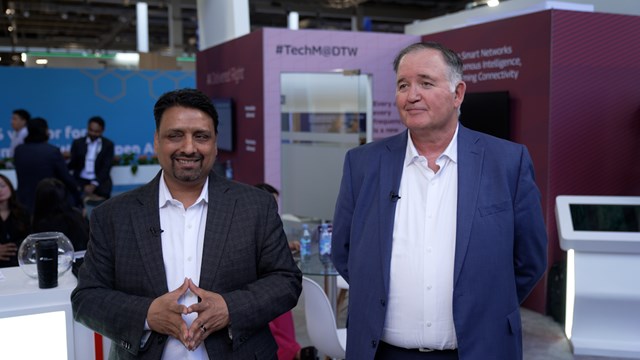
Sami Komulainen of Elisa and Warren Bayek of Wind River discuss the concept of 6G shifting from hardware-reliant ‘black boxes’ to autonomous, cloud-based architectures. By leveraging 5G foundations, edge inference, and digital twins, this intelligence-driven approach reduces latency and operational complexity. This panel discussion looks at how innovations aim to bring compute power closer to users, enabling rapid service launches and new monetisation through device-to-device communication.
Recorded March 2026
Participants

Sami Komulainen
Chief Operating Officer, Executive Vice President, Technology and Operations, Elisa

Warren Bayek
VP, Intelligent Edge, Wind River