The ‘AI super cycle’ and the rise of AI connectivity

By Ray Le Maistre
Jul 22, 2026
To embed our video on your website copy and paste the code below:
<iframe src="https://www.youtube.com/embed/SR8VFHZDtnA?modestbranding=1&rel=0" width="970" height="546" frameborder="0" scrolling="auto" allowfullscreen></iframe>
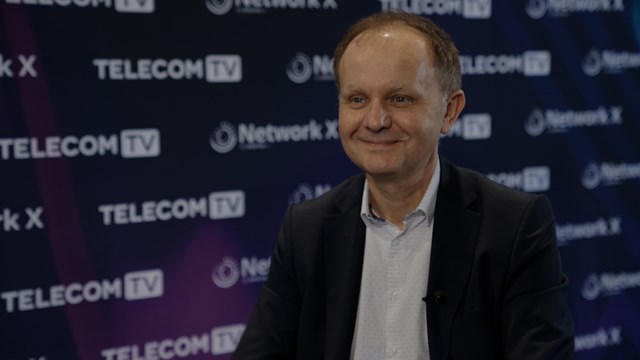
So we are in London at Nokia Tech Day 2026. I'm here with John Harrington. He is senior VP of Nokia Europe. John, great to see you. Thanks very much for joining us today. A lot going on in this industry, but can you tell us about the main market trends that are impacting Nokia's business and strategy in Europe right now?
John Harrington, Nokia (00:28):
Yes, absolutely. Wonderful to be here. It's a very busy event with lots of customers and partners and high tech companies. And we describe this as the AI super cycle. And I think Nokia's at the centre of this AI connectivity because we're moving from what's been traditionally connecting people, connecting packets, video. Now we're moving into connecting AI and the token economy. And so we see a real set of diversification and convergence where we have service providers, hyperscalers, wholesale companies, and the rise of these new neo-clouds that are offering GPU as a service. And what does all of this AI need? It needs connectivity. And that's what Nokia does, be it at the optical layer, the IP layer, and a high degree of automation. So very exciting time, a lot to learn and a lot to talk about when it comes to AI connectivity.
Ray Le Maistre, TelecomTV (01:24):
Now you mentioned the variety of companies that are here right now and that are impacting the sector with their own strategies. How are those various players, the hyperscalers, the neoclouds, the telcos, how are they thinking about AI and how is that translating into infrastructure investment?
John Harrington, Nokia (01:46):
Yeah. Well, I think an obvious thing for AI is their own operations, their own service assurance, customer experience, operations, network management. So I think the first thing they're doing is they're thinking about how do I become more efficient in my own delivery of services? I think the second thing is they're starting to think about what type of services and applications could be used by enterprises. We're moving from large training, large language models now into enterprise and inferencing where we actually put the AI closer to the enterprise and what type of services and what type of architecture do they need for that? So that's something that's evolving very quickly for us.
Ray Le Maistre, TelecomTV (02:28):
And what would you say are the key technology innovations that are shaping what will be possible in the AI era?
John Harrington, Nokia (02:37):
Some of the key things are automation. How do we get to this TM Forum Level 4? How do we move from just automation into agentic AI? And Nokia is doing a lot of that. We announced some things at DTW. I think second tenet is security. Is it safe or is it quantum safe? We're working on quantum safe networking. That's the second part of it. And then the third thing for us I would say is optics. After the acquisition of Infinera last year, we are finding ourselves where the optical layer and the IP layer is starting to collapse and we have this multi-layered architecture. How do you best get this connectivity at the lowest cost per bit and the lowest power per bit? And that's what we're doing with our optical networking portfolio.
Ray Le Maistre, TelecomTV (03:21):
Okay. Now obviously Nokia has a lot of strings to its bow, but how are you helping customers to become AI native leaders?
John Harrington, Nokia (03:32):
We're working with them, first of all, to better understand the technology. What can we do in their automation in their operations? How can they reduce their operational cost? The second thing we're doing is we're helping them with the architecture. There's a lot of new words, a lot of new nomenclature in AI. How do we help them move from just data centre interconnect to scale across, to actually the AI grid? How is the best way to modernise their architecture? I think people have got the coverage in 5G, the coverage in fibre, but how now do we modernise and then ultimately monetise this AI? How do they extract value from the network? That's the key thing.
Ray Le Maistre, TelecomTV (04:13):
Yeah. Well, that's a key part of the equation right there, isn't it? Helping companies to build their businesses and to thrive and grow in this era so you can as well. So John, great to join you today.
John Harrington, Nokia (04:27):
My pleasure.
Ray Le Maistre, TelecomTV (04:28):
Thanks very much for joining us in your busy schedule and a great event you have here.
John Harrington, Nokia (04:31):
Great. Nice to meet you. Thank you.
Please note that video transcripts are provided for reference only – content may vary from the published video or contain inaccuracies.
John Harrington, SVP Nokia Europe, Global Sales & Customer Operations, Nokia
At Nokia Tech Day 2026, Nokia SVP John Harrington discusses what he describes as the ‘AI super cycle’ and the shift from connecting people and packets to connecting AI and the token economy. He explains how operators, hyperscalers and neoclouds are evolving from operational AI to edge inference, highlights key drivers, such as agentic AI automation, quantum-safe security and optical integration via the Infinera acquisition, and explains how Nokia is helping customers monetise the transition to an AI grid.
Recorded July 2026
Email Newsletters
Sign up to receive TelecomTV's top news and videos, plus exclusive subscriber-only content direct to your inbox.