To embed our video on your website copy and paste the code below:
<iframe src="https://www.youtube.com/embed/noFG4ysP1mQ?modestbranding=1&rel=0" width="970" height="546" frameborder="0" scrolling="auto" allowfullscreen></iframe>
Guy Daniels, TelecomTV (00:13):
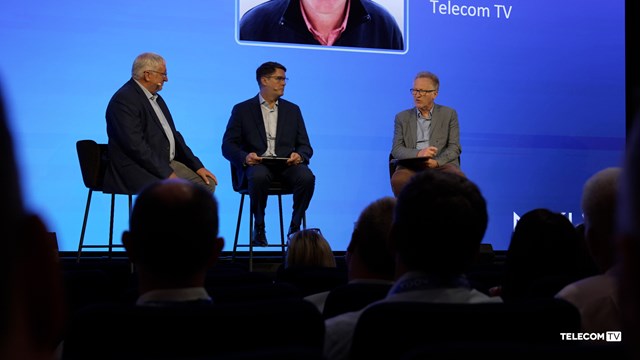
Right. We will start our next session then and we'll invite our next speakers who are Ignacio and Kieren Ignacio is there. Great to come to the stage. I can't see if Kieren's around here right in front of me. There we go. Come to the stage as well. Join me on the stage while we do this. And Ignacio, you're going to start this off, aren't you? So Ignacio is going to start us off. We're on AI for running efficiency and planning. If you just join me on here. And Ignacio Gonzalez is business development director, EMEA Telco for Red Hat. So Ignacio is all yours.
Ignacio Gonzalez, Red Hat (00:45):
Good morning. Good morning everyone here and there. I want to try to explain what we are seeing now from Red Hat when we talk about radio access network and how AI can help. I'm going to do a very quick journey. The first time is yes, I think everybody agrees on that. The final goal, the autonomous network, which is a little bit of automation, AI, analytics, and the final outcome should be understand, detect and act in order to be self-managed. We can see right now someone talk about some outages that we have lately that we are still not there and the final benefit, very clear, we are going to be able to use the technology even more. That's very important because it's going to help telcos to reduce CapEx. We have heard several telcos telling us that the current CapEx investment revenue ratio that they have today, they're expecting to drop between two, three points.
(01:47):
And also from an operational point of view, we are expecting a significant reduction because it will be easier to operate and maintain networks. Very important for us, at least here in Europe. Still the environmental side of this, we're going to consume less energy and we'll be probably more greener energy. Okay, the problem of data, and I met talk about this today, we have data silos everywhere. We have been talking about data and how we can clean the data and how can extract information from data for many, many years, more than 10 years ago, who remember when we talked that data, data science were needed for telco, we still there. And also the amount of data produced is humongous. What is the expectation is visible data, accessible data, hacked mentioned clean data. I can go one step farther, which is drinkable AI data. This is what we need.
(02:49):
Okay, now let's talk about what we are going to discuss, which is the day operations and we focus on day zero, day one and day two, day zero planning and design. Nothing new in terms of using AI and prediction, microwave tools, radio planning tools. They haven't been using prediction tools for tego. I've been using prediction tool for many times, many, many years. I remember a long time ago when I was a part of Vodafone 10 years ago, smart CapEx, smart planning. So the idea is as many layers of information of data you can put the final outcome is going to be better. So what we try to do now, thanks to GNI is moving to a framework where we are going to have even more layers of information to help us to help telcos to make this decision to obtain these optimized network design and the final benefit, probably lower CapEx and better performance.
(03:46):
Three examples of what telcos are doing. Three use cases that I put there, and I'm not going to go through them, but they are very, very, very typical. One in terms of prediction, the modeling for capacity, how they're using the spectrum, how can they get the most of this spectrum. Now we're talking about millimeter wave in these urban scenarios, how they're going to be able to deploy small cells, indoor outdoor for thanks to ai. And the final one, this is from Telefonica, how they can use a satellite image to detect where in rural sites they can improve coverage day one, build and deployment in this area I belief has been the area where telcos didn't, didn't do much in the past, but right now the potential is very, very, very great. Why? The idea here is having this dynamic network configuration, AHEC talk about this and digital twins is going to help a lot.
(04:43):
Think about if you can, thanks to this digital twin test, different configuration for different sites for the same site in different moments. If you have typical sites that they are very, very busy during certain type of the day, et cetera, et cetera. So at the end of the day, the idea is to get a fast and a highly efficient deployment. Again, three use cases that are not going to go through them in detail. Detail twin is, I can take many, many examples. I took this from Vodafone in order to do the and test the 5G slicing before is implemented. Second one is very, very common in many operators how they can enhance the mobile networks in terms of energy efficiency from the design to the deployment. And the final one is coming from SoftBank. We are working with them here in terms of how they were able to improve the Lene throughput around 30% thanks to purely it's purely ai.
(05:41):
It's purely about a language model thanks to this transformer model day two, I'm not going to talk much about day two because in terms of what we're going to cover here, it's not the main topic but Ased mentioned and that's what the industry is putting, it's putting a lot about gene AI gen. And the final goal here is thanks to this having these dynamic network operations and optimization and again we ended up talking about network autonomous operations, three of use cases. Again, I'm not going to go through this because just for the sake of time and now the question is, okay, you're red hat, what are you talking about here? Right? So at the end of the day, what do we want to achieve is this, we need to have a telco cloud native solution. That's the reason why of the cloud. When we're going to have these clean data, the data lakes that we're going to need to have over the same platform, over the same framework, together with a different AI application that we want to implement the language models, how we are going to at tune these language models, how we are going to get and optimize the inference scene and the outcome of this language model.
(06:49):
All of these done over the same platform. This is the value that we play here. So once we have this ideal scenario, you put on top this day one day zero, day one, day two operations and the question and what we are seeing from the operators is, okay, who is going to operate the network? So from day zero we still believe that it's going to be a man in the loop. That's what we are seeing and what telcos are telling us, and it's going to be this user AI dynamic collaboration, very similar for day one. It's going to be a man in the loop in many of the activities. At the end of the day, someone has to decide. And when we talk about day two, I do believe that is a different way. So it's going to be more about gentech, it's going to be more about autonomous agents doing this dirty job daily off cleaning alarms, check that the network is performing as suspected, et cetera, et cetera, et cetera.
(07:47):
Very important. This is retro freedom. So whatever it is, the outcome of the day two should be the input for the day zero and all the way around. At the end of the day, if we can intertwine the data that is coming and the performance that is coming from these three different stages, we will improve the overall, the operational efficiency of the network and people are working on there. And just my final slide, I'm taking the, this is from Vodafone. It was published in November, 2024. Google and Vodafone working together, pretty similar of probably what Deutche Telecom is doing that they published and is good and they try to explain in the daily activities of these network engineers how they can get the most of gene ai, ai, et cetera, et cetera. In terms of improving and adding value. They found so many fantastic use cases.
(08:51):
That guy, maybe we need to invite Vodafone to explain what is the status of this, right? Because after one year, based on our experience of what we are seeing, it is very easy to start talking about use cases, experimenting with these use cases. But the implementation and execution of those cases is when problems are showing up, how you can fetch data, what type of data you can use, how are you able to tune the language model, how you can make sure that the outcome of this language model is correct, how you're going to make sure that you can optimize this inference model. These are the real problems and this is where moving from this experimental to real use cases, we are seeing a big hurdle rear in the middle. Wow, I'm finished. So I hope I was very simple. I try to touch upon three different concepts now I'm happy to take any questions.
Guy Daniels, TelecomTV (09:49):
Fantastic. And you come and sit down as to Kieren there. That's fantastic. Well done. Thank you very much indeed. I'm sure we've got some questions there. Let's put these microphones to use. Any questions from this side of the room? Do I see all these hands coming up? I have so many hands, I can't pick one. Oh, I've got mic ready. You've got a mic ready? Come on. Tony's here with the microphone. Go make Tony work. It hasn't got to go very far. Go.
Yvon Rouault, Keysight Technologies (10:13):
Hello. Thank you. Good morning. Yvon Rouault from Keysight. I like could you elaborate a bit more on the digital twin contribution? Because you mentioned it can be used for testing, right? Could it be used as well? And I believe so for training the AI based applications with definitely clean data right from the beginning instead of using rotator and clean them and in particular to produce some very rare evidence or anomalies or things like this, right? Instead of counting on the chance to get them from the network.
Ignacio Gonzalez, Red Hat (10:50):
Of course, I think the training of the network because at the end of the day is what you're trying to do there. Detailed twins is going to be the punching guy that you're going to get to see, okay, how much can I express the network to achieve in the streaming circumstances? What is going to look like the final outcome and the final performance of the error. So yes, the answer is from my point of view, Kieren, and I don't know if you want to add anything, but yes, of course. Yeah.
Kieren Ashlee, Dell Technologies (11:13):
Yeah. No, I think it's the what if scenarios on digital twins that is really good. So you can create your replica, you've created your twin and then you do all of those different scenarios, those what ifs and that then allows you to play around so you don't have to make mistakes into the network.
Guy Daniels, TelecomTV (11:34):
Great, thanks so much and great question. Thank you very much indeed. Tony, you got a new question? Yes.
Virtyt Koshi, Mavenir (11:38):
Yeah. Okay, Virtyt Koshi from Mavenir, bit more for Ignacio but also for Kieren. You mentioned the telco cloud native conditions. To what extent do you think what you presented will bring benefits from the AI if the networks are not cloud native or partially cloud native?
Ignacio Gonzalez, Red Hat (12:03):
Good question. I truly believe that the more cloud native, the network and the applications and the workloads they are, the higher it's going to be. The gain to get the most of ai of course doesn't mean that if you don't have cloud native you cannot use and you cannot get any benefit for app. I don't think so yes, you can get certain benefit but it's going to be very limited. Think again about all the data. The more or the wider is the overall network in terms of elements that you can fetch the information, you can fetch data and you can analyze altogether to understand what is going to be the next one. Plus this disaggregation that we have that you can isolate it network functions one by one in order to even decide which actions you want to apply there I think is going to be a real deal to me. I think the best way to get the most of ai, it has to be based on a cloud native network for sure. But that's my view here.
Guy Daniels, TelecomTV (13:07):
Great.
(13:08):
Kieren, do you want to come in on this one? That's fine. Ignacio, thanks much indeed. Tony's got his hand spotted another question and we've just got time for one more question I think. So let's get this one in.
Luis Santos, Celfocus (13:16):
Yes, good morning Luis Santos from Celfocus. Can you elaborate a little bit in which capacity did the transformers enabled 30% extra throughput in the network?
Ignacio Gonzalez, Red Hat (13:30):
We have one minute here, but at the end with these guys, by the way, it is done in real time. So they are applying ai, generat AI and AI capabilities in real time, which when we talk about radio it's some fantastic, what I try to do is checking free in a nutshell in order to eliminate them and try to predict what is coming next in order to have this apline throughput. There are a couple of blocks there in terms of explaining what soman achieve. So I really invited to go there just here. We don't have much, much time to explain, but at the end of the day it's about how you can get rid off of interference that you have there to improve the overall throughput. Great. I
Guy Daniels, TelecomTV (14:11):
Thank you much indeed. Great question. Thank you. We're going to move on to our next presentation now. So round of applause for Ignacio. Thank you. Kieren, would you like to take the lectern for your presentation and Kieren Ashlee is EMEA RAN systems architect, telecom systems business at Dell Technologies. Kieren, all yours.
Kieren Ashlee, Dell Technologies (14:32):
Thank you very much. I think it was really interesting to see what Ahmed presented this morning. There's some tangible results coming through and also from the study that telco tv I'm hoping in my presentation to give you some numbers as well. So we've got some examples. But let me start off. So I work in the telco systems business in Dell. We're a dedicated unit within Dell to put together hardware and software dedicated for telco business. So just to start off, of course from a Dell perspective, we see four pillars for ai. The opportunity across the whole of our industry. There's new monetization, of course there's improved customer experience, improved business and operational productivity. But the one we are talking about today is how do we optimize network performance. So I hope to show you some examples and how that can be achieved. So the ask I was asked to do for this was to look at RAN efficiency and prediction and how does that apply to Spectrum and how do you manage the cellular network?
(15:51):
So there's just looking at this and there are four main topics we can talk about. So the first one is AI and machine learning. Of course for optimization you can create traffic forecasting models. That can be time series analysis, deep learning on graph based techniques, anomaly detection, how we reinforce the learning from those anomalies that we see in the network. And there's also on the other presentations with the Rick and with the SMO, you can use neural schedulers in the X apps and in the R apps so you can get the best scheduling. So there's companies like Cohere that are able to do channel estimation and to get better allocation in there. I think that's the difference between traditional RAN where you've obviously the network equipment providers have done their own modeling and how they can do their resource allocation. I think the exciting bit with open RAN and cloud RAN is how we can use the X apps and the R apps to get better channel estimation as an example.
(17:07):
So that's the first. The second technique we can use as we just spoke about is digital twins. And I do believe it's that what if analysis that's important for that. So you can create your replicas, you can play around, you can do your holistic scenario testing and that'll help you to then be confident in how you can then deploy that into the network. The third type of model is to use gen AI of course and use LLM and how we've trained those. So of course Dell has created a Dell AI factory with Nvidia, so we can use that as a platform. And then we've trained that with the natural language interface retrieved and we also use RAG as well to create insights from the network data.
(18:04):
The fourth one is of course predictive maintenance and also energy optimization models. So we can apply that to KPIs, logs and alarms and we can predict when the failures are going to happen. I mean fantastic. I mean at the moment the operations team spend a lot of time correcting problems in the network. If we're able to now predict those accurately, we can save a lot of time into the network. So some examples for you of what we've seen from telecom operators. So in Dell we don't create the workloads or the software for ai. We've worked with partners. So one of our partners we work with is a company called Opanga and they do predictive analysis and they optimize cell traffic. And it's all about looking at the congestion in the network. How do you improve the energy use? So here's one example. So in Mexico, the operator there had a challenge.
(19:22):
He's got 10,000 sites handling about 320 gigabits per second of traffic and it goes across their six data centers. So they knew they needed to expand their capacity. So they've used AI with the panga to look at those and to look at the sites that needed to be upgraded but in an intelligent way. So once they applied their AI modeling and their prediction to that traffic, the result was from that an 18% fewer sites were upgraded. And that also interestingly enough improved their busy hour user throughput as well by over 20%. So that's one example. Another example, we work with a company called AIRA Technologies with their VAC platform. It's a gen AI platform that's been used and it allows you to experiment, put the code into the network based on their modeling. And the result from that was, and I think it ties up with what you showed, is that they're able to show a time reduction of about 20% in the network anomaly detection on the network they had.
(20:45):
And the last is Kinetica. So we work with them again, a gen AI based platform and they do network troubleshooting and they also do geospatial analysis of the network. So there's a US tier one and they had a interactive agent across for network troubleshooting and they were able to show a four times faster troubleshooting with a greater than 90% accuracy. Another US tier one uses geospatial analysis here. It took four hours with CPU based technology to look at the data sets and process that with a GPU based solution, it took less than 10 minutes, so a 95% reduction.
(21:39):
Now these are two US tier ones. Later on this evening there's a networking dinner and drinks. If you come and buy me a drink, who knows, I might be able to tell you a little bit more about those US tier ones. So what are the enablers for this? So Dell has put an AI factory together with Nvidia. So it's an AI model training influencing predictive simulation across our hardware of course. And the Dell I factory takes data as an input, as good quality data. Of course we have our underlying infrastructure, we have an open ecosystem to work with partners who are developing their AI platform software. We create a level of services on top of that to deliver, to help enable and to push the data through. And then you've obviously got to have your use cases as well.
(22:43):
And finally, our products also enable ai. We've worked very closely with Nvidia. We have in our edge servers our XR 8,000 and please we've got one on our booth outside the ballroom. It has L four GPUs in there if you need to use that processing at the edge of the network if you've got low latency. And we've also got in the core network with our data center servers, the R seven 60, L 40 GPUs. So they're there, they're ready to be built to roll out into the network. And it's really where you use those GPUs at the edge of the network where you need the low latency type applications. If you don't need low latency, obviously you built that into the data centers and that is it. Thank you
Guy Daniels, TelecomTV (23:43):
Ki thank you very much indeed. Come and sit down. Thanks very much Kieren. Let's go to our audience and see if there's any questions for Kieren. There's one in the front now who's got the microphone? I am looking around. Here comes Alex with our second microphone. Very good. Powered up and ready to go. Just about the second table down.
Ron Insler, RAD DATA Communication (24:06):
Hi, I'm Ron from RAD Data Communication. You spoke about digital twin and when we are emulating the network, some of the devices are hardware based and I assume that the digital twin is a software based virtual. So is there any problem actually it'll not give the same performance. So how you overcome this?
Kieren Ashlee, Dell Technologies (24:29):
Well, I guess so one answer is if they're using the same chip set, you can get similar performance to that. Or secondly, we have an open telecom ecosystem lab so the hardware could be used and simulated in that environment. So I think if you've got the same underlying hardware platform and the chip set on there, you can use that to get the right performance for your digital twin.
Ron Insler, RAD DATA Communication (25:04):
Okay,
Guy Daniels, TelecomTV (25:05):
Thanks Kieren. Any more questions for Kiren or Ignacio while he's here as well? Any more questions for anybody? Any more questions for anybody? And just a reminder while we're here to our online audience, there is a question box on the website if you want to send us some questions at the break. I'm going to have a look at the questions that we've had so far and pop those into the conversation. So if you're not here in person, you can still send us some questions. Alex there's a question at the front here.
Francis Haysom, Appledore Research (25:32):
You mentioned earlier about siloed data being a key issue. I think in my 30 years in telco, siloed data has always been a problem. Could you sort of dig a little bit deeper about how you are changing the issue of siloed data and bringing it together?
Ignacio Gonzalez, Red Hat (25:50):
The idea at the end of the day is not only that is isolated, we try, one of the things that we try to do when we try to build this common platform is able to fetch this information, this data in let's say in the most real time point of view. So sometimes you need to have the information you need to fetch for that and it take forever. So if the use case that you want to implement there is based on real time capabilities is not going to happen. So what we are trying to do is thanks to having these common platform and the way that you can extract information and fetch information and data from that platform is the way that we're going to be able to reduce data silos. It's going to be possible to have non silos in the network, probably not. The idea is to reduce that whatever is needed.
Guy Daniels, TelecomTV (26:40):
Great. Thanks Ignacio. Thanks for that. I think we may be running out of time now. We've got a break coming up. I do want to pick up on, you said earlier that maybe a Vodafone should come and present. Well look, listen, there's an open invite to every single operator out there to come and talk to us and we expect next year's event to have a lot more operators talking and telling us what they've been doing these past 12 months. Spoilers there, right? I think we should take our coffee break. We have a break coming up. We've got snacks, teas, and coffees outside the ballroom there outside the doors to my left. And whilst you're there and whilst you're chatting with our presenters out there and asking them more questions due, take time to visit our exhibitors and all those pods, the pod people would love to see you. So first of all, let's have a round of applause for Ignacio and Kieren. Thank you.
Right. We will start our next session then and we'll invite our next speakers who are Ignacio and Kieren Ignacio is there. Great to come to the stage. I can't see if Kieren's around here right in front of me. There we go. Come to the stage as well. Join me on the stage while we do this. And Ignacio, you're going to start this off, aren't you? So Ignacio is going to start us off. We're on AI for running efficiency and planning. If you just join me on here. And Ignacio Gonzalez is business development director, EMEA Telco for Red Hat. So Ignacio is all yours.
Ignacio Gonzalez, Red Hat (00:45):
Good morning. Good morning everyone here and there. I want to try to explain what we are seeing now from Red Hat when we talk about radio access network and how AI can help. I'm going to do a very quick journey. The first time is yes, I think everybody agrees on that. The final goal, the autonomous network, which is a little bit of automation, AI, analytics, and the final outcome should be understand, detect and act in order to be self-managed. We can see right now someone talk about some outages that we have lately that we are still not there and the final benefit, very clear, we are going to be able to use the technology even more. That's very important because it's going to help telcos to reduce CapEx. We have heard several telcos telling us that the current CapEx investment revenue ratio that they have today, they're expecting to drop between two, three points.
(01:47):
And also from an operational point of view, we are expecting a significant reduction because it will be easier to operate and maintain networks. Very important for us, at least here in Europe. Still the environmental side of this, we're going to consume less energy and we'll be probably more greener energy. Okay, the problem of data, and I met talk about this today, we have data silos everywhere. We have been talking about data and how we can clean the data and how can extract information from data for many, many years, more than 10 years ago, who remember when we talked that data, data science were needed for telco, we still there. And also the amount of data produced is humongous. What is the expectation is visible data, accessible data, hacked mentioned clean data. I can go one step farther, which is drinkable AI data. This is what we need.
(02:49):
Okay, now let's talk about what we are going to discuss, which is the day operations and we focus on day zero, day one and day two, day zero planning and design. Nothing new in terms of using AI and prediction, microwave tools, radio planning tools. They haven't been using prediction tools for tego. I've been using prediction tool for many times, many, many years. I remember a long time ago when I was a part of Vodafone 10 years ago, smart CapEx, smart planning. So the idea is as many layers of information of data you can put the final outcome is going to be better. So what we try to do now, thanks to GNI is moving to a framework where we are going to have even more layers of information to help us to help telcos to make this decision to obtain these optimized network design and the final benefit, probably lower CapEx and better performance.
(03:46):
Three examples of what telcos are doing. Three use cases that I put there, and I'm not going to go through them, but they are very, very, very typical. One in terms of prediction, the modeling for capacity, how they're using the spectrum, how can they get the most of this spectrum. Now we're talking about millimeter wave in these urban scenarios, how they're going to be able to deploy small cells, indoor outdoor for thanks to ai. And the final one, this is from Telefonica, how they can use a satellite image to detect where in rural sites they can improve coverage day one, build and deployment in this area I belief has been the area where telcos didn't, didn't do much in the past, but right now the potential is very, very, very great. Why? The idea here is having this dynamic network configuration, AHEC talk about this and digital twins is going to help a lot.
(04:43):
Think about if you can, thanks to this digital twin test, different configuration for different sites for the same site in different moments. If you have typical sites that they are very, very busy during certain type of the day, et cetera, et cetera. So at the end of the day, the idea is to get a fast and a highly efficient deployment. Again, three use cases that are not going to go through them in detail. Detail twin is, I can take many, many examples. I took this from Vodafone in order to do the and test the 5G slicing before is implemented. Second one is very, very common in many operators how they can enhance the mobile networks in terms of energy efficiency from the design to the deployment. And the final one is coming from SoftBank. We are working with them here in terms of how they were able to improve the Lene throughput around 30% thanks to purely it's purely ai.
(05:41):
It's purely about a language model thanks to this transformer model day two, I'm not going to talk much about day two because in terms of what we're going to cover here, it's not the main topic but Ased mentioned and that's what the industry is putting, it's putting a lot about gene AI gen. And the final goal here is thanks to this having these dynamic network operations and optimization and again we ended up talking about network autonomous operations, three of use cases. Again, I'm not going to go through this because just for the sake of time and now the question is, okay, you're red hat, what are you talking about here? Right? So at the end of the day, what do we want to achieve is this, we need to have a telco cloud native solution. That's the reason why of the cloud. When we're going to have these clean data, the data lakes that we're going to need to have over the same platform, over the same framework, together with a different AI application that we want to implement the language models, how we are going to at tune these language models, how we are going to get and optimize the inference scene and the outcome of this language model.
(06:49):
All of these done over the same platform. This is the value that we play here. So once we have this ideal scenario, you put on top this day one day zero, day one, day two operations and the question and what we are seeing from the operators is, okay, who is going to operate the network? So from day zero we still believe that it's going to be a man in the loop. That's what we are seeing and what telcos are telling us, and it's going to be this user AI dynamic collaboration, very similar for day one. It's going to be a man in the loop in many of the activities. At the end of the day, someone has to decide. And when we talk about day two, I do believe that is a different way. So it's going to be more about gentech, it's going to be more about autonomous agents doing this dirty job daily off cleaning alarms, check that the network is performing as suspected, et cetera, et cetera, et cetera.
(07:47):
Very important. This is retro freedom. So whatever it is, the outcome of the day two should be the input for the day zero and all the way around. At the end of the day, if we can intertwine the data that is coming and the performance that is coming from these three different stages, we will improve the overall, the operational efficiency of the network and people are working on there. And just my final slide, I'm taking the, this is from Vodafone. It was published in November, 2024. Google and Vodafone working together, pretty similar of probably what Deutche Telecom is doing that they published and is good and they try to explain in the daily activities of these network engineers how they can get the most of gene ai, ai, et cetera, et cetera. In terms of improving and adding value. They found so many fantastic use cases.
(08:51):
That guy, maybe we need to invite Vodafone to explain what is the status of this, right? Because after one year, based on our experience of what we are seeing, it is very easy to start talking about use cases, experimenting with these use cases. But the implementation and execution of those cases is when problems are showing up, how you can fetch data, what type of data you can use, how are you able to tune the language model, how you can make sure that the outcome of this language model is correct, how you're going to make sure that you can optimize this inference model. These are the real problems and this is where moving from this experimental to real use cases, we are seeing a big hurdle rear in the middle. Wow, I'm finished. So I hope I was very simple. I try to touch upon three different concepts now I'm happy to take any questions.
Guy Daniels, TelecomTV (09:49):
Fantastic. And you come and sit down as to Kieren there. That's fantastic. Well done. Thank you very much indeed. I'm sure we've got some questions there. Let's put these microphones to use. Any questions from this side of the room? Do I see all these hands coming up? I have so many hands, I can't pick one. Oh, I've got mic ready. You've got a mic ready? Come on. Tony's here with the microphone. Go make Tony work. It hasn't got to go very far. Go.
Yvon Rouault, Keysight Technologies (10:13):
Hello. Thank you. Good morning. Yvon Rouault from Keysight. I like could you elaborate a bit more on the digital twin contribution? Because you mentioned it can be used for testing, right? Could it be used as well? And I believe so for training the AI based applications with definitely clean data right from the beginning instead of using rotator and clean them and in particular to produce some very rare evidence or anomalies or things like this, right? Instead of counting on the chance to get them from the network.
Ignacio Gonzalez, Red Hat (10:50):
Of course, I think the training of the network because at the end of the day is what you're trying to do there. Detailed twins is going to be the punching guy that you're going to get to see, okay, how much can I express the network to achieve in the streaming circumstances? What is going to look like the final outcome and the final performance of the error. So yes, the answer is from my point of view, Kieren, and I don't know if you want to add anything, but yes, of course. Yeah.
Kieren Ashlee, Dell Technologies (11:13):
Yeah. No, I think it's the what if scenarios on digital twins that is really good. So you can create your replica, you've created your twin and then you do all of those different scenarios, those what ifs and that then allows you to play around so you don't have to make mistakes into the network.
Guy Daniels, TelecomTV (11:34):
Great, thanks so much and great question. Thank you very much indeed. Tony, you got a new question? Yes.
Virtyt Koshi, Mavenir (11:38):
Yeah. Okay, Virtyt Koshi from Mavenir, bit more for Ignacio but also for Kieren. You mentioned the telco cloud native conditions. To what extent do you think what you presented will bring benefits from the AI if the networks are not cloud native or partially cloud native?
Ignacio Gonzalez, Red Hat (12:03):
Good question. I truly believe that the more cloud native, the network and the applications and the workloads they are, the higher it's going to be. The gain to get the most of ai of course doesn't mean that if you don't have cloud native you cannot use and you cannot get any benefit for app. I don't think so yes, you can get certain benefit but it's going to be very limited. Think again about all the data. The more or the wider is the overall network in terms of elements that you can fetch the information, you can fetch data and you can analyze altogether to understand what is going to be the next one. Plus this disaggregation that we have that you can isolate it network functions one by one in order to even decide which actions you want to apply there I think is going to be a real deal to me. I think the best way to get the most of ai, it has to be based on a cloud native network for sure. But that's my view here.
Guy Daniels, TelecomTV (13:07):
Great.
(13:08):
Kieren, do you want to come in on this one? That's fine. Ignacio, thanks much indeed. Tony's got his hand spotted another question and we've just got time for one more question I think. So let's get this one in.
Luis Santos, Celfocus (13:16):
Yes, good morning Luis Santos from Celfocus. Can you elaborate a little bit in which capacity did the transformers enabled 30% extra throughput in the network?
Ignacio Gonzalez, Red Hat (13:30):
We have one minute here, but at the end with these guys, by the way, it is done in real time. So they are applying ai, generat AI and AI capabilities in real time, which when we talk about radio it's some fantastic, what I try to do is checking free in a nutshell in order to eliminate them and try to predict what is coming next in order to have this apline throughput. There are a couple of blocks there in terms of explaining what soman achieve. So I really invited to go there just here. We don't have much, much time to explain, but at the end of the day it's about how you can get rid off of interference that you have there to improve the overall throughput. Great. I
Guy Daniels, TelecomTV (14:11):
Thank you much indeed. Great question. Thank you. We're going to move on to our next presentation now. So round of applause for Ignacio. Thank you. Kieren, would you like to take the lectern for your presentation and Kieren Ashlee is EMEA RAN systems architect, telecom systems business at Dell Technologies. Kieren, all yours.
Kieren Ashlee, Dell Technologies (14:32):
Thank you very much. I think it was really interesting to see what Ahmed presented this morning. There's some tangible results coming through and also from the study that telco tv I'm hoping in my presentation to give you some numbers as well. So we've got some examples. But let me start off. So I work in the telco systems business in Dell. We're a dedicated unit within Dell to put together hardware and software dedicated for telco business. So just to start off, of course from a Dell perspective, we see four pillars for ai. The opportunity across the whole of our industry. There's new monetization, of course there's improved customer experience, improved business and operational productivity. But the one we are talking about today is how do we optimize network performance. So I hope to show you some examples and how that can be achieved. So the ask I was asked to do for this was to look at RAN efficiency and prediction and how does that apply to Spectrum and how do you manage the cellular network?
(15:51):
So there's just looking at this and there are four main topics we can talk about. So the first one is AI and machine learning. Of course for optimization you can create traffic forecasting models. That can be time series analysis, deep learning on graph based techniques, anomaly detection, how we reinforce the learning from those anomalies that we see in the network. And there's also on the other presentations with the Rick and with the SMO, you can use neural schedulers in the X apps and in the R apps so you can get the best scheduling. So there's companies like Cohere that are able to do channel estimation and to get better allocation in there. I think that's the difference between traditional RAN where you've obviously the network equipment providers have done their own modeling and how they can do their resource allocation. I think the exciting bit with open RAN and cloud RAN is how we can use the X apps and the R apps to get better channel estimation as an example.
(17:07):
So that's the first. The second technique we can use as we just spoke about is digital twins. And I do believe it's that what if analysis that's important for that. So you can create your replicas, you can play around, you can do your holistic scenario testing and that'll help you to then be confident in how you can then deploy that into the network. The third type of model is to use gen AI of course and use LLM and how we've trained those. So of course Dell has created a Dell AI factory with Nvidia, so we can use that as a platform. And then we've trained that with the natural language interface retrieved and we also use RAG as well to create insights from the network data.
(18:04):
The fourth one is of course predictive maintenance and also energy optimization models. So we can apply that to KPIs, logs and alarms and we can predict when the failures are going to happen. I mean fantastic. I mean at the moment the operations team spend a lot of time correcting problems in the network. If we're able to now predict those accurately, we can save a lot of time into the network. So some examples for you of what we've seen from telecom operators. So in Dell we don't create the workloads or the software for ai. We've worked with partners. So one of our partners we work with is a company called Opanga and they do predictive analysis and they optimize cell traffic. And it's all about looking at the congestion in the network. How do you improve the energy use? So here's one example. So in Mexico, the operator there had a challenge.
(19:22):
He's got 10,000 sites handling about 320 gigabits per second of traffic and it goes across their six data centers. So they knew they needed to expand their capacity. So they've used AI with the panga to look at those and to look at the sites that needed to be upgraded but in an intelligent way. So once they applied their AI modeling and their prediction to that traffic, the result was from that an 18% fewer sites were upgraded. And that also interestingly enough improved their busy hour user throughput as well by over 20%. So that's one example. Another example, we work with a company called AIRA Technologies with their VAC platform. It's a gen AI platform that's been used and it allows you to experiment, put the code into the network based on their modeling. And the result from that was, and I think it ties up with what you showed, is that they're able to show a time reduction of about 20% in the network anomaly detection on the network they had.
(20:45):
And the last is Kinetica. So we work with them again, a gen AI based platform and they do network troubleshooting and they also do geospatial analysis of the network. So there's a US tier one and they had a interactive agent across for network troubleshooting and they were able to show a four times faster troubleshooting with a greater than 90% accuracy. Another US tier one uses geospatial analysis here. It took four hours with CPU based technology to look at the data sets and process that with a GPU based solution, it took less than 10 minutes, so a 95% reduction.
(21:39):
Now these are two US tier ones. Later on this evening there's a networking dinner and drinks. If you come and buy me a drink, who knows, I might be able to tell you a little bit more about those US tier ones. So what are the enablers for this? So Dell has put an AI factory together with Nvidia. So it's an AI model training influencing predictive simulation across our hardware of course. And the Dell I factory takes data as an input, as good quality data. Of course we have our underlying infrastructure, we have an open ecosystem to work with partners who are developing their AI platform software. We create a level of services on top of that to deliver, to help enable and to push the data through. And then you've obviously got to have your use cases as well.
(22:43):
And finally, our products also enable ai. We've worked very closely with Nvidia. We have in our edge servers our XR 8,000 and please we've got one on our booth outside the ballroom. It has L four GPUs in there if you need to use that processing at the edge of the network if you've got low latency. And we've also got in the core network with our data center servers, the R seven 60, L 40 GPUs. So they're there, they're ready to be built to roll out into the network. And it's really where you use those GPUs at the edge of the network where you need the low latency type applications. If you don't need low latency, obviously you built that into the data centers and that is it. Thank you
Guy Daniels, TelecomTV (23:43):
Ki thank you very much indeed. Come and sit down. Thanks very much Kieren. Let's go to our audience and see if there's any questions for Kieren. There's one in the front now who's got the microphone? I am looking around. Here comes Alex with our second microphone. Very good. Powered up and ready to go. Just about the second table down.
Ron Insler, RAD DATA Communication (24:06):
Hi, I'm Ron from RAD Data Communication. You spoke about digital twin and when we are emulating the network, some of the devices are hardware based and I assume that the digital twin is a software based virtual. So is there any problem actually it'll not give the same performance. So how you overcome this?
Kieren Ashlee, Dell Technologies (24:29):
Well, I guess so one answer is if they're using the same chip set, you can get similar performance to that. Or secondly, we have an open telecom ecosystem lab so the hardware could be used and simulated in that environment. So I think if you've got the same underlying hardware platform and the chip set on there, you can use that to get the right performance for your digital twin.
Ron Insler, RAD DATA Communication (25:04):
Okay,
Guy Daniels, TelecomTV (25:05):
Thanks Kieren. Any more questions for Kiren or Ignacio while he's here as well? Any more questions for anybody? Any more questions for anybody? And just a reminder while we're here to our online audience, there is a question box on the website if you want to send us some questions at the break. I'm going to have a look at the questions that we've had so far and pop those into the conversation. So if you're not here in person, you can still send us some questions. Alex there's a question at the front here.
Francis Haysom, Appledore Research (25:32):
You mentioned earlier about siloed data being a key issue. I think in my 30 years in telco, siloed data has always been a problem. Could you sort of dig a little bit deeper about how you are changing the issue of siloed data and bringing it together?
Ignacio Gonzalez, Red Hat (25:50):
The idea at the end of the day is not only that is isolated, we try, one of the things that we try to do when we try to build this common platform is able to fetch this information, this data in let's say in the most real time point of view. So sometimes you need to have the information you need to fetch for that and it take forever. So if the use case that you want to implement there is based on real time capabilities is not going to happen. So what we are trying to do is thanks to having these common platform and the way that you can extract information and fetch information and data from that platform is the way that we're going to be able to reduce data silos. It's going to be possible to have non silos in the network, probably not. The idea is to reduce that whatever is needed.
Guy Daniels, TelecomTV (26:40):
Great. Thanks Ignacio. Thanks for that. I think we may be running out of time now. We've got a break coming up. I do want to pick up on, you said earlier that maybe a Vodafone should come and present. Well look, listen, there's an open invite to every single operator out there to come and talk to us and we expect next year's event to have a lot more operators talking and telling us what they've been doing these past 12 months. Spoilers there, right? I think we should take our coffee break. We have a break coming up. We've got snacks, teas, and coffees outside the ballroom there outside the doors to my left. And whilst you're there and whilst you're chatting with our presenters out there and asking them more questions due, take time to visit our exhibitors and all those pods, the pod people would love to see you. So first of all, let's have a round of applause for Ignacio and Kieren. Thank you.
Please note that video transcripts are provided for reference only – content may vary from the published video or contain inaccuracies.
AI for RAN efficiency and planning
Ignacio Gonzalez of Red Hat and Kieren Ashlee of Dell Technologies discuss the role AI can play in creating autonomous networks, reducing operational expenses and enhancing environmental sustainability. They delve into the challenges of data silos, the importance of cloud-native solutions, and the potential of digital twins and generative AI in optimising network operations.
First Broadcast Live October 2025
Participants

Ignacio Gonzalez
Business Development Media/Telco EMEA, Red Hat

Kieren Ashlee
EMEA RAN Systems Architect, Telecom Systems Business, Dell Technologies