To embed our video on your website copy and paste the code below:
<iframe src="https://www.youtube.com/embed/obeaghSKtBA?modestbranding=1&rel=0" width="970" height="546" frameborder="0" scrolling="auto" allowfullscreen></iframe>
Let me tell you what we're going to be talking about next. Emerging trends and innovations is the title of our next session and we have three speakers coming up to join us and then we'll start a panel discussion right after that and that will be the close of the forum for this year. Welcome back also to our online viewers. Thank you very much for continuing to watch the live stream. Don't forget that poll results of the poll. We'll be coming up right at the end. So why don't we start by welcoming to the stage our next guest, we've got Prashant, we've got Emma, and we've got Ben. So please coming up to the stage and we'll start our first session. Round of applause, Prashant Agarwal is the vRAN business development manager for Intel. So Prashant, I will leave it to you to start your presentation. Over to you.
Prashant Agarwal, Intel Corporation (01:05):
Hi, good morning everyone. It's great to see such a good turnout on day two of conference. If you are here for insight or just for connections or just for coffee, I'm glad you decided to each day. I'm Prashant Agarwal, business development manager for Telco from Intel and I'm excited to be part of this session. Let's see, before we get into the details, let's spend some time to see how the AI workloads are evolving as the AI moving forward. So different tasks are emerging and it's making it more likely to choose your hardware wisely. You can also see it as a timeline. We started long time back like 15/20 years back with the machine learning. Then we move to deep learning and now you can see the new generative ai, which is like a next format of the deep learning itself. And now you can see CPU is good and it's perfect for earlier models like machine learning and up to some extent deep learning. Also maybe not that perfect for the large models like chat GPT for generative AI, but again, all the models are not same, they have different requirements.
(02:32):
So by learning all these different models, we can finally decide what hardware can be matched to which AI workload. In summary, that's the main thing. How can we make sure that we use the correct hardware for the correct AI workload? When we talk about the ai, GPUs are like a default choice. Everybody talks about the GPUs for AI workloads and they're great. They're great for some workload, but not for all AI workloads are not same and that's why they don't need the same hardware requirements. For example. Let's spend some time to look about this. So we have here in the blue sides we have Intel Xeon CPUs and on the green one you can see the GPU sites. So let's start from the CPU sites. They're great for running like a classic machine learning model like inre tuning and training. They're also good for deep learning inferences where you have less than 20 billion parameters and also for tuning and tuning and learning.
(03:48):
Also, regarding deep learning training, less than 10 billion parameters and up to 500GB training data, they work really well. And also for reg also, especially if you are dealing with the private data, they are perfect. And now let's think about the next one about the GPUs. They are built for the heavy workload as we all know. For example, if you have deep learning inferences, more than 20 billion parameters and let's say less than a hundred millisecond latency requirements, they're perfect. Similarly about the training, if a model is like more than 10 billion parameters more than let's say 1TB data, gps are perfect for that and for reg also, if you are dealing with the public models, they are perfect there also. So in summary, the point here is not all AI workloads are same, so you need to really understand what workloads you have and what's the perfect hardware to run on that.
(04:50):
So that's the key to match the right AI workloads with the right hardware. And there is another message, there is a message for network operators also here, see most of you, you already have a big network infrastructure, a lot of servers running on CPUs and they are perfect to run most of your AI workloads. We know that yes, you can see the GPUs are required for the high AI workloads, but for telco side, I mean telco workloads and the RAN workloads, I think most of the time you will find CPUs are more than enough so you don't really need to wait for any additional hardware. You can start deploying these AI workloads, especially in telco side on your existing hardware that will just speed up all your process. You can learn many things and you are ready for experiments and then you're ready for scaling when the new workloads come.
(05:56):
Let me move to the next one. So as we see that AI is evolving very fast from classic machine learning and then we see the genetic AI is coming, so it's evolving very fast and now we all know that's like LLMs deployed in data centers. GPUs are great for them. There's very loud language models deployed in data centers, but the main changes, main demand is coming on the edge, edge and devices, but the models are much smaller and the requirements for processing power is less smaller. The key things for the edge and devices are power efficiency and the cost and that's where we Intel CPU with our accelerator SOC that shines there is built to deliver the performance but same time check the power efficiency and the cost and that's the perfect for the agent devices. Now you can see in this picture starting from the left side, you have the data centers again on the data center I mentioned the LLMs are being developed there and they are the critical part of network automation.
(07:13):
And now you see in the middle part, which is like a core network and ran infrastructure and there we see this generative and agenting AI are being implemented to provide the high spectral efficiencies and energy efficiencies. But then you move towards the right side. That's where we call the edge network infrastructure and devices. As you can see, this is where with now we have a 5G and 6G, we are getting an era of super connectivity and with the high computing power what it's doing, it's allowing the AI to come out from the data centers in the real physical world to enable the mobility application like robotics, autonomous systems and intelligent edge devices. And that's the trend we are seeing. So the end as we move ahead, we think AI is just not, it's like a transformation and I will again say there's the opportunity for the network operators is now just right now you don't need to wait for anything by using the existing hardware which you already have. And by matching the AI workloads with the correct hardware, you can start unlocking the value of ai, whether it's to improve your customer experience or for network optimization or for operational efficiency. I will say AI is here now to deliver. Thank you very much for having me here and I'm looking forward for the great conversation.
Guy Daniels, TelecomTV (08:50):
Thanks Prashant. Take a seat please. Thank you very much indeed. Right? Great, thank you for that. We must have a question from our audience in the room here for Prashant. Tony, do you see any signs? I see Tony at the back. Tony has a microphone and he's willing to use it. Who would like to relieve Tony of the microphone whilst you're all thinking, I'm going to push a question to you based on that Prashant, you showed that slide there of the separation between the CPU and GPU use cases effectively and you had the subjective barrier separator between the two. As we move forward, we're talking about trends and innovations as we move forward, is that barrier going to move around? Is that dividing line going to move?
Prashant Agarwal, Intel Corporation (09:37):
Yeah, to be honest, what you're seeing that with agent AI coming now you can see there's a smaller language models are coming and the domain specific models also. So what you may start seeing the GPUs may be less powerful GPUs which are fit for these sort of models. So you're absolutely right, those BSS may change, but ultimately the point is that you need to really understand and decide that one size does not fit for all. So what AI workloads you want to run and then decide what sort of hardware you need. Do you need this? Because as I mentioned with the intel six Xeon also we have inbuilt accelerator, that's another thing. So in each core we have the inbuilt acceler accelerators, which are more than enough to run those smaller models and to provide in telco and RAN side. But of course, yeah, going back to your points, they be, these things will keep on moving that they, you will see the GPUs which are specific only for this inference models for example. They're not that perfect for GPUs, but they're perfect for those things. So yes.
Guy Daniels, TelecomTV (10:35):
Great, thanks Prashant. Do we have any takers Tony or are we going to move on? Oh, we have a taker. Thank you very much. We have a winner in the third row. Speak loudly.
Audience Member (10:47):
Okay, thank you very much for the presentation. It's clear and insightful. If we look to operator landscape, almost every operator have network cloud in order to run CNFs and telco cloud today. How do you see this platform will evolve in order to run inference for whatever software network function itself, domain orchestrations or cross domain orchestrations?
Prashant Agarwal, Intel Corporation (11:25):
That's a really good question. So in terms of ran, if you see there is a ran is going on, it's like towards virtualization and disaggregated RAN. So now that things are moving from that traditional ran towards this disaggregated ran or we call it virtual RAN or open RAN where you are segregating hardware and software and there when you deploy that you have the hardware which is capable of running the RAN workload, but same time this is also capable of running the AI workloads. So I think going back to your point, so when we have moving toward a desegregation side with virtualization, that will help operators to use the same hardware to do the RAN AI workloads and by using the orchestration and those into control the different type of servers which they have in their network.
Guy Daniels, TelecomTV (12:15):
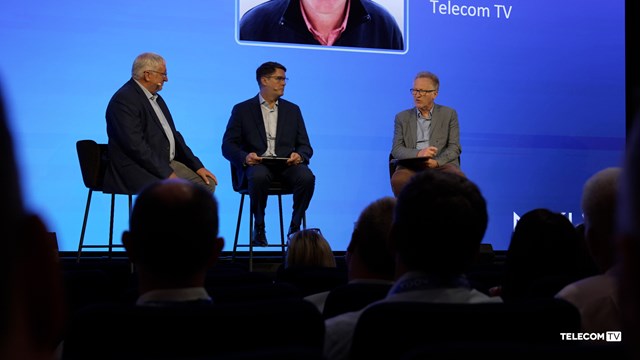
Thank you very much Prashant for that answer. Great question. Thank you very much. Right. In that case we will move on. So round of applause for Prashant and we'll move on to our next speakers. Thank you very much. Okay, so we're going to focus now on the role of or more focus on the role of AI driven automation. And here to explain more are Ben Hickey director, product portfolio management and M&A software networking at IBM and Emma Buckland who is research director at STL Partners. Ben and Emma, welcome. Thank you very much for joining us. We're not going to present here, we're just going to have a little chat. I'm going to allow the two of you to chat this through. It's an area we've touched on a few times in these two days of the forum. But Ben, I wonder first of all if perhaps you could start with introducing this automation journey and how IBM got to, its kind of like AI catalyst moment.
Benjamin Hickey, IBM (13:07):
Yeah, I think that's a good, Guy, to put it in that context because in reality we have been trying to automate for quite a long time now we're talking 10, 15 years plus. And I think if you look at many organizations with their networking teams, they've kind of seemed to have hit a cap, they've hit a ceiling. And what we've come to realize is that that actually is driven by a trust issue. So people have issues trusting their data, they have issues trusting their systems and the signal they get from their systems and they have issues trusting their rules based automation. So these issues are what are holding them kind of back. But as you mentioned, the catalyst, which is what makes it all very exciting right now is this gen AI coming along and in particular foundation models coming along. And so I think with this technology we're actually seeing an opportunity now to move beyond those trust issues.
Guy Daniels, TelecomTV (14:11):
Great. Thanks so much for introducing this Ben. Emma, I'd like to bring you in because I know STL Partners has done a lot of work in this field. Can you give us some context and background to what you've been doing and then we'll move on to specifics here.
Emma Buckland, STL Partners (14:24):
Sure, thank you and thank you very much for having me. So as you said, let me give a little bit of context as to the research that I'm going to describe in a second. So I think it was here on this panel yesterday, you asked or somebody actually in the audience ask, okay, there are lots of use cases for AI and automation, where do we start? And interestingly on the panel, they all gave a different answer to that question. So what our research really or has been trying to do is to actually look at all the use cases that the telco has in operating its network and assess. So we have listing 44 processes actually and think, okay, what can intelligence and what can automation improve in those processes? So obviously what money can save us, but also what is it that we're going to do better and therefore what new revenue might we be generating?
(15:25):
So it's next a model in Excel essentially that we have developed and we have been running in for a number of years. It's something we do in collaboration with a friend of ours called Charlotte Patrick, and we're looking at an average telco. So the average telco has 16 billion of revenue. It's a fixed and mobile operator. I'm not going to bore you with the detail, but let's call it the average telco. And for the average telco bringing more intelligence and more automation in the network, NOSS will bring financial value. So I'm not saving money. I'll explain again why that is equivalent to 5%, 5% of the top line. So if you make the mass very quickly, 5% of 16 billion is $800 million per year. 5% might not seem like a large percentage, but actually if you look at most telecos and their connectivity business, it's not a part of their business which is growing particularly.
(16:23):
So any money save any new money to be made is good to have. So if I look really at what comes within this 5% of financial benefits, there are obviously bits that are savings and there are bits that are going to be new revenue. So by and large the savings come savings from opex and that's actually half of that 5%, there's going to be savings from CapEx. So less money to be spent on network elements because we use what we have in the network more efficiently. That's about a quarter of the 5%, slightly less actually. And the rest is generating new revenue. Now I want to double click a little bit on what we mean with generating new revenue. We are not talking about super fancy services here or things that Telco might be doing more of in the future. Yes, we think by the way, at STL Partners that telcos should definitely look into those services, but we're looking at doing connectivity better here.
(17:31):
So having a network which has better quality of service, so your customers are not going to churn and obviously each customer is associated with an arpu. If that customer doesn't churn, you multiply it by your arpu, that's in new revenue. It also means that when somebody to have a service from you, you are able to provision that service more quickly. That's going to have a good ricochet effect on your NPS as by the way is the better retention that's going to attract more customer to your network. So that's the three areas where we see the value coming. There's a bit coming from OPEX savings, a bit coming from CapEx savings and a bit, not a huge bit, but still an interesting bit coming from new revenue generation.
Guy Daniels, TelecomTV (18:20):
Great, thanks. Do you want to continue? You've said something else. I think I'm just interrupted you by mistake there.
Emma Buckland, STL Partners (18:25):
No you haven't. I'm sure I would perhaps speak on what Ben is saying to give a few more figures, but let's not ruin the audience in figures quite yet.
Guy Daniels, TelecomTV (18:32):
Well it's some fascinating figures there and the 5% figures is fascinating and maybe we'll get some questions from the audience to pick up on that one. But just what's the relationship between you and the research here with IBM and STL?
Benjamin Hickey, IBM (18:44):
Yeah, so I think STL has shown to have this research and to be able to model out these benefits and so we wanted to work with STL to talk about some of these new technologies that we are bringing to market and that we are seeing can really impact it because when it's new, that's one of the challenges people have is, and you see this question coming up again and again with AI right now about what is the ROI. So by being able to work with Emma and the team at STL, we were able to share how we can impact that with the AI technologies and then have SDL be able to map that to the benefits that could come out.
Guy Daniels, TelecomTV (19:21):
Well let me just throw a question back to you about this research if I can. In the course of doing this and evaluating or any surprises, any standout surprises that went against your expectations maybe? Or are we tracking pretty much as you predict?
Emma Buckland, STL Partners (19:38):
Well, I think, let me perhaps turn the question on his head. What are the things that the research has sort of validated? Obviously a lot of the money to be made is going to be where operators actually spend already a lot. So there's a lot of savings to be made in managing the run better or planning the run better, using the energy more efficiently. So these are really the very big items that can be saved upon. And then I don't really want to steal Ben's fire here, but there's also money to be made in better managing the network.
Guy Daniels, TelecomTV (20:16):
Right. Well we'll come onto to that, shall we, Ben? Let's, let's look into that and also general trends that you are seeing independently and through this research, they're impacting the whole network life cycle.
Benjamin Hickey, IBM (20:30):
Yeah, I think one of the things we wanted to try and test with this research was we've all heard this idea that AI is coming for your jobs and what is that going to mean in the telecom space and for our engineering teams, because we're also quite aware many telecoms operators have really made significant headcount reductions over the last few years and many of them, if you like, are running skeletal teams. So the worry was, well if we get this benefits from ai but it has to be derived by reducing headcount, but we're already at the skeletal stuff, the minimum amount of headcount we need to run the network, then whatever benefit, 10, 20, 40, 60%, if you multiply it by zero, it's still zero. So what Emma's research showed was really the benefits outside of just people outside of OPEX and showing that there are benefits to the CapEx and the revenues as well.
(21:27):
So that was a huge success being able to see that. But going into the example that Emma mentioned, I think, and it comes to this question of where do you start, 78% of the benefits actually came in day two operations. And so that's kind of as you'd expect. We know that space very well. And so when you look into it, this network management area, there was actually a quarter of the benefits came from better managing the network. And that kind of proves out what we're seeing with the foundation models because in many ways we can now completely revolutionize how we handle the data that our networks produce and we're going to be able to move from a reactive mode of operations to a proactive mode of operations. And so we can start to use the AI for the first time to analyze data as it comes in to identify issues with a much higher degree of accuracy, but also to find the kinds of issues that people normally have to wait for their users to complain about the ones that slipped through the net of current systems. So this kind of proved that out and it showed that there was a huge value to go and target that initially.
Guy Daniels, TelecomTV (22:47):
Excellent. Thanks very much Ben. I'm going to pause now because I'd love to get the audience in and get some feedback from some of the orders members because I'm sure there was going to be a question. Tony's on the microphone duty and I know we have one at the front here, Tony, I'm sorry, I'm going to make you run all the way down to the front. It's coming Francis,
Francis Haysom, Appledore Research (23:11):
Really great conversation. I'm slightly intrigued in terms of the ROI you've identified, I think the industry has really been talking about OPEX savings, CapEx savings, quality of service improvements and value added services. I think as long as I've been doing ROIs for various vendors, what are you seeing as the distinct differences that AI make to this beyond the sort of typical, we've always needed automation in the network, we've always needed operational system and just intrigue as to particularly you. Emma, what were you seeing as what's different about AI in terms of this area?
Emma Buckland, STL Partners (23:56):
Thanks. So first if I, maybe I know we haven't calculated an ROI. So what we're looking at is what financial value will intelligence and automation bring? But we're not taking into account what operators actually have to invest for that to be the case. And we're looking at the whole spectrum of intelligence. So we are actually taking into account methods such as rule-based automation, predictive AI, gen AI, agentic AI. So I think the new techniques, and perhaps Ben can speak to that perhaps a bit more eloquently than I can are bringing some of these benefits closer to the reality. But there's another point I wanted to make actually, which perhaps I forgot to make when I was discussing the model initially, the benefits I'm talking about are going to really be able to be realized if operators adapt their existing workflows and change their workflows so that they can get the full benefit of AI.
(25:01):
There are practical implication of that. We were having our STL event this week and one of the analysts brought a really interesting anecdotes of iPads that had been distributed to the field force of a telecom operator for them to get the copilot on the screen and be able to do the repair when they were at site more easily and so on. And for some reason they found that actually the iPads always got broken because what happened is that the iPads was stuck at the bottom of the bag, all the tools on top, and obviously the iPad were broken all the time. I would imagine in this case the benefit of AI would be zero because actually you can only operate it. So I'm not sure if I have answered your question entirely, Francis, but I've certainly given you some do anecdote here. Ben, I don't know if you want to add anything.
Benjamin Hickey, IBM (25:52):
Maybe the two things, and we can obviously talk a lot more about this, but what we see is the shift from traditional machine learning algorithms being very tus specific has been the kind of root cause behind our systems producing a pretty poor quality signal to noise ratio if I put it that way. So now these foundation models are coming along and in particular we can recognize that Agen, Toki and LLMs are absolutely going to deliver a lot of value, but they need to be complimented because they don't understand this time series data. And we have this new type of foundation model called time series foundation models. So for the first time we have a general purpose model if you like. We don't have to have all of these discreet machine learning algorithms that can handle the various different types of data coming out of the network.
(26:49):
So that's what I meant about moving from reactive to proactive, the proxies, the things that network operations teams use today, they use things like alerts and thresholds. So you have to wait for that threshold to be breached to know there's an issue to then work backwards. Well, what if you could actually see the degradation before the threshold is hit and then you start to pick that up much easier, let alone just finding a lot more things that you wouldn't find because every threshold, every alert you set comes with a cost, it can be too noisy. So that's really on the analytical AI side as we see it. And then if you come back to the reasoning that the agents, just the value they will bring, moving beyond rules-based automation is going to be huge. So these two things together I think is the big unlock.
Guy Daniels, TelecomTV (27:38):
Great. Thanks Ben. Thanks Emma. We've probably got time for one more question. Any of our guests, actually you've a question of any of our guests if anyone want to Yes, we have one here. Thank you very much. Tony,
Audience Member (27:48):
I have a question. I think it's very interesting to talk about how some operators have, are only operating in skeleton mode for the number of FTEs and that we need to upscale there. So maybe question to Emma, in your digital twin of the average operator, how many FTEs are in your OPEX savings of the 50% or what is the percentage of people you could remove? Because this is I think the big elephant in the room and second day we never talked about. So can you comment on this?
Emma Buckland, STL Partners (28:27):
So I can't give you the exact number of FT that is in my model, but I could probably find out, but I thought you had given the number. Ben, in terms of, so on the OPEX savings that we are modeling, there's 70% of it, which comes from non-human reduction. So it's improvement, obviously a lot of it is improvement in the use of energy for a mobile network. Obviously that's a big bucket and its improvement to processes in general. You're also going to have, if you remember, there's a little bit of CapEx savings as well. Well actually not a little bit a quarter of the overall 5%. So obviously by having less equipment in the network, you're going to have fewer licenses to pay and so on. So it's not all, I just want to emphasize that it's not all at all about human reduction. A large portion is not about that.
Guy Daniels, TelecomTV (29:19):
Great. Thanks much. Great question. Thank you, for asking that. Just a quick one from Dean before we move on to our panel.
Dean Bubley, Disruptive Analysis (29:26):
Benefits of physical AI automation such as robots doing fiber splicing or use of, well actually robotics in general in telco domain. I saw one which was a mobile base station when they actually moved the antennas in and out physically.
Emma Buckland, STL Partners (29:46):
Sorry, is that a question or a statement?
Guy Daniels, TelecomTV (29:48):
That's Dean's statement, as a question. Are you seeing benefits? Are you seeing benefits like that?
Emma Buckland, STL Partners (29:53):
Yeah, obviously. Yeah, they are. Yeah. Yeah. And that's taken into account to some extent in the module as well.
Guy Daniels, TelecomTV (30:00):
Okay. Well we hope to see more examples like that when we reconvene in 12 one's time because I really do expect we will see more. We must end this session now though, because we've got our final panel coming up. So please, I'd like to thank Ben and Emma, first of all, round of applause and Prashant, thank you.
Please note that video transcripts are provided for reference only – content may vary from the published video or contain inaccuracies.
Emerging trends and innovations
This session delves into the latest trends and innovations in the telecommunications sector, focusing on how AI can be used to optimise hardware selection for various AI workloads and enhancing network operations. Experts from Intel, IBM, and STL Partners share their insights on how AI technologies, including generative AI and foundation models, can improve operational efficiency, reduce costs and potentially generate new revenue streams for telecom operators. They also discuss the importance of adapting existing workflows to fully leverage AI’s benefits.
First Broadcast Live October 2025
Participants

Benjamin Hickey
Director, Product Portfolio Management, AI Networking, IBM

Emma Buckland
Research Director, STL Partners

Prashant Agarwal
Business Development Manager, Telco EMEA, Intel Corporation