To embed our video on your website copy and paste the code below:
<iframe src="https://www.youtube.com/embed/FqE-9gPyty8?modestbranding=1&rel=0" width="970" height="546" frameborder="0" scrolling="auto" allowfullscreen></iframe>
Guy Daniels, TelecomTV (00:12):
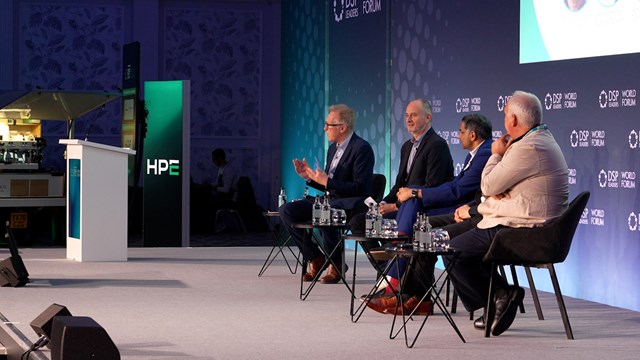
Well, hello everyone. Hello, hello, hello. Welcome to the AI Native Telco Forum 2025 coming in. Come on in. Please grab a seat before they all disappear. I've never seen so many of you before. That's fantastic. Please come on in. We're going to start right now, so please find yourself a seat. You'd be pleased to note that it's almost time for our first session, which as you can see is entitled AI for Enhanced Network Capabilities. Quick note about these sessions, because these are new to us and to you, they'll mostly comprise of two presentations, 10 minutes each, followed by quick q and a from the audience. So we do have some roving microphones. You do have the opportunity to ask our presenters a question or two. That's the plan. I think we'll get more questions or calls for questions than we have time for. So I would ask that you please use the networking breaks to follow up any questions you have and just keep the conversation flowing across these two days. So our first speaker is Ahmed Hafez, who is SVP Network Strategy and Data and AI networks at Deutsche Telekom. Now Deutsche Telekom is the CSP co-host for this forum and we've been really thankful and appreciative of the support they have given us. But before we hear his presentation, we should mention that Ahmed is the reason we are here today and I'd like him to come up on stage and have a quick chat with me to explain more Ahmed come up on stage.
Ahmed Hafez, Deutsche Telekom (01:53):
Oh, anyway, okay, so not to be too close.
Guy Daniels, TelecomTV (01:54):
Not too close. That's okay. It was socially distant timing. I'd just like to take it back before you give your presentation because it was DSP Leaders World Forum last year. So 2024, just over a year ago when you presented on the AI native, and I think at the time certainly for a lot of us, brand new, totally new concept, there'd been a management report, a consultancy report I think about the general idea of being AI native. So what was it that resonated with you? Why do you say, look, this is a really hot important area, crucial area that we need to focus on,
Ahmed Hafez, Deutsche Telekom (02:30):
Right? So first of all, we welcome everyone to Dusseldorf, so it's really happy to see you all here. I'm saying welcome because I'm living in Dusseldorf. So it was great that the form comes back to AI actually from early 2024. Even before that, even in 2023, we started realizing the waves that are coming with AI and how AI is developing and there was a clear opportunity for us to consume. So there are whatever you look into networks, whether you look into network life cycle or you look into the daily jobs that we do, AI can play a significant role. We do a lot of, if I may say tedious things that do not require really human intelligence. So the first observation was that why don't we use AI to actually do these tasks that are repetitive and quite boring also for experts and engineers. Then AI was developing as we speak and we were actually, as we try to do something, something else comes in and we started to see there is a chance of being overwhelmed with what's going on and we had to choices either we wait and see, so I sit back and I know that many have done that or we actually get in and learn by doing and we chose the second.
(03:44):
So we got in and we started learning by doing. We actually changed courses of things that we approached. We took approaches that we stopped and then we took a different approach. So we had to adapt and back then when I started the discussion, when we discussed to bring the topic in, so I thought mean this is going to be the topic of the next era. So we need actually to start talking about AI and deepen our understanding and together share our experiences because I think this is something that no one is enough to do and really we would have to be humble around AI. So AI is actually all over the place. There are so much developments that no one can actually manage alone. So it's actually the source of information when it's spread across and when we share it's actually good for everyone.
Guy Daniels, TelecomTV (04:32):
Now, I mentioned earlier that there's this expectation that we all know what the AI native telco means and maybe it's because of the rapid advancement of the LLM side of AI that we've just got so much knowledge on IT, news about AI coming at us from all sides. Do you think we really do have a clear picture of the AI native telco?
Ahmed Hafez, Deutsche Telekom (04:52):
Right, excellent question. So there's no definition of AI native networks, but what I can say is my perspective on that. So take it as miso of course as we said, we stay humble, it's just an opinion. So if you look from the stack that we deal with, an AI native network for me starts from data that is actually generating data that is consumable by agents, not only by human beings. We had developed discussions with suppliers that the way they describe their attributes, they do in log files, in alarms and other things is for human consumption requires a human behind. We need that to be agent friendly, agent ready. So it should be described well enough in order for an agent to interpret this alarm or this log file or whatever the data is. The data also should be have certain level of curation at the source because it's too expensive to collect petabytes of data and then try to clean up data.
(05:44):
We need the data to be started cleaned from the source, meaning that at least the basic rules of checking whether this record is valid or invalid can be done So we can actually filter. So this is just the data. Then you go the next step when you talk about a native AI native network, is the network having the right bolts or the right connections and interfaces for AI to create closed loop automation? Is it done? I mean you have, of course we are building the networks where a lot of resilience from day one. Without AI we had always rules and policies that would maintain that, but we need something that would connect back to the network. Then you go further, how can we deepen AI inside networks? So the networks not only that on the top like OSS layer and then we pull data and then process and go back.
(06:34):
How can we embed AI within the networks itself? So it becomes deepened inside the network functions, not outside the function but inside the function. Then you stop going into different aspects that related to if I fast forward, because I know I, I don't want to prolong that the intent based, it is intent based from an operational perspective and intent based from a customer perspective. So you can actually have the intent in operation say, I want to optimize this is what I need and so on, and the network can deal with something like that and then you go to customer intent. So I want to make sure customer experience or customers demanding certain experience and then you translate that into what does it mean for technology, what does it mean for implementation? So we have quite a long journey to get there, but I think if we don't start now, we will never reach it.
Guy Daniels, TelecomTV (07:23):
Absolutely. Right. We have to start now and you just articulated very well what we expect to talk about and discuss and why we need forums like this to discuss and then actually get on and implement. So that's a great scene setter for the forum. I'm going to invite you to the lectern because we'd love to hear the opening presentation. Right. Thank you. Please
Ahmed Hafez, Deutsche Telekom (07:42):
Accelerating AI networks. So my presentation will be focused on networks so it's not generic across everything in telcos. So it's network centric and I would start here with the latest MIT report that went out and said 95% of companies cannot really reap any value of AI. They're still investing but not getting the value. And before I judge that, I will just want to share with you the first thing is that the value is not only in productivity and TCOI would actually start from customer experience. AI can actually create exceptional customer experience even if it does not save you money, but this is a return on investment, this is a big return. This is not something to consider it as a side thing or a byproduct. It's a major outcome of ai. Then time to market, definitely we do a lot of things that takes us months.
(08:36):
It could takes us weeks or minutes. I mean in our team we created something on data pipeline automation instead of taking weeks. Now it takes one minute. So this time to market, even in project execution is extremely important and its value. Whether you can render this value back into money or not, this depends on the area and depends on what you're doing, but it's value in its own. If I do a project now instead of doing it in 12 months, I do it in three months. That's a big value of course TCO, so front and center, so that's why it's in the middle. So that yes, of course TCO is very important and it's every one of us is looking into it because we want to make sure that the industry is more efficient and sustainable, but also enhancing network resilience. I don't see a lot of people talking about that, but actually we're a critical infrastructure.
(09:23):
We need to care about resilience, meaning our network is robust against issues, security hazards, attacks, even outages. We need to be resilient enough and if you want to be resilient without ai, it would cost you huge amount of money and it's sometimes prohibitive. So AI can solve this kind of balance between I want to invest and get resilience but not invest too much for resilience because maybe that's too much. No, I can actually do what I want to achieve. But with ai, so this is also, again, even though maybe you're not reaching the resilience today, so you put ai, you reach a higher resilience, you're not saving money, but you're creating a lot of value. So the return on investment is not only TCO and finally of course AI would enable new business models, new services, new capabilities, and then you can launch things and then also get revenues out of it.
(10:15):
So AI is really of a huge potential. So despite being overwhelming, moving too much, it is the right path to take. I want to give you just a glimpse on our networks, just focus on networks, on use cases. I mean it's not the best measure because the impact is the best measure, but I would say just to give you a glimpse how things were evolving back in 2024, we had round up, I'm not putting the numbers intentionally, but I can tell you the numbers, like 150 use cases across networks. That was predominantly predictive AI back then. We said, okay, predictive AI is very strong, it's very important. It'll continue to be the core and then as we evolve said, but the scaling of generative AI use cases actually is going faster and we can actually leverage it faster. So you see a year later the growth in generative AI was staggering was the highest, and we also jumped into agen ai.
(11:12):
As we said, we are learning by doing. So we learned a lot across this journey and I will share with you later, I hope I'm not taking so much time, just warn me if I'm taking so much time. So we learned a lot by doing. Then we try to classify things because we also realize that the industry is using the word agent everywhere, so we try to maybe discipline ourselves first before anybody in order to have the nomenclature correct, at least in our perspective. So we have six tools starting from rule-based, the rule-based everybody knows. Then you have the predictive AI clear. Then you start with rack chat bots. So we put chat bots and racks together in one element. This is where generative AI starts. Then there is a step that's always confused as an agent. We don't call it an agent, we call it co-pilot.
(12:01):
This means that you have generative ai but always a human sitting behind it. So humans triggering it every time. That's a co-pilot that's assistant not undermining it. It's very important, very critical, but not an agent. Then we go into single and multiple agents and then where this is something that you can trigger by any means, not by human necessarily. That would be an agent that you can trigger automatically or in cycles and then that agent starts actually to do the job, finish the job, maybe communicated to a human or to another agent. So this is how we Dutch telecom classify the six tools for AI and rule base is still considered intelligence, even though you can argue, but we put it in the tool set. Why agents very quickly to mention few things about traditional automation before agents before intelligence or generative AI in general.
(12:58):
The point here was that automation is usually static. Take the example of the CPU load. You can of course put a very good rule and say if the CPU load exists 85% stop tracing, stop reporting, stop site functions, and if it exceeds 95%, you start blocking new calls to make sure that you don't go into cyclic restarts and then you render the network off. You all know about that, but what happens in reality is that you have spikes in CP load, CCP load can go above 85% for one second for two seconds. Do you want to trigger the stop of the tracing and then after that you want to see okay, after a while you bring it back or what do you want to do? So it's not intelligent enough, but if I have an agent and say, monitor the CP load, if it persists for some time over 85%, you can stop tracing.
(13:51):
So I am flexible to give it time and thoughts to look and monitor and judge because if it's 86 but it's going down, it'll not stop tracing, keep it, but then it has the intelligence to see what's going on. So it's dynamic, it's not static. Then lack of context, lack of context is a very interesting angle is that take for example a very simple example. Microwave links in microwave links you can with predictive ai, predict is the problem, weather is the problem, trees is the problem, something else and so on. Yeah, of course you can add more information and get more information, but if you deploy gentech ai the way you would deploy it, it would be different because you would say, okay, I will grab the information of that even of predictive AI and then I will look into the weather forecast and the weather today and now in that point, in that situation and the agent would verify the outcome of the predictive ai.
(14:48):
AI is really a weather problem, it's an issue. No, it's a fire, not weather. It's a fire in that place. So this you cannot get with predictive AI that you can get it with agent ai. So the context, what's going on. Then the other one is reactiveness, of course. This is what differentiate agents. Agents can be proactive, they can monitor and take action so you don't have to trigger them and this is very important if you talk about autonomous networks level four and above and then being prone to errors is another dimension of course agents as well as prone to errors, but agents you can verify and review what they do. When it comes to rule-based, complex based, that is two three pages long usually, and correct me here if I'm wrong, the ones that have developed it are the only ones who can change it.
(15:37):
It's becoming very complex. See if they retire, you would let this rule run until it crashes, then you have to remove it, no one can maintain it and to decouple, I mean what is this if and then goes here and then, but what happens if that this becomes conflicts? So just to give you a few examples of what we have used for ai, these are just examples of some numbers we have achieved and I will talk only on the first one, RAN guardian in the next minute. So RAN Guardian, what is RAN Guardian? RAN guardian is a multi-agent AI that is actually will be launched this month. So we are actually working on it since before MWC and now we announce it in MWC and we are launching it this month. And the RAN guardian is actually a system that is self-healing. It is monitoring what's going on, it's understanding the user experience and seeing if there are high utilization in cells because of events or because people are more coming and then they tune the configuration of the network automatically to match the people that are coming.
(16:44):
So it monitors what's going on in the networks if people are going to be gathered, it prepares that. It verifies things and verifies if the alarms that are already being generated are correctly prioritized or not. So for example, there's a concept and we know there's concept happening so the AI knows it'll know that there's concert happening in Germany in this place and then it goes check the alarms for the associated sites and then if the alarms are low priority, it lifts them up to higher priority because even though they're not creating problem now when people come, it'll be a problem, it could even render an outage. So then it takes that and it process that and makes the engineers process that as fast as possible before the event happens and during the event it cycles and checks the KPIs and accordingly it triggers actions automatically and these actions are triggered except two of the actions requires human intervention and this is a design choice. So we decided that only two would require human in the loop while all other actions that are taken on the configuration are safe enough to do so agents take decision on their own. I'll show the video and I'm done. So if actually the final result was that usually if you want to manage an event or so our opportunistics 45 minutes now with the AI is less than one minute. So even it's not 60 and 20, it's actually 45 to one minute. So thank you very much and thanks, I'm done. Absolutely fantastic, really
Guy Daniels, TelecomTV (19:07):
Fascinating. Come and sit down with us. Great presentation, fascinating insights. Then some interesting developments to watch out for. There's a lot I took from that but I'm sure the audience have maybe have a question or two. We do have a couple of roving microphones. You don't have to excuse us, the lights are quite low here so it's hard to see you all, but if anyone wants to put their hand up and ask a question, we can do so in the front row. Francis in the front row, there's a microphone on its way to you. Hello Francis.
Francis Haysom, Appledore Research (19:42):
Thank you, Ahmed. Francis Haysom from Appledore. I'm just interested in, this is really exciting, but how are you dealing with the issue of trust? You mentioned the rules based only the person who coded it knows what's in the rules, but you can read the rules. A lot of this is hidden, A lot of this is black box. How are you dealing with trust and what are actually considerable changes on the network? Last week for example, we had the Vodafone network go down and probably not for a configuration reason. How are you dealing with that trust aspect and actually verifying that you are making the networks more stable rather than
Ahmed Hafez, Deutsche Telekom (20:22):
Excellent question. So the trust has many facets. So I would start from the transparency. So when we code them, the agents have thousands of lines of code, not only prompts. So it has codes that would govern its movement and you would have to give them very clear instructions. That's the first step. Second step is that of course after testing and all that story, we did something which we actually limited the span of impact. What does that mean? I would give you choices like 10 choices. You cannot choose choice 11, there is no choice. 11, you just don't do anything if you can't choose one of the 10. So the damage, it can create a zero. It cannot create any damage because any of the 10 are safe. So they of course would impact slightly the user experience, maybe a little bit that could be better configuration.
(21:18):
But that happens in any case. So what we do is that we protect from any damages by this kind of limitation. Then there is something very important in general when it comes to agenda ai. When we started the journey, we learned a lot. We realized we need guidelines on how we operate agenda ai and of course we need to monitor exactly what's going on, log everything that is happening, understand it, and even deploy AI to verify what's going on to make sure, so we have humans managing the agentic AI and looking into the results. And you can stop the agent at any point if there's any issue you can stop and take over. You can actually look into if the agentic AI is doing it well and we are also doing kind of a closed loop learning because the agent logs the, when something happened, it logs what happened and the result, and then if the result is actually good enough then it can use that for the next time. Instead of iterations, I can actually jump into that target configuration because exactly the situation is the same so I can use, so these are just few things, but the topic is much bigger than that, sir. But there's just few hints.
Guy Daniels, TelecomTV (22:27):
Thanks very much and great question. Thanks so much indeed. I'll tell you what we'll do, we'll invite our next presenter to come on stage, have the next presentation and then see if we get some more questions at the end. So Clay, I'm going to ask Clay to come on stage. Please a round of applause for Clay. Clay Simmons is Vice President CGO, Chief of Staff at Supermicro. So I shall leave the clicker to Clay.
Clay Simmons, Supermicro (22:53):
Yeah, thank you. Appreciate it. Great presentation prior to this one Ahmed. This is a great dovetail. So I'm actually going to share eight different areas in which Supermicro is engaging carriers is engaging our partner ecosystem and is also engaging the AI RAN alliance on how we're making improvements in RAN with ai. So first and foremost, I think we can all agree that RAN is probably one of the most sophisticated complicated systems that man and women have ever created in our entire lives, right? When you talk about RF propagation modulation schemes and transporting layer three commands and protocols on top of that, it's extremely complex, but I think we can also agree that it can actually be improved significantly and I think the industry thinks that with ai these improvements can certainly present themselves. So I'm going to share with you eight particular areas that we're focused on and supporting our industry ecosystem.
(24:12):
So first and foremost is beam forming and massive MIMO. These are very complex with regards to how these antennas are managed, directed and how they're propagating the rf. But with the various layers, especially in extremely dense urban areas, the interference is incredibly intense in these environments and so deep learning obviously can improve and enhance the way in which the engineers manage these radio frequencies and propagation. Another is to Ahmed's earlier presentation is the predictive resource management. So it's really about how AI can forecast traffic, optimize spectrum use, and ultimately reduce energy in the process. The third is the development of the systems, the expansion of the radio access networks in new markets and how carriers can leverage using new models using digital twins to support smarter and better deployments. And the fourth is fault detection and root cause analysis. In fact, I just had a conversation with a large carrier in the Nordics that they're doing just this.
(25:34):
They're leveraging AI to predictably determine what their maintenance for hardware and software is on their systems. Shifting to the next slide, the next two get a little bit more complex. This is talking more about intelligent network optimization. So what many of you know as self-optimizing networks that we have today. But in this particular case it's doing this dynamically with AI using real-time parameter tuning and managing the coverage balance and anomaly detection and then also applying AI into the RIC, the RAN intelligent controllers, both the AI driven xApp, so more realtime network modification and also the larger data intensive rApps for enabling that closed loop automation and cross vendor optimization, which is quite interesting. I think Ahmed brought up a really good point today, the self optimized networks are rule-based. Rule-based is not artificial intelligence. I think we can all agree to that. And so when you have a rule-based, these rules apply specifically to the experts that developed it as was previously noted and also specific to the vendors that actually deploy it.
(27:05):
But with AI it becomes a lot more extensible, it becomes a lot more open, it becomes a lot more available for carriers to take ownership and for it to be more interdependent in the other functions of the carriers operations. And then the last two are quite obvious, right? So security being able to detect threat and anomaly detection earlier in advance, being able to adapt to those defenses and making the necessary choices dynamically without human intervention. And then the last of course we wouldn't be here without users and their ability to purchase and consume and enjoy the services that the telco industry provides. So quality of experience is extremely important and how that is tracked and monitored and how it's adapted based on the limited resources that the operators have is extremely important and I think AI can play a massive part in that as well.
(28:01):
So I want to double click on a couple of these that actually my solution architects helped me build and one is the predictive resource management. And this is a very simplified a slide to a very complex situation. But basically this is about how carriers can basically turn radio functions off and on and they're already doing this today in obvious time periods like in the middle of the night in this particular timescale, the X access being from midnight to 11:59 PM in the middle of the night. You might have improved resource management to where you might turn some radios off from say 1201 to 2:00 AM and then say from 2:00 AM to 4:00 AM you might actually turn just one off. As you can see, there's a little lighter squiggly line that determines the expected KPI. But when we turn these off using ai, it doesn't really change the KPIs.
(29:03):
And this is a pretty simplified model of course, but if you can think about not just looking at it from a time basis, but looking at it from a market base as well, how might you be able to manage the resources both in an urban or in a rural area, right? There's opportunities there to modify not just the time but also the geography of where these resources are applicable. So with scalable ai, meaning that it scales both depending on the deployment location, whether it be centralized or at the edge against existing KPI rules, the radio resource management can ultimately be improved. And so in turn can also improve overall both the human resource that's applied to it along with the energy power management that's applied to it as well. And then the last use case I want to talk about is the intelligent network. As I mentioned before, self optimized network networks are rule-based, right?
(30:18):
And so that's not artificial intelligence, but there is an opportunity for artificial intelligence to play a much larger role in both the service management orchestration and also the radio access network intelligent controllers to whereas today instead of rule-based, you actually have more of a dynamic approach to where the AI hardware and software is continuously monitoring a closed loop, the data collection and the process across both, whether it be central or at the edge to meet the performance metrics as I'd mentioned in the last slide, that are already established by the operations of the network carriers. So through this closed loop intelligent parameter toing in real time, you get the very best operational output against the resources that the carrier has. So in conclusion today as I mentioned, we have semi-automated self optimized network and traffic optimization, mostly vendor specific and traditional network equipment providers. They have been very successful and provided an energy reduction, some basic automation, but it's still rule-based I would say in 5G advanced we're going to be focusing more on that closed looped optimization via the Rick and the SMO and we'll be reinforced with both deep learning and edge ai and a lot of the traditional network equipment providers will begin to adopt some of this.
(32:00):
But then also we're having our own equipment and Nvidia has their software in many of the labs within the carriers on how we go from where we are today to where we have self-optimizing radio access and predictive energy control. And then lastly, future 6G, where we have fully autonomous self-learning radio access, it's federated, so it's highly extensible across all the different functions of the carriers environment and it's self evolving. So self-learning, it's completely closed loop so it becomes a true native AI RAN that both scales, right? Fits based on that specific KPI of both the carrier and the market that that carrier provides. So zero touch operations, 40 to 60% decrease in opex and ultimately lowering energy costs. And CO2 emissions comes along with that improving faster network adaptation and ultimately improved quality of experience for the customer. Thank you. Appreciate it.
Guy Daniels, TelecomTV (33:05):
Thank you very much indeed.
(33:09):
Come and sit down with us. Great. Thanks so much anyway, once say that's fine. Great presentation. Thank you so much for that. Do you have any questions from the audience for Clay? Otherwise I'm going to start off with a question. I'm going to sneak a question. Well Clay, I'm going to sneak a question in there. You identified eight areas as we just saw from your conversations. Do you see commonality between telcos on how and where they are either deploying or plan to deploy? Is there a consensus or is it on a case by case basis?
Clay Simmons, Supermicro (33:40):
Yes and no. It is on a case by case basis. I think there is some, I would say low lying fruit that back to Ahmed's point earlier where you have somewhat redundant processes that are uninteresting I think from an engineering perspective but yet still problematic and need to be addressed. We're seeing the telcos address some of those even right now. And we talked about predictive maintenance schedules and things like this, predictive being able to predict improvements. So we are seeing that. We're also seeing a lot of lab work across, I mean it is becoming very ubiquitous where we have a lot of our hardware and mini labs that are doing this kind of evaluation at the radio axis level. And we're also working with the network equipment providers, so the likes of Samsung, Nokia and Ericsson. And they too are also exploring these areas very closely and we're working very closely together. So I would say that we're in different places, but we're all moving in the same direction, if that makes sense.
Guy Daniels, TelecomTV (34:51):
It does, yeah. Clay, thanks very much. Just seems any more questions? We know we have invested two handheld microphones, so we've got to use them. So please let put this use, if not, I've got another question and Iman, I'm going to come back to you if you don't mind because you were talking in your presentation there about all these different tools and approaches and methodologies and definitions and non re that we haven't maybe sorted out yet. And then we come onto agents and agentic ai and yet if you read wider into the AI sphere, not everyone agrees on what an agent is. There's different definitions and it's evolving all the time. So you can't wait for definitions to suddenly resolve yourself. What's your approach to this ever-changing definition of ai?
Ahmed Hafez, Deutsche Telekom (35:36):
So rightfully so, we define things as we speak today. So as we see them today and we define them as we go. So what we decided is that we will go into the topics, we will work, we get our hands dirty with all the topics, then we adjust and we adjusted the number of things. So we worked in path that we realized the path are not really rendering enough value and we changed that direction. And I have to admit also when we decided to move to agents at all, we realized that actually for networks, agents are the biggest value. So if we want to reach autonomous networks level four with minimum human intervention, there is no way that I can do that with a chat bot that doesn't work. So we need to move to agents and that's why we went there and we define things so that we can work because otherwise if we talk different things within one company, it doesn't work. So we used the same language, at least internally with our suppliers as well. I think they also understand what we talk, when we talk about agents and then we moved on, if there is a better definition, we will embrace and update. So
Guy Daniels, TelecomTV (36:43):
Clay, an approach you take as well, you kind of defining for what is here today, and as Ahmed just said there, if a better definition comes along or it changes you'll adopt.
Clay Simmons, Supermicro (36:52):
No, for sure. Yeah, I mean we're definitely in a state of iteration in ai, right? I mean we're constantly iterating and we're constantly learning from each other, which is great. In fact, I approached today as not as a presenter, but as somebody that's wanting to learn a lot, right from a lot of the other presenters and just the collaboration. I mean the industry very much is in a state of learning and I do think that Amed is absolutely correct. Agen AI I think is really, it's generative AI to the next level. And as agents begin to not just help solve problems but also begin to communicate with each other, things get really interesting.
Guy Daniels, TelecomTV (37:35):
Great. Well both of you, thank you both very much for the presentations and the chat. We will move on. So round of applause please for Ahmed and Clay, thank you.
Well, hello everyone. Hello, hello, hello. Welcome to the AI Native Telco Forum 2025 coming in. Come on in. Please grab a seat before they all disappear. I've never seen so many of you before. That's fantastic. Please come on in. We're going to start right now, so please find yourself a seat. You'd be pleased to note that it's almost time for our first session, which as you can see is entitled AI for Enhanced Network Capabilities. Quick note about these sessions, because these are new to us and to you, they'll mostly comprise of two presentations, 10 minutes each, followed by quick q and a from the audience. So we do have some roving microphones. You do have the opportunity to ask our presenters a question or two. That's the plan. I think we'll get more questions or calls for questions than we have time for. So I would ask that you please use the networking breaks to follow up any questions you have and just keep the conversation flowing across these two days. So our first speaker is Ahmed Hafez, who is SVP Network Strategy and Data and AI networks at Deutsche Telekom. Now Deutsche Telekom is the CSP co-host for this forum and we've been really thankful and appreciative of the support they have given us. But before we hear his presentation, we should mention that Ahmed is the reason we are here today and I'd like him to come up on stage and have a quick chat with me to explain more Ahmed come up on stage.
Ahmed Hafez, Deutsche Telekom (01:53):
Oh, anyway, okay, so not to be too close.
Guy Daniels, TelecomTV (01:54):
Not too close. That's okay. It was socially distant timing. I'd just like to take it back before you give your presentation because it was DSP Leaders World Forum last year. So 2024, just over a year ago when you presented on the AI native, and I think at the time certainly for a lot of us, brand new, totally new concept, there'd been a management report, a consultancy report I think about the general idea of being AI native. So what was it that resonated with you? Why do you say, look, this is a really hot important area, crucial area that we need to focus on,
Ahmed Hafez, Deutsche Telekom (02:30):
Right? So first of all, we welcome everyone to Dusseldorf, so it's really happy to see you all here. I'm saying welcome because I'm living in Dusseldorf. So it was great that the form comes back to AI actually from early 2024. Even before that, even in 2023, we started realizing the waves that are coming with AI and how AI is developing and there was a clear opportunity for us to consume. So there are whatever you look into networks, whether you look into network life cycle or you look into the daily jobs that we do, AI can play a significant role. We do a lot of, if I may say tedious things that do not require really human intelligence. So the first observation was that why don't we use AI to actually do these tasks that are repetitive and quite boring also for experts and engineers. Then AI was developing as we speak and we were actually, as we try to do something, something else comes in and we started to see there is a chance of being overwhelmed with what's going on and we had to choices either we wait and see, so I sit back and I know that many have done that or we actually get in and learn by doing and we chose the second.
(03:44):
So we got in and we started learning by doing. We actually changed courses of things that we approached. We took approaches that we stopped and then we took a different approach. So we had to adapt and back then when I started the discussion, when we discussed to bring the topic in, so I thought mean this is going to be the topic of the next era. So we need actually to start talking about AI and deepen our understanding and together share our experiences because I think this is something that no one is enough to do and really we would have to be humble around AI. So AI is actually all over the place. There are so much developments that no one can actually manage alone. So it's actually the source of information when it's spread across and when we share it's actually good for everyone.
Guy Daniels, TelecomTV (04:32):
Now, I mentioned earlier that there's this expectation that we all know what the AI native telco means and maybe it's because of the rapid advancement of the LLM side of AI that we've just got so much knowledge on IT, news about AI coming at us from all sides. Do you think we really do have a clear picture of the AI native telco?
Ahmed Hafez, Deutsche Telekom (04:52):
Right, excellent question. So there's no definition of AI native networks, but what I can say is my perspective on that. So take it as miso of course as we said, we stay humble, it's just an opinion. So if you look from the stack that we deal with, an AI native network for me starts from data that is actually generating data that is consumable by agents, not only by human beings. We had developed discussions with suppliers that the way they describe their attributes, they do in log files, in alarms and other things is for human consumption requires a human behind. We need that to be agent friendly, agent ready. So it should be described well enough in order for an agent to interpret this alarm or this log file or whatever the data is. The data also should be have certain level of curation at the source because it's too expensive to collect petabytes of data and then try to clean up data.
(05:44):
We need the data to be started cleaned from the source, meaning that at least the basic rules of checking whether this record is valid or invalid can be done So we can actually filter. So this is just the data. Then you go the next step when you talk about a native AI native network, is the network having the right bolts or the right connections and interfaces for AI to create closed loop automation? Is it done? I mean you have, of course we are building the networks where a lot of resilience from day one. Without AI we had always rules and policies that would maintain that, but we need something that would connect back to the network. Then you go further, how can we deepen AI inside networks? So the networks not only that on the top like OSS layer and then we pull data and then process and go back.
(06:34):
How can we embed AI within the networks itself? So it becomes deepened inside the network functions, not outside the function but inside the function. Then you stop going into different aspects that related to if I fast forward, because I know I, I don't want to prolong that the intent based, it is intent based from an operational perspective and intent based from a customer perspective. So you can actually have the intent in operation say, I want to optimize this is what I need and so on, and the network can deal with something like that and then you go to customer intent. So I want to make sure customer experience or customers demanding certain experience and then you translate that into what does it mean for technology, what does it mean for implementation? So we have quite a long journey to get there, but I think if we don't start now, we will never reach it.
Guy Daniels, TelecomTV (07:23):
Absolutely. Right. We have to start now and you just articulated very well what we expect to talk about and discuss and why we need forums like this to discuss and then actually get on and implement. So that's a great scene setter for the forum. I'm going to invite you to the lectern because we'd love to hear the opening presentation. Right. Thank you. Please
Ahmed Hafez, Deutsche Telekom (07:42):
Accelerating AI networks. So my presentation will be focused on networks so it's not generic across everything in telcos. So it's network centric and I would start here with the latest MIT report that went out and said 95% of companies cannot really reap any value of AI. They're still investing but not getting the value. And before I judge that, I will just want to share with you the first thing is that the value is not only in productivity and TCOI would actually start from customer experience. AI can actually create exceptional customer experience even if it does not save you money, but this is a return on investment, this is a big return. This is not something to consider it as a side thing or a byproduct. It's a major outcome of ai. Then time to market, definitely we do a lot of things that takes us months.
(08:36):
It could takes us weeks or minutes. I mean in our team we created something on data pipeline automation instead of taking weeks. Now it takes one minute. So this time to market, even in project execution is extremely important and its value. Whether you can render this value back into money or not, this depends on the area and depends on what you're doing, but it's value in its own. If I do a project now instead of doing it in 12 months, I do it in three months. That's a big value of course TCO, so front and center, so that's why it's in the middle. So that yes, of course TCO is very important and it's every one of us is looking into it because we want to make sure that the industry is more efficient and sustainable, but also enhancing network resilience. I don't see a lot of people talking about that, but actually we're a critical infrastructure.
(09:23):
We need to care about resilience, meaning our network is robust against issues, security hazards, attacks, even outages. We need to be resilient enough and if you want to be resilient without ai, it would cost you huge amount of money and it's sometimes prohibitive. So AI can solve this kind of balance between I want to invest and get resilience but not invest too much for resilience because maybe that's too much. No, I can actually do what I want to achieve. But with ai, so this is also, again, even though maybe you're not reaching the resilience today, so you put ai, you reach a higher resilience, you're not saving money, but you're creating a lot of value. So the return on investment is not only TCO and finally of course AI would enable new business models, new services, new capabilities, and then you can launch things and then also get revenues out of it.
(10:15):
So AI is really of a huge potential. So despite being overwhelming, moving too much, it is the right path to take. I want to give you just a glimpse on our networks, just focus on networks, on use cases. I mean it's not the best measure because the impact is the best measure, but I would say just to give you a glimpse how things were evolving back in 2024, we had round up, I'm not putting the numbers intentionally, but I can tell you the numbers, like 150 use cases across networks. That was predominantly predictive AI back then. We said, okay, predictive AI is very strong, it's very important. It'll continue to be the core and then as we evolve said, but the scaling of generative AI use cases actually is going faster and we can actually leverage it faster. So you see a year later the growth in generative AI was staggering was the highest, and we also jumped into agen ai.
(11:12):
As we said, we are learning by doing. So we learned a lot across this journey and I will share with you later, I hope I'm not taking so much time, just warn me if I'm taking so much time. So we learned a lot by doing. Then we try to classify things because we also realize that the industry is using the word agent everywhere, so we try to maybe discipline ourselves first before anybody in order to have the nomenclature correct, at least in our perspective. So we have six tools starting from rule-based, the rule-based everybody knows. Then you have the predictive AI clear. Then you start with rack chat bots. So we put chat bots and racks together in one element. This is where generative AI starts. Then there is a step that's always confused as an agent. We don't call it an agent, we call it co-pilot.
(12:01):
This means that you have generative ai but always a human sitting behind it. So humans triggering it every time. That's a co-pilot that's assistant not undermining it. It's very important, very critical, but not an agent. Then we go into single and multiple agents and then where this is something that you can trigger by any means, not by human necessarily. That would be an agent that you can trigger automatically or in cycles and then that agent starts actually to do the job, finish the job, maybe communicated to a human or to another agent. So this is how we Dutch telecom classify the six tools for AI and rule base is still considered intelligence, even though you can argue, but we put it in the tool set. Why agents very quickly to mention few things about traditional automation before agents before intelligence or generative AI in general.
(12:58):
The point here was that automation is usually static. Take the example of the CPU load. You can of course put a very good rule and say if the CPU load exists 85% stop tracing, stop reporting, stop site functions, and if it exceeds 95%, you start blocking new calls to make sure that you don't go into cyclic restarts and then you render the network off. You all know about that, but what happens in reality is that you have spikes in CP load, CCP load can go above 85% for one second for two seconds. Do you want to trigger the stop of the tracing and then after that you want to see okay, after a while you bring it back or what do you want to do? So it's not intelligent enough, but if I have an agent and say, monitor the CP load, if it persists for some time over 85%, you can stop tracing.
(13:51):
So I am flexible to give it time and thoughts to look and monitor and judge because if it's 86 but it's going down, it'll not stop tracing, keep it, but then it has the intelligence to see what's going on. So it's dynamic, it's not static. Then lack of context, lack of context is a very interesting angle is that take for example a very simple example. Microwave links in microwave links you can with predictive ai, predict is the problem, weather is the problem, trees is the problem, something else and so on. Yeah, of course you can add more information and get more information, but if you deploy gentech ai the way you would deploy it, it would be different because you would say, okay, I will grab the information of that even of predictive AI and then I will look into the weather forecast and the weather today and now in that point, in that situation and the agent would verify the outcome of the predictive ai.
(14:48):
AI is really a weather problem, it's an issue. No, it's a fire, not weather. It's a fire in that place. So this you cannot get with predictive AI that you can get it with agent ai. So the context, what's going on. Then the other one is reactiveness, of course. This is what differentiate agents. Agents can be proactive, they can monitor and take action so you don't have to trigger them and this is very important if you talk about autonomous networks level four and above and then being prone to errors is another dimension of course agents as well as prone to errors, but agents you can verify and review what they do. When it comes to rule-based, complex based, that is two three pages long usually, and correct me here if I'm wrong, the ones that have developed it are the only ones who can change it.
(15:37):
It's becoming very complex. See if they retire, you would let this rule run until it crashes, then you have to remove it, no one can maintain it and to decouple, I mean what is this if and then goes here and then, but what happens if that this becomes conflicts? So just to give you a few examples of what we have used for ai, these are just examples of some numbers we have achieved and I will talk only on the first one, RAN guardian in the next minute. So RAN Guardian, what is RAN Guardian? RAN guardian is a multi-agent AI that is actually will be launched this month. So we are actually working on it since before MWC and now we announce it in MWC and we are launching it this month. And the RAN guardian is actually a system that is self-healing. It is monitoring what's going on, it's understanding the user experience and seeing if there are high utilization in cells because of events or because people are more coming and then they tune the configuration of the network automatically to match the people that are coming.
(16:44):
So it monitors what's going on in the networks if people are going to be gathered, it prepares that. It verifies things and verifies if the alarms that are already being generated are correctly prioritized or not. So for example, there's a concept and we know there's concept happening so the AI knows it'll know that there's concert happening in Germany in this place and then it goes check the alarms for the associated sites and then if the alarms are low priority, it lifts them up to higher priority because even though they're not creating problem now when people come, it'll be a problem, it could even render an outage. So then it takes that and it process that and makes the engineers process that as fast as possible before the event happens and during the event it cycles and checks the KPIs and accordingly it triggers actions automatically and these actions are triggered except two of the actions requires human intervention and this is a design choice. So we decided that only two would require human in the loop while all other actions that are taken on the configuration are safe enough to do so agents take decision on their own. I'll show the video and I'm done. So if actually the final result was that usually if you want to manage an event or so our opportunistics 45 minutes now with the AI is less than one minute. So even it's not 60 and 20, it's actually 45 to one minute. So thank you very much and thanks, I'm done. Absolutely fantastic, really
Guy Daniels, TelecomTV (19:07):
Fascinating. Come and sit down with us. Great presentation, fascinating insights. Then some interesting developments to watch out for. There's a lot I took from that but I'm sure the audience have maybe have a question or two. We do have a couple of roving microphones. You don't have to excuse us, the lights are quite low here so it's hard to see you all, but if anyone wants to put their hand up and ask a question, we can do so in the front row. Francis in the front row, there's a microphone on its way to you. Hello Francis.
Francis Haysom, Appledore Research (19:42):
Thank you, Ahmed. Francis Haysom from Appledore. I'm just interested in, this is really exciting, but how are you dealing with the issue of trust? You mentioned the rules based only the person who coded it knows what's in the rules, but you can read the rules. A lot of this is hidden, A lot of this is black box. How are you dealing with trust and what are actually considerable changes on the network? Last week for example, we had the Vodafone network go down and probably not for a configuration reason. How are you dealing with that trust aspect and actually verifying that you are making the networks more stable rather than
Ahmed Hafez, Deutsche Telekom (20:22):
Excellent question. So the trust has many facets. So I would start from the transparency. So when we code them, the agents have thousands of lines of code, not only prompts. So it has codes that would govern its movement and you would have to give them very clear instructions. That's the first step. Second step is that of course after testing and all that story, we did something which we actually limited the span of impact. What does that mean? I would give you choices like 10 choices. You cannot choose choice 11, there is no choice. 11, you just don't do anything if you can't choose one of the 10. So the damage, it can create a zero. It cannot create any damage because any of the 10 are safe. So they of course would impact slightly the user experience, maybe a little bit that could be better configuration.
(21:18):
But that happens in any case. So what we do is that we protect from any damages by this kind of limitation. Then there is something very important in general when it comes to agenda ai. When we started the journey, we learned a lot. We realized we need guidelines on how we operate agenda ai and of course we need to monitor exactly what's going on, log everything that is happening, understand it, and even deploy AI to verify what's going on to make sure, so we have humans managing the agentic AI and looking into the results. And you can stop the agent at any point if there's any issue you can stop and take over. You can actually look into if the agentic AI is doing it well and we are also doing kind of a closed loop learning because the agent logs the, when something happened, it logs what happened and the result, and then if the result is actually good enough then it can use that for the next time. Instead of iterations, I can actually jump into that target configuration because exactly the situation is the same so I can use, so these are just few things, but the topic is much bigger than that, sir. But there's just few hints.
Guy Daniels, TelecomTV (22:27):
Thanks very much and great question. Thanks so much indeed. I'll tell you what we'll do, we'll invite our next presenter to come on stage, have the next presentation and then see if we get some more questions at the end. So Clay, I'm going to ask Clay to come on stage. Please a round of applause for Clay. Clay Simmons is Vice President CGO, Chief of Staff at Supermicro. So I shall leave the clicker to Clay.
Clay Simmons, Supermicro (22:53):
Yeah, thank you. Appreciate it. Great presentation prior to this one Ahmed. This is a great dovetail. So I'm actually going to share eight different areas in which Supermicro is engaging carriers is engaging our partner ecosystem and is also engaging the AI RAN alliance on how we're making improvements in RAN with ai. So first and foremost, I think we can all agree that RAN is probably one of the most sophisticated complicated systems that man and women have ever created in our entire lives, right? When you talk about RF propagation modulation schemes and transporting layer three commands and protocols on top of that, it's extremely complex, but I think we can also agree that it can actually be improved significantly and I think the industry thinks that with ai these improvements can certainly present themselves. So I'm going to share with you eight particular areas that we're focused on and supporting our industry ecosystem.
(24:12):
So first and foremost is beam forming and massive MIMO. These are very complex with regards to how these antennas are managed, directed and how they're propagating the rf. But with the various layers, especially in extremely dense urban areas, the interference is incredibly intense in these environments and so deep learning obviously can improve and enhance the way in which the engineers manage these radio frequencies and propagation. Another is to Ahmed's earlier presentation is the predictive resource management. So it's really about how AI can forecast traffic, optimize spectrum use, and ultimately reduce energy in the process. The third is the development of the systems, the expansion of the radio access networks in new markets and how carriers can leverage using new models using digital twins to support smarter and better deployments. And the fourth is fault detection and root cause analysis. In fact, I just had a conversation with a large carrier in the Nordics that they're doing just this.
(25:34):
They're leveraging AI to predictably determine what their maintenance for hardware and software is on their systems. Shifting to the next slide, the next two get a little bit more complex. This is talking more about intelligent network optimization. So what many of you know as self-optimizing networks that we have today. But in this particular case it's doing this dynamically with AI using real-time parameter tuning and managing the coverage balance and anomaly detection and then also applying AI into the RIC, the RAN intelligent controllers, both the AI driven xApp, so more realtime network modification and also the larger data intensive rApps for enabling that closed loop automation and cross vendor optimization, which is quite interesting. I think Ahmed brought up a really good point today, the self optimized networks are rule-based. Rule-based is not artificial intelligence. I think we can all agree to that. And so when you have a rule-based, these rules apply specifically to the experts that developed it as was previously noted and also specific to the vendors that actually deploy it.
(27:05):
But with AI it becomes a lot more extensible, it becomes a lot more open, it becomes a lot more available for carriers to take ownership and for it to be more interdependent in the other functions of the carriers operations. And then the last two are quite obvious, right? So security being able to detect threat and anomaly detection earlier in advance, being able to adapt to those defenses and making the necessary choices dynamically without human intervention. And then the last of course we wouldn't be here without users and their ability to purchase and consume and enjoy the services that the telco industry provides. So quality of experience is extremely important and how that is tracked and monitored and how it's adapted based on the limited resources that the operators have is extremely important and I think AI can play a massive part in that as well.
(28:01):
So I want to double click on a couple of these that actually my solution architects helped me build and one is the predictive resource management. And this is a very simplified a slide to a very complex situation. But basically this is about how carriers can basically turn radio functions off and on and they're already doing this today in obvious time periods like in the middle of the night in this particular timescale, the X access being from midnight to 11:59 PM in the middle of the night. You might have improved resource management to where you might turn some radios off from say 1201 to 2:00 AM and then say from 2:00 AM to 4:00 AM you might actually turn just one off. As you can see, there's a little lighter squiggly line that determines the expected KPI. But when we turn these off using ai, it doesn't really change the KPIs.
(29:03):
And this is a pretty simplified model of course, but if you can think about not just looking at it from a time basis, but looking at it from a market base as well, how might you be able to manage the resources both in an urban or in a rural area, right? There's opportunities there to modify not just the time but also the geography of where these resources are applicable. So with scalable ai, meaning that it scales both depending on the deployment location, whether it be centralized or at the edge against existing KPI rules, the radio resource management can ultimately be improved. And so in turn can also improve overall both the human resource that's applied to it along with the energy power management that's applied to it as well. And then the last use case I want to talk about is the intelligent network. As I mentioned before, self optimized network networks are rule-based, right?
(30:18):
And so that's not artificial intelligence, but there is an opportunity for artificial intelligence to play a much larger role in both the service management orchestration and also the radio access network intelligent controllers to whereas today instead of rule-based, you actually have more of a dynamic approach to where the AI hardware and software is continuously monitoring a closed loop, the data collection and the process across both, whether it be central or at the edge to meet the performance metrics as I'd mentioned in the last slide, that are already established by the operations of the network carriers. So through this closed loop intelligent parameter toing in real time, you get the very best operational output against the resources that the carrier has. So in conclusion today as I mentioned, we have semi-automated self optimized network and traffic optimization, mostly vendor specific and traditional network equipment providers. They have been very successful and provided an energy reduction, some basic automation, but it's still rule-based I would say in 5G advanced we're going to be focusing more on that closed looped optimization via the Rick and the SMO and we'll be reinforced with both deep learning and edge ai and a lot of the traditional network equipment providers will begin to adopt some of this.
(32:00):
But then also we're having our own equipment and Nvidia has their software in many of the labs within the carriers on how we go from where we are today to where we have self-optimizing radio access and predictive energy control. And then lastly, future 6G, where we have fully autonomous self-learning radio access, it's federated, so it's highly extensible across all the different functions of the carriers environment and it's self evolving. So self-learning, it's completely closed loop so it becomes a true native AI RAN that both scales, right? Fits based on that specific KPI of both the carrier and the market that that carrier provides. So zero touch operations, 40 to 60% decrease in opex and ultimately lowering energy costs. And CO2 emissions comes along with that improving faster network adaptation and ultimately improved quality of experience for the customer. Thank you. Appreciate it.
Guy Daniels, TelecomTV (33:05):
Thank you very much indeed.
(33:09):
Come and sit down with us. Great. Thanks so much anyway, once say that's fine. Great presentation. Thank you so much for that. Do you have any questions from the audience for Clay? Otherwise I'm going to start off with a question. I'm going to sneak a question. Well Clay, I'm going to sneak a question in there. You identified eight areas as we just saw from your conversations. Do you see commonality between telcos on how and where they are either deploying or plan to deploy? Is there a consensus or is it on a case by case basis?
Clay Simmons, Supermicro (33:40):
Yes and no. It is on a case by case basis. I think there is some, I would say low lying fruit that back to Ahmed's point earlier where you have somewhat redundant processes that are uninteresting I think from an engineering perspective but yet still problematic and need to be addressed. We're seeing the telcos address some of those even right now. And we talked about predictive maintenance schedules and things like this, predictive being able to predict improvements. So we are seeing that. We're also seeing a lot of lab work across, I mean it is becoming very ubiquitous where we have a lot of our hardware and mini labs that are doing this kind of evaluation at the radio axis level. And we're also working with the network equipment providers, so the likes of Samsung, Nokia and Ericsson. And they too are also exploring these areas very closely and we're working very closely together. So I would say that we're in different places, but we're all moving in the same direction, if that makes sense.
Guy Daniels, TelecomTV (34:51):
It does, yeah. Clay, thanks very much. Just seems any more questions? We know we have invested two handheld microphones, so we've got to use them. So please let put this use, if not, I've got another question and Iman, I'm going to come back to you if you don't mind because you were talking in your presentation there about all these different tools and approaches and methodologies and definitions and non re that we haven't maybe sorted out yet. And then we come onto agents and agentic ai and yet if you read wider into the AI sphere, not everyone agrees on what an agent is. There's different definitions and it's evolving all the time. So you can't wait for definitions to suddenly resolve yourself. What's your approach to this ever-changing definition of ai?
Ahmed Hafez, Deutsche Telekom (35:36):
So rightfully so, we define things as we speak today. So as we see them today and we define them as we go. So what we decided is that we will go into the topics, we will work, we get our hands dirty with all the topics, then we adjust and we adjusted the number of things. So we worked in path that we realized the path are not really rendering enough value and we changed that direction. And I have to admit also when we decided to move to agents at all, we realized that actually for networks, agents are the biggest value. So if we want to reach autonomous networks level four with minimum human intervention, there is no way that I can do that with a chat bot that doesn't work. So we need to move to agents and that's why we went there and we define things so that we can work because otherwise if we talk different things within one company, it doesn't work. So we used the same language, at least internally with our suppliers as well. I think they also understand what we talk, when we talk about agents and then we moved on, if there is a better definition, we will embrace and update. So
Guy Daniels, TelecomTV (36:43):
Clay, an approach you take as well, you kind of defining for what is here today, and as Ahmed just said there, if a better definition comes along or it changes you'll adopt.
Clay Simmons, Supermicro (36:52):
No, for sure. Yeah, I mean we're definitely in a state of iteration in ai, right? I mean we're constantly iterating and we're constantly learning from each other, which is great. In fact, I approached today as not as a presenter, but as somebody that's wanting to learn a lot, right from a lot of the other presenters and just the collaboration. I mean the industry very much is in a state of learning and I do think that Amed is absolutely correct. Agen AI I think is really, it's generative AI to the next level. And as agents begin to not just help solve problems but also begin to communicate with each other, things get really interesting.
Guy Daniels, TelecomTV (37:35):
Great. Well both of you, thank you both very much for the presentations and the chat. We will move on. So round of applause please for Ahmed and Clay, thank you.
Please note that video transcripts are provided for reference only – content may vary from the published video or contain inaccuracies.
AI for enhanced network capabilities
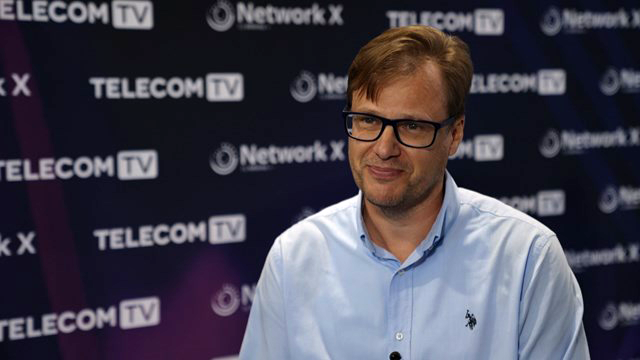
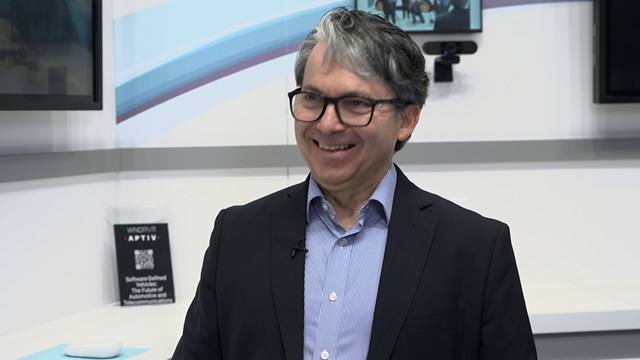
This session from the AI-Native Telco Forum 2025 explores how network capabilities can be enhanced with AI. Ahmed Hafez of Deutsche Telekom and Clay Simmons of Supermicro discuss the potential of AI in telecom, including predictive maintenance, resource management and the development of autonomous networks, as well as the importance of AI in driving efficiency, resilience, and customer satisfaction.
First Broadcast Live October 2025
Participants

Ahmed Hafez
SVP Network Strategy and Data & AI in Networks, Deutsche Telekom

Clay Simmons
Vice President, CGO Chief of Staff, Supermicro