To embed our video on your website copy and paste the code below:
<iframe src="https://www.youtube.com/embed/__KXoO4ACYA?modestbranding=1&rel=0" width="970" height="546" frameborder="0" scrolling="auto" allowfullscreen></iframe>
Guy Daniels, TelecomTV (00:13):
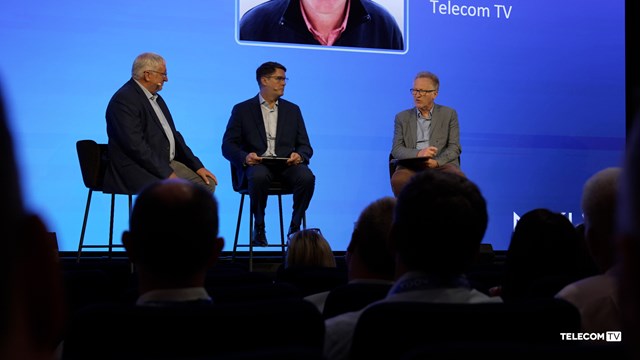
Right. So we should start our next session. Our next session is AI for cross-domain insights. Let's invite our next two guests to the day, shall we? And who have we got? We've got Sanil and Andrea. Sanil is going to start us off. Good morning everybody.
Sanil Nambiar, IBM (00:28):
It's a pleasure to be here again. My topic is AI for cross domain insights and we have a differentiated approach of looking at this problem. But before that, I want to sort of frame the market forces that are driving towards network autonomy in the sense that inspiring operators to drive towards network autonomy. I'm not going to go through all of them because my previous speakers already touched upon a lot of these. I want to touch upon a couple of them. One, the multi-cloud and edge explosion. I think that's a great example of literally reversal of the traffic patterns because of proliferation of the edge and the number of iot sort of devices that are sending traffic east west rather than the old way of trauma warning traffic all the way to the data center. So that's one dynamic traffic shift, which traditional tools within a domain or across domains can't handle.
(01:22):
Second one is a data deluge. The data deluge problem, again, has been addressed very well. Bjo addressed it, Amad addressed it, but the implication of the data deluge is also important to understand as well. I believe that AI can actually be a motivator because of this data deluge problem because now we have the technology to sort of solve it. The other problem of data deluge is that it has this issue of outstripping human cognition because of this distributed software defined network that we have today. And so not only have this, we have this impossible contradiction of data deluge, the human cognition getting outstripped because of this complexity, but also the customer expectations has been never higher in terms of SLAs and responses in terms of applications and users. So we have this impossible contradiction where data deluge is there, the network complexities are there and the SL expectations from customers.
(02:24):
So how do we sort of square the circle? And I think we need a new operating model where the systems are not just monitoring traditionally, but are actively taking part in the investigation of different hypothesis, surfacing evidences in order to make those cases for root cause analysis across domains, et cetera. So these market forces, I've sort of tried to picture this into this, what I'm calling is this modern networking paradox. So it's essentially, you could think of it like a telcos aerobics cubes puzzle with its multidimensional complexity and within it is hidden all the big problems that we really need to solve in terms of domain specific SLAs across domains, the processes that we need to optimize costs, energy, et cetera. And so complexity ultimately becomes a tax on innovation because you're spending so much of your time actually doing and handling this complexity in a traditional way.
(03:27):
So the challenges that arise out of this modern networking complexity, again, I'm not going to go through all of them, I touched on the first one, which is basically modern networks sort of outstrip human cognition because networks have this problem of the shared fate problem. They have so many dependencies on services, they're very layered in their architectures and can, if you compare that with applications, you can sort of isolate an application and troubleshoot it. But the problem with shared fate is that the blast radius is just too big. And so networks have the shared fate problem. The other one that I want to touch upon because of this complexity obviously is cross domain blind spots. That's probably the main theme of this particular presentation as well. But the other one is expertise and intuition. I think that's a great example of the great cruise shift that happens.
(04:19):
Emma talked about rules. If people leave, you don't know what to do with these rules because the knowledge just leaves with them. So networks have explicit knowledge configurations, metrics, events, topology, ontologies, et cetera. What about that tacit intuitive information that is resident with tribal knowledge of the engineers? It's really hard to sort of capture that in systems until now because now you can actually, like Vijo said, you could build domain specific ontologies and you can capture that contextual information within knowledge graphs so that you can actually present that to the LLMs to do iterative deterministic reasoning over graphs rather than sort of relying on its corpus of general knowledge that it has learned. And finally, the known unknown problems, look, automation has sort of solved 60 to 70% of the known problems. You know what to monitor, you measure it, something happens in the network, you have a playbook and you fix it.
(05:19):
There are these esoteric problems which arise because of these known unknowns and these unknown unknowns which are really hard to sort of tackle. And I believe we have the technology now to actually look at that also in a very much clearer picture. So the operating model that I was talking about is no longer just reporting problems, but you're having these software systems which can now actively investigate as part of the overall hypothesis that these reasoning LLMs comes with. Bring up the surface, the evidences that are required to either refute or promote this particular hypothesis and then present a fully explainable page to the users in terms of what they want to do next in terms of next best actions, et cetera. So I want to sort of come to the crux of my presentation now in terms of cross domain challenges, I've sort of put it on the left side with the challenges that I just spoke about.
(06:11):
But some of the interesting things that we need to understand is modern networks obviously span all of these different data domains and each of the data domains. I mean I'm leaving the data problem aside. Look, we also have a language problem. We don't have a shared taxonomy or a vocabulary of how to deal with different domains. So that's one big problem that we have. The second problem we have is, and this is an anecdote that I can tell you from the catalyst program at Copenhagen, which I saw where there was a particular catalyst which stuffed a lot of alarms into a normal LLM and there was a magical demo which talked about an assistant interface talking about even correlation using that corpus of trained knowledge using a generic LLM. And that got me thinking because how can a stochastic par like a LLM understand time, it cannot understand time sequences, casualties, multi-factor casualties in terms of time and time metrics, et cetera.
(07:13):
And networks is all about time. So how can you actually build something for the network but take the advantages of a foundation model and so that you can pre-train these models to a specific domain and treat it like a LAD language model but not with the signal of language but the signal of time. That would be pretty interesting. So that's the direction that we are actually taking in terms of our approach, IBM's approach towards network autonomy and solving some of these challenges. So I've sort of put together a directionality in terms of the AI architecture for deterministic insights and I'm calling it deterministic because I want to decouple the logic of temporal analysis from the LLM and give it to a system which can really understand time. And this is sort of, I would say a generalization that has happened in the gene AI industry saying that, oh, you can forget all your strong software engineering principles and then prompt your way to AI modules.
(08:14):
That's not going to happen. Okay? So you really need to decouple smaller tasks, decouple the logic of temporal analysis into something more deterministic, and then definitely use the strengths of the LLM like reasoning, chain of thought reflection, self-critique, and then pair that with agents so that you can sort of surface evidences of the plan that has been generated by these LLMs in order to further your sort of quest towards cross domain autonomy. So what we are doing with IBM is we have these time series foundation models that we have developed. And the interesting part is these models are really tiny GPU inference free, really, really low latency inferencing three to five milliseconds. You can distribute it at the edge, you can pre-train it to a specific domain. So if you get data from the ran, which is time series metrics from the IP backhaul from hyperscaler clouds, from the mobile core, you can literally have one time series foundation model per domain which is pre-trained and then fine tuned to a customer's data.
(09:20):
So the result of that is highly accurate observations and because it understands the idiosyncrasies of the domain, you also expect it to understand esoteric observations that are very predominant in that domain, the known unknowns that I was talking about. And then what you do is you take domain specific ontologies and pair it with these time series foundation models and then the observations that are coming out of these individual domains are then used by the reasoning agents as well as the LLMs in order to look at all of these problems in across domain point of view. So that's the direction in which we are taking the new products that we have launched recently. You can come at the booth, we can talk about it and I'll show you how I-B-M-T-S pulse, which is time series pulse works. It has many other, I would say features and I've sort of started talk about that here.
(10:10):
I'm going to skip it IBM TS files. You can go to hugging face and download this model. What we have done is we have added high value on top of this models in terms of giving it streaming support, working with our engineering teams to really have low latency in terms of its inferencing. You can pre-train these models to a specific domain and you can fine tune these models as well. So you can get really good imputation classification, multivariate anomaly detection and similarity search of traffic patterns using this tiny small model which can be distributed to the edge for real time inferencing. So we have another model called tiny time mixes, which is a multivariate forecasting model and you can put exogenous time series data into it as well like weather, TV schedules, sports schedules, et cetera, in order to get really good inferencing in terms of forecasting in capacity planning, et cetera.
(11:05):
Again, a 5 million parameters small model state-of-the-art performance in leaderboards downloadable from hugging face, right? So finally I just want to end up a simple scenario where you can implement a pre-trained RAN time series foundation model. You can implement a pre-trained IP TSFM and then you can provide them ontologies. Ontologies are nothing but abstractions of the rules in which a domain works. So for instance, a leaf switch should always connect to two spine switches for redundancy. That's not a rule. That's one of the abstractions of how that domain works for instance. So you can have many of these abstractions which are pretty standard and then you can present that to the LLMs order for the LLMs to deterministically look at these abstractions and come up with why those observations happened from those left side analytical AI that we are talking about. So first, bring determinism, don't stuff everything into an LLM and expect magic.
(12:10):
Don't prompt your way into AI modules, which you're not supposed to be doing. Make it very deterministic, trust by design. And I want to leave you. And this question came from Francis also in terms of trust, et cetera. This particular acronym there called care, if anybody has read this long chain blog, it's called Confidence in AI results. And it has five principles in which how you can guardrail your ai. So one of them is like strategic human in the loop reversibility of the reasoning, the autonomy gradient. So you have an assistant interface where the human is always in control with the least autonomy. And then you have this gradient where you can slowly increase the autonomy as the confidence threshold increases in the actions that the AI is taking. So that's really important. The other one is consequence isolation. If something happens, you want to isolate the consequence and bring it back into a digital twin so that you can redo that particular, the isolation, et cetera, from a consequence point of view. So these are principles of confidence in AI results, which is basically a framework you can optimize for. So it's not really about always the accuracy of the models with care, with design, the UX design, you can actually optimize for better trust and adoption in operations as well. So that's really important aspect as well, right? So that's pretty much it. Visitor booth, we have new products that we want to show you. It's called IBM Network Intelligence and happy to talk about it. Thank you very much.
Guy Daniels, TelecomTV (13:47):
Come and join us for a second, Andrea. Just one second. Let's just see, yeah, we will just see if there's any pickup because we've probably got like a minute or so for a question for Sanil and Sanil by the way's program director, portfolio strategy at IBM. Any questions there from the audience? A quickie. I'll tell you what, I'm going to a quickie because I've got a quickie. No, Francis, if you don't mind, I've just got a quickie from the audience and I promise to read some online questions out here. You talked about the CARE acronym there, confidence in AI Results, one of our online viewers says, do we have issues with hallucination in AI for telecoms and all the time and how do we work to remove it?
Sanil Nambiar, IBM (14:29):
So that's the deterministic part I was talking about. You can always not give it context and use the general corpus of information that it has in terms of reasoning, et cetera to do this. But then the moment you give the LLM access to dynamic tool calling either through MCP or through APIs or whichever mechanism is available, now you some determinism in the answers. So you can either refute the hypothesis or you can promote a particular hypothesis based on evidence. So that's one way to do it. The other, there are so many other care metrics that I talked about and you could apply all of those things in order to reduce the hallucinations as well.
Guy Daniels, TelecomTV (15:06):
Great, thanks. Round of applause for Sanil for his presentation and we'll get Andrea to do presentation now. Thank you. And Andrea Formisano is ICT artificial intelligence consultant at Adeptic Reply. Okay, thank you Andrea, please.
Andrea Formisano, Adeptic Reply (15:23):
Good morning everyone. I am Andrea Formisano from the company Adeptic Reply, and I work as team leader of the artificial intelligence group. Today I would like to present to you our project developed within the I-C-C-I-S initiative, an European program designed to create a cloud edge infrastructure to enable realtime services across strategic domains in the European Union. Here is our today's agenda. We'll start with the IPS ICIS program and the main challenges that we have to overcome. Then we'll pass to the reply solution and its key functionalities through the implementation of AI agents. After that, we'll look at some concrete use case and futuristic ideas and we'll conclude with the benefits of our work. So let's get started with the IP Sci CIS program. Ici CIS is the acronym for important project of common European interest for cloud infrastructure and services. Within this project, Europe is building a federated cloud edge ecosystem designed to transform and support digital transformation of public services industries and the entire society.
(16:44):
The initiative brings together companies, research centers, but also public institutions with the aim of create a sovereign European system, able to provide advanced services in areas such as data exchange, the next generation connectivity, autonomous systems and other ones. But let's start from the challenges. In fact, as we know, building a distributor system is not too easy, but it's really, really complex. The challenges to overcome are the following show in this light. First of all, we have latency because many applications demand real time responses to function properly after there are problem related to security that are related to two main things. First one, that distributed system increases risk. And then we have the problem related to the automation that on one end if reducing human intervention, but on the other hand it's reduce control and trust. Another important challenge is the sustainability. In fact, about sustainability, we know that the vast number of interconnected devices leads to significant energy consumption, energy waste, and the corresponding carbon footprint. Another challenge is the multi provider interoperability. In fact, we have multi provider, so different provider, different standard, it means notified control. And finally, but not for importance, we have the data ign. In fact, too often the information are exchange transferred outside of the European Union in unregulated context.
(18:30):
Okay, how could it be possible to overcome these challenges? To do that, reply has developed cloud edge continuum platform with three main characteristics. It's open because it's integrated standard open source components and it is designed to communicate with third party platform and third party orchestrators. It's modular because all the models, the various models for orchestration, for security, the AI models and other ones can be adopted individually or also in combination depending on this case. And finally, the most important, it's AI driving because the artificial intelligence is the important and the engine that governs all the entire system from the initial provisioning. Also the user interaction to finish with the final deployment of the servers required to achieve these characteristics, the three characteristics, we implemented a platform that following these key features. First of all, we include large language models and IL person for user friendly interaction.
(19:44):
In this mode, the end users can interact really naturally, really easy mode without technical expertise, without technical complexity. Also, we include an AI driving management. So there are AI agents that are used for automated zero touch provisioning for workload scheduling and balancing and data congestion and flow control. So there are also multilayer orchestration. In fact, our orchestrator work at three different level, end-to-end orchestrator, a central orchestrator and a local orchestrator after we can deep inside in this topic. And finally of course if efficiency and sustainability is really important. In fact, we know that is one of the main topic of today and the platform for this case improves energy efficiency and reduce energy waste, but reduces CO2 emissions thanks to an intelligent deployment of the services. As I seen before, greater focus should be given to the multilevel orchestration and the federated domains. Federated domains means in set of domains with a mutual trust for authentication, a authorization that allows user to interact between them to access to shared resources between different organization.
(21:13):
So our orchestrator is divided into three main parts. First one, the upside end-to-end network service orchestrator. So the end-to-end orchestrator manage the IGAs level orchestration at this is the entry point for the federated domains and third party organizations, a third party orchestrators and platform. For example, a telecom operator who already owns a proprietary platform but plug into the federation and benefit from a higher level of coordination. Second part of our orchestrator is the central orchestrator that manage large scale resources across the cloud infrastructures. And finally we have a local orchestrator that works to really closer to the edge sites. What is the result? The result is that thanks to this approach, true portability is unlocked and the result is a global supervision but with a local control to achieve the three characteristic listed above the platform reply, the solution is implemented by several AI components that perform the functionalities that are shown in this following slide.
(22:31):
This functionality are embedded within four main agents that works in synergy that form the intelligent framework of our platform. Let's analyze them. This slide shows the matching between the functionalities and the AI agents that form our intelligent framework. First of them, there is the lane agent. Lane is the AI agent focused on the interaction with user. So it exploits large language models to translate the user requests from natural language to machine language. And so in this mode it's ready to be processed by the other AI agents but also to the other components of the platform. The second agent is called placement. This is the intelligent optimization engine. IT use AI algorithms to choose the best node for deployment based on energy consumption, latency and resource availability. How is his goal? The goal is to ensure high performance, but while so while maintaining the energy optimization and cost reducing CO2 emissions.
(23:44):
Third, the agent is called the network slicer. It governs the use, the dynamic creation and the management of networks license. IT monitors, resource asage, prevent congestion, and finally really important enables automatic slice provisioning for each type of surfaces depending on use case. Finally, we have a net config AI that is used to automate the configuration of network services and the network or entire functions. In this mode, we reduce human errors but reduce also set up times. That is really important. This is the agent that's truly enabled the paradigm set up once and deploy anywhere to better understand that the really potential of our platform let's to look our some concrete use case scenarios. For example, in the telco scenarios, the AI plays really important role. It plays a central role in a profound transformation. We have a shift from hardware centric model to a fully ized environment.
(24:53):
So network functions are no longer tied to physical infrastructure, but they becomes software components that can be deployed anywhere depending on use case and depending on needs. Another scenario is the area of autonomous vehicle cell robotics. Thanks to the high here, thanks to the IRD Edge data is processed close to the source and so it provide coordination and collaboration between vehicles and machines. And in this mode we have immediate response times that is essential for the safety of this scenario. About finally in the cell is smart factories. The bag amount of data can be processed by the AI to create and enable real-time analytics, predictive maintenance as and quality control. Finally, as we show before, we know that the AI is also a good driver of sustainability by reducing energy waste and contributing to decarbonization goals. Alongside the concrete use case, we show also some futuristic use case.
(26:02):
In fact, our platform opened the doors to some ideas for the future. Our platform could transform sectors such as healthcare, urbanistic, public institutions and other ones futuristic use case are shown in this slide. We can analyze some of them. For example, the European predictive healthcare. We think like the idea is to implement AI powered analysis of the health data across Europe to enable early ES of epidemics, rare disease and personal prevention of the services other use case are shown. This slide maybe can discussed later. We conclude with the benefits. Our platform, of course, the benefit of our project are clear and evident across multiple domains. For tech operator, it simplifies the network functions through virtualization, ai, drive and management. For industries, it brings intelligent automation and real-time analytics increasing the productivity and reducing downtime. And for Europe, for Europe, it supports strategic goals such as the green deal at the digital serenity that is translating into competitiveness, sustainability, and independence. And so in conclusion, our vision is clear and ambitious. Europe has both the foundation and the responsibility to lead the next generation of AI native services, but not by following trends, but by setting them. These are our contact. I invite you to follow us on LinkedIn and we are really happy to collaborate with you. Thank you very much.
Guy Daniels, TelecomTV (27:52):
Great. Please, thanks very much. Come and sit down and join us. Great. Fascinating. Thank you very much for presenting that. Any questions? We've just got about a minute or so. Is there a question from our audience? Anything tickles you're fancy there about European AGI native platforms, for example? Any questions? Any questions coming up? Anything? Tony? Anything Tony? Good. Nothing Good. That's it. Nothing looking good? Sure. Question. Any questions at all? No. No. Right. Look at this. They're so impressed that they can't wait to go and see what's going on outside at the pod. And I'll just plug that again outside during the lunch break, you'll find out more. Go and talk to these people and companies and you'll get a lot more insights. But for now, round of applause please to guests. Thank you very much indeed.
Right. So we should start our next session. Our next session is AI for cross-domain insights. Let's invite our next two guests to the day, shall we? And who have we got? We've got Sanil and Andrea. Sanil is going to start us off. Good morning everybody.
Sanil Nambiar, IBM (00:28):
It's a pleasure to be here again. My topic is AI for cross domain insights and we have a differentiated approach of looking at this problem. But before that, I want to sort of frame the market forces that are driving towards network autonomy in the sense that inspiring operators to drive towards network autonomy. I'm not going to go through all of them because my previous speakers already touched upon a lot of these. I want to touch upon a couple of them. One, the multi-cloud and edge explosion. I think that's a great example of literally reversal of the traffic patterns because of proliferation of the edge and the number of iot sort of devices that are sending traffic east west rather than the old way of trauma warning traffic all the way to the data center. So that's one dynamic traffic shift, which traditional tools within a domain or across domains can't handle.
(01:22):
Second one is a data deluge. The data deluge problem, again, has been addressed very well. Bjo addressed it, Amad addressed it, but the implication of the data deluge is also important to understand as well. I believe that AI can actually be a motivator because of this data deluge problem because now we have the technology to sort of solve it. The other problem of data deluge is that it has this issue of outstripping human cognition because of this distributed software defined network that we have today. And so not only have this, we have this impossible contradiction of data deluge, the human cognition getting outstripped because of this complexity, but also the customer expectations has been never higher in terms of SLAs and responses in terms of applications and users. So we have this impossible contradiction where data deluge is there, the network complexities are there and the SL expectations from customers.
(02:24):
So how do we sort of square the circle? And I think we need a new operating model where the systems are not just monitoring traditionally, but are actively taking part in the investigation of different hypothesis, surfacing evidences in order to make those cases for root cause analysis across domains, et cetera. So these market forces, I've sort of tried to picture this into this, what I'm calling is this modern networking paradox. So it's essentially, you could think of it like a telcos aerobics cubes puzzle with its multidimensional complexity and within it is hidden all the big problems that we really need to solve in terms of domain specific SLAs across domains, the processes that we need to optimize costs, energy, et cetera. And so complexity ultimately becomes a tax on innovation because you're spending so much of your time actually doing and handling this complexity in a traditional way.
(03:27):
So the challenges that arise out of this modern networking complexity, again, I'm not going to go through all of them, I touched on the first one, which is basically modern networks sort of outstrip human cognition because networks have this problem of the shared fate problem. They have so many dependencies on services, they're very layered in their architectures and can, if you compare that with applications, you can sort of isolate an application and troubleshoot it. But the problem with shared fate is that the blast radius is just too big. And so networks have the shared fate problem. The other one that I want to touch upon because of this complexity obviously is cross domain blind spots. That's probably the main theme of this particular presentation as well. But the other one is expertise and intuition. I think that's a great example of the great cruise shift that happens.
(04:19):
Emma talked about rules. If people leave, you don't know what to do with these rules because the knowledge just leaves with them. So networks have explicit knowledge configurations, metrics, events, topology, ontologies, et cetera. What about that tacit intuitive information that is resident with tribal knowledge of the engineers? It's really hard to sort of capture that in systems until now because now you can actually, like Vijo said, you could build domain specific ontologies and you can capture that contextual information within knowledge graphs so that you can actually present that to the LLMs to do iterative deterministic reasoning over graphs rather than sort of relying on its corpus of general knowledge that it has learned. And finally, the known unknown problems, look, automation has sort of solved 60 to 70% of the known problems. You know what to monitor, you measure it, something happens in the network, you have a playbook and you fix it.
(05:19):
There are these esoteric problems which arise because of these known unknowns and these unknown unknowns which are really hard to sort of tackle. And I believe we have the technology now to actually look at that also in a very much clearer picture. So the operating model that I was talking about is no longer just reporting problems, but you're having these software systems which can now actively investigate as part of the overall hypothesis that these reasoning LLMs comes with. Bring up the surface, the evidences that are required to either refute or promote this particular hypothesis and then present a fully explainable page to the users in terms of what they want to do next in terms of next best actions, et cetera. So I want to sort of come to the crux of my presentation now in terms of cross domain challenges, I've sort of put it on the left side with the challenges that I just spoke about.
(06:11):
But some of the interesting things that we need to understand is modern networks obviously span all of these different data domains and each of the data domains. I mean I'm leaving the data problem aside. Look, we also have a language problem. We don't have a shared taxonomy or a vocabulary of how to deal with different domains. So that's one big problem that we have. The second problem we have is, and this is an anecdote that I can tell you from the catalyst program at Copenhagen, which I saw where there was a particular catalyst which stuffed a lot of alarms into a normal LLM and there was a magical demo which talked about an assistant interface talking about even correlation using that corpus of trained knowledge using a generic LLM. And that got me thinking because how can a stochastic par like a LLM understand time, it cannot understand time sequences, casualties, multi-factor casualties in terms of time and time metrics, et cetera.
(07:13):
And networks is all about time. So how can you actually build something for the network but take the advantages of a foundation model and so that you can pre-train these models to a specific domain and treat it like a LAD language model but not with the signal of language but the signal of time. That would be pretty interesting. So that's the direction that we are actually taking in terms of our approach, IBM's approach towards network autonomy and solving some of these challenges. So I've sort of put together a directionality in terms of the AI architecture for deterministic insights and I'm calling it deterministic because I want to decouple the logic of temporal analysis from the LLM and give it to a system which can really understand time. And this is sort of, I would say a generalization that has happened in the gene AI industry saying that, oh, you can forget all your strong software engineering principles and then prompt your way to AI modules.
(08:14):
That's not going to happen. Okay? So you really need to decouple smaller tasks, decouple the logic of temporal analysis into something more deterministic, and then definitely use the strengths of the LLM like reasoning, chain of thought reflection, self-critique, and then pair that with agents so that you can sort of surface evidences of the plan that has been generated by these LLMs in order to further your sort of quest towards cross domain autonomy. So what we are doing with IBM is we have these time series foundation models that we have developed. And the interesting part is these models are really tiny GPU inference free, really, really low latency inferencing three to five milliseconds. You can distribute it at the edge, you can pre-train it to a specific domain. So if you get data from the ran, which is time series metrics from the IP backhaul from hyperscaler clouds, from the mobile core, you can literally have one time series foundation model per domain which is pre-trained and then fine tuned to a customer's data.
(09:20):
So the result of that is highly accurate observations and because it understands the idiosyncrasies of the domain, you also expect it to understand esoteric observations that are very predominant in that domain, the known unknowns that I was talking about. And then what you do is you take domain specific ontologies and pair it with these time series foundation models and then the observations that are coming out of these individual domains are then used by the reasoning agents as well as the LLMs in order to look at all of these problems in across domain point of view. So that's the direction in which we are taking the new products that we have launched recently. You can come at the booth, we can talk about it and I'll show you how I-B-M-T-S pulse, which is time series pulse works. It has many other, I would say features and I've sort of started talk about that here.
(10:10):
I'm going to skip it IBM TS files. You can go to hugging face and download this model. What we have done is we have added high value on top of this models in terms of giving it streaming support, working with our engineering teams to really have low latency in terms of its inferencing. You can pre-train these models to a specific domain and you can fine tune these models as well. So you can get really good imputation classification, multivariate anomaly detection and similarity search of traffic patterns using this tiny small model which can be distributed to the edge for real time inferencing. So we have another model called tiny time mixes, which is a multivariate forecasting model and you can put exogenous time series data into it as well like weather, TV schedules, sports schedules, et cetera, in order to get really good inferencing in terms of forecasting in capacity planning, et cetera.
(11:05):
Again, a 5 million parameters small model state-of-the-art performance in leaderboards downloadable from hugging face, right? So finally I just want to end up a simple scenario where you can implement a pre-trained RAN time series foundation model. You can implement a pre-trained IP TSFM and then you can provide them ontologies. Ontologies are nothing but abstractions of the rules in which a domain works. So for instance, a leaf switch should always connect to two spine switches for redundancy. That's not a rule. That's one of the abstractions of how that domain works for instance. So you can have many of these abstractions which are pretty standard and then you can present that to the LLMs order for the LLMs to deterministically look at these abstractions and come up with why those observations happened from those left side analytical AI that we are talking about. So first, bring determinism, don't stuff everything into an LLM and expect magic.
(12:10):
Don't prompt your way into AI modules, which you're not supposed to be doing. Make it very deterministic, trust by design. And I want to leave you. And this question came from Francis also in terms of trust, et cetera. This particular acronym there called care, if anybody has read this long chain blog, it's called Confidence in AI results. And it has five principles in which how you can guardrail your ai. So one of them is like strategic human in the loop reversibility of the reasoning, the autonomy gradient. So you have an assistant interface where the human is always in control with the least autonomy. And then you have this gradient where you can slowly increase the autonomy as the confidence threshold increases in the actions that the AI is taking. So that's really important. The other one is consequence isolation. If something happens, you want to isolate the consequence and bring it back into a digital twin so that you can redo that particular, the isolation, et cetera, from a consequence point of view. So these are principles of confidence in AI results, which is basically a framework you can optimize for. So it's not really about always the accuracy of the models with care, with design, the UX design, you can actually optimize for better trust and adoption in operations as well. So that's really important aspect as well, right? So that's pretty much it. Visitor booth, we have new products that we want to show you. It's called IBM Network Intelligence and happy to talk about it. Thank you very much.
Guy Daniels, TelecomTV (13:47):
Come and join us for a second, Andrea. Just one second. Let's just see, yeah, we will just see if there's any pickup because we've probably got like a minute or so for a question for Sanil and Sanil by the way's program director, portfolio strategy at IBM. Any questions there from the audience? A quickie. I'll tell you what, I'm going to a quickie because I've got a quickie. No, Francis, if you don't mind, I've just got a quickie from the audience and I promise to read some online questions out here. You talked about the CARE acronym there, confidence in AI Results, one of our online viewers says, do we have issues with hallucination in AI for telecoms and all the time and how do we work to remove it?
Sanil Nambiar, IBM (14:29):
So that's the deterministic part I was talking about. You can always not give it context and use the general corpus of information that it has in terms of reasoning, et cetera to do this. But then the moment you give the LLM access to dynamic tool calling either through MCP or through APIs or whichever mechanism is available, now you some determinism in the answers. So you can either refute the hypothesis or you can promote a particular hypothesis based on evidence. So that's one way to do it. The other, there are so many other care metrics that I talked about and you could apply all of those things in order to reduce the hallucinations as well.
Guy Daniels, TelecomTV (15:06):
Great, thanks. Round of applause for Sanil for his presentation and we'll get Andrea to do presentation now. Thank you. And Andrea Formisano is ICT artificial intelligence consultant at Adeptic Reply. Okay, thank you Andrea, please.
Andrea Formisano, Adeptic Reply (15:23):
Good morning everyone. I am Andrea Formisano from the company Adeptic Reply, and I work as team leader of the artificial intelligence group. Today I would like to present to you our project developed within the I-C-C-I-S initiative, an European program designed to create a cloud edge infrastructure to enable realtime services across strategic domains in the European Union. Here is our today's agenda. We'll start with the IPS ICIS program and the main challenges that we have to overcome. Then we'll pass to the reply solution and its key functionalities through the implementation of AI agents. After that, we'll look at some concrete use case and futuristic ideas and we'll conclude with the benefits of our work. So let's get started with the IP Sci CIS program. Ici CIS is the acronym for important project of common European interest for cloud infrastructure and services. Within this project, Europe is building a federated cloud edge ecosystem designed to transform and support digital transformation of public services industries and the entire society.
(16:44):
The initiative brings together companies, research centers, but also public institutions with the aim of create a sovereign European system, able to provide advanced services in areas such as data exchange, the next generation connectivity, autonomous systems and other ones. But let's start from the challenges. In fact, as we know, building a distributor system is not too easy, but it's really, really complex. The challenges to overcome are the following show in this light. First of all, we have latency because many applications demand real time responses to function properly after there are problem related to security that are related to two main things. First one, that distributed system increases risk. And then we have the problem related to the automation that on one end if reducing human intervention, but on the other hand it's reduce control and trust. Another important challenge is the sustainability. In fact, about sustainability, we know that the vast number of interconnected devices leads to significant energy consumption, energy waste, and the corresponding carbon footprint. Another challenge is the multi provider interoperability. In fact, we have multi provider, so different provider, different standard, it means notified control. And finally, but not for importance, we have the data ign. In fact, too often the information are exchange transferred outside of the European Union in unregulated context.
(18:30):
Okay, how could it be possible to overcome these challenges? To do that, reply has developed cloud edge continuum platform with three main characteristics. It's open because it's integrated standard open source components and it is designed to communicate with third party platform and third party orchestrators. It's modular because all the models, the various models for orchestration, for security, the AI models and other ones can be adopted individually or also in combination depending on this case. And finally, the most important, it's AI driving because the artificial intelligence is the important and the engine that governs all the entire system from the initial provisioning. Also the user interaction to finish with the final deployment of the servers required to achieve these characteristics, the three characteristics, we implemented a platform that following these key features. First of all, we include large language models and IL person for user friendly interaction.
(19:44):
In this mode, the end users can interact really naturally, really easy mode without technical expertise, without technical complexity. Also, we include an AI driving management. So there are AI agents that are used for automated zero touch provisioning for workload scheduling and balancing and data congestion and flow control. So there are also multilayer orchestration. In fact, our orchestrator work at three different level, end-to-end orchestrator, a central orchestrator and a local orchestrator after we can deep inside in this topic. And finally of course if efficiency and sustainability is really important. In fact, we know that is one of the main topic of today and the platform for this case improves energy efficiency and reduce energy waste, but reduces CO2 emissions thanks to an intelligent deployment of the services. As I seen before, greater focus should be given to the multilevel orchestration and the federated domains. Federated domains means in set of domains with a mutual trust for authentication, a authorization that allows user to interact between them to access to shared resources between different organization.
(21:13):
So our orchestrator is divided into three main parts. First one, the upside end-to-end network service orchestrator. So the end-to-end orchestrator manage the IGAs level orchestration at this is the entry point for the federated domains and third party organizations, a third party orchestrators and platform. For example, a telecom operator who already owns a proprietary platform but plug into the federation and benefit from a higher level of coordination. Second part of our orchestrator is the central orchestrator that manage large scale resources across the cloud infrastructures. And finally we have a local orchestrator that works to really closer to the edge sites. What is the result? The result is that thanks to this approach, true portability is unlocked and the result is a global supervision but with a local control to achieve the three characteristic listed above the platform reply, the solution is implemented by several AI components that perform the functionalities that are shown in this following slide.
(22:31):
This functionality are embedded within four main agents that works in synergy that form the intelligent framework of our platform. Let's analyze them. This slide shows the matching between the functionalities and the AI agents that form our intelligent framework. First of them, there is the lane agent. Lane is the AI agent focused on the interaction with user. So it exploits large language models to translate the user requests from natural language to machine language. And so in this mode it's ready to be processed by the other AI agents but also to the other components of the platform. The second agent is called placement. This is the intelligent optimization engine. IT use AI algorithms to choose the best node for deployment based on energy consumption, latency and resource availability. How is his goal? The goal is to ensure high performance, but while so while maintaining the energy optimization and cost reducing CO2 emissions.
(23:44):
Third, the agent is called the network slicer. It governs the use, the dynamic creation and the management of networks license. IT monitors, resource asage, prevent congestion, and finally really important enables automatic slice provisioning for each type of surfaces depending on use case. Finally, we have a net config AI that is used to automate the configuration of network services and the network or entire functions. In this mode, we reduce human errors but reduce also set up times. That is really important. This is the agent that's truly enabled the paradigm set up once and deploy anywhere to better understand that the really potential of our platform let's to look our some concrete use case scenarios. For example, in the telco scenarios, the AI plays really important role. It plays a central role in a profound transformation. We have a shift from hardware centric model to a fully ized environment.
(24:53):
So network functions are no longer tied to physical infrastructure, but they becomes software components that can be deployed anywhere depending on use case and depending on needs. Another scenario is the area of autonomous vehicle cell robotics. Thanks to the high here, thanks to the IRD Edge data is processed close to the source and so it provide coordination and collaboration between vehicles and machines. And in this mode we have immediate response times that is essential for the safety of this scenario. About finally in the cell is smart factories. The bag amount of data can be processed by the AI to create and enable real-time analytics, predictive maintenance as and quality control. Finally, as we show before, we know that the AI is also a good driver of sustainability by reducing energy waste and contributing to decarbonization goals. Alongside the concrete use case, we show also some futuristic use case.
(26:02):
In fact, our platform opened the doors to some ideas for the future. Our platform could transform sectors such as healthcare, urbanistic, public institutions and other ones futuristic use case are shown in this slide. We can analyze some of them. For example, the European predictive healthcare. We think like the idea is to implement AI powered analysis of the health data across Europe to enable early ES of epidemics, rare disease and personal prevention of the services other use case are shown. This slide maybe can discussed later. We conclude with the benefits. Our platform, of course, the benefit of our project are clear and evident across multiple domains. For tech operator, it simplifies the network functions through virtualization, ai, drive and management. For industries, it brings intelligent automation and real-time analytics increasing the productivity and reducing downtime. And for Europe, for Europe, it supports strategic goals such as the green deal at the digital serenity that is translating into competitiveness, sustainability, and independence. And so in conclusion, our vision is clear and ambitious. Europe has both the foundation and the responsibility to lead the next generation of AI native services, but not by following trends, but by setting them. These are our contact. I invite you to follow us on LinkedIn and we are really happy to collaborate with you. Thank you very much.
Guy Daniels, TelecomTV (27:52):
Great. Please, thanks very much. Come and sit down and join us. Great. Fascinating. Thank you very much for presenting that. Any questions? We've just got about a minute or so. Is there a question from our audience? Anything tickles you're fancy there about European AGI native platforms, for example? Any questions? Any questions coming up? Anything? Tony? Anything Tony? Good. Nothing Good. That's it. Nothing looking good? Sure. Question. Any questions at all? No. No. Right. Look at this. They're so impressed that they can't wait to go and see what's going on outside at the pod. And I'll just plug that again outside during the lunch break, you'll find out more. Go and talk to these people and companies and you'll get a lot more insights. But for now, round of applause please to guests. Thank you very much indeed.
Please note that video transcripts are provided for reference only – content may vary from the published video or contain inaccuracies.
AI for cross-domain insights
In this session, experts from IBM and Adeptic Reply discuss the evolution of network management, and the importance of a new operating model powered by AI to handle the complexities of modern networks. They explore the significance of cross-domain insights, the data deluge and how deterministic AI is key to solving network challenges.They also offer a glimpse into future AI-driven telecom services.
First Broadcast Live October 2025
Participants

Andrea Formisano
ICT Artificial Intelligence Consultant, Adeptic Reply

Sanil Nambiar
Program Director, Portfolio Strategy, IBM