To embed our video on your website copy and paste the code below:
<iframe src="https://www.youtube.com/embed/L2ul8MuMgLw?modestbranding=1&rel=0" width="970" height="546" frameborder="0" scrolling="auto" allowfullscreen></iframe>
Right. Welcome back everyone. Time for the final session of day one. I promise you, this is going to be a good one. We've got a great panel for you to round out day one of DSP Leaders World Forum. This is the first of two vertical market panels for this year's event. We're starting with automotive, the SDV globalization gap, that software defined vehicle. And there's going to be some terminology we're going to be using there. It's probably unique to the automotive sector that is different or not known to telecoms, but it's an interesting mix and we'll develop this conversation as we go along. And if there's any questions, and I'm sure there will be questions from you in the audience, we will come to you and incorporate as many as we can. So software defined vehicles promises continuous feature upgrades and new revenue models, but the business case doesn't really stand up when these services can't be delivered consistently across markets.
(01:30):
We've developed this panel in association with 5G AI and the information we've got tells us that most OEMs and OEMs are car companies in this context. Yeah. So it's different context. Most OEMs deploy connected vehicle services in roughly 50 first tier countries, while the SDV ambitions target about 140 or more markets. Big difference there. But fragmented connectivity models, ESIM lifecycle complexity, compliance requirements, there's uneven regulatory environments. There's a long list here. And these create a globalization gap that can turn this on SDV vision into dozens or more of incompatible implementations, which obviously we don't want. So we're going to meet our panelists. I'm going to ask them to introduce themselves and then Maxime will say a few words. So let's introduce our panelists and it's a welcome return to Colin from my file left. Colin.
Prof. Colin Lee, Jaguar Land Rover (JLR) (02:26):
Good afternoon. My name is Professor Collin Lee, Queens University Belfast. And then also work for JLR clearly. I look after the VCDP, which is a vehicle connectivity data platform strategy and our V2X technology, which is where my 5G AI board membership comes in in that respect. So that's me.
André Schlufter, Cubic³ (02:49):
Yeah. Hello. Together, André Schlufter, my name. I'm with Cubic and we are looking providing global connectivity solutions that we are probably talking about today. Previously I was leading connectivity for German car ROM Porsche, so I know what the other guys are talking about. Thank you.
Patrick Jeanbart, Orange Business (03:08):
Hello. I'm Patrick Jeanbart. I'm working at Orange Business Services and I'm leading the connected car vertical in order to deploy our connected and digital services across the world. And I'm also coming from the automotive industry having worked for Toyota Voz again in Stellantis.
Camille Voisin, General Motors (03:26):
Hi, everyone. I'm Camille. I'm director of software engineering in general motors. So I'm on the technical side and I'm responsible for carrier connectivity for all our vehicle globally. So that's a small car park of more than 20 million vehicles.
Craig Turner, APTIV (03:43):
Great. Great vehicles too. Hi everyone. My name's Craig Turner. I'm responsible for the in- cabin experience and middleware product lines at APTIV. APTIV is a global technology provider, heavily rooted, of course, in the automotive industry, but also addressing a variety of other vehicles together with our partners at Wind River and then across things like drones, robotics, and other up and coming industries.
Guy Daniels, TelecomTV (04:06):
Great. Thank you.
Maxime Flament, 5GAA (04:07):
And Maxime Flamont from the 5GA. I'm the chief technology officer and my role is to herd the cats sometimes. And so making sure that the automotive talk to the TEDcos and TEDcos talk to the automotive.
Guy Daniels, TelecomTV (04:23):
Great. Well, good to meet you all. Maxim is our DSP co-host for this session. So I'm going to ask him to take to the podium if you can and deliver our DSP leaders address.
Maxime Flament, 5GAA (04:37):
Thank you very much and thank you also TelecomTV for the invitation two years in a row. Actually last year we were also in this panel and we also in 2024 we started or actually TelecomTV started this channel that is called Tedcos and Autos, which I invite you also to look at. We as 5GA, we try to contribute to this channel with different members contributing and being then interviewed. And last year we were only three persons in the panel. And I'm very happy that this has expanded. More than half is actually coming from the 5GA and this really shows that the topic is getting more and more important. Last year we were talking about cross MNOs corporation, cross borders, non-terrestrial network we talked about. This year, I think we really targeted something much more exciting and it's two issues on the software defined vehicles on one side and then the global connectivity.
(05:56):
And the reason we did that is that at 5GA, we did our homework, let's say we have a different project inside the organization and we bring the, as I said earlier, the automotive sector and the automotive sector and the techco together, make sure that they understand each other, talk about what is really, what are the real pain points in terms of deployment, but also in terms of standardization or in terms of also policy making and then eventually try to come up with common understanding. And on SDV front, we came with conclusion that definitely connectivity, if we want to have a global scale, connectivity needs a new paradigm. And that paradigm is being created by the likes of Kamara, for example, with programmable APIs or API driven platforms that then guarantee that we don't have only connectivity as a coverage, but then have connectivity continuity in terms of services.
(07:12):
Now the original title of the session was much more alarmist because we think that we are not there yet and that's why we have this panel. And so I'm very happy that we end up with this. Now perhaps a quote is that now most of the vehicles that you have out there are on permanent roaming and roaming is great. I mean, everyone enjoys it when he's traveling abroad, but roaming is working for connectivity, but it's not working yet for services. And we have to make sure that at the end of the day, the services that are run inside these vehicles are served well in any countries. Thank you very much.
Guy Daniels, TelecomTV (08:03):
Maxim, thank you very much. I said earlier, there's some connected themes at this year's event and we've had a few mentions of the sector already today. I think Andy in the previous panel mentioned connected cars and then Neil reminded us that telcos and the car sector need to understand each other better. And then earlier in the day, I think Warren was talking about data center on wheels analogy. So this kind of permeates through a lot of the discussions we're having this year, but I'd like to start if I can, because you mentioned two issues and the first being the global connectivity. So if we can start on that one, is global connectivity now an integral part of this SDV platform or are OEMs, are the car companies still treating this as a country by country procurement exercise? What has to change? What has to improve for connected vehicles not to store beyond the obvious sort of first tier country markets?
(09:13):
How do we push this or how do you push this and extend this telcos and automotive? Patrick, can I come to you first on this one and get your view on how we can perhaps start to achieve this?
Patrick Jeanbart, Orange Business (09:25):
Yeah. So we see a lot of changes in the CIS market. So it was not a country per country sourcing. It was more per regional sourcing. In fact, and now that we are increasing the globalization of the vehicles, as we have vehicles produce in one country, for example, in China or in Turkey, but who are sold across the world, now you have software defined vehicle, you have the electric vehicle who is coming. The dealer network is decreasing. And so now for the car manufacturer, in order to find new revenue streams, the connected services is really key because it's no more the aftermarket and to be linked to the first customer who are the rental companies long and short term and after that also linked to the users and in order to sell different kind of connected services and also be compliant with the different local regulations, allow you have local regulation in North America, you have local regulations in Europe and in Europe per country you have different kind of regulations.
(10:35):
And it's also here where I agree with Maxim. So you have the IoT connectivity in roaming with 901, which is good is very working perfectly for basic telematic services. But now as we are increasing the different kind of models of different kind of owners or end users of the vehicle, I have to say that for example, the multiple enabled profile solution is something great because on one simpler you can have several profile activated. So you can still have your IoT 901 for the basic telematics services. Now we have also more and more requests regarding 5G standalone and that also enables you to respond to the different use case on 5G standalone, but there is no rooming on 5G standalone. So you cannot do homing. So that means that you need to localize, but you will not put a lot of technologies and hardware into the vehicle.
(11:36):
So yes, with one modem and with one SIM card with a multiple enabled profile, you can start to answer that kind of use cases. And after that you have another one because I think that today 60 to 70% in Europe, I don't know in North America, but in Europe are B2B new registrations, less and less B2C registrations. So here you have the fleet management who is coming. I will take, for example, a large leasing company, they will not use the connectivity of the OEM because otherwise it would be too much costly. So they will ask to put their own connectivity because they have their own connectivity provider into the vehicle, but they will use the data coming from the car manufacturer in order to do their fleet services because they impose to the car manufacturer to put a telematic box at some point. I think it was 20 to 25 years ago and now they will impose to the car manufacturer, "Okay, give me your data.
(12:29):
I will pay for it, but I will not pay for the connectivity." Of course, they are stronger. So it's something that will help in order to respond to the different kind of SDV and the revenue on top of that. And after that, you have the user of the vehicle willing to have, for example, wifi outspot in the car, but he will not pay for that. So he will use the subscription of his mobile phone to put it into the vehicle. So that's different kind of stuff that operators will enable in order to facilitate the car manufacturer to deploy software defined vehicle across the world. And after that, also to respond to the different kind of regulations that are moving and also with all the geopolitics today, the different regulation and constraints will also move. And for that, we need to be flexible and to make it easy for the car manufacturers.
Guy Daniels, TelecomTV (13:25):
Okay. Thanks very much, Patrick. Colin, can I come to you next because you were here last year with us and we had these conversations last year. Are things changing? Are things changing enough?
Prof. Colin Lee, Jaguar Land Rover (JLR) (13:39):
Yes and no. So yes, they are changing. There's a realization that vehicles need to be connected always. I mean, that's very clear. Are we there yet? No, but we're getting closer because there's other technologies that are now starting to come up in the 5G AA, things like NTN. We've also, as Kip was saying, about the ability to be able to use cellular in different countries without worrying too much about the regulations, which has always been a burden on us and we're overregulated in many cases on vehicles with the data as well. There's lots of other things I'm sure that'd be covered later. But I think what we're trying to do now is figure out how we can exploit all of those coming in. So if you can imagine having a multiplexer coming in with all the different technologies coming in, we're trying to figure out how can we help ourselves to be always connected because at the moment we're not there yet.
(14:38):
So I love what Neil said earlier. Working on the black spots I think is really important for you guys because as soon as you do that, we won't have to do it, but we're doing what we have to do to do what we need to do. For things like, for example, receiving diagnostic data to understand if there are common problems, if we need to repair parts of the vehicle, we don't know if we're not connected. We don't know about that. Feature over the air, software over the air. There's lots of various things that we need to do as an OEM that is becoming more and more important for us to have the high quality vehicle that our customers expect.
Guy Daniels, TelecomTV (15:13):
Great. Thanks very much. Anyone else want to comment on this connectivity?
Camille Voisin, General Motors (15:18):
I'd love to. I think you talk about how connectivity is an integral part of SDV vehicle. I would say connectivity is the experience of an SDV vehicle. I don't think you can really separate what we want to offer as a beautiful finished product if you don't have connectivity, because many of the services that we offer within this vehicle require connectivity. And so I think as we've evolved from a need of data that was really supporting telemetry and supporting maintenance, it's becoming really critical now for the quality of experience that we offer to customers. And guess what? We want that experience to be consistent globally, but we have to run that over many different jurisdiction that have different regulation, different standards, all the way from hardware frequency equipment to different ESIM technology to different localization requirements and to offer that in convincing and consistent expense for the customer, it's hard.
(16:29):
It's definitely a lot of work for us.
Guy Daniels, TelecomTV (16:32):
So it's hard. Maxime, you spoke about coordinating this activity. What are you doing with your members and the industry to help accelerate this?
Maxime Flament, 5GAA (16:43):
I think Andrea can answer this. Yeah. So maybe
André Schlufter, Cubic³ (16:46):
It's
Guy Daniels, TelecomTV (16:46):
Beautiful the question. Come on.
André Schlufter, Cubic³ (16:50):
So I didn't mention it earlier, but also Cubic is part of the 5G AA. We are also on the board there, especially to address one work item that we have in the 5GA addressing the global connectivity and there we are dealing, especially with the challenges that pain points that OEMs are expressing today. We have other M&Os in the community there and there we are trying to bring things together, have an exchange and find solutions. And this is perfect also a spot for us as Cubic, as we are providing these global solutions to the industry. So we are specialized in the mobility sector. So our aim is to provide to OEMs. And as these gentlemen have explained, they want to have a homogeneous experience basically with one API integrating to us and we are doing the work working with the telco community around the globe to normalize this and orchestrate this, to make it simple for them and avoiding multiple integrations.
(17:49):
So that's the discussion we have there.
Guy Daniels, TelecomTV (17:52):
Do you get a receptive audience from the global telecoms community?
André Schlufter, Cubic³ (17:56):
Yeah. So we are happy to work with the entire industry. So we are today live active in 200 markets and as Patrick also explained, so there's a trend that we go more and more local roaming cannot do it. So we are happy to, let's say, enable all of the telcos around the globe to enable the cars of the future. And maybe it's an important tipping point for the telco to see now what is happening before maybe everybody was saying hard, the connected cars, there's not so much traffic, it's not so critical for the business, but with these SDVs coming on, we see the trend now. They're really kicking off and data is increasing massively. So we need to look together also on solutions to have the networks ready for these cars, having quality of service enabled because I mean, this is getting the third living space for all of us behind home office.
Guy Daniels, TelecomTV (18:54):
Great. Maxime, want to come in?
Maxime Flament, 5GAA (18:55):
Yeah. And perhaps one on the process is quite interesting. So 5GA is a lot also working on standards and 3GPP, et cetera. And so we usually start as a vertical to provide requirements from the automotive. Here, this is another way around. We start with the pain point and so it's much, much later in the standardization process after the standard is done, after the deployment is done and then we are here standing in a group telcos on one side and automotive on the other side and then listing the pain points and they are one after the other coming up and at the beginning we were very shy. We were saying, "Oh, let's see what happens." But now it's really kicking off and we don't have the pretension that we are going to answer all the pain points, certainly not some of the policymakers pain points in some countries which are quite challenging, but at least by putting ourselves together and trying to solve this together, we can find a solution.
Guy Daniels, TelecomTV (20:02):
Good, good. Thanks, Maxine. Greg, do you want to add anything?
Craig Turner, APTIV (20:05):
Sure, just a little bit, maybe. I don't think I can add much to what all of my esteemed colleagues here have said. There are a lot more experts on the connectivity side of it. As an in- car technologist, first of all, just talking about the SDV, for us, the SDV is really all about separating the hardware from the software and you put that together with some other evolutions in the vehicle, electrification being a big one, the introduction of autonomy being another big one, you've got a bit of a triple crown of heavy duty vehicle architecture changes all coming at us. And what we need to handle across doing all of that is still leveraging the potential that each of those things brings. So for autonomy, we need to figure out how do we handle the perception that was coming up earlier? How do we deal with all of the cameras?
(20:49):
How do we deal with all of the high levels of compute? Electrification. I think everybody has their experiences with hybrids and fully electric vehicles, but then when we come to the software abstraction from the hardware, the connectivity becomes absolutely critical. As soon as we've done that, the reason we do that, number one, we can optimize on the hardware. We can make the bomb cheaper. We can find ways to combine domains that we otherwise haven't. On the other hand, then we've got software that we can iterate on and we can iterate at different speeds than we have historically by bringing in full units every time we update something. And so to come back to what everyone has been saying here, yes, it absolutely has to be ubiquitous. It absolutely has to just work from an in- car perspective because when we're dealing with creating those updates and then applying them across 30 million vehicles around the globe, as the technology partners, we can't really deal with all of the unique regional differences and challenges that come up there and still be able to maintain delivering a consistent, reliable, safe and verified software experience on top of all of that.
(21:56):
So the connectivity then becomes really the heart and soul of actually leveraging what we're enabling by bringing in the SDV.
Guy Daniels, TelecomTV (22:04):
So if the connectivity is the heart and soul of leveraging this, what are we bringing in? What is a minimal viable SDV technology stack then for global rollout? What are we talking about? And is it the OEMs who own this? Who owns it all? It's quite a new and novel to a lot of us here, the SDV concept. So can we go into a little more detail about what we mean technology wise when we talk about SDV? Whose
Craig Turner, APTIV (22:33):
Ideal one? I'll start and then I think there's some answers to more of the details of the question from around here. Maybe actually Mike Seam owns it because the 5G AA is really a key part of that. Inside the vehicle itself, the fundamentals of what is the minimum viable application is really an abstraction layer that provides that link between the hardware and the software. So that's a starting point. Now is that sufficient? Of course not, because that doesn't actually enable any of the value that we need to generate. It just provides a playing field that then that software can sit on regardless of what the underlying hardware is. And that's where I would then hand over to the rest of the team here to really discuss what do we need to then start bringing in that software at a high frequency and provide those updates.
Guy Daniels, TelecomTV (23:18):
Okay. We've got that abstraction. Actually, do you want to kick off and then we'll go down the panel for extra comments?
Maxime Flament, 5GAA (23:23):
I think Colin mentioned over the airdates, that's one of the most important. If you don't have over the update in a secure manner and a reliable manner and at scale, of course, you don't have SDV that you defeat SDV actually. And so I'm concerned about these cars that are going to be running for 10 years in Europe, for example, and then they're going to be exported in other countries where perhaps there is no SEV support. What's going to happen then? Does that mean that any security gaps are going to be unfulfilled? That's the over the air. And then there are also many different ambitions in terms of ... I mentioned service earlier. There is differentiations of services. There are safety services, non-safety services, and these ones that will have to run on the same TCU. So then how can we across different countries consistently be able to access these different quality of services?
(24:34):
And that's not given yet.
Guy Daniels, TelecomTV (24:37):
Okay. Colin, you want to come?
Prof. Colin Lee, Jaguar Land Rover (JLR) (24:38):
So I just wanted to add to that. Thanks. It's good. What I was trying to cover here is that we make literally thousands of vehicles and they're set up for certain parts of the world. So you get China vehicles, you get European vehicles, you get US vehicles. SDV really allows us to have an empty phone where we can then add the apps depending on where we're going on the world. And I think the SDV from an OEM point of view is to really make that easier. We can also personalize the way that vehicle is for people. We can change the capability of that vehicle, like the curves of the acceleration could be varied quite easily. So you can actually pay more money if you like for more things, but it's really to try and make life a little bit easier from the OEM point of view.
(25:31):
I think that's one side. The ADAS side of things for the safety inside will pretty much be basically a great big castle inside. No one's allowed to go fortress is the word I was looking for. You can't go into that area because they're going to try and make sure that car's safe and it's going to be reacting to the safety and the environment around it. But when you start coming up the layers and you start having the people inside the car with what they need and their needs, wearables and the kind of equipment inside for the children to watch, for example, the back and then you've got us as well trying to improve the importance of the car. Then you start looking at certain layer within the car where it's almost identical to the outside world in the terms of the areas that you're in.
(26:18):
And I do see some quite, they'd say 10 years down the line, I don't see any reason why a car couldn't actually be like a mobile tower effectively. I think there needs to be a lot of work being done, but as soon as you've got that, then you've got communications in time of vehicle and you've also got below the ground. And I think that's, I'm probably skipping a bit, but I'm trying to set the scene as the SDV was initially there for us to really understand steer by wire, brake wire, wire, acceleration by wire. It really does make a lot easier.
Guy Daniels, TelecomTV (26:52):
Was it about 15 years ago? I'm sure one of the big OEMs was experimenting with this sort of sell on wheels thing, which didn't really get anywhere, but maybe now it's convergence of technologies, we start thinking of new innovative solutions. So it's interesting where we're going to go with this. Patrick, I want to bring you in though.
Patrick Jeanbart, Orange Business (27:10):
Yeah. I think that at Orange Business, we have also discussion with Orange Cyber Defense and Orange consulting on the cyber security topic and on the data trust topic. One thing is that, okay, now OEMs are willing to make a lot of revenues on top of software defined vehicles, which means that hackers are really interested to hack this vehicle in order to get some money from the OEM. So that's the first point is to have partners who are able and it's part of the stack of the SDV is to be security compliant, I would say. And also here we can talk about the past quantum cryptography and ECM cryptography on top of that. The second topic that we also have, which were more coming from the Chinese OEM is the data trust, which means that in this software different vehicles you are collecting a lot of data that are most of the time not compliant with the local regulation and not compliant with GDPR.
(28:18):
I can ask Andre to give me for a day his Porsche, for example, and the issue is that Andre will be able to track me on his mobile phone without my consent, which is fully not GDPR compliant, but thank you, Andrea.
(28:38):
So that's a topic. So you have the security not to be hacked and not that also fleet will be hacked by some hackers. And also the fact that we are developing a software defined vehicle with a lot of data and we need to be care of something that the local regulation can ask you to stop all the activities because you are not compliant. So that's two topics where we also need to focus, which are also part of the stack of the software defined vehicle.
Guy Daniels, TelecomTV (29:10):
Great. Kamil, do you want to come in?
Camille Voisin, General Motors (29:12):
Yeah, I think the consent and the data obviously extremely relevant and important. I'd like to go maybe in another direction here, which is on observability. And I think as there were a lot of discussion earlier about how to surface data from the telco network and use it to better run your network. I think the partnership between the telco and the OEM is also incredibly important because we need, I think, to understand the telco data and for the telco to be able to surface some of the maybe behaviors that are abnormal in term of cybersecurity, in term of data consumption, in term of quality of service, in terms of performan Performance and for us to be able to utilize that to provide an optimized experience for our customers. And so I think that that's a huge opportunity that we have and that's why I'm so glad the dialogue is happening here between the two verticals because I think the potential of what we can do for the customer is huge.
Guy Daniels, TelecomTV (30:18):
That's really nicely said. And I think this is a perfect point just to maybe try and go to our audience quickly and see if there's any questions at this stage. Okay. Let's start over there.
Dr. Dr. Mike Short CBE, AWTG (30:34):
Thank you, Mike Short. I'm very keen to understand where can customers in its widest definition get a roadmap of coverage by which I would define it as wifi, cellular and satellite and GPS. Where can customers get a best idea of the equal next generation progress? Where can they get the best view of the security roadmap that would suit other sectors such as the defense industry, the police and logistics industry? And lastly, where would the roadmap most suited to the insurance industry be most visible? Therefore, roadmaps, which maybe 5GA have started on, but I'm not sure they're visible enough.
Guy Daniels, TelecomTV (31:19):
So Mike, you're saying that there's four roadmaps there that the 5G AIs are started along.
Dr. Dr. Mike Short CBE, AWTG (31:26):
Are we asking if 5G has started?
Guy Daniels, TelecomTV (31:28):
Yeah.
Dr. Dr. Mike Short CBE, AWTG (31:28):
Or if not, when will you start?
Guy Daniels, TelecomTV (31:29):
Right. Thanks. Maxim, are you able to field?
Maxime Flament, 5GAA (31:33):
At least a couple of them, but not at least the latter one. For example, insurances we do not have members that are representing insurance and so therefore we didn't get into these. But I think you mentioned e-coal and e-code is definitely one of the pipeline that we are pursuing. We are looking very closely at NGE coal for Europe, but also beyond Europe we want to make sure that the learnings from what we have in Europe are used also in other regions of the world. Now, the first one was? Coverage.
André Schlufter, Cubic³ (32:17):
Coverage.
Maxime Flament, 5GAA (32:18):
Yeah, coverage. Yeah. And you mentioned non-terrestrial network on that. Yes. And perhaps you ... Should we pass on there, Colleen?
Prof. Colin Lee, Jaguar Land Rover (JLR) (32:33):
Yeah. So we've done quite a few experiments with some test companies. I know JLR did a test coverage with Amitsu to check to see how we as a car deal with when we lose connectivity and when we gain connectivity, do we click to roam or do we wait until it pops up again? So we've done some initial ... What we've been trying to do is get some understanding and because we're trying to do it politely without saying, "Oh, we're connected to this M&O and this M&O." Unfortunately, you guys, you know your black spots. We have to kind of test them and try and figure out what they are and then try to do something in our car to flick across them to make sure we have the best possible connectivity. I think that's the gap we have at the moment. So we are working on it.
(33:32):
I think that's the most important thing. We are talking about this in 5G AA.
Maxime Flament, 5GAA (33:37):
Yeah. And if I can compliment, we do have a roadmap for non-terrestrial network, so just on that one, but it starts with very rudimentary kind of use cases of services, very narrow band services starting with emergency call or resiliency in general, but then gradually going as the technology evolves going towards wider band services. And that technology itself is dependent on two things, on the standards that are being developed at 3GPP, but also on the satellites that are available or the constellations that are available and that are quickly improving. And for that reason, actually I think over the three last years we got six different satellite operators in our membership because they all have something to offer and there are different constellations that can provide different services.
Prof. Colin Lee, Jaguar Land Rover (JLR) (34:44):
I would suggest you pop over to 5G AA and ask those questions because that would be good also. You see what I mean?
Guy Daniels, TelecomTV (34:51):
Great. Great. Thanks. Anyone to add or we can go to another question from the audience? We've got another question from the audience because we've got Robert Obi here. I think that's all for time being.
Robert Curran, Appledore Research (35:06):
Sorry, Tony. Robert Carolan from Apitour Research. We talked a lot this morning about collaboration and it seems to me that this combination of automotive and the whole ecosystem and telcos might have some very interesting collaboration potential, particularly around some of the data that you're capturing. Can you just explain to me how the value chains tacks up and who's likely to be, which direction it's going to flow? I'm thinking of things, I mean, very basic things. The kind of environmental information that you might gather in a vehicle as you're going along, air quality, for example, or road surface quality, those kind of things. And if that was channeled back through a telco, that could be resold as information to all kinds of people. Or alternatively, the car providers from a fleet management point of view could monetize that data more directly. Is there an obvious direction for that value chain to function and is that something that's actually material to the OEMs or is that just kind of noise in the revenue picture?
Guy Daniels, TelecomTV (36:06):
Thanks, Roberta. Colin, do you want to take that
Prof. Colin Lee, Jaguar Land Rover (JLR) (36:08):
First? Yeah, I'll take this one. I can say that what you've been asking for there, we've been wanting to for some time. We do things like purification. We do also air quality measurements on some of our vehicles. We collect the data, but we can't do anything with it because of GDPR and we can't do it because we regulate it so heavily without the customer's-
Patrick Jeanbart, Orange Business (36:32):
Consent.
Prof. Colin Lee, Jaguar Land Rover (JLR) (36:33):
Unlike a phone where you can pretty much collect the data we go through so much regulation that we struggle to try and ... We'd love to share it. We'd love to be able to use it, but we can't always do it. So I'm afraid we're kind of regulated, overregulated to be able to do a lot of things you're asking for. Happy to talk to you offline, but there's an awful lot of regulation around what we're doing compared to ... Because we're not a consumer product, you see a phone is a consumer product, so there's totally different regulations for that than there is for vehicles.
Guy Daniels, TelecomTV (37:03):
That's great. And Patrick?
Patrick Jeanbart, Orange Business (37:07):
On our side, we have worked, for example, with Continental in some African countries in order to, from the sense of the vehicle to get weather information in order to predict because it's less costly than a satellite and in some countries we are not able to put satellite in order to get this information and that enables you to get real time information. We are also, and that's part of the Viva tech events that we are having with Reno, for example. We are also getting this information in France for the moment in order for weather or for road incidents that we can have. We are also, we have some projects where with the cameras we are able to detect holes on the road and so to send it back to the data lake in order to inform the other vehicles. So at some point, of course, GDPR here is really critical because you cannot send back the VIN number or some identification information.
(38:19):
But I think that more and more we will come to this part where the data of the vehicle will contribute to increase information regarding the locality where the vehicles are. It can be road information, but it can be also other kind of information.
Guy Daniels, TelecomTV (38:40):
Okay, great. Andrew, do you want to come on this one as well?
André Schlufter, Cubic³ (38:41):
No. I just wanted to bring similar examples. It's fine. So I think in the industry we see already that information like if there's an hazard on a road and so on, this is going to be exchanged already quite frequently and help other vehicle owners already.
Craig Turner, APTIV (38:57):
So maybe in terms of the question about where the value will end up being captured and these different use cases we're talking about, I think if it's something like whether air quality, traffic, basic status, a lot of these things that we know as V2X applications, the value won't land in the network strongly because it's just a matter of sending that data somehow to a cloud instance that can be handled somewhere and then sent back as appropriate. There's no time limitation, there's no criticality to it. If we start looking at some of the more safety relevant applications, some of the more autonomy relevant applications, suddenly timeliness becomes critical. So as soon as we start talking about anything that maybe needs a turnaround time of 30 milliseconds, 40 milliseconds, relevant now information rather than aggregated general information, that's where I think the telcos and the 5G network have a unique capability to really provide applications, services together with car manufacturers, together with the overall technology group and the entire value chain to actually enhance the safety of our roads because cars are getting very rapidly, very safe, but the roads themselves are getting still quite unsafe simply due to the sheer number of vulnerable road users, sheer number of vehicles on the road, some of them autonomous, some of them electric, some of them not.
(40:22):
You bring all of that together and being able to then gather through CVX, so cellular V2X over the 5G with the applications running directly in the network and providing low latency feedback to vehicles, you can allow one vehicle, for example, to look around a corner. You can provide information to emergency services, what's happening around them, what's happening at the location of any emergency. And in fact, this even goes beyond these kinds of applications where we're saying cars on streets because the mobility sector goes beyond that. So we have commercial vehicles come into that. That means trucking as a simple example and then even further off highway. So you start talking about safety at construction sites, safety in mines, safety in other locations like agriculture where you just have large vehicles moving around somewhere where we can connect them. Now agriculture gets a little trickier because of the coverage issues that we were talking about earlier.
(41:18):
So if we can solve that, adds a use case for me. I think that's great. You take all of that and then we go even further, right? Drones coming up huge, exact same topic. Similarly, autonomous mobile robots. We start looking into the industrial space. We start looking around the world with smaller vehicles moving around, driving around something that isn't necessarily a road. Suddenly the applications of a simple technology that'll allow us to give rapid fast feedback, low latency feedback of potentially high volume data, because we are talking about radars and cameras in vehicles of some sort, doing heavy duty detection algorithms to identify and classify objects around them and then share all of that information with all of the other vehicles. And to make that really hard, we've got millions and millions of these all providing that information and somehow you need to figure out is that one person crossing the road that 10 cars are seeing or is it 10 people crossing the road that 10 cars are seeing?
(42:14):
And doing that processing in the network or near the edge to be able to provide that value back to the vehicles will actually be a step function in safety in our roads. And I think that's something where the telcos especially and the overall usage of the 5G network can make a huge difference in road safety and that's worth doing.
Guy Daniels, TelecomTV (42:34):
Great. Okay. So a lot of ideas for telcos to take on board there. That's fantastic. Any more comments on this one when we'll move on coming? Do you want to add to this or where the value might be? Or happy to move on because we've got about five or six minutes left. Yeah. SDV globalization gap is the topic of this session. So if we are to unlock this scale, if we are to go beyond where we are now and look at the vast potential available to us, what would you say needs to be standardized or what do you think should be standardized across the ecosystem today to help unlock this scale and move us forward? Andre, are you able to start us
André Schlufter, Cubic³ (43:14):
With this? Yeah, I think it's a good summary of all the topics we addressed here earlier. So it's about to enable global connectivity via SIM management, for example, to enable all the local networks. Then on top of this, then we need to have a common API set to enable the same services on global scale. So we are working on this with GSMA, Camara on solutions for that, but then it's also about how we do analyze for security stuff, traffic. And then we need to look also into operations stuff like observability that Kami mentioned because OEMs need to be warned quickly if there's maybe obscure traffic increase happening due to OTAs that are failing or whatever. So there need to be standards be deployed and then it needs to come probably also to kind of service level agreements because OEMs, they want to make sure that customers to the point earlier maybe when coverage is not good so that it is always on the car and future.
(44:22):
So these topics.
Guy Daniels, TelecomTV (44:23):
Great. And from the OEM perspective, is it important that we increase the standardization across these components?
Camille Voisin, General Motors (44:29):
It's really important and I think we talk here about geographical reach, but I think beyond geographical reach, it's also about providing the best service, which means really having all of the different networks and all the different MNOs collaborating. So when I think about launching in one new market, it's not just adding one MNO, it's really looking at all the MNOs that can provide service in that market. And there's great technology out there with 5GSA and traffic prioritization, but for us to use that, we need a consistent and standardized way to access these services because we may accept customization in our biggest market, right? If I'm dealing with North America, yes, I might go and do that one-on-one with an MNO, but I cannot do that globally. So it's really critical for us that some of these new features and capabilities that the telco industry is offering is packaged or accessible to us in a standardized way that we can easily deploy at scale.
Guy Daniels, TelecomTV (45:30):
Great. We're going to extend another five minutes because this is a great conversation and we've got to call in a minute, but Maxine.
Maxime Flament, 5GAA (45:36):
I just want to compliment on that one because it's not only knowing what is going to be available, but when and when is ... We need a three year lead time to understand and to prepare what are the products that are going to come and be embedded in the cars. So a roadmap from the ... And I think that GSMA actually GSMA open gateway is one of the body that would do that the best.
Guy Daniels, TelecomTV (46:11):
We'll integrate this into one of tomorrow's sessions because we're looking at APIs tomorrow. So we'll bring that one up. Colin.
Prof. Colin Lee, Jaguar Land Rover (JLR) (46:16):
Yeah, thank you. One of the things that crossed my mind possibly as part of standardization or at least working together is as SDV vehicles have APIs, then there's a lot of virtual testing that can be done, not only within the vehicle, because that's one of the things we really like about SDV is that you can literally have a server on your desk and you can have all the necessarily APIs for each of the ECUs inside the server and you could literally do millions and millions of tests to make sure that you've tested everything like software and so on. But as soon as you then start having external APIs and how you then connect the outside world to us, do they work? And then going through yourself to other parts of the world, do they work? And I think testing could be one of the areas that could be covered here on regulation.
Guy Daniels, TelecomTV (47:10):
Thanks so much, Colin. We've got a couple of minutes left, but I do want to round this out by just trying to get a view of what does it mean for the telcos? Because if we look at, say, a year ahead, and Patrick, maybe I could come to you first as our telco on this stage, how do telcos benefit? How will telcos benefit from global SDV deployment? What's really the benefit and what's the need for the telco?
Patrick Jeanbart, Orange Business (47:40):
It will not only be a big increase of data, but of course we are interested in the big increase of data, but it's more also how we will help to facilitate the deployment of the software defined vehicle by solving the different paints that the car manufacturer will have in the different countries or in different technologies is also to bring more security, as I said before, on the cryptography, that's also another thing and is also, so now we're talking about software different vehicle. A software different vehicle does not start at the dealer. It starts in the factory and it's how do we help with the mobile private network, the in factory provisioning, how do we help OEM to help the software defined vehicle to burn in the factory to be tested, to test the different profiles that will need for the different markets and for the different businesses and use cases, that's the first topic.
(48:43):
We also talked about, okay, we need to identify people, we need to be GDPR compliant. So the data trust behind that and the telco is really expert in data trust because we are watched every time by the different regulators. So here's how will we help the OEM to implement the solutions that we have implement already in our business to be implemented in the connected car business and smartphone on wheels business, that's another thing. And of course as we are securing our network, so we will help the OEM to secure his network. I like to say that the telco is a new network of the car manufacturer because we are helping to be connected to the different businesses in use case. Before it was a physical network and the physical dealer now, we are the new network of the car manufacturers who we will help to secure and to ease that for the business.
Guy Daniels, TelecomTV (49:43):
Fantastic. And Maxime, let's wrap this up. How should telcos collaborate here best? What role should they be playing?
Maxime Flament, 5GAA (49:54):
Perhaps I think the first ... I mean, I can come back to my earlier comment. There are a lot of pain points and so there was a lot of promises with 5G and the 5G networks have been deployed and there are these list of pain points that are being outspoken now. And I think that it is the right time to just look at one of each one of them and then see is there a possibility to find a solution at a global scale so that the vehicle manufacturers feel confident about connectivity and bringing that in 150 country plus.
Guy Daniels, TelecomTV (50:35):
Great. Thanks very much, Maxine. That's all the time we have for this session. We must end it there unfortunately, but what a great discussion to close out our first day. If you could all stay seated for a moment whilst I read out a few announcements and we also do need to check our progress with the audience poll that been running. But for now, run of applause for our guests, please.
Please note that video transcripts are provided for reference only – content may vary from the published video or contain inaccuracies.
Panel Discussion
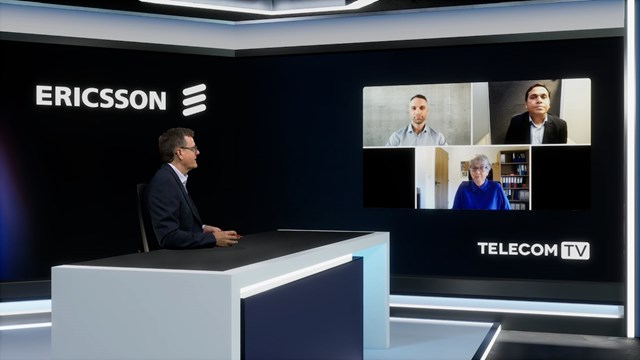
A panel of automotive and telecom experts from 5GAA, General Motors, Orange Business, Cubic, Aptiv and JLR discuss the challenges to achieving global scale for software-defined vehicles (SDVs). While most OEMs currently deploy connected vehicle services in approximately 50 first-tier countries, SDV ambitions target 140 or more markets. The discussion explores solutions to fragmented connectivity models, eSIM lifecycle complexity, compliance requirements and uneven regulatory environments that create a globalisation gap, potentially turning one SDV vision into dozens of incompatible implementations.
Broadcast live 19 May 2026
Participants

CO-HOST
Maxime Flament
CTO, 5GAA

André Schlufter
Director of Automotive Connectivity Innovation, Cubic³

Camille Voisin
Director Carrier and Vehicle Experience, General Motors

Prof. Colin Lee
Principal Product Owner VCDP Strategy and Technical Specialist V2X, Digital Product Platform, Jaguar Land Rover (JLR)

Craig Turner
Vice President and Managing Director, Digital Cockpit & Middleware, APTIV

Patrick Jeanbart
Head of Connected Cars, Orange Business