To embed our video on your website copy and paste the code below:
<iframe src="https://www.youtube.com/embed/rr5xYcwT-qE?modestbranding=1&rel=0" width="970" height="546" frameborder="0" scrolling="auto" allowfullscreen></iframe>
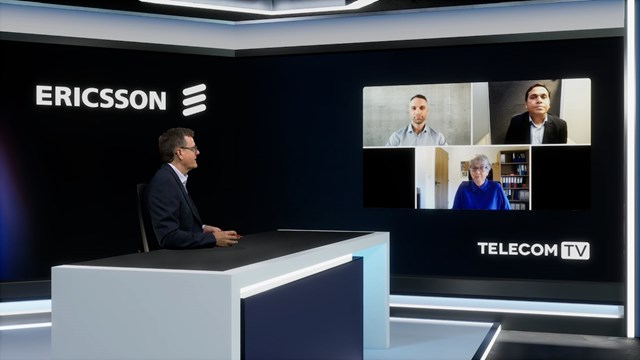
We're going to be moving on now to the final session of this year's event, and rather appropriately I think it's called Accelerating the AI Native Telco. So one final session to go. AI, as we've heard these past two days, is not a standalone initiative. It runs across cloud native automation, data, APIs, and new services. Yet lots of telcos lack a coherent strategy to become genuinely AI native organisations. We've talked about what AI native means for these past two days. Without a unified framework for measuring readiness or tracking progress, how do operators prioritise their investments? How do they look and say how they're doing against their peers and other parts of the world? There's a lot of intelligence here we need to gather and work out — and also to justify why we are making this move towards AI native operations. So first of all, let's meet our panellists — who we've all met before, actually — but Warren, let's do a quick introduction for our viewers, especially our online viewers who are just watching this for the first time.
Warren Bayek, Wind River (01:40):
Thank you, Guy. I'm Warren Bayek. I oversee intelligent edge strategy and futures at Wind River.
Itsuma Tanaka, NTT DOCOMO (01:46):
Thanks, Warren. Hi, I'm Itsuma Tanaka from NTT DOCOMO, and I'm leading next-generation telecom research. Thank you.
Ahmed Hafez, Deutsche Telekom (01:56):
Hi everyone. I'm Ahmed Hafez from Deutsche Telekom Group. I'm responsible for network strategy and AI networks.
Guy Daniels, TelecomTV (02:03):
Fantastic. Well, good to have the three of you on the stage. We're going to have a discussion about how we accelerate the AI native telco. We have no DSP co-host for this session, but I do have a few words to say that tie into this panel, because we as TelecomTV want to spend a couple of minutes announcing our next project — because it does directly tie in with the discussion we're going to have. So over the last three years — and I think it was three years ago on this stage that you first introduced the concept of the AI native telco.
Ahmed Hafez, Deutsche Telekom (02:39):
Yeah.
Guy Daniels, TelecomTV (02:39):
Great. It's all your fault. The industry has changed because of you, right? We're blaming you for this.
(02:46):
And since then, practically every operator has stood up and told us they're becoming AI native. Every vendor appears to have an AI native solution ready to sell. And yet — what is actually being achieved, and by whom? There's a growing gap between operators who are genuinely transforming their businesses and leading the way, and those who have yet to fully commit. Which is why we are announcing ANTER — TelecomTV's new project, the AI Native Telco Accelerator. It's been in the works for a good six or seven months now. It's not a single offering or a single service — it's actually three. What we're doing is bringing together a dedicated channel on TelecomTV — the news, the case studies, the interviews, the analysis — the record of how this industry is actually rewiring itself towards AI and AI native operations.
(03:44):
Second, the AI Native Telco Forum — our in-person event. I'm delighted to confirm that the forum is returning to Düsseldorf for its second year, on the 8th and 9th of September. That's where we're going to have the deep conversations and presentations around AI with the people who are actually building solutions. And the third element of ANTER is the index — the AI Native Telco Index and Report. This September, we're going to publish what we believe is the first regional ranking of the world's leading operators on their collective AI transformation activity. We've been tracking all year — foundational readiness, strategic intent, execution, evidence, transformation velocity. We've got about 20 metrics, feeding into composite scores on a regional basis, so that we can say: how does North America compare with the Nordics?
(04:38):
How does Europe compare with China? What are the different market and regulatory environments doing? And the reason we're doing this is because we need to direct our media and publishing activities for the year ahead. This evidence-based research has been tagged, published against a published methodology, and this methodology has been validated by our steering board. I'm delighted to say that we've got two members of the telco steering board with us on stage today — Deutsche Telekom and NTT DOCOMO. We also have Orange — Philippe had to leave earlier, unfortunately, but he was with us yesterday — along with Rakuten Mobile and Axiata. And we also have one of our first founding sponsors on the stage — Warren is representing Wind River. We're delighted that Wind River are on board with the ANTER project. So thank you very much indeed. If you want to participate, go and see Sean and the team — they'll be more than happy to have a chat with you.
(05:32):
And just a reminder — this index we're producing, this whole ANTER project, is editorially independent and it's all based on evidence. It's going to help us shape our editorial and our media activities so that when we get to Düsseldorf, the agenda will be based on what the industry is telling us and the evidence we are seeing. So more to follow from TelecomTV on that very soon. So let's get onto the panel, because this is where we really want to focus. Why is it important that we measure these dimensions? Because there's so much more to becoming an AI native telco than just technology — we've got data architectures, people, talent, culture.
(06:22):
So by collecting this evidence, by looking at what our peers are doing, by looking at what the industry's doing — is this going to help us collectively move forward? I would hope so. Do you see a value in trying to bring the industry together collectively on this journey?
Ahmed Hafez, Deutsche Telekom (06:45):
Right. So in my humble view, it helps. I had a friend who was a sprint runner, and I was telling him, "I can run very fast — can you watch and record for me?" And he said, "Listen, if you want to really run, I need to run with you to get your best, and then someone else should record for us." And this is the whole story — if we run alone and measure ourselves only, and we are satisfied with whatever we do, we say, "Okay, we're good." So yeah, we're not bad. But if someone else is looking at it, especially in an unbiased form, and comes back to say, "Guys, you rank fourth" — this helps us to see where we're weak,
(07:39):
where we're strong, can we improve, how do we make ourselves better, is this a problem of communication or execution or strategy? It is always helpful to see where you are. And actually this helps all of us to get faster.
Guy Daniels, TelecomTV (08:01):
Great. Thanks. Itsuma.
Itsuma Tanaka, NTT DOCOMO (08:03):
Yeah, I fully agree. And if we talk about the AI native telco, it's not just about AI in the network. It's business processes, big corporations, ecosystems — everything combined. And that requires us to look at how we're doing from all the different perspectives so that we have a holistic view of how we are doing compared to other cases. There must be a lot of learning from what others are doing. So having different dimensions — not just technology — is very important.
Guy Daniels, TelecomTV (08:47):
Yeah. And it's an important distinction, isn't it, between applying AI or being an AI user and being what we call an AI native company. There's a lot more to it. And Warren — it's technology, yes, but it's also the culture. There's a whole lot of other factors in there.
Warren Bayek, Wind River (09:03):
Yeah, exactly. And that's what I was going to build on from what Itsuma said — not only is it important that we collect data because we should be data-driven, of course. It's very important that we collect the correct data as well. And I've heard a lot over these past few days talking about AI not for its own sake, but AI for an outcome. So we do need to measure not only the data readiness, the infrastructure readiness, the cultural capabilities, but also — are the outcomes we expect to get producing the benefits to our customers that we think they should be producing? As Ahmed said, being able to watch the progression over time is extremely important. And if we don't create a baseline of validated data, it's very difficult to measure whether we're actually making progress on the things we know we need to progress on.
(10:07):
As a cyclist, I'm very much into the marginal gains theory. We always have to be progressing. And if we don't have a measurement — a speed or a time for our race — how do we know we're actually moving in the right direction?
Guy Daniels, TelecomTV (10:22):
Thanks, Warren. And Ahmed — we have these conversations with so many telcos, and so often they tell us of their AI native ambitions or desire to be an AI native company. But currently, what do you think is the critical barrier? What are some of the main issues preventing more telcos from either starting on this route, or progressing and — as this session title tells us — accelerating towards becoming AI native?
Ahmed Hafez, Deutsche Telekom (10:52):
Right. So the barriers to start with AI are different from the barriers to accelerate or scale. To accelerate and scale, you need to build the foundations. It's a lot easier to come up with a number of use cases, implement them, and show impact. But in order to create a platform with really scalable, foundational capabilities and enablers that let you develop an unlimited number of use cases — that's the real challenge. And the challenge there is that the enablers don't allow you to associate a direct return on investment with them. So how do you justify them? You can associate ROI with a use case, but how do you associate it with data as an enabler? Having the data ready is not enough — you have to build things on top of it.
(11:50):
So that's one of the hurdles. But I also want to mention something related to the previous point. What I like about ANTER is the holistic view — not only looking at networks, but looking at a telco as an operator: the services, the customer service, everything. It's not only about autonomous networks, which may be measured elsewhere. You're looking holistically across the telco as a company. That's a big part of the value. And at scale, the challenge is how can different parts of the company work at the same speed? In a telco, because of the different departments and different people, you can see some areas ahead of others. So they don't all move together or necessarily at synchronised speeds.
(12:45):
And this is also one of the things that hinders scaling.
Guy Daniels, TelecomTV (12:54):
Thanks, Ahmed. And this is something we're really keen on — not just focusing on the network, but looking at the whole telco holistically. So that's a great way of putting it. Itsuma, what do you see as some of the challenges for telcos to start this journey and then to move forward?
Itsuma Tanaka, NTT DOCOMO (13:12):
Yeah, I see it's a kind of chicken-and-egg problem — where to start first. But many companies are already starting to build big data foundations — data lakes, federated data structures, and means for people to access them. But I see the biggest issue as whether the people touching those data want to transform the way they do their everyday jobs. To become an AI native telecom company is a long, transformative journey. We need to change maybe how we see the world, how we see our systems. There are a lot of transitions we need to go through. And when it comes to transitions, usually it comes down to our mindset.
Guy Daniels, TelecomTV (14:14):
Yes. As we've heard earlier today in our cultural session, Warren — these transformations can take a long time. CSP to DSP, still ongoing.
Warren Bayek, Wind River (14:24):
Still—
Guy Daniels, TelecomTV (14:24):
Ongoing. Still ongoing. Yes. So what's your view on what the major challenges are for the AI native journey?
Warren Bayek, Wind River (14:30):
I'd echo exactly what's been said here. The biggest challenge to becoming a truly AI native telco company probably isn't technological. I'll touch on that in a second, but I think it's more — and we've heard it here and in previous panels over the past few days — it's organisational. Things are changing so fast in this AI space. So as humans, it's frankly difficult to keep up organisationally with what's happening in AI. And it's a real challenge that happens at different levels across the organisation. Some parts are very keen to adopt AI policies and practices. Others are a little slower — for good reason in some cases, and frankly maybe not for good reason in others. But either way, it's a very difficult transition, and it's going to continue to be difficult because AI outpaces our ability as humans to keep up with it.
(15:32):
The other thing I want to touch on — while I don't think it's primarily a technology problem — I do want to reiterate that building an AI native infrastructure across a full telco deployment is not easy, as was mentioned yesterday. I think we sometimes overlook how difficult it already is to virtualise these environments. And as was mentioned earlier today, as we move to 6G — the truly AI native G, if you will — we can't wait for 6G to get there. We have to get started now. It's a little chicken-and-egg, but creating an AI-operationally effective company that can operationally cover the entire infrastructure and the entire company has to start now. That's a capability gap. I think most telcos are struggling with how to create that unified, AI-automated ability to operationally manage their entire business.
Guy Daniels, TelecomTV (16:40):
It's not easy, is it? And for a large telco or telco group, more resources are at your disposal. But for a lot of the tier twos and tier threes, this is quite a challenge.
Ahmed Hafez, Deutsche Telekom (16:52):
It is indeed. But the point is that everyone can do something. It's not that you either do it all or not at all. Even big telcos find it not so easy. You can argue the other way round — if you're smaller, you can target small use cases, smaller teams, less effort for collaboration, more agile decision-making, so you can decide and pursue something and do it. And we have examples of smaller companies that manage to do a great deal — let alone the startups that have reached hundreds of millions in value within a couple of years, which was unheard of before. So this kind of speed is possible. You can do this even while you're also laying the foundations, scaling, going all the way through, having an R&D arm.
(18:48):
The point is to make a start. Don't think of it as all or nothing. You can start small, learn, and then build. The momentum becomes self-reinforcing over time.
Guy Daniels, TelecomTV (19:00):
Good. Itsuma, do you have a sense of where NTT DOCOMO's most important work is right now in terms of this journey?
Itsuma Tanaka, NTT DOCOMO (19:10):
Yeah, I think that's a critical question. We have multiple angles at DOCOMO. On the operational side, network operations, those are very important and yes, we are pursuing those. And on the business side, customer experience and how we improve our revenue, but also the internal aspects of how efficiently we run our operations, how quickly we can deliver services. Those are the areas. And right now we are starting to see some early results, small experiments. And I think having those results and accumulating them is a very important step for us.
Guy Daniels, TelecomTV (19:55):
And Warren, following on from that — as a supplier of technology into the telco space, what do you think are the key things that you need to be doing to help telcos on this journey?
Warren Bayek, Wind River (20:10):
Yeah, I think there are a few things. First is just helping telcos understand what the art of the possible is. I think one of the key challenges is that AI is moving so fast that most organisations are struggling to understand where it can actually provide measurable value. So at Wind River, a big part of what we do is we work with operators to identify those specific use cases where AI can provide specific, measurable, tangible outcomes. And then we help build the technical underpinning, the infrastructure, the software stack to make that actually happen. And then over time, as those use cases become — as we call it — battle-tested, production-grade, then you can start to extend them more broadly.
(21:06):
The second piece is really helping to make sure that the infrastructure is correct. As I mentioned earlier, the infrastructure problems don't go away when you move to AI. If anything, they get more complicated. So making sure that the infrastructure — all the way from the edge to the cloud to the core — is truly AI-ready, truly capable of handling the requirements of AI workloads, including latency, reliability, sovereignty — those are things that we're very focused on.
Guy Daniels, TelecomTV (21:46):
And Ahmed, from the operator's perspective, what are the key things you need from suppliers and from the ecosystem to help Deutsche Telekom accelerate this journey?
Ahmed Hafez, Deutsche Telekom (22:00):
Right. So the one thing I was going to say before but didn't get to is the buy-in. And I think it's a very important aspect — not only senior leadership buy-in, but more importantly, the teams in the organisation. The ones that are actually going to use these AI tools, because those are the most important. If I give, for example, our AI solutions to my network operations team and they don't trust them and they don't use them, then the ROI doesn't matter — the business case doesn't exist. So the organisational change management, the ability to train and to show measurable impact to the teams, and getting their buy-in is really critical. That's one thing I would say.
(22:53):
The second thing I would say is on the supplier side, it's the openness. And this is something that we have been saying for a long time — open interfaces, open standards, open APIs. And I think this is becoming even more critical as we're trying to build a unified AI stack across our entire operations because if the tools and the platforms that we're using don't have open interfaces, then we end up with another silo, and then we end up with a problem of how do we integrate this AI silo with our other AI tools? So that's really critical.
Warren Bayek, Wind River (23:34):
Yeah. I think that's critical. As Ahmed said, you have to have board and C-level buy-in, of course. But if you're not producing valuable, measurable improvements for people at every level, it's never going to get any real momentum in the company. And the flip side is absolutely true — the minute you give engineers or marketing people or product people measurable, obvious, tangible results, they're going to buy in, full stop. They're all in once you do that. So the critical part is: find some small gains, get started, make sure that everyone starts to benefit from it. And the people who are benefiting — those who weren't originally as into this AI journey will look and say, "Wow, what's happening over there? I want to be a part of that. That looks easier, better, faster, stronger."
(24:06):
It kind of reminds me of way back when I was actually doing real work in code. The first thing I learned is if you do something twice, you better figure out a way to programmatically make it work for you so you don't have to reproduce it all the time. And I think AI is going in the same direction — if you can show tangible results and improvement in day-to-day activities, people will buy in very quickly. And I think that's when the transformation really snowballs and gains momentum.
Guy Daniels, TelecomTV (24:26):
Great. Itsuma, why are we talking about the AI native telco? There's so much interest in AI, but AI native in particular — why should we be talking about it?
Itsuma Tanaka, NTT DOCOMO (24:39):
Coming from a for-profit company in this capitalist world, operational excellence is why we need to always pursue this direction. AI is giving us a really interesting new tool to explore that direction. So operational excellence means service quality, how quickly we can fix things when they break. There are a lot of AI applications we are already testing and seeing good results from, and that's one element. And of course we have competitors, and how to thrive or survive in this environment — we need to catch up with the latest technology. And operational excellence means not just network operations but business operations in general. I'm quite sure that AI nativeness — how much we integrate AI into our business processes — can and hopefully will help us stay ahead in the game.
(25:44):
And one more thing. What makes the AI native telco particularly interesting is that at the same time, as part of our critical infrastructure mission, sometimes we're not purely for-profit. We need to meet certain regulations, governance is very important — saving everybody's daily lives, mission-critical resiliency. So AI plays a lot of parts there as well.
Guy Daniels, TelecomTV (26:28):
Thanks, Itsuma. Warren, you wanted to add something?
Warren Bayek, Wind River (26:29):
Yeah. I think one of the big reasons we're talking about AI native now specifically is that we've created this amazing infrastructure and these amazing organisations to manage it, and they're far too complex anymore for humans to manage, full stop. What we're managing now — even automation is not able to really manage it effectively and efficiently. And that's only going to get orders of magnitude worse as more AI and more complexity gets put into these networks and we look to create the ecosystem and the capabilities we're talking about.
Guy Daniels, TelecomTV (27:16):
Fantastic. Thanks very much. Do we have any questions from our audience?
Tony Poulos, TelecomTV (27:23):
We've got questions from the online audience.
Guy Daniels, TelecomTV (27:25):
From the internet. Thank you very much, online audience. We do appreciate you staying with us.
Tony Poulos, TelecomTV (27:30):
We've got a couple of good ones.
Guy Daniels, TelecomTV (27:31):
Great. Let's have the first one.
Tony Poulos, TelecomTV (27:34):
It says: AI native transformation depends not only on models, but on data governance, automation maturity, and organisational alignment across the network stack. What is the hardest non-technical barrier preventing large operators from becoming genuinely AI native at scale?
Guy Daniels, TelecomTV (27:55):
The largest non-technical barrier.
Ahmed Hafez, Deutsche Telekom (27:57):
Excellent question. So you can also ask others in the panel, but I'll offer an answer first and then my colleagues can continue. The biggest impediment we see is adoption within the networks and within operators, and this is coming from a lack of trust. How things are being talked about in the industry — agentic AI, what's happening with it, what is the level of accuracy, we can't have hallucinations, we have security concerns — all of this is because you are shifting mindset. How can I shift from a mindset of deterministic resilience, very high reliability, five nines, to going probabilistic and saying 70 to 80% is good enough? This is a huge shift in how we actually design and do things. But the trick here is that what we're trying to do is not drop the resilience or reduce network reliability.
(29:00):
It's completely the opposite — we're actually trying to augment human capabilities with AI intelligence that will actually ensure resilience increases, not the other way around. And the choices we make here make a big difference. Let me give a concrete example. When we implemented RanGuardian — it's up and running in Germany — what we did is use agents to execute on their own in a closed loop in areas where there is no damage that can happen. Because the changes they make are not going to cause damage to the network and they're being monitored all the time. So we're actually taking human out of the loop but putting human on the loop — human is still monitoring what AI does and monitoring what the results of the network are, and then deciding if anything doesn't seem quite right, they can change it, and then you learn over time and enhance the AI.
(29:58):
There are other parts where we decided not to do AI closed loop because they could have a detrimental impact — and there, humans are in the loop. So what we're trying to do is build trust through intelligence. The more we get to trust the AI, the more our teams are open to it. It is not about FTE reduction. It is about being faster, more efficient, achieving higher technological excellence. Their acceptance is very important because they're the ones embracing AI and they're the ones creating that value. So it's not only about AI alone.
Guy Daniels, TelecomTV (30:36):
Great answer to that question. Either of you want to add anything? Because we have another question from our online audience.
Tony Poulos, TelecomTV (30:45):
This one is directed to Itsuma-san. As AI moves closer to the edge and real-time telecom operations, latency and sovereignty become strategic constraints and not just technical ones. Will the future AI native telco be defined more by intelligence or by control of where that intelligence resides?
Itsuma Tanaka, NTT DOCOMO (31:10):
Where the intelligence resides? Wow, that's a good question. Thank you for the question. Yes, I think geolocation has played a certain role in how we deal with all the AI. And what we see already is that it really depends on the use case. If you need immediate feedback, then we talk about edge — meaning maybe the network edge or even inside the device. So it really depends on what capability you're looking for and how AI can assist in what context. Sorry, it's a somewhat generic answer, but the location question is genuinely use-case dependent.
Guy Daniels, TelecomTV (31:59):
No, that's a great question — and a tough one to be thrown with two seconds to think about it. Warren, have you got some thoughts?
Warren Bayek, Wind River (32:09):
Yeah. I don't think you can separate those two things for the reasons Itsuma kind of mentioned. The intelligence itself is obviously incredibly important, but much like we've learned in everything that happens in software layers — analytics is a great example — having the intelligence reside where it needs to, and passing only the information required at higher levels, becomes a really important part of the intelligence of AI. Things that can be determined and decided on a device, there's no reason for that data to go anywhere beyond the device. If there's data the device collects that needs a little more processing power, a little more collaborative information, maybe pass that to the far edge where multiple devices can pull information.
(33:04):
Obviously if you need more, it goes toward the central core as you get more requirements of the data. But sovereignty and regulation are going to play a huge part in that decision as well. And that's frankly another aspect of AI that I think we didn't talk much about over these two days — governmental oversight and regulatory oversight is also a piece of this that will trail AI. So as for-profit organisations, we're going to have to decide — within the bounds of regulatory compliance, of course — how much data is okay to pass on, where data belongs. That's something that we as for-profit corporations are also somewhat responsible for.
Guy Daniels, TelecomTV (33:52):
Thanks very much, Warren. Thanks, Itsuma, for answering that question. Tony, is that the second and final question from our online audience for now?
Tony Poulos, TelecomTV (34:01):
Well, you wouldn't believe it — they're very active.
Guy Daniels, TelecomTV (34:04):
Don't tell me there's more coming in.
Tony Poulos, TelecomTV (34:05):
Would you like one more?
Guy Daniels, TelecomTV (34:06):
Why not?
Tony Poulos, TelecomTV (34:07):
It's an interesting one. Most operators are deploying AI as a layer on top of legacy systems rather than redesigning the telco itself around AI native logic, which we've been discussing at length this week. At what point does AI-enabled become truly AI native?
Ahmed Hafez, Deutsche Telekom (34:31):
No, I was stepping back from the beginning.
Guy Daniels, TelecomTV (34:34):
You could have given us an easy one, couldn't you, Tony?
Tony Poulos, TelecomTV (34:35):
No easy ones at this time of day.
Guy Daniels, TelecomTV (34:37):
Okay.
Ahmed Hafez, Deutsche Telekom (34:40):
Maybe I can take that. So if you look at our networks now — they still support 2G and we also have 5G. 5G has a service-based interface, natively on cloud, cloud native. So is 2G cloud native? No, it's not. And where do you draw the line? Because then you have evolutions that go along the way. You try to retrofit as the technology deserves and can absorb, and also based on the lifecycle of that technology. If I'm retiring equipment in the next few months, I would not retrofit AI for that equipment — I'm retiring it, and I am planning to do that. So do we continue to have legacy? Of course, because it's a cycle. You keep getting rid of legacy but creating new, and you go along that. And then you start putting in more and more AI-native principles.
(35:43):
As time goes on and we are trying to become more native, it's the same discussion as cloud native. We went to cloud native. We started moving workloads onto clouds. Does that mean that every single workload is now in the cloud? No. And so the point is that over time, the increasing sheer value of the nativeness is growing. That's how a brownfield operator naturally progresses. And that's why 6G came into context — because we're discussing 6G, which is still new, and we're asking: why don't we start native there? So that's the discussion. I hope I answered at least part of it.
Guy Daniels, TelecomTV (36:23):
No, that's a well-framed response. Yeah.
Itsuma Tanaka, NTT DOCOMO (36:25):
Yeah, exactly. Every generation is a great opportunity to refresh the architecture. We saw in 5G — cloud native platforms were introduced as part of the next generation by design. And once we have 5G, we keep adding enhancements. It's like adding a lot of renovations to an existing house. But having a next generation means if you build a new house, you can introduce new technology into it, built in by design. So I have strong expectations for 6G, and I hope that helps move us towards truly AI native.
Guy Daniels, TelecomTV (37:13):
Fantastic. Thanks, Itsuma. I think we'll pause the audience questions there — because that was the most online questions we've had in one session. Thanks, Tony. And thanks to our online audience for those. One final question before we end our session — and indeed the entire DSP Leaders World Forum. As we look forward to getting together again in September with our AI Native Telco Forum in Düsseldorf — what should we as an industry be addressing? What's the most important thing you think we should be addressing in that room? I know there could be thousands of areas, but if we were to select one or two, what would you expect to be the key outcomes of the Düsseldorf meeting? Warren, have you got any thoughts?
Warren Bayek, Wind River (37:59):
Yeah, I'll maybe be boring and say I really think we need to start focusing on outcomes and monetisation. Customer outcomes and monetisation have to be at the forefront. A lot of money has been invested in these telco networks — tens of billions of dollars. We have to start figuring out how to measure the return on that investment.
Guy Daniels, TelecomTV (38:25):
Great. We'll mark those down and make sure we address them. Itsuma?
Itsuma Tanaka, NTT DOCOMO (38:31):
Similar answer, but again — tangible results. All of us are doing lots of experiments, trials, and POCs, big or small, and I'm sure those results will accumulate. In September, I'm looking forward to seeing how much we've progressed and how we can express that in terms of numbers and figures.
Guy Daniels, TelecomTV (38:54):
Yep, me too. I want to see how far we've come. It's moving so, so fast. Ahmed, what should we be looking for?
Ahmed Hafez, Deutsche Telekom (39:00):
Agreeing with what my colleagues have said and complementing it — I would add another dimension. We as operators need to come with more concrete requirements towards suppliers on what we actually need from them to help us go down the AI native path. There are really concrete aspects we need to discuss openly, and also to listen back on whether they're challenging or not, how they can be addressed, how we go forward. I think that's also a very important question to ask.
Guy Daniels, TelecomTV (39:32):
Absolutely. Great. Right — we've marked all those down. We are almost out of time for this session and indeed for the entire DSP Leaders World Forum event. But before we end, we really should have a look at our audience poll — because it is highly relevant to what we're talking about — and see the results. The question we've been asking this year: what represents the best service growth opportunities for digital service providers in 2026 and beyond? We gave you seven possible answer choices. And if I click this button here, magically the final scores should come up on the screen. Well, there we go — digital sovereignty and resilience as a service has sneaked ahead, with almost half of respondents choosing that.
(40:28):
Edge computing — who would have thought? — in second, followed by distributed AI inference. And it's quite a narrow range of responses, maybe with the possible exception of network slicing at the bottom. Any immediate thoughts on what we're seeing — and the fact that digital sovereignty is climbing ahead? Surprises? No surprises?
Warren Bayek, Wind River (41:02):
Yeah, pretty much as expected.
Guy Daniels, TelecomTV (41:04):
Yeah. So we're on track. We're all thinking the same way. We're singing from the same hymn sheet, which is good. We're heading in the right direction. So I'd just like to say, thank you very much. Please stay seated for a moment because we've got a few little things to sort out. But for the time being, can we give our guests a really big round of applause?
(42:06):
So before we disappear — we have a new champion for the charity pinball tournament, which is great news because we're rather tired of the same people winning every single year. So let me make the big announcement. The winner of this year's double super jackpot charity pinball tournament for the National Autistic Society is Rich Stephens, Vice President EMEA Telco at Red Hat. Where's Rich? Is Rich in the room? Rich is in the room over there. Come on up, Rich. Look at what I have for you. It's engraved as well — you'll forever be looking at the name Neil McRae. That's fantastic. Why don't you say a few words to your adoring fans? What made you such a pinball wizard, Rich?
Tony Poulos, TelecomTV (42:36):
I don't think I've played on a pinball machine for about 40 years. Must have been a fluke, I think.
Guy Daniels, TelecomTV (42:42):
Brilliant.
Tony Poulos, TelecomTV (42:42):
That's good.
Guy Daniels, TelecomTV (42:43):
Rich, congratulations.
Tony Poulos, TelecomTV (42:44):
Thank you very much.
Guy Daniels, TelecomTV (42:53):
Rich, you're an absolute sport. Thanks very much indeed. And to everyone who has participated — to date, in support of the National Autistic Society, we have raised from this competition since 2023, £11,142. So thanks to everyone, just for playing pinball. Unbelievable. So thanks very much, everyone. And it's also time to thank our sponsors. Thanks very much to all of our sponsors and to all of our delegates and expert guests — there were loads of them and in very high quality this year — and our online audience who really came good at the end with all those questions. I'm not forgetting the support crew, all the partners that we work with, and the whole TelecomTV team. As I said earlier, we simply can't stage these events without all your support. So thank you very, very much indeed. We will see you again very, very soon. Our next event is the AI Native Telco Forum, which is once again being held in Düsseldorf in Germany.
(43:48):
That is in September this year — a month earlier than usual, so it's less than four months away. And we do hope that we will see you there — and our online audience, because we'll be live streaming that event as well. We've got an awful lot planned, including the launch of the first edition of the AI Native Telco Index and Report. That's very exciting — can't wait to share the findings with you all. From all of us at TelecomTV, thanks very much for an absolutely amazing DSP Leaders World Forum, and we hope to see you again soon. Thank you very much indeed.
Please note that video transcripts are provided for reference only – content may vary from the published video or contain inaccuracies.
Panel Discussion
TelecomTV’s Guy Daniels unveils ANTA (AI-Native Telco Accelerator), a comprehensive project comprising a dedicated content channel, annual forum in Düsseldorf, and the industry's first regional ranking of operators in terms of AI transformation. The AI-Native Telco Index will assess around 20 metrics, including foundational readiness, strategic intent, execution evidence and transformation velocity. Industry experts from Deutsche Telekom, NTT Docomo and Wind River discuss the challenges telcos face in becoming truly AI-native organisations, emphasising that success requires more than technology adoption – it demands cultural transformation, organisational alignment and holistic business process changes across the entire company.
Broadcast live 20 May 2026
Participants

CO-HOST
Ahmed Hafez
SVP Network Strategy and Data & AI in Networks, Deutsche Telekom

Itsuma Tanaka
President & CEO, Docomo Communications Laboratories Europe GmbH

Warren Bayek
VP, Intelligent Edge, Wind River