To embed our video on your website copy and paste the code below:
<iframe src="https://www.youtube.com/embed/AJ2HqhOQgbE?modestbranding=1&rel=0" width="970" height="546" frameborder="0" scrolling="auto" allowfullscreen></iframe>
Ray Le Maistre, TelecomTV (00:05):
So we're at DTW Ignite 2026 in Copenhagen. I'm here with Charles Molapisi. He's the CTIO of the MTN Group. Charles, great to meet you. Thanks so much for joining us on TelecomTV today.
Charles Molapisi, MTN (00:19):
Thank you so much, Ray. Thank you so much for having me.
Ray Le Maistre, TelecomTV (00:22):
Thank you. Okay. So if we could just start by having you explain your role — what is the CTIO role at the MTN Group?
Charles Molapisi, MTN (00:31):
I'm the Group Chief Technology and Information Officer. So I look after the entire MTN strategy on networks and IT across all our 19 markets. So essentially the rollout of capital — of CapEx — across the markets, deployment of networks, strategic choices in terms of vendors, and essentially how do we set up the organisation for success in technology terms. And currently also focusing quite strongly on the role of AI in the organisation — so essentially orchestrating the AI strategy across MTN Group.
Ray Le Maistre, TelecomTV (01:06):
So if we just broaden that out a bit, because obviously there isn't a vertical sector or a company around the world that isn't considering what the impact of AI is going to be on their future. But of course we need to think at a bigger level — at a geographical, at a continental level. What's your view on how the AI era might impact Africa as a continent?
Charles Molapisi, MTN (01:33):
Sure. The way we are thinking about it is that this could actually be an opportunity for us to leapfrog as a continent. We have done that in mobile. We have done that in FinTech. And I think AI, for the continent at large, presents an opportunity for us to leapfrog in so many areas — whether it's going to be the impact of AI in education, or the impact of AI in healthcare, in so many facets of our continent. And the way I like to think about this is that the challenges of the continent — every area where there are deficits — we believe that we can use AI to essentially leapfrog.
Ray Le Maistre, TelecomTV (02:10):
And a lot of people — and there's a lot of excitement in the telecom sector — feel that this is now an opportunity where chances have been missed before. This is an opportunity for the telecom sector to play a leading role in the evolution and development of a key technology. Do you think that that's true? Do the telcos in particular have a great role to play here?
Charles Molapisi, MTN (02:35):
I have to say to you, I'm very anxious about that, because I've seen in the past big waves of innovation and technology that have passed us by. I've seen our inability in the past to modernise and to monetise. I'm approaching this phase with a little bit of trepidation and concern to make sure that that doesn't happen again. And that's why the way we looked at it at MTN — just to make sure that we protect the foray of MTN into AI — we have to frame it into three, let's say, verticals. The first thing we said was that we will drive AI Insights, AI B2C, and AI B2B. So we framed those three pillars. And then what we said is that AI Insights for us is the biggest starting point — in essence, it's the right to play. So you need to make sure that you infuse AI across all the elements of the business: finance, FinOps, revenue assurance, network — you can think of any aspect of the business. And then because I look after the network and IT, pretty much 50% of the total OpEx of the Group sits in network and IT.
(03:52):
So I have to go against that number. I have to challenge that number and use AI to shrink that cost profile — in essence, creating a company that can sort of finance itself, because AI Insights is self-funding. So if I do that, then I create an opportunity for us to play in B2C and B2B, because there is no chance of being strong in B2C and B2B with AI if you are actually very weak in terms of AI Insights. And I believe that all the capabilities we are going to build — whether it's going to be agentic platforms, or analytics platforms, or all the fibre sensing platforms that we are building — all that intelligence creates an opportunity for us now to be much stronger in the monetisation of AI under B2C and B2B. And then on B2B, we're looking at three layers. We're thinking about data centres — we are building DCs as a partnership model in South Africa and Nigeria.
(04:53):
We are now on the path to take over all of our towers, so on a tower buyback exercise — that should give us the infrastructure where we can turn that infrastructure into the future. So that's very, very important. And then fibre. Now we have to think about all of this and say, okay, fine, how do we make sure we win? Then my biggest message is: token per watt. We have to make sure we watch the token economics of AI, because if you don't, there's no chance that you're going to be able to monetise AI if your cost of energy is still very high.
(05:26):
So if I can compress my cost of energy using AI Insights across all the technologies, create capacity for B2C and B2B, then I think the story starts to make a little bit of sense. And maybe the last thing I'll add on this is: we have to think of this almost as an upside–downside asymmetry. In essence, that means there are going to be some misses, but the misses cannot outweigh the gains. So the upside must be so high where we're winning that it compensates for areas where we're going to struggle and where we're going to make bad choices.
Ray Le Maistre, TelecomTV (06:01):
That's going to be an interesting dynamic to watch — what goes on either side. Now, one of the strengths of the telecom sector it seems is to have trusted brands, and trust has been a very — it's almost been used at this event in the past two days as much as AI and data all put together. And a key part of that is sovereignty, which of course has become a massive topic in the last 12 to 18 months. How do you see sovereignty and trust playing into this whole AI equation in Africa?
Charles Molapisi, MTN (06:40):
I mean, to start with — if you think about it — we are the backbone of the economy in many markets where we operate, in terms of connectivity. We are probably the only business on the planet that collects money at every second. If you think about how we rate and charge and bill, we are probably the only business where every second we can rate a call, charge, and collect at scale. MTN has over 300 million customers across all 19 markets. Every second we're engaging with a customer one way or another — they're using our product, they're recharging, they're topping up. That level of engagement brings trust, and I think we're better positioned for that. So for me, sovereign AI — and the backbone of sovereign AI — rests with telcos, because that's our core space: infrastructure. That's what we've done all along — connectivity backbone, the infrastructure layer. There we must participate, and we must participate very, very well.
(07:34):
And that's why I said to you before, we're not just thinking but doing — data centres, fibre cores — and we're bringing back our towers because we realise that the digital infrastructure layer is going to be quite critical in terms of the development of AI going forward. Very, very important. Now think about Africa for a second. There is a forecast that by 2040, one in every four human beings on the planet will be from Africa. But today, if you think about it, Africa represents only under 1% of total global compute. So all our data, all our rich languages, all our rich culture, all the interactions, the FinTech — there is an opportunity for us to actually enrich that. And we cannot find ourselves in a position where we're exporting our raw data and buying it back as intelligence. We have to bring that computing close to the continent, localise it in our markets, and make sure that we can actually mine for our own solutions, use our own data and our own intelligence.
(08:29):
So the African level of intelligence must be manufactured, produced, and curated in an African context. That's what we intend to do. Now, on the aspect of how I think we can navigate the issue of scale — because not every country on the continent will have an opportunity to build large-scale AI data centres fast enough — so what are you going to do in that case? One of the frameworks that we are putting forward is what I refer to as data embassies. So a quick example: if we are building a data centre, we should be able to create sublets of data embassy space so that smaller countries can own that little piece of real estate inside the DC, just like how a normal embassy operates. In that way, we take all of them on a regional scale and everyone on the continent knows where their data is. They can mine it themselves, they can retrieve it if they want to retrieve it, but they have a sovereign right of protection at the embassy level of data — to own that data for themselves.
Ray Le Maistre, TelecomTV (09:28):
You will assure that?
Charles Molapisi, MTN (09:29):
We will assure that, because we are the critical backbone on the continent — we're in 19 markets, we're very strong on fibre, strong in terms of network sites, strong in terms of engagement with government and all of that. No one is better placed on the continent to deliver this than MTN.
Ray Le Maistre, TelecomTV (09:46):
Okay. Interesting. And I love to come across new terms — the data embassy is a new one. That's fantastic. So finally, Charles, just to wrap up — have you got a message for the market that you would like to send out, so people can engage with MTN and also share ideas themselves?
Charles Molapisi, MTN (10:05):
Look, I'm just saying to everyone that if you think about AI and the continent, we have an opportunity to change and transform lives. This thing is not just about creating shareholder value — it's also about AI for good. We have a powerful instrument of our generation in our lifetime. We are faced with one of the most profound technologies the world has ever seen, and that happens in our lifetime. It's a privilege and an opportunity, and I urge everybody to invest heavily in understanding this technology and making sure that as a continent we are able to move forward.
Ray Le Maistre, TelecomTV (10:39):
Great message to end on, Charles. Thanks so much for your time. Excellent to speak to you and look forward to catching up with you again in the future. Thank you so much.
Charles Molapisi, MTN (10:47):
Thank you very much. Thank you.
So we're at DTW Ignite 2026 in Copenhagen. I'm here with Charles Molapisi. He's the CTIO of the MTN Group. Charles, great to meet you. Thanks so much for joining us on TelecomTV today.
Charles Molapisi, MTN (00:19):
Thank you so much, Ray. Thank you so much for having me.
Ray Le Maistre, TelecomTV (00:22):
Thank you. Okay. So if we could just start by having you explain your role — what is the CTIO role at the MTN Group?
Charles Molapisi, MTN (00:31):
I'm the Group Chief Technology and Information Officer. So I look after the entire MTN strategy on networks and IT across all our 19 markets. So essentially the rollout of capital — of CapEx — across the markets, deployment of networks, strategic choices in terms of vendors, and essentially how do we set up the organisation for success in technology terms. And currently also focusing quite strongly on the role of AI in the organisation — so essentially orchestrating the AI strategy across MTN Group.
Ray Le Maistre, TelecomTV (01:06):
So if we just broaden that out a bit, because obviously there isn't a vertical sector or a company around the world that isn't considering what the impact of AI is going to be on their future. But of course we need to think at a bigger level — at a geographical, at a continental level. What's your view on how the AI era might impact Africa as a continent?
Charles Molapisi, MTN (01:33):
Sure. The way we are thinking about it is that this could actually be an opportunity for us to leapfrog as a continent. We have done that in mobile. We have done that in FinTech. And I think AI, for the continent at large, presents an opportunity for us to leapfrog in so many areas — whether it's going to be the impact of AI in education, or the impact of AI in healthcare, in so many facets of our continent. And the way I like to think about this is that the challenges of the continent — every area where there are deficits — we believe that we can use AI to essentially leapfrog.
Ray Le Maistre, TelecomTV (02:10):
And a lot of people — and there's a lot of excitement in the telecom sector — feel that this is now an opportunity where chances have been missed before. This is an opportunity for the telecom sector to play a leading role in the evolution and development of a key technology. Do you think that that's true? Do the telcos in particular have a great role to play here?
Charles Molapisi, MTN (02:35):
I have to say to you, I'm very anxious about that, because I've seen in the past big waves of innovation and technology that have passed us by. I've seen our inability in the past to modernise and to monetise. I'm approaching this phase with a little bit of trepidation and concern to make sure that that doesn't happen again. And that's why the way we looked at it at MTN — just to make sure that we protect the foray of MTN into AI — we have to frame it into three, let's say, verticals. The first thing we said was that we will drive AI Insights, AI B2C, and AI B2B. So we framed those three pillars. And then what we said is that AI Insights for us is the biggest starting point — in essence, it's the right to play. So you need to make sure that you infuse AI across all the elements of the business: finance, FinOps, revenue assurance, network — you can think of any aspect of the business. And then because I look after the network and IT, pretty much 50% of the total OpEx of the Group sits in network and IT.
(03:52):
So I have to go against that number. I have to challenge that number and use AI to shrink that cost profile — in essence, creating a company that can sort of finance itself, because AI Insights is self-funding. So if I do that, then I create an opportunity for us to play in B2C and B2B, because there is no chance of being strong in B2C and B2B with AI if you are actually very weak in terms of AI Insights. And I believe that all the capabilities we are going to build — whether it's going to be agentic platforms, or analytics platforms, or all the fibre sensing platforms that we are building — all that intelligence creates an opportunity for us now to be much stronger in the monetisation of AI under B2C and B2B. And then on B2B, we're looking at three layers. We're thinking about data centres — we are building DCs as a partnership model in South Africa and Nigeria.
(04:53):
We are now on the path to take over all of our towers, so on a tower buyback exercise — that should give us the infrastructure where we can turn that infrastructure into the future. So that's very, very important. And then fibre. Now we have to think about all of this and say, okay, fine, how do we make sure we win? Then my biggest message is: token per watt. We have to make sure we watch the token economics of AI, because if you don't, there's no chance that you're going to be able to monetise AI if your cost of energy is still very high.
(05:26):
So if I can compress my cost of energy using AI Insights across all the technologies, create capacity for B2C and B2B, then I think the story starts to make a little bit of sense. And maybe the last thing I'll add on this is: we have to think of this almost as an upside–downside asymmetry. In essence, that means there are going to be some misses, but the misses cannot outweigh the gains. So the upside must be so high where we're winning that it compensates for areas where we're going to struggle and where we're going to make bad choices.
Ray Le Maistre, TelecomTV (06:01):
That's going to be an interesting dynamic to watch — what goes on either side. Now, one of the strengths of the telecom sector it seems is to have trusted brands, and trust has been a very — it's almost been used at this event in the past two days as much as AI and data all put together. And a key part of that is sovereignty, which of course has become a massive topic in the last 12 to 18 months. How do you see sovereignty and trust playing into this whole AI equation in Africa?
Charles Molapisi, MTN (06:40):
I mean, to start with — if you think about it — we are the backbone of the economy in many markets where we operate, in terms of connectivity. We are probably the only business on the planet that collects money at every second. If you think about how we rate and charge and bill, we are probably the only business where every second we can rate a call, charge, and collect at scale. MTN has over 300 million customers across all 19 markets. Every second we're engaging with a customer one way or another — they're using our product, they're recharging, they're topping up. That level of engagement brings trust, and I think we're better positioned for that. So for me, sovereign AI — and the backbone of sovereign AI — rests with telcos, because that's our core space: infrastructure. That's what we've done all along — connectivity backbone, the infrastructure layer. There we must participate, and we must participate very, very well.
(07:34):
And that's why I said to you before, we're not just thinking but doing — data centres, fibre cores — and we're bringing back our towers because we realise that the digital infrastructure layer is going to be quite critical in terms of the development of AI going forward. Very, very important. Now think about Africa for a second. There is a forecast that by 2040, one in every four human beings on the planet will be from Africa. But today, if you think about it, Africa represents only under 1% of total global compute. So all our data, all our rich languages, all our rich culture, all the interactions, the FinTech — there is an opportunity for us to actually enrich that. And we cannot find ourselves in a position where we're exporting our raw data and buying it back as intelligence. We have to bring that computing close to the continent, localise it in our markets, and make sure that we can actually mine for our own solutions, use our own data and our own intelligence.
(08:29):
So the African level of intelligence must be manufactured, produced, and curated in an African context. That's what we intend to do. Now, on the aspect of how I think we can navigate the issue of scale — because not every country on the continent will have an opportunity to build large-scale AI data centres fast enough — so what are you going to do in that case? One of the frameworks that we are putting forward is what I refer to as data embassies. So a quick example: if we are building a data centre, we should be able to create sublets of data embassy space so that smaller countries can own that little piece of real estate inside the DC, just like how a normal embassy operates. In that way, we take all of them on a regional scale and everyone on the continent knows where their data is. They can mine it themselves, they can retrieve it if they want to retrieve it, but they have a sovereign right of protection at the embassy level of data — to own that data for themselves.
Ray Le Maistre, TelecomTV (09:28):
You will assure that?
Charles Molapisi, MTN (09:29):
We will assure that, because we are the critical backbone on the continent — we're in 19 markets, we're very strong on fibre, strong in terms of network sites, strong in terms of engagement with government and all of that. No one is better placed on the continent to deliver this than MTN.
Ray Le Maistre, TelecomTV (09:46):
Okay. Interesting. And I love to come across new terms — the data embassy is a new one. That's fantastic. So finally, Charles, just to wrap up — have you got a message for the market that you would like to send out, so people can engage with MTN and also share ideas themselves?
Charles Molapisi, MTN (10:05):
Look, I'm just saying to everyone that if you think about AI and the continent, we have an opportunity to change and transform lives. This thing is not just about creating shareholder value — it's also about AI for good. We have a powerful instrument of our generation in our lifetime. We are faced with one of the most profound technologies the world has ever seen, and that happens in our lifetime. It's a privilege and an opportunity, and I urge everybody to invest heavily in understanding this technology and making sure that as a continent we are able to move forward.
Ray Le Maistre, TelecomTV (10:39):
Great message to end on, Charles. Thanks so much for your time. Excellent to speak to you and look forward to catching up with you again in the future. Thank you so much.
Charles Molapisi, MTN (10:47):
Thank you very much. Thank you.
Please note that video transcripts are provided for reference only – content may vary from the published video or contain inaccuracies.
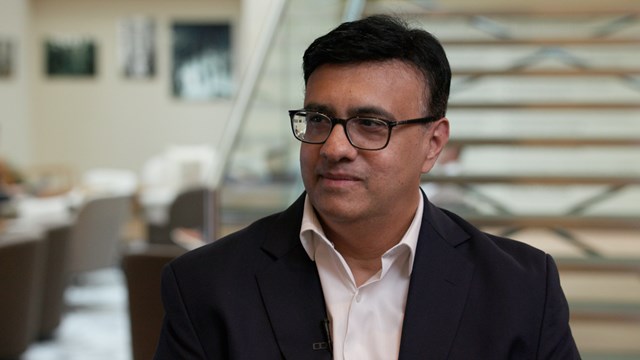
Charles Molapisi, CTIO, MTN
Talking to TelecomTV during the recent DTW Ignite 2026 event in Copenhagen, Charles Molapisi, chief technology and information officer (CTIO) at pan-African operator MTN, discusses the impact of sovereignty and AI on Africa and the emergence of ‘data embassies’ on the continent, outlines the three pillars of MTN’s strategy, and more.
Recorded June 2026
Email Newsletters
Sign up to receive TelecomTV's top news and videos, plus exclusive subscriber-only content direct to your inbox.