Huawei turns to tokens to help operators monetise AI

By James Pearce
Jun 26, 2026
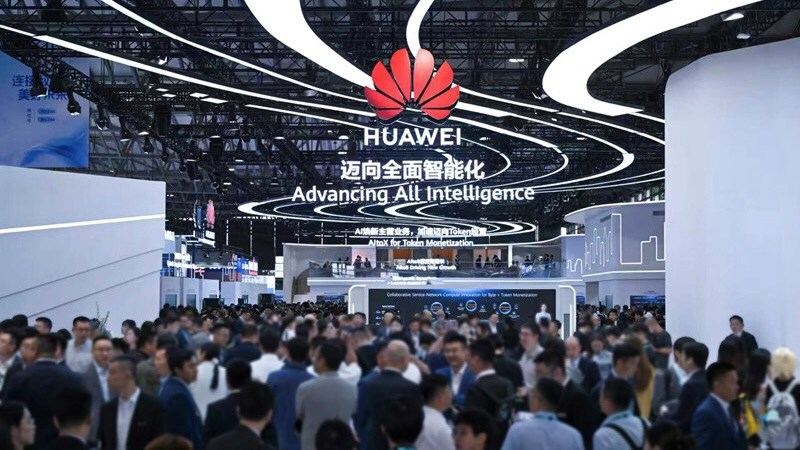
Huawei stand at MWC Shanghai. Source: Huawei
- At MWC Shanghai, Huawei unveiled its plans to help operators develop AI token-based revenue models
- ‘Tokenisation’ is emerging as a potential monetisation opportunity for Asian operators
- At DTW Ignite,TM Forum discussed its work on the token economy
Tokenisation may sound like another AI buzzword to add to an ever-growing list that would make even the Oxford English Dictionary blush, but for some in the industry, tokens are a clear path to monetising AI investments.
Speaking this week at MWC Shanghai, Huawei’s deputy chairman of the board and rotating chairman, David Wang, used his keynote speech to comment on how AI is paving the way for the next decade of mobile operator sector growth.
During the speech, he outlined six “key imperatives” that will play a vital role in turning AI and network investments into revenue opportunities.
They include: Developing new services and capabilities for mobile; integrating AI with mobile communications to build three distinct layers of intelligence; building network architecture for integrated satellite-ground communications; advocating for sustainable and future-oriented spectrum planning and allocation; defining the specifications of AI-native core networks; and exploring new business models and application scenarios for mobile services.
From traffic to real-time interaction
As networks shift from traffic-centric networking to networking for real-time interaction in order to offer users guaranteed connectivity, they become key components in AI usage. The boom in AI agents is expected to drive rapid growth in token services, which will require ultra-broadband networks that support high uplink, high reliability and low latency, noted Wang.
In Shanghai, alongside China’s three major carriers – China Mobile, China Telecom and China Unicom – Huawei released technological and business innovations in 5G-Advanced high uplink and experience monetisation, AI-powered business upgrade, and token monetisation: According to figures shared by the Chinese vendor, the number of 5G-Advanced users worldwide has exceeded 100 million.
The suggestion that mobile operators can drive new revenue-generating opportunities from token-based services is an interesting one, but not everyone believes it is necessarily the right approach for mobile operators (see this LinkedIn post from industry analyst Dean Bubley, who does not sit on the fence with regards to any topic).
China looks to be leading the way. In May, China Telecom announced it is trialling commercial AI token subscription plans that allow users to leverage its AI compute power. As we reported at the time, China Telecom and its domestic rivals are attempting to drive incremental revenues from the generation of AI tokens – the basic units of text, code or data that an AI model processes or generates – through new subscription packages.
At the same time, as TelecomTV previously reported, India’s largest mobile operator, Reliance Jio, is working towards becoming a token service provider.
And Huawei isn’t the only vendor aiming to help telcos with their token-based service model developments: Ericsson is examining the potential of such models, as Jasmeet Singh Sethi, head of Ericsson Consumer Lab, explained recently; while Mavenir and Red Hat have developed an Integrated AI Platform that, they claim, “enables network operators to monetise AI the way they already monetise data, through token-based consumption plans, billed on the phone bill, with full control over pricing, service-level agreements (SLAs) and the models that power every interaction.”
Navigating the costs of MODaaS
Tokenisation, or token economics, was also on the agenda at the TM Forum’s recent DTW Ignite event in Copenhagen, though more from the cost analysis than from the revenue-generation perspective.
One of the industry efforts to understand and manage the cost of token usage is taking place within TM Forum’s wider collaboration around model-as-a-service (MODaaS) offerings. MODaaS looks at how telcos can source, operate and scale multiple AI models as enterprise‑grade services across cloud, edge and on‑premises environments, regardless of where models are sourced.
A survey conducted last year by the forum for its AI Benchmark found that telcos were concerned about the costs associated with using AI. It found that, at the time, more than three-quarters of CSP respondents view cost as at least a moderate challenge to becoming AI native, with nearly a third believing it’s a major challenge.
Balancing AI infrastructure expenses with token economics
But AI tokens are changing the approach to pricing for both telcos and their customers, offering a way to understand how much compute capacity, or what agents, they need for certain tasks, according to TM Forum vice president of innovation Aaron Boasman-Patel.
Speaking to TelecomTV at DTW Ignite, Boasman-Patel explained: “The industry is evolving rapidly, so it is important we look at this and try to understand and measure how many agents telcos need.”
Looking back even a year ago, AI was seen as a central brain that would control the network, he noted. But due to the cost of compute, that is too expensive and consumes too much energy, meaning operators are looking at how to use smaller agents to control specific tasks.
“This is where token economics becomes so important – to understand where you need automation and where you need autonomy. As costs grow, using an AI agent could become just as expensive as using a human agent, and the industry needs a way to measure that, so we can balance costs but also monetise AI,” added Boasman-Patel.
- James Pearce, Editor, TelecomTV
Email Newsletters
Sign up to receive TelecomTV's top news and videos, plus exclusive subscriber-only content direct to your inbox.