From gigabytes to tokens: The evolution of telecom business models with AI

By James Pearce
Jun 23, 2026
To embed our video on your website copy and paste the code below:
<iframe src="https://www.youtube.com/embed/bvNMxV7IWMI?modestbranding=1&rel=0" width="970" height="546" frameborder="0" scrolling="auto" allowfullscreen></iframe>
I'm delighted to be joined today by Jasmeet Singh Sethi, who is head of Ericsson Consumer Lab. Thank you so much for joining us. Now that we're seeing CSP offerings around differentiated connectivity over 5G standalone, what are some of the key learnings that you've found so far?
Jasmeet Singh Sethi, Ericsson (00:22):
Yeah. No, I think first and foremost, we do see that since last year there's a lot of momentum that has built up and we see more and more CSPs largely also from Europe coming out with differentiated connectivity offerings, which is a positive. We expect CSPs to at least test trial and learn from those experiences. But what we are seeing now is that for CSPs who've already gone and are offering differentiated propositions, we see that they're having a real impact in driving brand perception and satisfaction among consumers. The research that we have done shows us that consumers who are put on an assured performance plan tend to have a 46% higher brand perception for their operator versus those who are not on a performance-based offering. And they also tend to have an 18% higher satisfaction score. So differentiated connectivity is also driving this sort of brand perception and satisfaction for the service providers.
(01:23):
Now, having said that, we do also see some sort of challenges out here. One of the things that I feel is that often CSPs tend to drive differentiation, but that differentiation is left in the dark because your product offering is not very visible to the end consumers. We see that some of the offerings are probably hidden behind six or seven clicks and users are not able to even discover it. They are behind paywalls and not available through the channels that consumers access. So there's definitely, once you solve the technical hurdles, there is more a commercial and marketing hurdle that needs to be solved. This is where the product IT teams, network teams need to work in tandem with the marketing and commercial guys in order to get the last bit of execution to be correct. Technology is not so much of a problem. I believe the execution is a big problem.
(02:21):
So I think I hope that by next year we will start to see a further improvement in how these offers are essentially relayed, conveyed, and the value is really very visible to the end consumers.
James Pearce, TelecomTV (02:34):
It sounds like we came a long way in that time. Why is it that Ericsson's emphasising uplink demand, particularly driven by AI use cases?
Jasmeet Singh Sethi, Ericsson (02:43):
I mean, I think the way that we'd look at AI and essentially the adoption of AI is largely driven by a couple of things. We do see traction in the ecosystem, but we also see changes in the consumer behaviours. They're now almost a billion users who are using AI sort of applications and have gen AI capable devices and so forth. And smartphone is to start with the first gateway into AI applications, but we also see that that is going to evolve going from smartphones to more wearables like smart glasses. You might have vehicles and you're going to use personal assistant in autonomous vehicles. There is of course physical AI and robots and so forth. And the multimodal nature of these AI applications, which is ingesting not just text, but essentially audio and video means that there is a lot of traffic which is running up to the cloud for inferencing.
(03:38):
And we see this as more a hybrid sort of phenomena. Some things are going to be handled on device. The other more complex prompts are going to go into the network. And that's why we believe that uplink is one challenge that we definitely need to solve. Also, that some of our measurements tell us that most operators are still not there as far as uplink is concerned. And so it's our responsibility as a player in the ecosystem to flag this before this starts to become a real problem and our customers are not able to really monetise this whole shift towards AI usage and applications.
James Pearce, TelecomTV (04:17):
That's obviously something they're majorly concerned with. Maybe we can look at how AI usage in the mass market is going to shape network demand in the short term.
Jasmeet Singh Sethi, Ericsson (04:28):
So I think that what would happen with the networks now is that of course there is, as we have talked about, the uplink demand that we possibly see. There are a couple of other things that we are starting to see in from the research that we have done. We see a bit of this rise of what we call super AI users. And these are users which are heavily engaged with using diverse sort of AI applications. These are not just chatbots. These could be voice assistants, these could be video assistants, this could be advanced applications and use cases. And we think that some of these users are telling us that the way that they think about the network is no longer through the lens of speed anymore or coverage anymore. It's actually AI responsiveness, which is becoming a key factor right now for these users. And this is where latency comes in.
(05:19):
So we've not talked so much about latency in a while, but I believe that in addition to uplink AI responsiveness and latency is going to become so important. And the way that we think about network KPIs is also going to change. We need to think about KPIs like time to first token, for example, or token streaming latency and other parameters that are more important for how you experience AI applications. And that is where we need to go back and start looking at what parameters on the network can really influence the user experience. So in the short term, we think yes, there is uplink, but we also think that it's going to impact this demand for more responsiveness and latency. And the third one is battery endurance. So as you start to use more AI native applications, we also see that these applications are very power hungry, especially if stuff is done on the device and that's where battery endurance features are essentially going to come in.
(06:19):
So these all together combined are going to have an impact on the network and we need to rethink how we dimension design networks to deal with not just throughput, but essentially uplink latency and of course energy efficiency and battery endurance.
James Pearce, TelecomTV (06:35):
So let's talk monetisation. How do you see monetisation models evolving if we say next five years, especially as AI usage scales and what are the opportunities there for your customers for the CSP?
Jasmeet Singh Sethi, Ericsson (06:49):
So it's really fascinating that now we are starting to see a bit of a shift in how the application landscape is essentially changing. Thinking about agents that you can essentially have on your smartphone, which are able to orchestrate and automate workflows on your smartphone itself. And that is all happening because we are moved beyond a chat related sort of paradigm to more agentic sort of paradigm. And the fuel for the agentic paradigm is not necessarily just gigabytes or connectivity. It is essentially tokens. Tokens are essentially the currency of how LLMs are able to consume these tokens and orchestrate these workflows. So we've already starting to see some frontrunner CSPs in China, for example, and some of the other markets also stepping into this whole token economics. And rather than just selling gigabytes, they're starting to sell tokens because they want to be relevant in this value chain.
(07:55):
They don't want to be relegated as just a bit pipe out here. So I see that over the next five years, one business model that is going to be interesting to keep an eye on is this token economy and that's where connectivity also comes in. So imagine if you have a video or a voice assistant and you are a developer who's building this, you of course need millions of tokens in order to build this sort of workflow, but then you also need great connectivity, which is great latency, great throughput and responsiveness. And that is going to be coming in from the CSP who can expose capabilities. So these tokens essentially become priority tokens with network acceleration kind of baked in. So I see over the next five years we have moved from gigabytes to a throughput model to an SLA based model, but eventually a token model is what we might see over the next five years and that might coincide with how we look at 6G and what is going to be the next business model for 6G.
James Pearce, TelecomTV (09:03):
That ties things up really nicely. Thank you so much for joining me today.
Jasmeet Singh Sethi, Ericsson (09:06):
Thanks for having me.
Please note that video transcripts are provided for reference only – content may vary from the published video or contain inaccuracies.
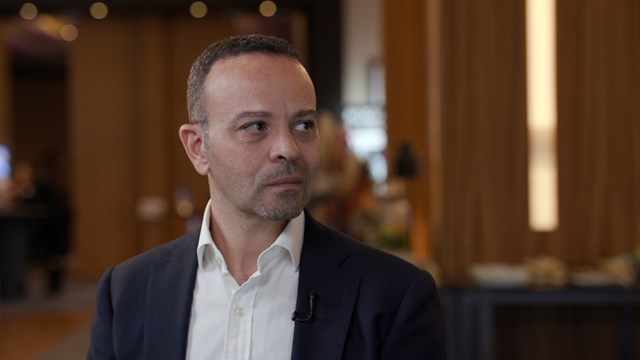
Jasmeet Singh Sethi, Head of Consumer Lab, Ericsson
Jasmeet Singh Sethi from Ericsson Consumer Lab reveals that while 5G differentiated connectivity boosts brand perception and customer satisfaction, many offerings remain hidden behind multiple clicks and paywalls. Looking ahead, he explains that AI usage is driving new network demands including uplink capacity, latency requirements and battery endurance considerations. Sethi also predicts a shift from gigabyte-based to token-based monetisation models as operators seek relevance in the AI value chain.
Recorded May 2026
Email Newsletters
Sign up to receive TelecomTV's top news and videos, plus exclusive subscriber-only content direct to your inbox.