More than a token gesture? China Telecom launches AI token subscriptions

By James Pearce
May 18, 2026
- China Telecom has launched three tiers of AI token subscription packages
- Both China Unicom and China Mobile are trialling AI tokens locally
- AI tokens are being positioned as a future revenue generator for the industry
China Telecom has launched a trial of commercial AI token subscription plans that allow users to leverage its AI compute power.
As telcos look for ways to monetise the AI boom, China Telecom and its domestic rivals are attempting to drive incremental revenues from the generation of AI tokens – the basic units of text, code or data that an AI model processes or generates – through new subscription packages, according to reports from the Chinese media. (On average, one token is equivalent to four written characters – it is estimated that 1 million tokens would be equal in length to the entire Harry Potter book series.)
But China Telecom looks to be a step ahead of its rivals. Its national trial includes three subscription tiers for different types of users: Individual consumers; developers and small and micro enterprise customers; and token ecosystem partners. For individuals, the packages range from 9.9 yuan ($1.45) per month for 10 million tokens to 49.9 yuan ($7.33) for 80 million tokens.
The enterprise/developer/partner packages, which support coding and AI agent development, range from 39.9 yuan ($5.86) per month for up to 15 million tokens to 299.9 yuan ($44.08) per month for up to 250 million tokens, and include access to optional services such as enhanced broadband uplink speeds and security protection.
China Telecom, which has 440 million mobile and 202 million fixed broadband customers, is bundling its token plans alongside access to its own AI model, Telechat, as well as other models including DeepSeek.
According to reporting in the South China Morning Post, both China Unicom and China Mobile are also seeking to turn tokens into billable units, but have focused on regional offerings instead. Unicom has launched token packages for its customers in Shanghai, while China Mobile released trial token packages in several provinces last month.
The model is similar to the approach telcos took with data when demand for mobile internet access first started growing, this time replacing data packets with AI tokens as the sale point. Selling megabytes and gigabytes helped operators offset declining revenues from voice and SMS, which were being eaten up by over-the-top players.
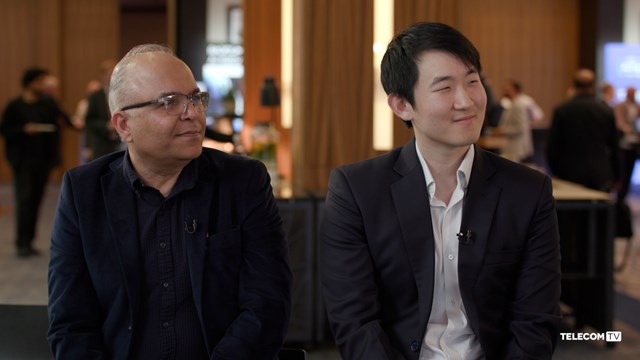
As Professor Merouane Debbah of Khalifa University in Abu Dhabi wrote in a recent Medium post on the subject, “operators are already experts at metering usage” and extending this to tokenisation is a natural step. These could even be bundled with connectivity packages and network services, as demonstrated by China Telecom’s trial offering.
Debbah wrote: “In the age of AI, the operators who thrive will be those who learn to trade in a new unit called tokens: Small, invisible packets of intelligence flowing through a network that finally does more than carry bits. It thinks.”
As Nvidia CEO Jensen Huang has repeatedly said, “compute equals revenues for companies” and tokens could provide this opportunity for telcos, though they will face competition from the AI companies themselves.
Speaking at Mobile World Congress in March, Jio Platforms group CEO Mathew Oommen said that the industry is entering the “intelligence era”, which will see the telecom currency rapidly evolve “from minutes to bytes to tokens”. He added that India’s largest telco, Reliance Jio (part of Jio Platforms), is “determined to deliver the lowest-cost token per month” to become one of the first scalable token service providers.
A 2026 survey by Nvidia found that 77% of telecom professionals expect AI-native networks to launch ahead of 6G, and tokens are already offering an opportunity for the industry.
And in a blog published in February, T-Mobile US CTO John Saw highlighted that while today’s AI systems are built around “informational tokens”, physical AI – which will see AI that interacts with the world through autonomous machines and robots or intelligent infrastructure – will need actionable tokens, which he referred to as “kinetic tokens”. These demand more bandwidth and lower latencies, so must be built on smarter, AI-native networks.
- James Pearce, Editor, TelecomTV
Email Newsletters
Sign up to receive TelecomTV's top news and videos, plus exclusive subscriber-only content direct to your inbox.