To embed our video on your website copy and paste the code below:
<iframe src="https://www.youtube.com/embed/hPhqd1_tw9Y?modestbranding=1&rel=0" width="970" height="546" frameborder="0" scrolling="auto" allowfullscreen></iframe>
Ray Le Maistre, TelecomTV (00:05):
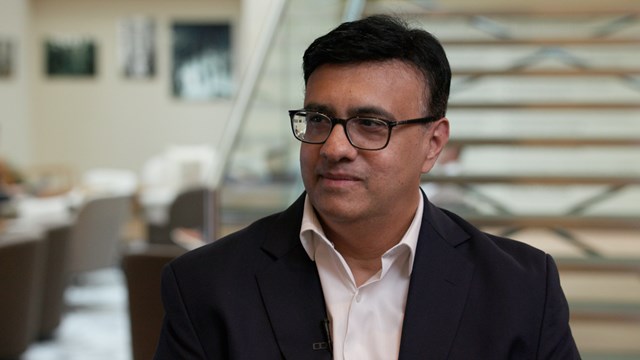
We are in the Bella Center in Copenhagen at DTW Ignite 2026. I'm here with Kanwardeep Singh Ahluwalia, who is the Group CIO at Deutsche Telekom. KD, thanks very much for joining us today. Great to see you. Now, with its production use of agentic AI and internal developments, Deutsche Telekom appears to be very well advanced with its AI-native strategy. Is that an accurate assessment? And if so, what foundations have enabled DT to get to this advanced point?
Kanwardeep Singh Ahluwalia, Deutsche Telekom (00:39):
Yeah, first of all, thank you so much and my pleasure to be talking to you. I think on your statement, I would say I agree because DT, I think, picked this up pretty much early in the phase. And this was super clear right from day one: this is a wave we don't want to miss. So imagine, telcos actually have missed the digital wave. They were not the front runners, but they caught up. But this is our time and we truly believe we can actually catch up on that. And this is where actually we are not just working on one particular aspect in DT. We believe it's a multi-layered architecture which we need to go and kind of change. And if you start from the most basic layer, which is maybe around the infrastructure and the cloud, we are there. We recently launched our industrial AI cloud as well.
(01:35):
And then of course from a consumer perspective, we are at the forefront. So whether this was democratising the access to AI for our consumers, we created the whole umbrella of offerings under Magenta AI, whether it's through our app or through the other offerings. We partner with the leading AI players in the market, and we will continue to do that. And then recently we also announced AI calling in Barcelona, so we will now be launching that pretty soon. So we definitely feel that we have the right to play here and we'll continue to do that. And then in between these two — the consumer and the infrastructure — I think there's a lot which we can do internally as well. So whether that's from how we serve our customers, how efficiently we can do that — we worked on that and we achieved good results so far — or whether the biggest change we can bring is how do we develop the products,
(02:36):
how do we develop the software? That's another big thing we are working on. So I would agree. I think we have made good progress, but the reality is, if I really look at it, the hunger to do more is much greater than what we have already delivered.
Ray Le Maistre, TelecomTV (02:53):
Yeah, absolutely. And I think you can see the passion when these new developments and advances are shared with the industry, and everybody appreciates that, I think. Now, of course, as everybody knows and as has been talked about here at DTW for some years, key to all of these developments is the data — the data that feeds the AI. How is Deutsche Telekom managing its data, and how do you decide which data is useful and to whom?
Kanwardeep Singh Ahluwalia, Deutsche Telekom (03:26):
Again, maybe the good part is we don't have to start from zero. We started the whole data transformation a few years ago, so we are actually in a good place. But what we have done recently — and I don't have to repeat this, right? — AI can only be as powerful as the data you feed into it. So maybe the criticality of data has gone up many times compared to the past. This is where we are also revising. We revised our strategy a few months ago and we said we want to now harness the data not only within silos but across the group as well. The reusability of the data has to go much further than what we have today. So we have now tweaked and evolved our data strategy into data products. We have now more and more data products. We created one marketplace.
(04:20):
They are published onto the marketplace, they are reusable across the group. I can request, I can search for a data product and use it. Now we believe that this becomes the basis for AI to harness as well. Whether we do it through products which are not really normal products but more like knowledge graphs, or some of the things which AI understands much better in that manner — other than of course the normal data products, whether that's customer information or product information — we believe we have made good progress in the last few months to accelerate the whole data transformation through the marketplace as well as the data product.
Ray Le Maistre, TelecomTV (04:58):
Now, of course, as a lot of people have been pointing out, especially in the past year, this is a transformation not just about technology but about people as well. How has Deutsche Telekom managed the introduction of AI into its workforce and its operations? And would you say that Deutsche Telekom has an AI culture?
Kanwardeep Singh Ahluwalia, Deutsche Telekom (05:20):
I think let's come to the AI culture maybe at the end of this, but I think what we essentially realised is we are not only democratising AI for consumers — we have to democratise it for our employees as well. So this is where, again, very early on, we ensured that every employee should have access to the tools. We have our own platform wherein I should be able to create agents, I should be able to do what I am doing much better. And then of course we have partnerships with some of the big model providers, the big companies as well. I come back to the office in the morning and I have a summary of my emails — I'm just giving you one example, right? But similarly, if there is someone who is doing a job which is repetitive, people create agents and then share those agents across.
(06:16):
We have multiple use cases. If there is an opportunity in the enterprise market and it's available somewhere, it can automatically fetch — oh, by the way, this is where we stand in terms of responding to this opportunity. So there is a lot of cultural transformation which has happened, wherein people right now are thinking about higher-level, abstracted problems rather than actually doing the repetitive tasks, which are being offloaded to these AI models. So luckily, I think we have made the right investment. We are empowering all our employees with those tools so as to ensure that we harness the power.
Ray Le Maistre, TelecomTV (06:58):
Yes. I'm sure that evolves quite quickly once more and more people are using it and seeing the benefits. There are a lot of changes, a lot of moving parts there, but of course at the end of the day it has to be proven to be a success. So how do you measure the success of an AI strategy?
Kanwardeep Singh Ahluwalia, Deutsche Telekom (07:18):
Let me just start from what we should not use to measure success, which is the number of POCs, the number of pilots. I think that was probably good two years ago, but no more. For us, success really comes through multiple factors. One, we are able to — like I said — really serve our customers. We are able to ensure that customers have access to the right models, the right AI nuggets, whether through AI calling or through the entire AI umbrella for all the features. So we have to ensure the customer is really the focal point. And then of course people talk about three things. One is speed: am I able to do what I used to do earlier in maybe months, more in real time today? Am I able to do it more efficiently?
(08:12):
And then the third one is all about trust. I think that is also super important for us, because you hear a lot of noise coming in — is AI the right thing? Is AI ethically the right thing or not? I think, like any other technology, it can be used for good things or maybe for bad things. For us, that is also super important because trust is something we don't want to compromise.
Ray Le Maistre, TelecomTV (08:41):
Now of course there is a lot of impact and change within the industry, but there is an aspiration this time that telcos and the telecom sector — the ecosystem more broadly — can be a leader and a game changer rather than a follower. So what roles can telecom operators play in the development of the broader AI ecosystem, do you think?
Kanwardeep Singh Ahluwalia, Deutsche Telekom (09:07):
Yeah, I think first and foremost we are definitely enabling this whole connectivity. Nothing is going to happen without that, so that's beyond any justification or explanation. But I believe we have a chance, like I said initially, to really lead this through the front. And what does that mean? It means reinventing even the way customers talk to each other. As an example, I mentioned AI calling — we believe we can actually transform and make it more efficient and more meaningful for two people to talk to each other. These are the innovations which we are squarely in a position to provide to customers. So I think that's our right to play. We definitely need to continue to lead there.
(10:13):
And then of course, beyond what we are doing for customers, the fundamental thing which we will never compromise is we need to continue to win the trust of customers. Our customers do look at our brand and say, "I trust this." So while we give them AI — and they are at times confused, they hear multiple noises — we need to ensure that we don't break that trust, but rather cement it further as well.
Ray Le Maistre, TelecomTV (10:29):
Well, KD, I really appreciate the time you've given us today. Thanks for talking about what is happening at Deutsche Telekom and I look forward to catching up in the future and hearing more about how Deutsche Telekom and the telecom sector is impacting not only our industry but the broader world of tech — and pretty much everything, I guess, with AI. So thank you very much.
Kanwardeep Singh Ahluwalia, Deutsche Telekom (10:52):
Thank you. And I'm excited too. Thank you so much.
We are in the Bella Center in Copenhagen at DTW Ignite 2026. I'm here with Kanwardeep Singh Ahluwalia, who is the Group CIO at Deutsche Telekom. KD, thanks very much for joining us today. Great to see you. Now, with its production use of agentic AI and internal developments, Deutsche Telekom appears to be very well advanced with its AI-native strategy. Is that an accurate assessment? And if so, what foundations have enabled DT to get to this advanced point?
Kanwardeep Singh Ahluwalia, Deutsche Telekom (00:39):
Yeah, first of all, thank you so much and my pleasure to be talking to you. I think on your statement, I would say I agree because DT, I think, picked this up pretty much early in the phase. And this was super clear right from day one: this is a wave we don't want to miss. So imagine, telcos actually have missed the digital wave. They were not the front runners, but they caught up. But this is our time and we truly believe we can actually catch up on that. And this is where actually we are not just working on one particular aspect in DT. We believe it's a multi-layered architecture which we need to go and kind of change. And if you start from the most basic layer, which is maybe around the infrastructure and the cloud, we are there. We recently launched our industrial AI cloud as well.
(01:35):
And then of course from a consumer perspective, we are at the forefront. So whether this was democratising the access to AI for our consumers, we created the whole umbrella of offerings under Magenta AI, whether it's through our app or through the other offerings. We partner with the leading AI players in the market, and we will continue to do that. And then recently we also announced AI calling in Barcelona, so we will now be launching that pretty soon. So we definitely feel that we have the right to play here and we'll continue to do that. And then in between these two — the consumer and the infrastructure — I think there's a lot which we can do internally as well. So whether that's from how we serve our customers, how efficiently we can do that — we worked on that and we achieved good results so far — or whether the biggest change we can bring is how do we develop the products,
(02:36):
how do we develop the software? That's another big thing we are working on. So I would agree. I think we have made good progress, but the reality is, if I really look at it, the hunger to do more is much greater than what we have already delivered.
Ray Le Maistre, TelecomTV (02:53):
Yeah, absolutely. And I think you can see the passion when these new developments and advances are shared with the industry, and everybody appreciates that, I think. Now, of course, as everybody knows and as has been talked about here at DTW for some years, key to all of these developments is the data — the data that feeds the AI. How is Deutsche Telekom managing its data, and how do you decide which data is useful and to whom?
Kanwardeep Singh Ahluwalia, Deutsche Telekom (03:26):
Again, maybe the good part is we don't have to start from zero. We started the whole data transformation a few years ago, so we are actually in a good place. But what we have done recently — and I don't have to repeat this, right? — AI can only be as powerful as the data you feed into it. So maybe the criticality of data has gone up many times compared to the past. This is where we are also revising. We revised our strategy a few months ago and we said we want to now harness the data not only within silos but across the group as well. The reusability of the data has to go much further than what we have today. So we have now tweaked and evolved our data strategy into data products. We have now more and more data products. We created one marketplace.
(04:20):
They are published onto the marketplace, they are reusable across the group. I can request, I can search for a data product and use it. Now we believe that this becomes the basis for AI to harness as well. Whether we do it through products which are not really normal products but more like knowledge graphs, or some of the things which AI understands much better in that manner — other than of course the normal data products, whether that's customer information or product information — we believe we have made good progress in the last few months to accelerate the whole data transformation through the marketplace as well as the data product.
Ray Le Maistre, TelecomTV (04:58):
Now, of course, as a lot of people have been pointing out, especially in the past year, this is a transformation not just about technology but about people as well. How has Deutsche Telekom managed the introduction of AI into its workforce and its operations? And would you say that Deutsche Telekom has an AI culture?
Kanwardeep Singh Ahluwalia, Deutsche Telekom (05:20):
I think let's come to the AI culture maybe at the end of this, but I think what we essentially realised is we are not only democratising AI for consumers — we have to democratise it for our employees as well. So this is where, again, very early on, we ensured that every employee should have access to the tools. We have our own platform wherein I should be able to create agents, I should be able to do what I am doing much better. And then of course we have partnerships with some of the big model providers, the big companies as well. I come back to the office in the morning and I have a summary of my emails — I'm just giving you one example, right? But similarly, if there is someone who is doing a job which is repetitive, people create agents and then share those agents across.
(06:16):
We have multiple use cases. If there is an opportunity in the enterprise market and it's available somewhere, it can automatically fetch — oh, by the way, this is where we stand in terms of responding to this opportunity. So there is a lot of cultural transformation which has happened, wherein people right now are thinking about higher-level, abstracted problems rather than actually doing the repetitive tasks, which are being offloaded to these AI models. So luckily, I think we have made the right investment. We are empowering all our employees with those tools so as to ensure that we harness the power.
Ray Le Maistre, TelecomTV (06:58):
Yes. I'm sure that evolves quite quickly once more and more people are using it and seeing the benefits. There are a lot of changes, a lot of moving parts there, but of course at the end of the day it has to be proven to be a success. So how do you measure the success of an AI strategy?
Kanwardeep Singh Ahluwalia, Deutsche Telekom (07:18):
Let me just start from what we should not use to measure success, which is the number of POCs, the number of pilots. I think that was probably good two years ago, but no more. For us, success really comes through multiple factors. One, we are able to — like I said — really serve our customers. We are able to ensure that customers have access to the right models, the right AI nuggets, whether through AI calling or through the entire AI umbrella for all the features. So we have to ensure the customer is really the focal point. And then of course people talk about three things. One is speed: am I able to do what I used to do earlier in maybe months, more in real time today? Am I able to do it more efficiently?
(08:12):
And then the third one is all about trust. I think that is also super important for us, because you hear a lot of noise coming in — is AI the right thing? Is AI ethically the right thing or not? I think, like any other technology, it can be used for good things or maybe for bad things. For us, that is also super important because trust is something we don't want to compromise.
Ray Le Maistre, TelecomTV (08:41):
Now of course there is a lot of impact and change within the industry, but there is an aspiration this time that telcos and the telecom sector — the ecosystem more broadly — can be a leader and a game changer rather than a follower. So what roles can telecom operators play in the development of the broader AI ecosystem, do you think?
Kanwardeep Singh Ahluwalia, Deutsche Telekom (09:07):
Yeah, I think first and foremost we are definitely enabling this whole connectivity. Nothing is going to happen without that, so that's beyond any justification or explanation. But I believe we have a chance, like I said initially, to really lead this through the front. And what does that mean? It means reinventing even the way customers talk to each other. As an example, I mentioned AI calling — we believe we can actually transform and make it more efficient and more meaningful for two people to talk to each other. These are the innovations which we are squarely in a position to provide to customers. So I think that's our right to play. We definitely need to continue to lead there.
(10:13):
And then of course, beyond what we are doing for customers, the fundamental thing which we will never compromise is we need to continue to win the trust of customers. Our customers do look at our brand and say, "I trust this." So while we give them AI — and they are at times confused, they hear multiple noises — we need to ensure that we don't break that trust, but rather cement it further as well.
Ray Le Maistre, TelecomTV (10:29):
Well, KD, I really appreciate the time you've given us today. Thanks for talking about what is happening at Deutsche Telekom and I look forward to catching up in the future and hearing more about how Deutsche Telekom and the telecom sector is impacting not only our industry but the broader world of tech — and pretty much everything, I guess, with AI. So thank you very much.
Kanwardeep Singh Ahluwalia, Deutsche Telekom (10:52):
Thank you. And I'm excited too. Thank you so much.
Please note that video transcripts are provided for reference only – content may vary from the published video or contain inaccuracies.
Kanwardeep Singh Ahluwalia, Group CIO, Deutsche Telekom
At the recent DTW Ignite event in Copenhagen, Deutsche Telekom’s group CIO, Kanwardeep ‘KD’ Singh Ahluwalia, discusses the operator’s AI progress, how DT measures the success of its AI strategy, the importance of data management, and much more.
Recorded June 2026
Email Newsletters
Sign up to receive TelecomTV's top news and videos, plus exclusive subscriber-only content direct to your inbox.