Netomnia acquisition to fuel further fibre M&A deals – Nexfibre

By Ray Le Maistre
Apr 16, 2026
To embed our video on your website copy and paste the code below:
<iframe src="https://www.youtube.com/embed/vDlJaN_LkPc?modestbranding=1&rel=0" width="970" height="546" frameborder="0" scrolling="auto" allowfullscreen></iframe>
The UK fiber broadband market is entering a new stage. While dozens of small alt nets struggle for survival, a small number of major players look set to survive and potentially thrive in the long term. And one of those is Next Fiber, the wholesale Fiber to the premises network builder that is backed by Infravia Capital Partners, Liberty Global and Telefonica, and which boasts major UK retail broadband service provider, Virgin Media O2, as its anchor customer. I'm talking today with Rajiv Datta, a telecom sector veteran who was appointed as NextFiber's CEO in late 2023. Rajiv, thanks so much for joining us today. Great to see you. Can you just give us a quick update on NextFiber's plans and progress, where you are on your network rollout and the nature of that relationship with VMO2?
Rajiv Datta, nexfibre (00:58):
Sure. As you said, Nix Fiber has built a wholesale only full fiber platform across the UK. Our network footprint now crosses over 2.6 million premises in every part of the United Kingdom. And our network is XGSPlan only. It's the latest next generation capability that we bring to the market. As you indicated, the market is very fragmented and NextFiber's footprint of 2.6 million homes or premises already puts us as the third largest challenger platform in the UK. And as I'm sure we'll talk about, we recently announced a transaction that will get us to close to eight million premises by the end of 27, making us a scaled national footprint to challenge BT open reach, which is sort of our core mission. As indicated, NextFiber is backed by world-class investors, which you've named, who not only bring financial capability, but also bring a real understanding of FTTH networks and telecom operations across many different footprints, including the UK, but in other geographies as well.
(02:18):
And core to our proposition is our strategic partnership with Virgin MediO2. And that comes in at least two dimensions. One is VirginMedio2 is our Anchor 10 customer, and that means that they use our network exclusively in places where it is available. And that of course is very important to any Altnet, any network provider to have that base of customers and penetration. But we also have an important build and operate partnership with VirginMedio2 where we leverage their scale, their substantial capability to build and operate networks, which allows us to get those benefits and maintain a relative lean structure and with the economics that come from that. So that is a critical part of our proposition and our position in the market.
Ray Le Maistre, TelecomTV (03:10):
Okay, great. Yeah. And that relationship makes a lot of sense, gives you something that a lot of the other new challenges haven't had, of course. Now, as you alluded to, the big news recently for NextFiber has been the acquisition for two billion pounds of NetOmnia, one of the larger and more successful Altnets in recent years. When is that acquisition due to be completed? And what will it mean for Next Fiber? And why do you think NetOmnia is a good fit for you?
Rajiv Datta, nexfibre (03:44):
Well, I think we should, if I had to back up, the Netomia transaction results in three key benefits, I think, to the marketplace. First and foremost, it will drive three and a half billion pounds of new investment into FTTH in the UK. And as we'll talk about, the investor confidence situation in the UK, especially in the fiber to the home marketplace is strained. And this is a sharpened the arm in terms of economic growth and investment within this part of the market within the UK. That 3.5 billion pounds, by the way, is not inclusive of the actual transaction to acquire net omni. I'm talking about future capital investments in connecting customers, upgrading footprint. We're also upgrading some HFC footprint as part of this transaction on the VMO2 side, et cetera. So that is a big benefit to the UK in a moment where investment is sorely needed.
(04:49):
Second, this builds, as I indicated, an eight million premises of footprint by the end of 2027. And we co-market our footprint along with VMO2's own upgrade plan for its HFC network. And in combination, eventually, that footprint with VMO2 will cover 20 million premises. And to me, this is the only narrative that brings to bear a genuine, scalable challenger to BT open reach. And we have to remember that this is the core sort of objective mission of the entire investment cycle in fiber in the UK is to bring that real competition to the market and to ensure that full fiber continues to innovate and evolve with new technologies that will come as times progress, and that we have a player that can invest in those cycles. So that's crucial, that sustainable challenger to BT open reach. The third benefit is for consumers. And there is a clear near term benefit in the fact that millions of Virginia two customers that are currently on HFC will have full fiber capability in a very accelerated timeframe as a result of this transaction.
(06:09):
So that's a near-term clear benefit. But I really think the long-term benefits to consumers and the midterm benefits to consumers are very important to remember. By having a wholesale proposition where we are inviting all retail ISPs to leverage our infrastructure, this transaction will result in more choice for consumers in terms of broadband providers. It will also deliver greater capability. It's important to remember all full fiber networks are not the same. BT OpenREACH has been deploying largely GPON networks, which is last generation technology. Our network, all eight million homes by the end of 2027 will have XGSPON only. And that incremental capability and continuous innovation in terms of the technology platforms is very important. And I think that this transaction will drive that competitive tension that will force all players to improve capability. And finally, it will improve service because in the end, that is one of the key drivers of competitive pressure in any case, which is to treat customers better, to provide a more frictionless install experience, which has always been a challenge in the fiber marketplace, et cetera.
(07:27):
So I think there's some really key benefits to this transaction that will come across the market and for consumers.
Ray Le Maistre, TelecomTV (07:35):
Okay. And in terms of the actual RezonDetra behind the acquisition, I mean, did NetOmnia have a compatible footprint? Was there not much overlap between what you were doing and what NetOmnia had? And also, can you talk about when this deal might close? Some M&A activity can take a very long time to actually close, and therefore the benefits therefore take some time to come to fruition.
Rajiv Datta, nexfibre (08:06):
Oh, first of all, I think we should recognize that Netomy has been one of the more successful builders in the marketplace, as you indicated, with over three million homes passed in a relatively short period of time. I think there are two things that I would point to that make Netomnia a good target and a good partner for this consolidation. The first is scale. And as I indicated, being a wholesale challenger to BT Openreach, which isn't something that has never existed before in the UK, requires you to get to a certain size and scale so that you can be appealing to retail ISPs. And as you know, the retail broadband providers in the UK are large national players and they're looking for large national footprints. So the scale of Natomia is one key aspect. The other aspect, and for observers of the marketplace will know, because we've been talking about consolidation for a long time, but you need the capital structure that allows for that.
(09:08):
And Natomia has one of the most capital efficient structures in terms of what they've spent on their platform and on building. And of course, that is an important element that allowed us to find a way to make a transaction happen. In terms of timeframe, we are obviously very focused on getting the transaction completed. Obviously, we have to go through regulatory steps and processes, which we respect, and we're in that process right now with the CMA in order to get it closed and to get that approval. Depending on what specific process unfolds, our view with a phase one approval process is towards the end of the summer to close the transaction. And of course, to your point about acquisitions taking time to actually see the benefits, we will then have to go through an integration process. Network integrations are not that straightforward. And obviously, this is a fairly complex deal that will take some time to integrate.
(10:15):
So we're hoping for completing the transaction towards the end of the summer, and then thereafter, of course, an integration process to actually bring the networks together.
Ray Le Maistre, TelecomTV (10:26):
Sure. Okay. And that's relatively quickly in terms of a lot of M&A deals. And then just in that footprint, a very compatible footprint then, not too much overlap with what you've done already or what you're planning to do.
Rajiv Datta, nexfibre (10:41):
So the Netamia footprint and the next fiber footprint has very minimal overlap, something less than 200,000 premises from of their three point, call it two million at what we project there'll be a deal closure. So no material overlap with NextFiber. There is some overlap between the Natomia footprint and the Virgin Media O2 HFC footprint that we are, as part of this transaction, we're also entering into a transaction with Virgin MediO2 where they will leverage the Natomia footprint to migrate customers and to upgrade customers from HFC to full fiber. So there is some overlap in that context, but from a fiber footprint, next fiber to Natomia, there's very little overlap.
Ray Le Maistre, TelecomTV (11:34):
So we've mentioned the Altnet sector and how the market is developing a little bit already, but how do you see in the coming years this market developing as the smaller altnets continue to struggle as many of them are, and the ISPs, retail ISPs consider their options. I mean, everybody's been expecting a wave of consolidation for years, but it's only been happening very slowly. Do you expect this now to accelerate? Are you going to be involved more? Are you lining up any more deals or will NetOmnia give you everything that you need for the next few years?
Rajiv Datta, nexfibre (12:15):
As you said, I think the AllNet space is clearly under financial stress. We have a very fragmented space with over a hundred different Altnet operators across the UK of varying sizes, many of them very small and subscale. There's mounting debt, which has been widely reported as you indicated. And as a result, people have slowed down or stopped building. Investment is focused almost uniquely on customer connections, which is also fairly capital intensive by the way, relative to ARPUs. So that continues to drive the need for cash and investment, which has dried up for the most part. It's very difficult to find investors who want to invest in UK fiber at the moment, just based on the history. And that's driven by the fact that interest rates have gone up. Penetration assumptions that were once made in business plans have not progressed at the pace that the plan would've indicated.
(13:19):
And as a result, as you said, there's been a lot of discussion for years about there being a need for consolidation, and that has been very difficult to move forward. And we're really excited to offer this sort of bellwether deal in the market that is the catalyst that everyone I think has been waiting for to actually move the needle and to move this marketplace forward. We're starting to see an increasing number of distressed financial restructurings that have been in the news at some growing frequency, and obviously that will frankly continue unless we can find a way to consolidate footprints and to bring that challenge to VT Open Reach, which is all of our original objectives. So I think I do believe that the market is waiting to see this deal complete and close and has been in limbo now for this two-year, three-year period of waiting, and they're waiting for this deal to complete so that people can now start recognizing how they can participate in a meaningful consolidation.
(14:37):
For our part, obviously we're focused on getting this deal completed and closed. If we can find other opportunities to add to our platform, we're always eager to do that. But of course, the challenge has been the capital structure and financial conditions around many of the alt nets. And I do think that some of these more distressed restructurings will probably bring more focus to investors and lenders to find the right solutions as we progress.
Ray Le Maistre, TelecomTV (15:11):
Yeah. Yeah. We do appear to be heading for a crunch point, but then again, I think we've been saying that for a couple of years as well. So we'll see what happens in the rest of 2026. Now, obviously it's great to be talking about fiber in the UK because only 10 years ago, everybody was asking whether UK would ever get decent fiber access infrastructure. And what changed that, of course, or what really helped was a change in the regulatory environment. And of course, that regulatory environment is absolutely key for all of the players in the sector. How will the latest telecoms access review from the UK regulator, OFCOM shape the market for the next five years? Is it going to enable companies such as Next Fiber that are competing with OpenREACH to achieve their returns on investments? Do you think that the new review is the right one for the market?
Rajiv Datta, nexfibre (16:04):
Well, I think first of all, we should recognize the positive aspects of what OFCOM has achieved with this TAR and the previous TAR, in terms of creating a framework that points to stability. And that's how I would describe the TAR that has been recently released. Stability is very important in this marketplace. Investors crave stability to know what the rules of the game are for their investments. I keep talking about the fact that infrastructure investment is a long-term game, and you need to know and believe as an investor that that investment will go through cycles of change with rules that are consistent and stable. So I think from that perspective, I think the TAR was important, and we're very supportive of the fact that it maintains constraints on VT open reach, which are very important because they clearly still have significant market power, and we have not yet formed something that adequately challenges them.
(17:13):
That's what we're trying to do with this transaction and building that platform of eight million homes and eventually up to 20.
(17:23):
So I think the TAR has achieved that stability. I think what we are looking for, of course, is the continued support for consolidation as this initial process of consolidation in the market starts to unfold. We're looking for that support from the regulators to drive what we believe to be a healthier market structure, which I think is what we're all aiming for in the market. So we're happy with where TAR came out, and of course we need to recognize the benefits of the regulation over time, the rollout of PIA, for example, that has reduced the cost of build and so on, but now it's time to make sure that the next steps of consolidation are supported as well as we progress.
Ray Le Maistre, TelecomTV (18:13):
Yeah, absolutely. And let's hope that some common sense prevails and the best outcome can be had for everybody, but that isn't always how it plays out because there's not always a true understanding of the role of digital infrastructure. I mean, this is in my opinion, by ministers, less so at the regulators, they have more idea. But do you think the UK political parties appreciate the importance of digital infrastructure? Do you think there's an awareness of the importance of fiber in the corridors of power and what this can mean for the UK economy?
Rajiv Datta, nexfibre (19:00):
My sense is that there's general cross-party recognition of the importance of digital infrastructure to drive, frankly, growth and productivity. Of course, in the era of AI that we're in, that certainly gets a lot of headlines, but clearly beyond the obvious participants in the AI era, everyone knows that you need to move all of this information around in the role of fiber and its absolute standard bearing sort of role in there is no other medium to drive the mass amounts of data that needs to move around. So I think there is an appreciation that fiber is a critical sort of national enabler resource asset. I do think they understand that. Of course, as you would expect, that is at a certain high level. And what we try to do and what we would aim to do is to continue to remind political parties and people in power of the nature of fiber infrastructure investment, and specifically that it takes an incredibly long time to get returns.
(20:17):
This is not a near term single cycle type of return phenomenon, and therefore you need long-term sustainable policies, and therefore regulation is relevant in that context. You need scale, you need sustainability. This is not about what you're offering in a promotional period for Black Friday. This is about what sustainable context, what sustainable operation and network can you create that can last generations. And I think this is Britain's broadband moment, in my view, in terms of the transaction and in terms of the next stage of evolution. And our job is to continue to remind those in power and those who can define the pace at which we move here, that these are important elements that need to be understood to get the investment that the country needs, that the infrastructure requires, and that will benefit the economy, and of course, consumers in the end. I mean, in the end, this is about creating an environment that consumers will benefit from for generations.
(21:32):
It's not about what happens in 2026 or 2027.
Ray Le Maistre, TelecomTV (21:38):
No, absolutely. And there's quite a few of us actually that are very glad that the UK is having any kind of broadband moment at all. That's a very positive thing for all of us. And finally, Rajiv, you've talked about obviously you're looking to close and then move on and get the benefits of the NetOmnia acquisition. But in general, what's next for Next Fiber? Are there any other key developments or plans that are happening in tandem with the M&A progress?
Rajiv Datta, nexfibre (22:10):
So as you said, I mean, we're heads down focused on A, getting the deal completed, B, focusing on integration planning, which we can only do in a limited way before the deal actually closes. So the integration and getting that done and getting the benefits is going to be our core focus and priority. But beyond that, I have to say the phone has been ringing off the hook from broadband providers who have taken note of this eight million home footprint we're going to have by the end of 27 and are interested in understanding how they can leverage it, how they can participate in it. And as a result, the wholesale platform that we're trying to build is something that we're very focused on. We have Virgin Media two as a customer. We launched GiftGaf at the end of last year as a separate brand, but we are focused on building a large number of retail ISPs that leverage the footprint.
(23:09):
That's absolutely a focus for us. And beyond that, of course, as I indicated, if we can continue to participate in consolidation, I think the market is waiting to see this transaction complete so that further work can be done. And if we can find ways to continue to participate and grow the platform, obviously we'll be looking to do that, but obviously it has to come with the right economics.
Ray Le Maistre, TelecomTV (23:34):
Okay. Well, that's fantastic. Well, really looking forward to seeing the NetOmnia acquisition close and the news of further ISP customers for NextFiber, because these things are always good to further stimulate the market as well. So Rajiv, thanks so much for joining us today. Great to talk to you, and thanks for joining us on Telecom TV.
Rajiv Datta, nexfibre (23:54):
Thank you, Ray.
Please note that video transcripts are provided for reference only – content may vary from the published video or contain inaccuracies.
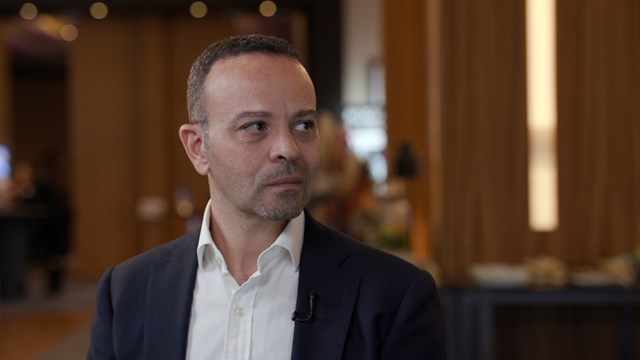
Rajiv Datta, CEO, Nexfibre
Rajiv Datta, CEO of UK fibre to the premises (FTTP) wholesale operator Nexfibre, says his company’s £2bn acquisition of Netomnia, which is set to close this summer, will have an impact on the broader market as well as add significant scale to Nexfibre as it seeks to challenge BT’s Openreach. Datta also discussed the operator’s wider plans and its relationship with Virgin Media O2, commented on Ofcom’s recent Telecoms Access Review (TAR), and shared his expectations for the UK broadband services sector.
Recorded April 2026
Email Newsletters
Sign up to receive TelecomTV's top news and videos, plus exclusive subscriber-only content direct to your inbox.