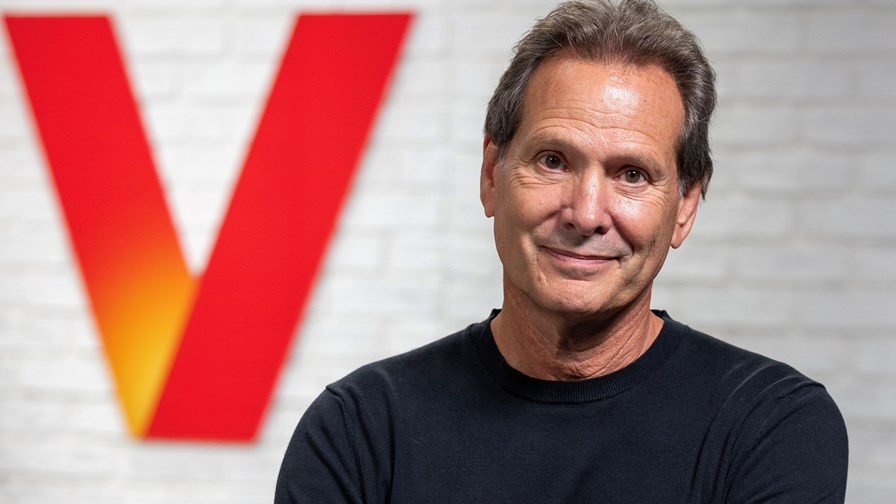
Verizon CEO Dan Schulman clains his company is "redefining loyalty".
- Verizon CEO has a lightbulb moment
- APAC telcos team up on 6G and AI
- EC picks partners for €180m sovereign cloud push
In today’s industry news roundup: In what must have been a shocking Eureka moment, Verizon’s CEO appears to have realised that customers will jump ship if they are treated as spreadsheet items rather than cash-constrained and often volatile human beings; LG Uplus, Globe, and all four Japanese mobile operators strike a partnership that will see them collaborate on 5G and AI; the European Commission names telcos Proximus and Post Telecom among the four (including several alliances!) providers for its €180m sovereign cloud services tender; and much more!
Verizon CEO Dan Schulman appears to have come to the not–so-staggering conclusion that his company might have to lavish some love on its user base and treat them like valuable customers and not just potential churn statistics. Schulman, who took the helm at Verizon in October last year and almost instantly cut 13,000 jobs and revamped much of his management team, admitted during the Semafor World Economy conference in Washington DC that Verizon has been losing market share to its bitter rivals AT&T and T-Mobile US and that, while it believes it still has the best mobile network in the US, it can’t rely on that pitch to attract and retain customers any more. “We now need to do all of the basic stuff,” Schulman told the event’s attendees, before adding, “you have to treat people like humans, not like accounts”. Saying it is one thing – doing it is very much another: Let’s see how Verizon performs for the rest of 2026 in the face of ever-intensifying price and bundled services competition from Verizon’s two main rivals.
Some of Asia’s biggest telcos and industry organisations have signed a co-operation agreement in Tokyo that will see them share standards and business models in future 6G and AI infrastructure. Korea’s LG Uplus and Philippines telco Globe joined Japan’s NTT Docomo, KDDI, Rakuten Mobile and SoftBank Corp, plus three APAC 6G alliances – India’s Bharat 6G Alliance, South Korea’s 6G Forum and Japan’s XG Mobile Promotion Forum (XGMF) – to put their names to the Tokyo Accord at the GSMA’s Digital Nation Summit in Tokyo. The agreement will see operators collaborate to build interoperable platforms on top of 6G infrastructure to support AI and business use cases. The partners agreed to key principles, such as fostering a digital ecosystem, accelerating digital transformation for enterprises, and enhancing cross-border digital trust.
Roubaix, France-based OVHcloud has teamed up with fellow French firm Quandela, a photonic quantum computing specialist, to make the latter’s Belenos computer available via OVHcloud’s Quantum platform, which was launched during the second half of 2025 to make quantum computing accessible through a quantum-as-a-service (QaaS) consumption model. The Quandela Belenos, which uses photonic quantum technology to offer a compute power of 12 qubits, “helps organisations to experiment with new algorithms in innovative domains, such as image sorting and generation, accelerated AI calculus or quantum machine learning,” notes OVHcloud in this announcement. Niccolò Somaschi, CEO and co-founder of Quandela, stated: “The integration of Belenos 12 qubits into the OVHcloud portfolio marks a decisive step for quantum in Europe. Accessible through the cloud, this photonic computer becomes a concrete tool for businesses. With OVHcloud we are offering data scientists and innovators alike the means to develop their algorithms on a flexible and sovereign infrastructure.”
And still with OVHcloud… It is one of the cloud providers selected by the European Commission to provide sovereign cloud services up to the value of €180m to European Union institutions, bodies, offices and agencies over the next six years. The EC’s chosen quartet are: Luxembourg’s Post Telecom, with its partners CleverCloud and OVHcloud; StackIT, the cloud platform developed and run by European multinational Schwarz Group, which was in the news earlier this month as its supermarket division Lidl unveiled its expanded MVNO ambitions; Scaleway, the cloud services unit of the Iliad Group; and Belgium’s national telco Proximus, which partners with S3NS (a joint venture of Thales and Google Cloud), Clarence and Mistral. The move, albeit small potatoes in a global cloud services market that is worth more than $400bn per year and rising, supports the EC’s efforts to “enhance its own sovereignty, reinforcing strategic control across key technologies and infrastructure,” it noted in this announcement. The four selected cloud services providers were chosen based on their alignment with the commission’s Cloud Sovereignty Framework, which measures sovereignty across eight objectives.
Canadian operator Rogers Communications has partnered with T-Mobile US to expand its direct-to-device (D2D) offering to include roaming in the US, adding an additional 1.3 million square kilometres to its footprint. Rogers has combined its own Rogers Satellite service with T-Satellite – T-Mobile US’s D2D offering – to introduce satellite connectivity, via Starlink, for its customers who are travelling in the US. The Canadian telco first launched its Rogers Satellite text service in July, but has added support for additional apps, such as X, Google Maps, AllTrails and AccuWeather. Users can also make voice and video calls via WhatsApp and Facebook’s Messenger, and Rogers said it plans to introduce traditional voice calls in the future.
Having set up its new Sovereign AI unit with a kitty of £500m to invest in startups, the UK government’s Department for Science, Innovation and Technology (DSIT) has announced the first companies that are benefitting from the new unit’s funding and the resources that funding will help to create. “Sovereign AI’s first equity investment will be in the AI infrastructure startup Callosum,” which is developing software that orchestrates disparate AI infrastructure resources and treats it as one instance, though the amount being invested in the startup was not revealed. In addition, “six further startups will receive access to some of the UK’s foremost supercomputing capacity” through the Sovereign AI unit’s AI Research Resource (ARR) initiative, noted the government in this announcement. The six startups are Prima Mente, Cosine, Cursive, Doubleword, Twig Bio and Odyssey. “Putting some of the nation’s foremost supercomputing capacity behind some of the country’s most promising new companies tackles a critical hurdle: The need for vast amounts of specialist hardware like GPUs to train advanced AI models, test ideas and run complex simulations,” noted the DSIT. Callosum was unveiled in February this year, when it announced $10.25m in seed funding.
Linux Foundation Networking (LFN), the arm of the open-source organisation that specialises in networking projects, has taken over full control of the O-RAN Software Community (O-RAN SC), which LFN had set up in collaboration with a fellow industry group, the O-RAN Alliance. The O-RAN SC, which focuses on “developing modular, open, intelligent, efficient and agile disaggregated RAN solutions aligned with O-RAN Alliance open architecture and specifications”, was established “with the mission of developing open-source software for the RAN – the next major frontier for the open source community,” noted LFN in this announcement. Thomas Lips, chair of the board of O-RAN Alliance and senior VP of RAN disaggregation at Deutsche Telekom, stated: “After eight years, the O-RAN Software Community successfully accomplished its mission to jumpstart open-source RAN software closely aligned with the O-RAN architecture and specifications, supporting the RAN industry in building open and intelligent radio access networks. Ever since, relevant open-source initiatives have continued to expand, and the O-RAN Alliance looks forward to further supporting the broader LF open-source community in developing O-RAN consistent open-source software.”
Finnish cybersecurity and connectivity firm Cinia has partnered with Nokia to launch an advanced distributed denial-of-service (DDoS) protection solution to safeguard critical infrastructure from complex cyberattacks. The partnership – which Nokia calls a managed security service provider (MSSP) model – will see Cinia offer its customers a fully managed 24/7 DDoS protection service that uses Nokia’s AI-based Deepfield Defender system for detection and mitigation. Cinia operates critical infrastructure in Finland and internationally, including a 17,000km optical fibre network and the C-Lion1 subsea cable that links the Nordic country to Germany.
– The staff, TelecomTV
Email Newsletters
Sign up to receive TelecomTV's top news and videos, plus exclusive subscriber-only content direct to your inbox.