How telcos can differentiate themselves with telecom sovereignty services

By Guy Daniels
Jun 5, 2026
To embed our video on your website copy and paste the code below:
<iframe src="https://www.youtube.com/embed/6bflpCn_Hfw?modestbranding=1&rel=0" width="970" height="546" frameborder="0" scrolling="auto" allowfullscreen></iframe>
Hello, you're watching Telecom TV. I'm Guy Daniels. At last month's Unthinkable Lab in London, a group of over 20 telcos, vendors, channel partners, developers, and regulators spent the day exploring the issues around telecom's sovereignty, including the evolution of frameworks and the development of telco propositions. You can download the post-event report by following the links below this video. Now though, I'm joined by the hosts of the Unthinkable Lab and the event partner to unpack what we learned, identify the challenges and see what needs to happen next. So let me now introduce Andrew Collinson, founder and principal, Connective Insight. Dean Bubley, Founder and Director Disruptive Analysis and Jed Pell, MD and Senior Vice President AMEA and APAC Alianza. Hello, everyone. Really good to see you again. Well, let's start by addressing what is driving sovereignty and why is there so much focus around this now? What were the thoughts of the unthinkable lab?
(01:22)
Andrew?
Andrew Collinson, Connective Insight (01:24):
Well, in one word, the answer's Trump, but in a more sophisticated answer, I think it would be to say that the kind of current outlook and behavior of the US administration has significantly heightened interest fear in what has been around for a while, which is the US Cloud Act, which allows or in fact doesn't just allow. It enforces the ability of the US administration in certain circumstances to get information and take other actions with respect to cloud services providers and other online service providers. And with the US administration's current somewhat acquisitive and aggressive approach to negotiation, there's concern that this may trigger either routes of address through the US Cloud Act or some other form of leverage exacted by the US administration on other people, for example, Europe. So the short answer is Trump, the longer answer is it's the different attitude of the US administration in particular.
(02:36)
And beyond that, there's existing risks and threats from other sources, the geopolitical fragmentation that we're seeing. But the thing that's really heightened it recently, I think, has been the approach of the US administration.
Guy Daniels, TelecomTV (02:49):
Great. Thanks very much Andrew. Dean, let me come across to you. We've heard from Andrew there about the impact of the US and obviously geopolitics has a major role here. What's your thoughts?
Dean Bubley, Disruptive Analysis (03:01):
I'll sort of take a slightly different start to Andrew and I think that a lot of the interest around sovereignty goes back at least 10 years and actually initially the main vector was more about China. If you think about the UK and other countries banning high risk vendors from networks and there's certainly more recently been supply chain issues around things like critical minerals. So I think there's a bit of a distinction here between cloud sovereignty and telecoms and network sovereignty. And we'll come onto that later. But also on network sovereignty, we've also got issues around things like satellite and GPS for timing, which is impacted by conflicts, particularly jamming and spoofing by Russia in border areas around the Baltic. There was an incident of the UK's defense minister's plane was on the sharp end of that only just a few days before recording of this.
(03:58)
So I think that it's much broader on a geopolitical point of view and it impacts different parts of the value chain in different ways.
Guy Daniels, TelecomTV (04:07):
Great. Thanks very much, Dean. Andrew, let's get back to you. Dean was saying there about going back even further to the concerns about China. Additional thoughts from you?
Andrew Collinson, Connective Insight (04:18):
First to start with a disagreement because that's how we roll. To be true, I don't disagree with Dean. My answer to your question was the why now question. Why is it sharply spiked now? I think Dean's absolutely right. That's the backdrop, but I feel that pressure is the thing that has raised the ante, particularly in Europe.
Guy Daniels, TelecomTV (04:38):
Yeah, thanks Andrew. And as you said, the beauty about the Unthinkable Labs is we get to discuss all aspects and hopefully all angles in a very good environment, which are hasten to add, is under the Chatham House rule. So people are really free to say exactly what they think and it's an absolutely great series of events if our audience hasn't been, they really ought to get to the next one. So Dean, I'm going to come back to you because you mentioned the distinction between that cloud sovereignty and network sovereignty and all the various different domains. We keep hearing that sovereignty means different things to different people, even amongst different telcos. So what are the problems surrounding the definitions and the propositions for the telco sector? Is this something the event discussed?
Dean Bubley, Disruptive Analysis (05:20):
Yes, absolutely. And as well as there's a geographic dimension and there's a sector dimension. And so I've had different topics arise on sovereignty and discussions in UK, in mainland Europe, in the US, in Canada, in Asia recently, Central Asia. And I think that then reads across to opportunities and risks for not just service providers, but for governments and enterprise. And certainly I think at the moment the policy discussion, here's where I agree with Andrew. And certainly in the EU, the main thrust of debate and discussion and we're expecting the next version of the cloud and AI and data act outsource shortly is around cloud infrastructure, AI models, data residency and things like that, which is important, especially for operators that are offering cloud services. But ultimately we're talking about telecoms here. So we also have to think about the provenance of network equipment, the route that data takes across the network and also adjacent areas like it could be satellite communications, maritime and aviation, critical network infrastructure, which is for things like utilities and rail, which is not quite telecoms.
(06:38)
There's internet governance as well, enterprise networking and security. And it also impinges on security and resilience of networks as well as the data and cloud infrastructure. And so I think at the moment, if I look at, well, particularly in Brussels, about 80% of the discussion is around cloud, AI, data centers and data residency, but more broadly, and I think this is something that came out in the workshop and a couple of other events that I've spoken at recently, you've got everything from the timing positioning to subsea fiber to satellite to network equipment provision. And this applies actually in the US as well as in Europe and UK. So in the US, there's discussion about where contact centers are located and having sovereign contact centers and they've also tried to block import of foreign-made wifi routers and gateways for broadband. So the sovereignty discussion is quite nuanced and broad, both in terms of sectors and in terms of geography.
(07:45)
I'd say Canada probably aligns with the UK a bit more in terms of a focus more on security, which is basically that you need to have proven resilience and security and fallback. Europe tends to be more looking at supply chain strategic autonomy and sort of invented here, whereas I think some other markets are more looked at looking at the controls and resilience characteristics.
Guy Daniels, TelecomTV (08:13):
Thanks very much, Dean. I'll come to and do in a second, but Jed, I'd like to bring you into the conversation there because as we've heard, defining and understanding what we mean by telecom sovereignty is a very important aspect.
Jed Pell, Alianza (08:25):
Yeah, 100%. And I think sovereignty has certainly moved from policy talk to board level operating requirements. And I don't think the timing's coincidental. We've got the geopolitical fractures that we've talked about, US, China, and EU diverging on technology. We can't underestimate what's happened with Ukraine and now the Iranian crisis showing how fragile cross border dependencies really are. And also along with this, we've got regulatory waves hitting right now, the telcos. NIST2 as an example, DORA, AI Act phasing in and also national variants stacking on top of that. Cloud concentration risk is also driving some of the requirements here. Years of hyperscale dependency is really exposed by the Cloud Act actually where the extra territorial reach comes in and really let's stack on top of this AI that really raises the stakes, how data flows, new inference jurisdictions, new model providence questions, none of which kind of existed three years ago.
(09:34)
So sovereignty isn't really one thing. It's at least five things that I can think of right now, data sovereignty. Where's the data physically sitting? Operational sovereignty, who has the keys and the access and then technology sovereignty, who controls the stack, the IP, the supply chain, and then jurisdictions sovereignty. Which legal authority compel action, repatriate data, for example. And then lastly, strategic sovereignty. So the ability to act without any external veto. It's pretty hard for the telco sector right now because telcos are traditionally cross border and sovereignty becomes more than just a procurement tick box. It really is as many of the telcos that were in the room we're talking about, it needs the clear definitions, both within the telco environment and also from the vendor community to know really what sovereign means.
Guy Daniels, TelecomTV (10:30):
Yeah. Thanks very much, Jed. Andrew, I'll come to you because as we heard from Jed there, it covers a lot of ground. And to me, the more I hear and the more I try and understand about sovereignty in the telecom space, the more complex it appears. What's your take?
Andrew Collinson, Connective Insight (10:45):
Yeah, I think one of it is very complex and I think Jed and Dean have made a very good case for the lines of complexity. On the other hand, I think it's very simple. Nobody really knows what we're talking about when we talk about sovereignty and there are two reasons for that. One is we've lived in a world of global connectivity and global interconnectivity. So we've lived for a long time under the assumption that everything's connected and everything's equal and suddenly it isn't. And what that means is that a previously undivided world has suddenly become divided in some way that we don't quite understand and we don't have a common understanding of more importantly. So like Jen and Dean were saying, you can talk about sovereignty with great confidence, but you might be talking about something completely different from the person on the other side of the table, what they actually mean, what they want, what's important to them about it and the way I think about it, what you can do about it is the important thing.
(11:39)
So on the one hand, yes, you're absolutely right, Guy. Immensely complicated. On the other end, if you step back from it, the reason it's complicated is it's very simple. We've gone from an undivided world to a divided world and nobody's quite worked out where the dividing lines are yet.
Guy Daniels, TelecomTV (11:54):
Yeah, Andrew, we really have. Very good point. And Dean, I'll come straight back to you.
Dean Bubley, Disruptive Analysis (11:59):
Well, one other thing is we also don't know what people will pay for. And so we can talk about sovereignty and that's one thing, but it's not coming for free. If you end up duplicating supply chains or you have to have fallback options and additional resilience, that comes with a cost, both in terms of money and sometimes in terms of time and perhaps in terms of capability and features and so on, if we talk about applications. And so I think one of the tasks and challenges is matching the right sovereignty to the right task and right enterprise. Even within government, the level of sort of sovereign control you want for your, I don't know, military targeting software is very different to something about collecting the rubbish on a local council. It's all government, but it's got very different requirements and very different propensity
Guy Daniels, TelecomTV (12:51):
To pay. Yeah, absolutely. Thank you, Dean. And whilst we should look at now, I think what people will pay for, because whilst we continue to transort out and discuss definitions of what sovereignty actually is and encompasses, there is a question of commercial propositions from the telcos, what telecom specific opportunities are there for sovereignty related services? Was there any consensus over the best approach at the lab? Jed, what are your views about the commercial opportunities for these services?
Jed Pell, Alianza (13:25):
Yeah, I think sovereignty is one of the very few topics where an operator has actually a stronger position than the hyperscalers, which is pretty unique really. And that kind of provides a commercial opening, but it really only is a commercial opening if the telcos actually apply it at the right layer in their stack. Sovereign voice and message hosted in country again has to be vertically aligned. I mean, clearly critical national infrastructure communications for government defense, blue light, emergency services are also some of those kind of key areas where we sort of see operators being able to justify those additional value points. I mean, really the kind of key thing is from an operator's point of view, a sovereign communication fabric that the operator sells has to be at a tiered level, not as a feature because sovereignty really isn't a feature, it's a network wide infrastructure environment and really a tier one operator selling compliance ready building blocks is really something that could also benefit some of the smaller tiered players who have those compliance requirements.
(14:38)
But as usual, defense and some of those hardening sovereign environments and mission grade critical applications are certainly where a lot of the focus is initially when we're talking about sovereignty.
Guy Daniels, TelecomTV (14:51):
Yeah. Thanks very much, Jed. Andrew, I'll come across to you in an interesting point there about sovereignty not necessarily being a feature. Your thoughts about commercial sovereignty-based services?
Andrew Collinson, Connective Insight (15:04):
A few things. First of all, I was just reading about Amazon's sovereignty proposition. It's about 15% deer than Amazon Cloud and it launched with something like 90 out of 240 services. So there is a sort of degradation of what's available in a sovereign cloud at the moment. Now that may change and it may be a bit more expensive and that really was an interesting point made by Colin Bannon from BT, and BT have invested in creating their product, global fabric and some other products that go around it to create sovereign offerings. And they said they've kind of jumped the gun and they say, "Well, you have to invest and it will be a bit more expensive to be sovereign." The problem for us is for us as in BT, there are no clear lines. So anyone at the moment, certainly in the UK, less so in Europe, but even so to some extent, you could say this is a sovereign proposition.
(16:05)
And because nobody knows actually what that means, you can kind of get away with it. So one of the risks here is sovereignty washing, like everything else, you just call it sovereign and nobody really knows the difference. And that's one of the problems of the lack of definition because you don't know where the line lies is what you're buying really sovereign. And the other question that's in my head behind that is, well, so what? Because you've got a trade off decision to make between being connected to the most advanced, most fastest moving R&D and investment cycles in the world, in the sort of hyperscaler clouds, or a more limited one in a sovereign environment or some of the sovereign environments. Now that may be a good choice for you, it may not. It's a trade off. It's a question of what matters to your business and in your area.
(16:57)
I think it's quite interesting what Jed was saying and what Dean's and I've been talking a lot, Dean's particularly strong on this is when you look at different areas, they have different needs. So if you're talking about a defense application or a banking application, they have different needs from each other, but they have very strong societally based and structured needs. Other companies may not have nearly the same need for that level of sovereignty. And so the risk to them is very different if something went wrong in that environment. So when you look at the structure of sovereignty, you've got price differences, you've got possibly sector differences and then you've got different consequences of your choices to consider. So we'll come on to talk about this a bit more when we talk about frameworks. The way a lot of frameworks have been structured at the moment don't really marry all of those at a perfect level to make choices easy for customers, both customers to buy and companies to invest in order to deliver those propositions.
(18:06)
So structure's really important and the structure comes after the definition.
Guy Daniels, TelecomTV (18:10):
Great. Thanks Andrew. And Dina, I'll come across to you because it must be hard to create a compelling service if we haven't really got a good definition that is specific to customer domains.
Dean Bubley, Disruptive Analysis (18:19):
Right. Well, when I think about telecoms sovereignty in particular, I've got sort of a three tier model in mind that there's sort of an infrastructure and connectivity tier. There is a solutions tier and then what I'll call a sort of full stack. And what I'm including in that, if you're connectivity, there's like sovereign things which are, it could be zero trust networking, it could be routing of data internationally to ensure it doesn't go via unfriendly countries. It could be right out to things like sovereign satellite gateways and subsea fiber. There's things like zero trust networking in there and that's part of, could be either standalone or part of a more integrated stack. Even at the far end, particularly for government use cases, you've got things like quantum key distribution. But then at the solution level, and we'll talk a little bit more about that next, this is where I think Telcos can really start to differentiate by offering sort of either vertical or horizontal offers that embed sovereignty varying levels of granularity within them.
(19:32)
So we'll talk about voice and AI sovereignty, but there's also things like private networks. So for example, doing connectivity for the health service or for a port or an airport, could be the operator acting as a B2B systems integrator using, it could be fully local supply chain or just making sure that all the data residency and the key management is done appropriately. It could be line of business in terms of things like financial services industry, bits of government. But an example here is in France where the government has said that the civil service should stop using things like Teams and Zoom and transition to a European, I guess ideally French, alternative for unified comms. And so that's what I think of as a solution. And on the top of that, then you've got the integrated stack, which is things where you're in combining network with, it could be physical AI data centers, it could be the entire cloud stack from, it could be open source, it could be local platforms as well.
(20:39)
And there you're seeing certainly the data center side, you've got companies like BT and Tellers were both present, but others, I think I was on a call with one of a leading AI chip vendor recently that cited 27 operators doing sovereign data center builds. There's a lot of interesting things like edge inferencing there as well. So you've got that going on, you've got other operators that are partnering either with local cloud companies or hyperscalers in some cases to create sovereign versions of that and a number of M&Os around the world are doing that as well as having what they call AI factories, which could be creating local LMs and actually local language, for example, for applications and infrastructure there as well. So there's lots of different tiers of solution from quite granular connectivity through to software applications and sort of point solutions.
Guy Daniels, TelecomTV (21:38):
Thanks very much, Dean. And as you suggested there, let's take a look at voice now because I'd like to ask if voice is a special sovereignty case, it's not massively internet based, it's already a heavily regulated service. So where does that leave voice? And also as we move forward, what about AI voice, which is obviously now emerging? Jed, can I put this across to you first?
Jed Pell, Alianza (22:03):
Yeah. I think just really to introduce the topic as well, I mean, voice for me is the cleanest sovereignty win telecom has. It's already regulated, it's already national and predominantly already a trusted source AI voice is called what could really quietly undo that unless operators really claim the layer of where it lives. And the moment AI touches the call, the audio usually leaves the regulated voice environment typically routes through a US hyperscaler stack for transcription, the intent and generation is all outside of the operator's domain and that breaks the sovereignty model entirely and the call that's started in the regulator to stay ends up and exported. And most operators don't really have a platform sitting in that layer today. So the AI is hosted somewhere else by default and that default is usually O2T, which also means they don't have control either of where that is rooted, but also how they can create that as a service and generate that model.
(23:10)
Really the kind of key strategy is how do they keep the audio path, the transcription, the model and the data inside one operator controlled fabric and really sovereign AI voice is not new to the market for telcos, it's really a defense of the one that they already own. And I guess plus the new AI that sits on top of it that's really causing some of the challenges. And that to me is where a fabric above that that is sovereign is actually really what's being decided upon, how the operators manage and operate that, be it in a air gaped environment or be it in a sovereign environment.
Guy Daniels, TelecomTV (23:48):
Great. Thanks, Jed. And for making this clear and I like to bring conversation across the Dean as well, because it does tend to come back to something you said earlier about the different sort of sovereign domains, cloud domain, network domain, and whether or not voice and AI voice warrants its own.
Dean Bubley, Disruptive Analysis (24:06):
I certainly think that voice and UC and by extension of things like CPAS platforms are more sovereign capable than most for telcos. I mean, as Jeff was saying, voice has been sovereign since day one. Numbering is sovereign, regulation is sovereign. Historically we all ran our own switches often manufactured by in- country manufacturers in different countries around the world, whether it was Nortel and Canada or Alcatel in France and everyone else had their own ecosystem for voice systems going back 20, 30, 40 years. And we've sort of changed that over time as we've gone towards voiceover IP and you see conferencing platforms, which has tended to be a little bit more internationally oriented and based on international standards. What we're seeing now is perhaps a pendulum shift back to retaining both control and the voice traffic locally. As Jeb mentioned, that gets a bit more complicated when you bring AI into it as to sort of where the model is located and what the controls are on the AI or intelligence plane as well as the media and signaling plane.
(25:18)
And so one of the things that I've been pondering is whether what we used to refer to is session border controllers end up becoming more like sort of AI border controllers or sovereignty border controllers. And there's certainly a lot of work that's going on around AI ops and there's a second set of work that's going on around reinventing sort of voice and unified comms architecture for enterprise and some of the consumer voice as well. So I think that it's still emerging, but I'm already talking to companies that are offering sovereign UC, for example, and some of it also sovereign CPAS or hybrid cloud platforms, whether it's entirely cloud based, some of it may well have to go back on prem. I think it's going to be a blend depending on the workflow. And again, this is the sort of thing where if you're looking at secure voice within government or defense of public safety, that's very different to calling about a local authority issue or booking yourself a healthcare appointment is different again with privacy requirements.
(26:19)
So I think that there's all sorts of opportunities here and there's lots of different control points and I think that telcos have an absolute right to play in a number of those.
Guy Daniels, TelecomTV (26:30):
Yeah. Thank you, Dean. And Andrew, your thoughts on voice sovereignty and AI voice?
Andrew Collinson, Connective Insight (26:37):
Yeah. Well, you probably know Dean and I ran a workshop on this, a lab on a tip back in November and I've just written a report for AI voice for CPASA. There's two things that are kind of related but not quite the same. Let's think about sovereignty for a minute. I think my favorite definition of sovereignty came from Hisham, who's the CIO of Telus who built an AI factory, very impressive, sold out. I've built and sold out in a year, very, very cool. He says sovereignty is control over your own destiny. And I think that's a really good way of thinking about it. And that's fundamentally what most enterprises want to be able to do. They won't control over their own destiny. And in a way, that's one of the reasons it becomes a bit conflated with resilience and cybersecurity. They all kind of come under the same heading, but the sovereignty is the key.
(27:30)
So to be independent and able to act on your own basis is what an enterprise wants. Then there is the basis of national sovereignty, which is what the government may or may not want to impose or the region may want to come and it's a different thing. It's related but it's different. And I think it's quite important to understand the distinction between the two and it relates to AI voice in the sense that if you're building an AI voice platform, you may well want to use US models as part of what you were doing. That probably isn't the issue. The issue is your ability to change and control because with some of the things that might happen, you've probably got some warning. So what you really want as to be in control of your own destiny is if this you think is going to happen to you is to be able to change horses and that's where the heart of sovereignty lies and it's the heart of AI voice as well is control of the orchestration or runtime piece of it.
(28:31)
And that's a big dilemma and a big choice for operators really to understand how to do that. But the key bit is to make sure that in those places where they are running their own operations, they have that control and that orchestration of the runtime.
Guy Daniels, TelecomTV (28:44):
Great. Thanks very much, Andrew. Thanks everyone for your responses to that. We touched very earlier in the conversation, we touched a little bit on the role of the defense sector in telecom sovereignty, but there's another area I wouldn't mind just quickly covering if we can, and that's satellite and Dean, I wonder if I could pop over to you with this one, because if we're recommending that telecoms has its own set of sovereignty definitions and frameworks, does this include NTN and satellite? Because we're seeing these rapidly converging, certainly in terms of standards and services with Telco.
Dean Bubley, Disruptive Analysis (29:18):
I would say that actually satellites have historically have been sovereign. If you go back and you think about defense and actually TV broadcast and geosynchronous orbits is, the nice thing about historically satellites in geosynchronous orbits is you could park them directly above your country with a local earth station and local TV broadcasters or military or aviation or maritime. Where it gets more difficult is the newer lower earth orbit satellites because they're inherently sort of moving relative to the earth and so you have to sort of deal with new ones coming overhead and the fact that those satellites are spending most of the orbit over someone else's territory or over the ocean. So that becomes more difficult. As well, we've gone from a world where the launch systems were, it was basically it was NASA, it was Arian and European Space Agency, it was the Russians and a couple of others through a world where launch is now commercial and primarily driven by SpaceX and Rocket Labs and a couple of others, but it's much more of a commercial rather government run enterprise.
(30:26)
So a combination of new launch capabilities which are changing the economics, you've got LEO constellations, which are primarily US driven and especially SpaceX followed by Amazon. And yes, there's also Utah, SAT and OneWeb, which is European, but that's changed the nature. And so you've got the European Union and other countries thinking what does sovereign satellite capability look like? We're not sure we want to rely on as of next week, possibly the first trillionaire and the whims of private organizations. So Europe is looking at for high end sovereignty with things like the IRS squared project, but there's also things like the Vodafone working with AST Space Mobile to create a sort of European gateway to satellite connectivity. And Europe is particularly problematic from a satellite and direct to device point of view where you integrate it with mobile. It's one thing doing things with defense or TV broadcast.
(31:28)
Integrating it with mobile is much more difficult because you're limited in terms of spectrum and spectrum isn't that inherently ... Well, you have sovereign spectrum licenses, but if you're near a border and the satellite is 500 kilometers above you, you can't really necessarily direct a beam from the satellite to just come down on one side of the border to the next. So at the moment, what parts of the European regulatory regime are looking at coming up with pan-European authorizations also a lot of debate about what to do with a couple of specific slices of spectrum called MSS and then how to work with, whether it's SpaceX, I suspect Amazon Leo is going to be a little bit more sovereignty friendly in the same way that AWS is today and will work with local providers to partner. So we'll see how that evolves. So you've got lots of different parts of the supply chain.
(32:26)
You've got launch, you've got the satellite manufacturer, you've got the semiconductors for both the ground segment and the space segment. What does data residency mean when you've got something moving around the planet and your data is over Australia for half the orbit?
(32:44)
It's not easy, but I think we're starting to bottom out the issues there.
Guy Daniels, TelecomTV (32:49):
Yeah. Thanks so much, Dean. As you said, this is rapidly evolving and we'll hear more about this over the coming years. I am sure. Well, look, there's a final question I'd like to ask the three of you. I'd like to know, Andrew, let's start off with you. I'd like to know what action should the telecom sector take if it really is true and wants to create and lead a functioning sovereign market and how do we therefore go about bridging this sovereignty gap?
Andrew Collinson, Connective Insight (33:16):
Thank you. The answer is it needs a clear definition. I think there were two Derekalemaha moments at the workshop that felt like they really resonated with the participants. The first was Dean's description of the sort of three layer infrastructure solutions and full stack type of propositions. And I think that's a good way of thinking about it. It's a good structural way of thinking about it. And the second was we put forward an idea for how you measure a sovereignty, which is very practical, which has four levels going from you're effectively constrained to completely free with two in the middle, which are based on the possibility of making a change from a normal sovereign solution, the cost of doing so and the timescale of doing so. And that seemed to me with a lot of approval from the group because it was like, we can see how you use this because it actually turns it into a risk type appraisal.
(34:19)
And it's not just a risk appraiser, it's an opportunity appraisal because one of the aspects of sovereignty is control over your own destiny. And that means the ability to choose future opportunities as well as to protect against existing risks. So that structure seemed to be very appealing and to me it seems very practical. And I think what operators need to do, there are good frameworks already. There's the European cloud framework, which is out the cloud sovereignty, which is quite good. It's got a couple of things that could be tweaked and they're looking for feedback on tweaks of that. There's also another framework called the SISP framework, which is perhaps a little bit more ... It's been issued by European cloud service providers. So that's who wrote it. So read it with that respect in mind. But there are some good frameworks in Europe. But of course the UK is not part of the European framework at this point.
(35:10)
The UK is looking for a direction. And I know Colin Bannon, for example, was talking about the red tractor mark, which is a food standards authority mark to say this food has come from a supply chain which has good provenance. And Colin's argument is what we need is some sort of mark or association that gives you a clear indication of what really is sovereign and what isn't. But you can only do that if you know what you're talking about and you know what you mean by sovereign. So I think those are the things that need to happen. I understand there are some moves afoot to have that as you would expect where there are multillions, if not billions of money to be played for.
Guy Daniels, TelecomTV (35:54):
Oh yeah, indeed. Thanks very much, Andrew. And Jed, thoughts from you about the next steps that operators should take now?
Jed Pell, Alianza (36:02):
Yeah. I mean, the sovereignty gap really is the distance between what regulators expect, what customers want and what the operators can really deliver today and closing it in my view sort of needs actions to start now. And I sort of see six key action points that as an industry we need to work through. I think define as we talked about there, what the telecom specific sovereignty is. Do we wait for cross-industry consensus? I think really government and sovereignty framework boards have a real kind of key piece to play. But I think from an operator point of view, the second point is stop reselling generic sovereign cloud, build operator led platforms with control of the IP and the roadmap. As we talked about, sovereignty is really about your own control and not just the hosting location as part of that sovereign environment. It has to be much larger than that.
(37:00)
The third point we talked about voice anchor on voice and messaging, protect that, protect and extend the regulated voice path. As we talk about the fourth point, bringing AI inside the regulated estate before it really leaked out into the OTT world and the intelligence layer has to stay within where the comms value sits within the operator. And then really point five is about productizing commercially, the sovereign tiers and we talked about how to look at that, is it around SLAs audit trails, what will the customer really pay for if it is 15% as we talked about earlier? And then really got to engage with government early. Government and defense, they really set the bar and I think we need to kind of work through that. So sovereignty has a cost, the telcos need to price it and explain it confidently. I think that's the key thing for me.
Guy Daniels, TelecomTV (37:59):
Great. Thanks so much, Jed. Obviously a lot for telcos still to do. Dean, let's close out the conversation by getting your views as to how the telcos can close the sovereignty gap.
Dean Bubley, Disruptive Analysis (38:09):
I think they need to work more closely with policymakers to specifically carve out this idea of telecom sovereignty because at the moment a lot of the oxygen is being sucked out of the room because of focus rightly so on cloud AI, actually semiconductors and chips as supply chain of raw materials and rare earths and what have you. But I think that there needs to be a much louder and concerted push by the telecoms industry to reclaim the right to telecom sovereignty as a concept in that ecosystem and to sort of talk about the connectivity, the solutions including voice and where telcos fit into the cloud and AI part of it, whether they're running their own AI data centers or edge inferencing or running cloud stacks either with partnerships with hyperscalers or on their own. But I think that whilst there's a little bit of that referenced in the things like the European proposals for the digital networks at DNA and some extent it's also reflected in the UK Telecom Security Act and others you get in Canada and elsewhere, there is not a clear framework for what is telecom sovereignty through the lens of an operator or a network vendor or an enterprise telecoms network specialist or for voice as well.
(39:28)
And I think that sort of beating that drum and saying we deserve our own set of definitions, our own framework and our own tiering I think is important to get that seat to the table.
Guy Daniels, TelecomTV (39:40):
Great. Well, thanks very much everybody. We must leave it there though. Thanks so much for taking part in our discussion today and we will continue this discussion later I am sure. Now as I mentioned earlier, you can download the post-event report by following the links below this video and you can view previous Unthinkable Lab panels and reports and also register to attend the next Unthinkable Lab, which will be held in London later this year. For now though, thank you very much for watching and goodbye.
Please note that video transcripts are provided for reference only – content may vary from the published video or contain inaccuracies.
Panel discussion
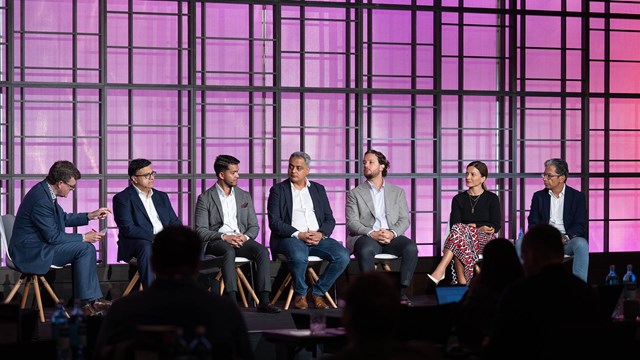
A panel of industry experts examines the growing focus on telecom sovereignty, exploring how geopolitical tensions, regulatory pressures, and the US Cloud Act are driving new requirements for data residency and network control. The discussion reveals the complexity of defining sovereignty across different domains – from cloud infrastructure to network equipment provenance – and examines the commercial opportunities for operators to differentiate themselves with sovereign services. Key challenges include the lack of clear definitions, varying customer requirements across sectors, and the trade-offs between sovereignty and access to advanced global services.
Featuring:
- Andrew Collinson, Founder & Principal, Connective Insight
- Dean Bubley, Founder and Director, Disruptive Analysis
- Jed Pell, MD & Senior Vice President, EMEA & APAC, Alianza
Recorded May 2026
Email Newsletters
Sign up to receive TelecomTV's top news and videos, plus exclusive subscriber-only content direct to your inbox.