To embed our video on your website copy and paste the code below:
<iframe src="https://www.youtube.com/embed/YFFfNbIZrUE?modestbranding=1&rel=0" width="970" height="546" frameborder="0" scrolling="auto" allowfullscreen></iframe>
Charlotte Kan, TelecomTV (00:08):
Thank you for joining us here at the Wind River booth at MWC 2026, where I am joined by Sushil Rawat, who is Director of RAN Strategy at TELUS, and Nastasi Karaiskos, who is Vice President of Global Telco for Europe, Middle East, and Africa Sales at Wind River. Thank you for joining us. So, a quick round of introductions, maybe to start with, tell us more about what you do and your role.
Sushil Rawat, TELUS (00:38):
I work for TELUS, which is a tier one telco in Canada. We were awarded for the best network performance just last week by OpenSignal. So we are a technology and performance-biased company, I would say. Our world revolves around building a quality of service that our customers can appreciate and we can grow. I work for the radio access network wireless domains. I'm Director for RAN Engineering and Operation overall. That's my role at TELUS.
Charlotte Kan, TelecomTV (01:15):
Thank you very much, Nastasi.
Nastasi Karaiskos, Wind River (01:16):
So Charlotte, it's great to be here with you and Sushil. Great to be back at MWC for another year. I'm Nastasi Karaiskos. I'm the Vice President of the Global Telecoms practice at Wind River, and I also look after the EMEA sales for Wind River across our other verticals.
Charlotte Kan, TelecomTV (01:33):
So we're here to discuss your collaboration, of course, but before we do, Sushil, I'd like you to maybe tell us about the challenges you are facing right now and the challenges you expect to face in the next few years in terms of network transformation. What are your priorities, etc.?
Sushil Rawat, TELUS (01:50):
I would not call it challenges, but how the whole telecom industry is evolving. All the operators are investing into the network, building new technologies, adopting technologies which are transformational and innovative at the same time while the average revenue per user is going down. So overall global revenue in telco is going down, but operators are still, I won't say forced, but compelled to continue doing innovation, which I must appreciate all the telcos are trying very hard and doing everything possible that they can to adopt new technologies, including virtualisation and AI. And the challenge remains to keep innovating in this environment where everybody is challenged with the revenues and whatnot. That said, we still continue to innovate. As I said, we just decided that we'll transform our traditional RAN network into the virtualised and open radio access network. We decided that two years ago, I think same place, same build.
(03:00):
Two years ago, I was talking to Wind River and we were planning and I'm happy to say that as of today, we have 20% of our network on virtualised and open RAN, and that's quite an achievement for a mature operator like us. And we are very happy for the collaboration with Wind River and our other partners that help us put the stack together. Very happy with performance. Looking forward, I think one of the major challenges that telcos face, all the telcos have done virtualisation and automation, but in some way or the other, there is always something proprietary. What it lacks is federated openness. Everybody wants to do federated cloud and deployment that suits individual network elements, but there is lack of standardisation when it comes to interoperating them between each other. And that's where telcos have to work with those limitations, having multiple suppliers, but we work around those and we continue to evolve and continue to build solutions that can work cohesively with each other.
(04:09):
TELUS is a very diverse company. We have diverse business. I can't really say for all the business units, but in our area, AI is definitely an area where we want to go forward with transformation.
Charlotte Kan, TelecomTV (04:21):
So we are at a time of great transformation, of course, for the industry, as you pointed out. Tell us about the Wind River platform and how it's supporting you and how it fits into your overall architecture and strategy.
Sushil Rawat, TELUS (04:34):
So we use Wind River for the cloud layer, for our open RAN network. Both operating real-time operating system and the cloud layer come from Wind River and their specialisation is in the real-time kernel, which is very, very important for our time-sensitive applications such as radio access network. So we run our L1-L2 stack on Wind River Cloud in our network.
Charlotte Kan, TelecomTV (05:00):
And Nastasi, can you maybe tell us more about your role in supporting TELUS?
Nastasi Karaiskos, Wind River (05:03):
Yeah, absolutely. So Wind River partners with forward-thinking, innovative operators like TELUS. And when we look across the industry on a global scale, what the TELUS team and Sushil's team are achieving in Canada is truly remarkable. Embracing the latest technology through innovation to ensure efficiency, speed to market, so they can deploy more applications and services to their end subscribers as well. And I understand your subscriber base has been growing and continues to grow as well. So we don't see ourselves as a vendor. We see ourselves as a long-term strategic innovation partner to TELUS. And this is a true long-term partnership. This is a multi-year project that we've embarked on together and TELUS have ambitions to deploy their technology nationwide across Canada by 2029, and we're on track together to do that. We have great strategic and executive alignment within the organisation, and that really helps us to drive our technology roadmap to ensure TELUS's requirements are captured as we roll out new features for them into their network.
Charlotte Kan, TelecomTV (06:14):
So Sushil, from your perspective, what were the key benefits of the platform operationally, strategically, and maybe in terms of speed, flexibility, control, etc.?
Sushil Rawat, TELUS (06:24):
I've said this before, every time I talk to Wind River, their specialty is in the real-time kernel. They come from an industry where it was a real-time operating system. So we're very happy with their performance on the real-time kernel and supporting the applications, very reliable application. What we love about the partnership is it's a right-sized company. They have the right priority toward telcos. They're not too much pulled into multiple domains such as data centres and others. I'm pretty sure they do work with them, but as a telco-focused company, it's a great partnership, a right-sized team, we have capability to influence the roadmap, we have capability to work with them, and we're very happy with the response time that we have. They address issues at a blazing speed and also new requests get addressed quite easily, I would say. And that's all you need as an operator, because if your systems are not standard, you'd always need something custom for you.
(07:29):
And Wind River has been very open and very supportive to help us with new feature requirements and new technology innovations.
Charlotte Kan, TelecomTV (07:37):
You've given us a few cues here, but can you tell us a bit more about why this partnership is working and what makes a difference and what does a good partnership look like?
Sushil Rawat, TELUS (07:46):
A good partnership in my sense is when your customer's voice is heard, right? And that's what I was trying to get to. If there's an issue with the software, they'll jump onto it and quickly fix it. That's all you need from your supplier. When you are in need, then your suppliers should listen to you and should be able to support you at the same time. And that's the critical point of this partnership. They're very supportive in the operational aspect and also in the strategic part where they build new features for us and support us with our requirements.
Nastasi Karaiskos, Wind River (08:22):
Yeah. And we continue to offer that support and also flexibility as well. I think when you're shaping and deploying at scale as TELUS and their rollout, you need to offer transparency in terms of where the project is heading or deliverables, but also that flexibility. So developing new features, for example, within our roadmap over the next six, nine months, for example, as we roll out those software features, it's important for us to make sure that we're aligning. So we are listening to TELUS, we're listening to the development that we need to incorporate in our technology roadmap.
Charlotte Kan, TelecomTV (09:01):
And finally, maybe could you share, Nastasi, could you share some learning points, I guess, or some insights, things you have learned from working for TELUS?
Nastasi Karaiskos, Wind River (09:14):
Yeah, absolutely. So I think the partnership, first of all, on a communication level is super important. So we have engineering communication where the teams are working on deliverables, they're working on the new features, for example, and understanding the importance of them to incorporate them into the roadmap, as I said. But then we also have engagement at a good commercial level and at an executive level as well. So I think that is there and has been in place for some time and it's very important. We are the cloud infrastructure layer, the partner. And as operators innovate on their cloud-native journey to introduce autonomous networks, to introduce AI, we are listening to that and we're introducing more features into our other products as well. So our technology domains that we operate in are on the RAN, on the radio access network, but also in core and IT.
(10:05):
So we're offering our partners a future roadmap of technology as well that they could embrace from us and our partner ecosystem. And the partner ecosystem is really important in a project like vRAN or Open RAN because managing that partner ecosystem is equally important as the technology itself because you've got multiple vendors coming together to deploy a solution. They've got to work in harmony as well, and we are managing to do that. We're successfully doing that with our partner TELUS and partners in the ecosystem.
Charlotte Kan, TelecomTV (10:37):
Well, great to hear you both on this well-working partnership. Many thanks to both of you, Sushil and Nastasi. We are here at the Wind River booth. Thank you for watching.
Thank you for joining us here at the Wind River booth at MWC 2026, where I am joined by Sushil Rawat, who is Director of RAN Strategy at TELUS, and Nastasi Karaiskos, who is Vice President of Global Telco for Europe, Middle East, and Africa Sales at Wind River. Thank you for joining us. So, a quick round of introductions, maybe to start with, tell us more about what you do and your role.
Sushil Rawat, TELUS (00:38):
I work for TELUS, which is a tier one telco in Canada. We were awarded for the best network performance just last week by OpenSignal. So we are a technology and performance-biased company, I would say. Our world revolves around building a quality of service that our customers can appreciate and we can grow. I work for the radio access network wireless domains. I'm Director for RAN Engineering and Operation overall. That's my role at TELUS.
Charlotte Kan, TelecomTV (01:15):
Thank you very much, Nastasi.
Nastasi Karaiskos, Wind River (01:16):
So Charlotte, it's great to be here with you and Sushil. Great to be back at MWC for another year. I'm Nastasi Karaiskos. I'm the Vice President of the Global Telecoms practice at Wind River, and I also look after the EMEA sales for Wind River across our other verticals.
Charlotte Kan, TelecomTV (01:33):
So we're here to discuss your collaboration, of course, but before we do, Sushil, I'd like you to maybe tell us about the challenges you are facing right now and the challenges you expect to face in the next few years in terms of network transformation. What are your priorities, etc.?
Sushil Rawat, TELUS (01:50):
I would not call it challenges, but how the whole telecom industry is evolving. All the operators are investing into the network, building new technologies, adopting technologies which are transformational and innovative at the same time while the average revenue per user is going down. So overall global revenue in telco is going down, but operators are still, I won't say forced, but compelled to continue doing innovation, which I must appreciate all the telcos are trying very hard and doing everything possible that they can to adopt new technologies, including virtualisation and AI. And the challenge remains to keep innovating in this environment where everybody is challenged with the revenues and whatnot. That said, we still continue to innovate. As I said, we just decided that we'll transform our traditional RAN network into the virtualised and open radio access network. We decided that two years ago, I think same place, same build.
(03:00):
Two years ago, I was talking to Wind River and we were planning and I'm happy to say that as of today, we have 20% of our network on virtualised and open RAN, and that's quite an achievement for a mature operator like us. And we are very happy for the collaboration with Wind River and our other partners that help us put the stack together. Very happy with performance. Looking forward, I think one of the major challenges that telcos face, all the telcos have done virtualisation and automation, but in some way or the other, there is always something proprietary. What it lacks is federated openness. Everybody wants to do federated cloud and deployment that suits individual network elements, but there is lack of standardisation when it comes to interoperating them between each other. And that's where telcos have to work with those limitations, having multiple suppliers, but we work around those and we continue to evolve and continue to build solutions that can work cohesively with each other.
(04:09):
TELUS is a very diverse company. We have diverse business. I can't really say for all the business units, but in our area, AI is definitely an area where we want to go forward with transformation.
Charlotte Kan, TelecomTV (04:21):
So we are at a time of great transformation, of course, for the industry, as you pointed out. Tell us about the Wind River platform and how it's supporting you and how it fits into your overall architecture and strategy.
Sushil Rawat, TELUS (04:34):
So we use Wind River for the cloud layer, for our open RAN network. Both operating real-time operating system and the cloud layer come from Wind River and their specialisation is in the real-time kernel, which is very, very important for our time-sensitive applications such as radio access network. So we run our L1-L2 stack on Wind River Cloud in our network.
Charlotte Kan, TelecomTV (05:00):
And Nastasi, can you maybe tell us more about your role in supporting TELUS?
Nastasi Karaiskos, Wind River (05:03):
Yeah, absolutely. So Wind River partners with forward-thinking, innovative operators like TELUS. And when we look across the industry on a global scale, what the TELUS team and Sushil's team are achieving in Canada is truly remarkable. Embracing the latest technology through innovation to ensure efficiency, speed to market, so they can deploy more applications and services to their end subscribers as well. And I understand your subscriber base has been growing and continues to grow as well. So we don't see ourselves as a vendor. We see ourselves as a long-term strategic innovation partner to TELUS. And this is a true long-term partnership. This is a multi-year project that we've embarked on together and TELUS have ambitions to deploy their technology nationwide across Canada by 2029, and we're on track together to do that. We have great strategic and executive alignment within the organisation, and that really helps us to drive our technology roadmap to ensure TELUS's requirements are captured as we roll out new features for them into their network.
Charlotte Kan, TelecomTV (06:14):
So Sushil, from your perspective, what were the key benefits of the platform operationally, strategically, and maybe in terms of speed, flexibility, control, etc.?
Sushil Rawat, TELUS (06:24):
I've said this before, every time I talk to Wind River, their specialty is in the real-time kernel. They come from an industry where it was a real-time operating system. So we're very happy with their performance on the real-time kernel and supporting the applications, very reliable application. What we love about the partnership is it's a right-sized company. They have the right priority toward telcos. They're not too much pulled into multiple domains such as data centres and others. I'm pretty sure they do work with them, but as a telco-focused company, it's a great partnership, a right-sized team, we have capability to influence the roadmap, we have capability to work with them, and we're very happy with the response time that we have. They address issues at a blazing speed and also new requests get addressed quite easily, I would say. And that's all you need as an operator, because if your systems are not standard, you'd always need something custom for you.
(07:29):
And Wind River has been very open and very supportive to help us with new feature requirements and new technology innovations.
Charlotte Kan, TelecomTV (07:37):
You've given us a few cues here, but can you tell us a bit more about why this partnership is working and what makes a difference and what does a good partnership look like?
Sushil Rawat, TELUS (07:46):
A good partnership in my sense is when your customer's voice is heard, right? And that's what I was trying to get to. If there's an issue with the software, they'll jump onto it and quickly fix it. That's all you need from your supplier. When you are in need, then your suppliers should listen to you and should be able to support you at the same time. And that's the critical point of this partnership. They're very supportive in the operational aspect and also in the strategic part where they build new features for us and support us with our requirements.
Nastasi Karaiskos, Wind River (08:22):
Yeah. And we continue to offer that support and also flexibility as well. I think when you're shaping and deploying at scale as TELUS and their rollout, you need to offer transparency in terms of where the project is heading or deliverables, but also that flexibility. So developing new features, for example, within our roadmap over the next six, nine months, for example, as we roll out those software features, it's important for us to make sure that we're aligning. So we are listening to TELUS, we're listening to the development that we need to incorporate in our technology roadmap.
Charlotte Kan, TelecomTV (09:01):
And finally, maybe could you share, Nastasi, could you share some learning points, I guess, or some insights, things you have learned from working for TELUS?
Nastasi Karaiskos, Wind River (09:14):
Yeah, absolutely. So I think the partnership, first of all, on a communication level is super important. So we have engineering communication where the teams are working on deliverables, they're working on the new features, for example, and understanding the importance of them to incorporate them into the roadmap, as I said. But then we also have engagement at a good commercial level and at an executive level as well. So I think that is there and has been in place for some time and it's very important. We are the cloud infrastructure layer, the partner. And as operators innovate on their cloud-native journey to introduce autonomous networks, to introduce AI, we are listening to that and we're introducing more features into our other products as well. So our technology domains that we operate in are on the RAN, on the radio access network, but also in core and IT.
(10:05):
So we're offering our partners a future roadmap of technology as well that they could embrace from us and our partner ecosystem. And the partner ecosystem is really important in a project like vRAN or Open RAN because managing that partner ecosystem is equally important as the technology itself because you've got multiple vendors coming together to deploy a solution. They've got to work in harmony as well, and we are managing to do that. We're successfully doing that with our partner TELUS and partners in the ecosystem.
Charlotte Kan, TelecomTV (10:37):
Well, great to hear you both on this well-working partnership. Many thanks to both of you, Sushil and Nastasi. We are here at the Wind River booth. Thank you for watching.
Please note that video transcripts are provided for reference only – content may vary from the published video or contain inaccuracies.
Sushil Rawat, TELUS & Nastasi Karaiskos, Wind River
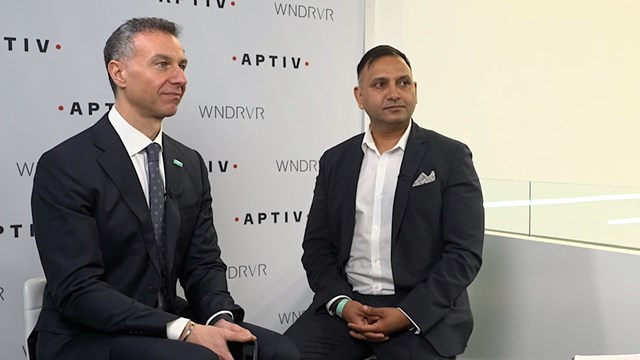
Sushil Rawat, director of RAN strategy at TELUS, and Nastasi Karaiskos, vice president of Wind River, discuss their ongoing collaboration to transform TELUS’s radio access network using virtualised and Open RAN technologies.
Featuring:
- Sushil Rawat, Director RAN Strategy, TELUS
- Nastasi Karaiskos, VP Global Telco & EMEA Sales, Wind River
Recorded March 2026
Email Newsletters
Sign up to receive TelecomTV's top news and videos, plus exclusive subscriber-only content direct to your inbox.