To embed our video on your website copy and paste the code below:
<iframe src="https://www.youtube.com/embed/izNIpiKwIpY?modestbranding=1&rel=0" width="970" height="546" frameborder="0" scrolling="auto" allowfullscreen></iframe>
TelecomTV (00:08):
We're in Barcelona. It's MWC26. I'm here with Lorinda Pang. She is the CEO of Synch. Lorinda, thanks so much for joining us today. Great to see you.
Laurinda Pang, Sinch (00:18):
Great to see you as well. Thanks for the opportunity, Rafel.
TelecomTV (00:21):
So for those not familiar with Cinch, can you just give us a quick overview of the company?
Laurinda Pang, Sinch (00:27):
Yeah, absolutely. It's a great opportunity actually to share who we are, what we do. So Cynch is connecting every business to every customer everywhere in the world. And what I mean by that is we're enabling brands, governments, regulatory agencies to be able to connect to their end consumers. They need to do that via messaging, via email, via voice. And we enable all of those channels across our platform. We do that at a global scale. We've got 4,000 employees around the world and we enable close to one trillion transactions every year. So we see a lot. We enable a lot. And we really think that in terms of being here at MWC very specifically, we have a long heritage with the mobile network operators around the world. And it's a core part of the ecosystem for us and we're just excited to be here once again.
(01:20)
It's a good year.
TelecomTV (01:21):
Right. And there are several reasons why it could be a good year and we're going to come to that because if you can just go a little bit deeper into how Cynch does engage with the mobile network operator community, how it is you engage with them and how that helps their business and yours.
Laurinda Pang, Sinch (01:39):
Sure. So our business was founded ... We're based in Stockholm. We were founded roughly about 18 or so years ago. And our founders, who by the way, still happen to be very much engaged in the business. So we're fortunate from that perspective. What they recognized was that there was a real challenge for global senders to be able to communicate and connect with their end consumers anywhere in the world. Those brands having to have direct connections with every single mobile network operator around the world was just not feasible. So Synch actually started its heritage as an aggregator and connecting, like I said, over 600 M&Os, building those relationships and connecting to our platforms. So we really simplify for the global senders the ability to reach their end consumers. So quite frankly, we're bringing a lot of traffic to the operators around the world. And in addition to sending communications through their network to their consumers, we also enable them through our operator services products.
(02:43)
And so we enable them to be able to monetize messaging as well.
TelecomTV (02:48):
Okay. So really, I guess what we're saying here is that Cinch was at the early start of what's become more broadly known as the communication platform as a service sector, something that-
Laurinda Pang, Sinch (03:00):
We should hire you. Yes. Thank you for saying that. Yes, absolutely. Yeah. I mean, we play in the CPAS space. That's, I think, transitioning, giving conversational AI very specifically. But yeah, that's exactly the space that we play in.
TelecomTV (03:13):
Okay. Mobile network operators are very focused right now on using Kamara based network APIs to expose their capabilities to application developers, generate new growth opportunities. How does Synch, with this role you have and the platform you have, how do you fit into that particular development and help them to expose those APIs and to reach those developers?
Laurinda Pang, Sinch (03:38):
Yeah. So I think first of all, we're very supportive of the operators standardizing. I think that's incredibly important for all of us. And the role that Synch plays in that, I think we're both participating in it as well as complimentary to it, meaning that the aggregation capability that we have already plays a significant role and it enables developers around the world to be able to access through our aggregation capabilities to be able to access all of those APIs at the same time. So we're supportive. Like I said, we've already deployed some ourselves as well, and we're excited to see where this brings us. We're very focused in on the verification side predominantly. We're pleased to see that that's one of the first ones to come live. And in today's world, verification, security, identity, trust are so foundational to communication services. And we feel like we play a very significant role, an important role to be stewards of trust for our customers.
TelecomTV (04:49):
Yeah. No, I hear quite a few people in this particular sector of the market almost apologizing that this is where that they are starting, but this is the most important place to be starting. This is the biggest challenge for consumers out there to feel that they can trust the communications that they are receiving and that that whole transaction can be trustworthy. So it's absolutely critical.
Laurinda Pang, Sinch (05:12):
Completely agree. Yeah, absolutely. And Cinch's DNA, quite frankly, is always based on trust. I mean, that's part of who we are. So as the world has evolved here, technology has evolved. Unfortunately, bad actors too have evolved. And with Agentic coming into play here to be able to do any of those maybe not so ethical communications at scale, it's kind of a scary world out there. And so again, we feel very much accountable and recognize the role that we and some of our peers play in that.
TelecomTV (05:49):
Okay. Excellent. Now, you mentioned Agentic there, and there are real high hopes for Agentic AI in the telecom sector in lots of different ways. Yes. How is Cynch seeking to capitalize on the growing interest in AI agents and how is that manifesting itself right now?
Laurinda Pang, Sinch (06:07):
Yeah. So I think communication volumes are going to explode as a result. And so the role that we play is we're not going to be yet another agent builder out there. We know that there are lots of other players out there that are building natively to do that. And then there's others that have been doing it for quite a while. So it's not a space that we play in. We are the trusted infrastructure that's going to enable those communications that are coming through as a result-
TelecomTV (06:33):
That the agents are engaging with.
Laurinda Pang, Sinch (06:35):
Absolutely. So both, we have developer experiences, we have agent experiences, and we have an expectation that, like I said, communication volumes will explode because as agents are tasked with more workflows and tasked with achieving more business outcomes for enterprises, they will need to reach the end consumer and they're going to do it across the channels that already exist, right? Until we have telepathy that really-
TelecomTV (07:04):
Somebody's working on that.
Laurinda Pang, Sinch (07:06):
Yeah. Somebody here at MWC is probably working on that. But listen, the channels of communications is still messaging. It's email, it's voice, and that is exactly where we excel and we do it at scale in a trusted way. So we're very optimistic about the opportunity that Agentic brings to the communications world.
TelecomTV (07:27):
Okay. Now you mentioned voice there and another sort of exciting possibility now is to almost re-energize the voice sector around common- Voice
Laurinda Pang, Sinch (07:38):
Is sexy again.
TelecomTV (07:39):
Yeah, conversational AI. I haven't heard enough about that this year, which is surprising, but is that something that Synch can enable through its platforms?
Laurinda Pang, Sinch (07:49):
Yeah, absolutely. So I think what's exciting for us is we've seen really almost three generations of digital communications for customers. I think customer engagement's becoming much more autonomous and agentic. Consumers are more demanding of the brands that they do business with. And so the expectation from consumers is that the communications are personalized, they're timely, they're relevant. So that puts a tremendous amount of burden on the brands that are communicating. So you have this desire from a consumer to be much more conversational, to be interacting, to be two-way. And then you have agentic and generative AI very specifically, and the combination between the two all of a sudden is extremely powerful. And so again, when we think about the role that Cynch plays, it's squarely in our sweet spot. And again, I think volumes will increase significantly. Consumers will become much smarter. Messaging and the conversations that we're enabling have to become much more rich, more relevant.
(09:05)
And so for us, it's not just the infrastructure, it's also the intelligence that's layered on top of that and the orchestration across channels because the brand is not going to decide what's the best channel the consumer is. And so that puts a lot of demand on the brand to be able to know what that consumer wants and expects from them.
TelecomTV (09:29):
Yeah. And I get the feeling that everybody can see the potential, but the use cases are still being figured out for conversational AI and how that can best be applied and thinking about customer first, which is something that maybe this industry has forgotten about in previous years, but it is much more front and center now, I think. So just very briefly then, what's next for Cynch? How do you see 2026 developing?
Laurinda Pang, Sinch (09:58):
Like everybody here at MWC, I think there's a tremendous amount of focus on AI and what it will do for the communications industry. And for Synch, we've just announced Agentic Conversations. We just did a press release around that leading up to MWC. And it's really about taking the capabilities that we already have and making it available to brands and to any entity, quite frankly, who has to communicate with their end customers and leveraging it across all of the different channels of communications and do it in a way that is leveraging our expertise, whether it be ... Well, NLP is almost old school, right? But leveraging the LLMs that we're currently embedded with. We just had another announcement with Lovable, which is an AI native and really is allowing software developers or actually everybody, you and I. Well, actually, I don't know your background, right? So I don't know if you're a developer.
TelecomTV (10:56):
Not. I
Laurinda Pang, Sinch (10:57):
Am not, but it enables people like me to be able to develop applications really seamlessly. And so it's important for Synch to continue on our journey with partnerships and embedding our capabilities into platforms like Lovable and any of the other AI natives to be able to enable their agents than to communicate. So we'll be working hard on those partnerships and making sure that trust continues to be at the forefront of all of that. We have a long heritage of high compliance. We're in a very regulated industry in the US very specifically, and wherever we communicate, there's a tremendous amount of regulation that we have to work through. So we're bringing that expertise to the agentic world, because whether it's a developer or an agent communicating, they don't get an excuse, they don't get a free pass.
TelecomTV (11:53):
Right. No, absolutely. Yeah, no, very exciting possibilities. I'm one of the many people I think that are really excited about the no code era, because that's going to open up opportunities that the non-developers have had to explore and see what previously was going on behind the curtains that we didn't really understand, or people like me didn't understand. So exciting times. So Lorinda, thanks so much for joining us. Thank you, Ray. Really interesting to hear what Cinch is doing and also how it fits into the broader ecosystem. I think that's an important thing to be figuring out now for this whole community. So great to talk to you. Thanks very
Laurinda Pang, Sinch (12:34):
Much. Good to meet you. Thanks, Ray.
We're in Barcelona. It's MWC26. I'm here with Lorinda Pang. She is the CEO of Synch. Lorinda, thanks so much for joining us today. Great to see you.
Laurinda Pang, Sinch (00:18):
Great to see you as well. Thanks for the opportunity, Rafel.
TelecomTV (00:21):
So for those not familiar with Cinch, can you just give us a quick overview of the company?
Laurinda Pang, Sinch (00:27):
Yeah, absolutely. It's a great opportunity actually to share who we are, what we do. So Cynch is connecting every business to every customer everywhere in the world. And what I mean by that is we're enabling brands, governments, regulatory agencies to be able to connect to their end consumers. They need to do that via messaging, via email, via voice. And we enable all of those channels across our platform. We do that at a global scale. We've got 4,000 employees around the world and we enable close to one trillion transactions every year. So we see a lot. We enable a lot. And we really think that in terms of being here at MWC very specifically, we have a long heritage with the mobile network operators around the world. And it's a core part of the ecosystem for us and we're just excited to be here once again.
(01:20)
It's a good year.
TelecomTV (01:21):
Right. And there are several reasons why it could be a good year and we're going to come to that because if you can just go a little bit deeper into how Cynch does engage with the mobile network operator community, how it is you engage with them and how that helps their business and yours.
Laurinda Pang, Sinch (01:39):
Sure. So our business was founded ... We're based in Stockholm. We were founded roughly about 18 or so years ago. And our founders, who by the way, still happen to be very much engaged in the business. So we're fortunate from that perspective. What they recognized was that there was a real challenge for global senders to be able to communicate and connect with their end consumers anywhere in the world. Those brands having to have direct connections with every single mobile network operator around the world was just not feasible. So Synch actually started its heritage as an aggregator and connecting, like I said, over 600 M&Os, building those relationships and connecting to our platforms. So we really simplify for the global senders the ability to reach their end consumers. So quite frankly, we're bringing a lot of traffic to the operators around the world. And in addition to sending communications through their network to their consumers, we also enable them through our operator services products.
(02:43)
And so we enable them to be able to monetize messaging as well.
TelecomTV (02:48):
Okay. So really, I guess what we're saying here is that Cinch was at the early start of what's become more broadly known as the communication platform as a service sector, something that-
Laurinda Pang, Sinch (03:00):
We should hire you. Yes. Thank you for saying that. Yes, absolutely. Yeah. I mean, we play in the CPAS space. That's, I think, transitioning, giving conversational AI very specifically. But yeah, that's exactly the space that we play in.
TelecomTV (03:13):
Okay. Mobile network operators are very focused right now on using Kamara based network APIs to expose their capabilities to application developers, generate new growth opportunities. How does Synch, with this role you have and the platform you have, how do you fit into that particular development and help them to expose those APIs and to reach those developers?
Laurinda Pang, Sinch (03:38):
Yeah. So I think first of all, we're very supportive of the operators standardizing. I think that's incredibly important for all of us. And the role that Synch plays in that, I think we're both participating in it as well as complimentary to it, meaning that the aggregation capability that we have already plays a significant role and it enables developers around the world to be able to access through our aggregation capabilities to be able to access all of those APIs at the same time. So we're supportive. Like I said, we've already deployed some ourselves as well, and we're excited to see where this brings us. We're very focused in on the verification side predominantly. We're pleased to see that that's one of the first ones to come live. And in today's world, verification, security, identity, trust are so foundational to communication services. And we feel like we play a very significant role, an important role to be stewards of trust for our customers.
TelecomTV (04:49):
Yeah. No, I hear quite a few people in this particular sector of the market almost apologizing that this is where that they are starting, but this is the most important place to be starting. This is the biggest challenge for consumers out there to feel that they can trust the communications that they are receiving and that that whole transaction can be trustworthy. So it's absolutely critical.
Laurinda Pang, Sinch (05:12):
Completely agree. Yeah, absolutely. And Cinch's DNA, quite frankly, is always based on trust. I mean, that's part of who we are. So as the world has evolved here, technology has evolved. Unfortunately, bad actors too have evolved. And with Agentic coming into play here to be able to do any of those maybe not so ethical communications at scale, it's kind of a scary world out there. And so again, we feel very much accountable and recognize the role that we and some of our peers play in that.
TelecomTV (05:49):
Okay. Excellent. Now, you mentioned Agentic there, and there are real high hopes for Agentic AI in the telecom sector in lots of different ways. Yes. How is Cynch seeking to capitalize on the growing interest in AI agents and how is that manifesting itself right now?
Laurinda Pang, Sinch (06:07):
Yeah. So I think communication volumes are going to explode as a result. And so the role that we play is we're not going to be yet another agent builder out there. We know that there are lots of other players out there that are building natively to do that. And then there's others that have been doing it for quite a while. So it's not a space that we play in. We are the trusted infrastructure that's going to enable those communications that are coming through as a result-
TelecomTV (06:33):
That the agents are engaging with.
Laurinda Pang, Sinch (06:35):
Absolutely. So both, we have developer experiences, we have agent experiences, and we have an expectation that, like I said, communication volumes will explode because as agents are tasked with more workflows and tasked with achieving more business outcomes for enterprises, they will need to reach the end consumer and they're going to do it across the channels that already exist, right? Until we have telepathy that really-
TelecomTV (07:04):
Somebody's working on that.
Laurinda Pang, Sinch (07:06):
Yeah. Somebody here at MWC is probably working on that. But listen, the channels of communications is still messaging. It's email, it's voice, and that is exactly where we excel and we do it at scale in a trusted way. So we're very optimistic about the opportunity that Agentic brings to the communications world.
TelecomTV (07:27):
Okay. Now you mentioned voice there and another sort of exciting possibility now is to almost re-energize the voice sector around common- Voice
Laurinda Pang, Sinch (07:38):
Is sexy again.
TelecomTV (07:39):
Yeah, conversational AI. I haven't heard enough about that this year, which is surprising, but is that something that Synch can enable through its platforms?
Laurinda Pang, Sinch (07:49):
Yeah, absolutely. So I think what's exciting for us is we've seen really almost three generations of digital communications for customers. I think customer engagement's becoming much more autonomous and agentic. Consumers are more demanding of the brands that they do business with. And so the expectation from consumers is that the communications are personalized, they're timely, they're relevant. So that puts a tremendous amount of burden on the brands that are communicating. So you have this desire from a consumer to be much more conversational, to be interacting, to be two-way. And then you have agentic and generative AI very specifically, and the combination between the two all of a sudden is extremely powerful. And so again, when we think about the role that Cynch plays, it's squarely in our sweet spot. And again, I think volumes will increase significantly. Consumers will become much smarter. Messaging and the conversations that we're enabling have to become much more rich, more relevant.
(09:05)
And so for us, it's not just the infrastructure, it's also the intelligence that's layered on top of that and the orchestration across channels because the brand is not going to decide what's the best channel the consumer is. And so that puts a lot of demand on the brand to be able to know what that consumer wants and expects from them.
TelecomTV (09:29):
Yeah. And I get the feeling that everybody can see the potential, but the use cases are still being figured out for conversational AI and how that can best be applied and thinking about customer first, which is something that maybe this industry has forgotten about in previous years, but it is much more front and center now, I think. So just very briefly then, what's next for Cynch? How do you see 2026 developing?
Laurinda Pang, Sinch (09:58):
Like everybody here at MWC, I think there's a tremendous amount of focus on AI and what it will do for the communications industry. And for Synch, we've just announced Agentic Conversations. We just did a press release around that leading up to MWC. And it's really about taking the capabilities that we already have and making it available to brands and to any entity, quite frankly, who has to communicate with their end customers and leveraging it across all of the different channels of communications and do it in a way that is leveraging our expertise, whether it be ... Well, NLP is almost old school, right? But leveraging the LLMs that we're currently embedded with. We just had another announcement with Lovable, which is an AI native and really is allowing software developers or actually everybody, you and I. Well, actually, I don't know your background, right? So I don't know if you're a developer.
TelecomTV (10:56):
Not. I
Laurinda Pang, Sinch (10:57):
Am not, but it enables people like me to be able to develop applications really seamlessly. And so it's important for Synch to continue on our journey with partnerships and embedding our capabilities into platforms like Lovable and any of the other AI natives to be able to enable their agents than to communicate. So we'll be working hard on those partnerships and making sure that trust continues to be at the forefront of all of that. We have a long heritage of high compliance. We're in a very regulated industry in the US very specifically, and wherever we communicate, there's a tremendous amount of regulation that we have to work through. So we're bringing that expertise to the agentic world, because whether it's a developer or an agent communicating, they don't get an excuse, they don't get a free pass.
TelecomTV (11:53):
Right. No, absolutely. Yeah, no, very exciting possibilities. I'm one of the many people I think that are really excited about the no code era, because that's going to open up opportunities that the non-developers have had to explore and see what previously was going on behind the curtains that we didn't really understand, or people like me didn't understand. So exciting times. So Lorinda, thanks so much for joining us. Thank you, Ray. Really interesting to hear what Cinch is doing and also how it fits into the broader ecosystem. I think that's an important thing to be figuring out now for this whole community. So great to talk to you. Thanks very
Laurinda Pang, Sinch (12:34):
Much. Good to meet you. Thanks, Ray.
Please note that video transcripts are provided for reference only – content may vary from the published video or contain inaccuracies.
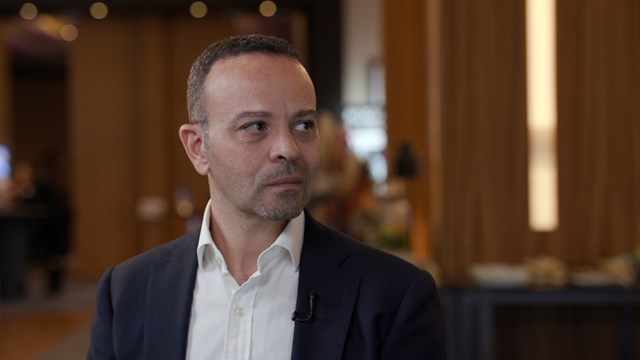
Laurinda Pang, CEO, Sinch
Laurinda Pang, CEO at communications platform-as-a-service (CPaaS) specialist Sinch, discusses the company’s relationship with mobile network operators, its role in the network API ecosystem, the impact of agentic AI on comms interactions and why voice is sexy again.
Recorded March 2026
Email Newsletters
Sign up to receive TelecomTV's top news and videos, plus exclusive subscriber-only content direct to your inbox.