To embed our video on your website copy and paste the code below:
<iframe src="https://www.youtube.com/embed/0U7o-ymj4sQ?modestbranding=1&rel=0" width="970" height="546" frameborder="0" scrolling="auto" allowfullscreen></iframe>
James Pearce, TelecomTV (00:07):
Welcome to TelecomTV. My name is James Pearce. Today we're going to be talking about Syntelligence AI, which is a joint venture backed by some of the biggest telcos in the world. And I'm delighted to be joined today by Syntelligence AI CEO, Prateek Choudhary. Welcome, Prateek. Why don't we dive straight in? Why don't you give our audience an introduction to Syntelligence?
Prateek Choudhary, Syntelligence (00:27):
Absolutely. So Syntelligence AI is a joint venture between five telcos, five of the biggest telcos in the world. So we are backed by SoftBank, e& based out of Dubai, Singtel in Singapore, SK Telecom in Seoul, and Deutsche Telekom, of course, based out of Europe. And we have been fortunate enough to have the backing of these five telcos. Our mandate is to solve the biggest problems in telcos using AI. And you might think that, oh, that's a very wide scope mandate. But very deliberately we have kept this mandate this wide because we are looking at those problems. Now, if you think about the telco domain, it's a very old school industry, of course, highly regulated. And we feel like there's lots of opportunity here to make changes, especially now the technology is available. So we are leveraging AI to solve the biggest problems. We are starting with one problem, but as we go along, we'll focus on more.
James Pearce, TelecomTV (01:31):
So what exactly was the thought process behind the joint venture?
Prateek Choudhary, Syntelligence (01:35):
Syntelligence was born out of GTAA, which stands for Global Telco AI Alliance. So the five telcos came together around a year and a half ago when new AI models were coming in, and they thought it would be a really good idea to join forces to build something in AI together. The reason being is the AI models depend on a lot of data that you train the models on. And the more telcos you bring together, the more data that it consumes, it consumes from different regions, different languages, the smarter it becomes. And that was the idea, that we can solve a problem collectively much better as opposed to doing it individually. So that was the thesis behind Global Telco AI Alliance, and hence Syntelligence was born to actually execute on the strategy.
James Pearce, TelecomTV (02:27):
So you mentioned the GTAA. I mean, why go down the route of a separate entity rather than doing it through that body?
Prateek Choudhary, Syntelligence (02:34):
So Syntelligence actually is a vehicle to carry out the vision for GTAA. So we are a child of Global Telco AI Alliance. So Global Telco AI Alliance, of course, does other things. For example, panels, knowledge sharing, other bits, but we are primarily focused on actually building the product. So Syntelligence AI is working on building the fraud detection platform right now. And so we are very much part of GTAA. GTAA does, as I said, multiple things and we are doing, we are one part of that.
James Pearce, TelecomTV (03:06):
Of course, one of the big goals of the GTAA was building a large language model, telco specific. So that's still an important part of what you're doing?
Prateek Choudhary, Syntelligence (03:15):
Very much so. We have reprioritised a few things as we have learned. So GTAA, as I said, was formed a year and a half ago. And in the world of AI, one and a half years is like 100 years. So a lot of water has flown under the bridge until this point. So when the GTAA was formed, there was the idea that the first thing we would do would be a telco domain LLM, multilingual LLM. And we still plan to do it at some point down the line, but we shifted the priority because we wanted to focus on the application layer side. We wanted to look at a problem that could be solved first. And the models, if we think about it, whether it's LLM, whether it's an SLM, they all essentially by themselves are not that useful, but you have to build an application layer on top of that, which would consume those models.
(04:04):
So we are at a place, we are building the application layer and we are using a lot of telco data to of course make those models, but we are also using very smart, foundational language models that are being produced by the big labs around the world. So we are leveraging both of those. At some point we'll realise that, oh, if we do need a specific LLM, we will do that. One point I would also make is that some of the LLMs are already being built by our partners. So SK Telecom is building their LLM in the Korean language, which we can go and leverage. And that's the fantastic part of being in an alliance, of being in a joint venture, that we can learn, we can knowledge share from all these partners and bring all that together to build something.
James Pearce, TelecomTV (04:50):
So why don't you give us a little bit of insight into what you're demonstrating at Mobile World Congress this year?
Prateek Choudhary, Syntelligence (04:55):
Absolutely. So one of the first things we decided to work on is a problem that has been happening essentially for the last 20 years, which is scam through voice calls. Now, it's a problem which touches pretty much every person on the planet, and it's a big problem for telcos because telcos are the networks that are being used by the scammers to scam people. Now, even though this problem has been alive for two, three decades, there isn't a really robust solution. There are solutions in the market which do some job, but not to the extent that people feel safe. Even today, hundreds of billions of dollars are lost during scam calls. You hear all these sad stories from people who have lost their pensions, who have lost other things. So we are trying to make sure how do we protect people. So we are building a trust platform which protects people throughout the entire life cycle of a call.
(05:50):
So before the call starts, we gather a lot of information from the network: where the call is originating from, what is the SIM status, what is the roaming status, has this number been used in the past two hours to call 25 numbers? So these are the signs of a scam that we can use. And this information is only available with the telco. So it's not available on device. It's not available on an app. So telcos are in a great place to synthesise all that data and to give us information whether this could be a scam or not. Now, when the phone rings, we already tell you whether it's potentially a scam call or not, you can then decide to send the call to an AI assistant, which will take the call on your behalf so that you don't have to deal with it at all. And this is not a typical enhanced voicemail, but this AI assistant understands the intent of the caller.
(06:40):
So why are you calling? Are you creating some kind of a scenario which looks like a scam? Are you asking for some information that you should not be asking? So we gather again all that and our LLM essentially processes that and summarises it and gives you whether it's a scam or not. Finally, if you do decide to take the call yourself, for example, we would monitor the call and we would give you live alerts if the call is evolving into a scam. So for example, typical scam signs are creating urgency like, "Oh, you have to do it now, otherwise we will send it to the debt collectors." Or you have to give us your credit card information now, otherwise your account will close. We understand all these fake urgencies, especially for vulnerable people, and then the AI will give live alerts. So we are building this end-to-end model platform where people will be protected during voice calls.
James Pearce, TelecomTV (07:32):
That's really interesting. And what about the roadmap? What's in the future for Syntelligence?
Prateek Choudhary, Syntelligence (07:37):
So we are building on this and we are working with the partners right now to get it delivered on the network. And as you can imagine, anything that touches the network has to be very robust, has to be very regulatory proof, very privacy proof. So we are working on that. We'll be focusing on the distribution a lot as we go along. So we want to have this product pretty much everywhere on all the telcos. So not only the five partners, not only the five founding members, but all the parties around the world. So that's our goal, the near term goal. The next, as I said, the mandate for Syntelligence is to work on the biggest problem for the network, for the telcos. And the other big problems are how do we optimise the network? How do we figure out when the equipment is going to fail or can we predict that?
(08:22):
So there are lots of other problems that we are looking at, and we'll figure out what is the biggest problem to solve for our partners, and then we'll take those on.
James Pearce, TelecomTV (08:30):
Well, thank you so much for joining me today.
Prateek Choudhary, Syntelligence (08:32):
Absolutely. Thank you, James. Pleasure talking to you.
Welcome to TelecomTV. My name is James Pearce. Today we're going to be talking about Syntelligence AI, which is a joint venture backed by some of the biggest telcos in the world. And I'm delighted to be joined today by Syntelligence AI CEO, Prateek Choudhary. Welcome, Prateek. Why don't we dive straight in? Why don't you give our audience an introduction to Syntelligence?
Prateek Choudhary, Syntelligence (00:27):
Absolutely. So Syntelligence AI is a joint venture between five telcos, five of the biggest telcos in the world. So we are backed by SoftBank, e& based out of Dubai, Singtel in Singapore, SK Telecom in Seoul, and Deutsche Telekom, of course, based out of Europe. And we have been fortunate enough to have the backing of these five telcos. Our mandate is to solve the biggest problems in telcos using AI. And you might think that, oh, that's a very wide scope mandate. But very deliberately we have kept this mandate this wide because we are looking at those problems. Now, if you think about the telco domain, it's a very old school industry, of course, highly regulated. And we feel like there's lots of opportunity here to make changes, especially now the technology is available. So we are leveraging AI to solve the biggest problems. We are starting with one problem, but as we go along, we'll focus on more.
James Pearce, TelecomTV (01:31):
So what exactly was the thought process behind the joint venture?
Prateek Choudhary, Syntelligence (01:35):
Syntelligence was born out of GTAA, which stands for Global Telco AI Alliance. So the five telcos came together around a year and a half ago when new AI models were coming in, and they thought it would be a really good idea to join forces to build something in AI together. The reason being is the AI models depend on a lot of data that you train the models on. And the more telcos you bring together, the more data that it consumes, it consumes from different regions, different languages, the smarter it becomes. And that was the idea, that we can solve a problem collectively much better as opposed to doing it individually. So that was the thesis behind Global Telco AI Alliance, and hence Syntelligence was born to actually execute on the strategy.
James Pearce, TelecomTV (02:27):
So you mentioned the GTAA. I mean, why go down the route of a separate entity rather than doing it through that body?
Prateek Choudhary, Syntelligence (02:34):
So Syntelligence actually is a vehicle to carry out the vision for GTAA. So we are a child of Global Telco AI Alliance. So Global Telco AI Alliance, of course, does other things. For example, panels, knowledge sharing, other bits, but we are primarily focused on actually building the product. So Syntelligence AI is working on building the fraud detection platform right now. And so we are very much part of GTAA. GTAA does, as I said, multiple things and we are doing, we are one part of that.
James Pearce, TelecomTV (03:06):
Of course, one of the big goals of the GTAA was building a large language model, telco specific. So that's still an important part of what you're doing?
Prateek Choudhary, Syntelligence (03:15):
Very much so. We have reprioritised a few things as we have learned. So GTAA, as I said, was formed a year and a half ago. And in the world of AI, one and a half years is like 100 years. So a lot of water has flown under the bridge until this point. So when the GTAA was formed, there was the idea that the first thing we would do would be a telco domain LLM, multilingual LLM. And we still plan to do it at some point down the line, but we shifted the priority because we wanted to focus on the application layer side. We wanted to look at a problem that could be solved first. And the models, if we think about it, whether it's LLM, whether it's an SLM, they all essentially by themselves are not that useful, but you have to build an application layer on top of that, which would consume those models.
(04:04):
So we are at a place, we are building the application layer and we are using a lot of telco data to of course make those models, but we are also using very smart, foundational language models that are being produced by the big labs around the world. So we are leveraging both of those. At some point we'll realise that, oh, if we do need a specific LLM, we will do that. One point I would also make is that some of the LLMs are already being built by our partners. So SK Telecom is building their LLM in the Korean language, which we can go and leverage. And that's the fantastic part of being in an alliance, of being in a joint venture, that we can learn, we can knowledge share from all these partners and bring all that together to build something.
James Pearce, TelecomTV (04:50):
So why don't you give us a little bit of insight into what you're demonstrating at Mobile World Congress this year?
Prateek Choudhary, Syntelligence (04:55):
Absolutely. So one of the first things we decided to work on is a problem that has been happening essentially for the last 20 years, which is scam through voice calls. Now, it's a problem which touches pretty much every person on the planet, and it's a big problem for telcos because telcos are the networks that are being used by the scammers to scam people. Now, even though this problem has been alive for two, three decades, there isn't a really robust solution. There are solutions in the market which do some job, but not to the extent that people feel safe. Even today, hundreds of billions of dollars are lost during scam calls. You hear all these sad stories from people who have lost their pensions, who have lost other things. So we are trying to make sure how do we protect people. So we are building a trust platform which protects people throughout the entire life cycle of a call.
(05:50):
So before the call starts, we gather a lot of information from the network: where the call is originating from, what is the SIM status, what is the roaming status, has this number been used in the past two hours to call 25 numbers? So these are the signs of a scam that we can use. And this information is only available with the telco. So it's not available on device. It's not available on an app. So telcos are in a great place to synthesise all that data and to give us information whether this could be a scam or not. Now, when the phone rings, we already tell you whether it's potentially a scam call or not, you can then decide to send the call to an AI assistant, which will take the call on your behalf so that you don't have to deal with it at all. And this is not a typical enhanced voicemail, but this AI assistant understands the intent of the caller.
(06:40):
So why are you calling? Are you creating some kind of a scenario which looks like a scam? Are you asking for some information that you should not be asking? So we gather again all that and our LLM essentially processes that and summarises it and gives you whether it's a scam or not. Finally, if you do decide to take the call yourself, for example, we would monitor the call and we would give you live alerts if the call is evolving into a scam. So for example, typical scam signs are creating urgency like, "Oh, you have to do it now, otherwise we will send it to the debt collectors." Or you have to give us your credit card information now, otherwise your account will close. We understand all these fake urgencies, especially for vulnerable people, and then the AI will give live alerts. So we are building this end-to-end model platform where people will be protected during voice calls.
James Pearce, TelecomTV (07:32):
That's really interesting. And what about the roadmap? What's in the future for Syntelligence?
Prateek Choudhary, Syntelligence (07:37):
So we are building on this and we are working with the partners right now to get it delivered on the network. And as you can imagine, anything that touches the network has to be very robust, has to be very regulatory proof, very privacy proof. So we are working on that. We'll be focusing on the distribution a lot as we go along. So we want to have this product pretty much everywhere on all the telcos. So not only the five partners, not only the five founding members, but all the parties around the world. So that's our goal, the near term goal. The next, as I said, the mandate for Syntelligence is to work on the biggest problem for the network, for the telcos. And the other big problems are how do we optimise the network? How do we figure out when the equipment is going to fail or can we predict that?
(08:22):
So there are lots of other problems that we are looking at, and we'll figure out what is the biggest problem to solve for our partners, and then we'll take those on.
James Pearce, TelecomTV (08:30):
Well, thank you so much for joining me today.
Prateek Choudhary, Syntelligence (08:32):
Absolutely. Thank you, James. Pleasure talking to you.
Please note that video transcripts are provided for reference only – content may vary from the published video or contain inaccuracies.
Prateek Choudhary, CEO, Syntelligence
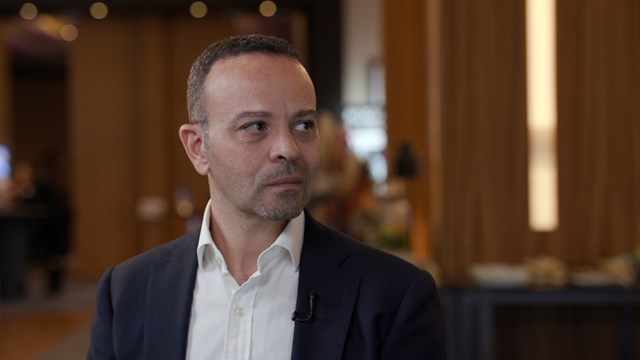
Prateek Choudhary, CEO of the recently formed, telco-backed startup Syntelligence, explains how the company came to be formed by some of the key members of the Global Telco AI Alliance (GTAA) and how it is using telco data and AI to develop a fraud detection platform for digital service providers.
Recorded March 2026
Email Newsletters
Sign up to receive TelecomTV's top news and videos, plus exclusive subscriber-only content direct to your inbox.