To embed our video on your website copy and paste the code below:
<iframe src="https://www.youtube.com/embed/KEnOgMwRZMY?modestbranding=1&rel=0" width="970" height="546" frameborder="0" scrolling="auto" allowfullscreen></iframe>
Ray Le Maistre, TelecomTV (00:07):
So we're in Barcelona. We are at MWC26. I'm here with Maxime Flament, who's the CTO of the 5GAA. So Maxime, great for you to join us again. Thanks very much for your time. So for those not familiar with the 5GAA, can you just quickly remind us about the organisation and what it's aiming to achieve?
Maxime Flament, 5GAA (00:28):
So 5G Automotive Association is an organisation that brings together on one side the automotive industries and then the telco industries on the other side. We make sure that we get connected vehicles on the roads, everywhere at the global level. So we are a global industry association. We have about 100, 105 members at the moment. And these are composed of the whole supply chain from the automotive, the whole supply chain, from the mobile network operators, and also a lot of ITS or IT solution vendors.
Ray Le Maistre, TelecomTV (01:04):
Okay, excellent. Well, I mean, it's 2026 now and 5G is not new anymore. It's been around for years. But are you encouraged with the ongoing investments in 5G infrastructure, in particular 5G standalone or 5G SA networks and distributed edge data centres by mobile operators? Do you feel like this is a key development for the evolution of vehicle connectivity ecosystems?
Maxime Flament, 5GAA (01:30):
Yeah, 5G standalone is part of the 5G promises at the end of the day. So we are always keen on looking at what comes along the way, what will be available. One thing that is very important for the automotive is to have a vision on larger regions of the availability of these kind of solutions. So 5G standalone is great to have it in Germany or in the UK, but we need to really have a perspective at the European level or in other countries around the world. Now when we are talking about edge computing, this has been perhaps flying a little bit or taking off a little bit slower, but there is still a lot of perspective, especially in terms of automated driving and software-defined vehicles where the offload of some of the functions that are running inside the car could be done by the edge.
Ray Le Maistre, TelecomTV (02:32):
Okay. Yeah. And we're certainly seeing, I mean, just this week heard a lot more developments about the telco edge and that seems to be after years and years, that seems to be becoming a real thing now. But we're also seeing a great deal of attention, of course, on low Earth orbit or LEO satellite deployments. Do you feel this is a positive move as well for the 5GAA's members?
Maxime Flament, 5GAA (02:54):
Yeah. So 5G has been working on the non-terrestrial network for some time. It answers one or two of the very important aspects of mobility and automotive connectivity. On one side, the resilience in terms of disaster or whether there is any outage, but also very much on the coverage gaps that we still see even in populated areas. And so we need to have a fallback as a connectivity and the NTN is part of the equation at the end of the day. Now you mentioned low Earth orbit. So at the moment, we are looking at very narrowband kind of use cases using NB-IoT, so an LTE version of the whole connectivity, but of course we want to transition towards low Earth orbits. So there is no urban low Earth orbit solutions that are out there, and then gradually shift towards 5G NTN, which are then by definition lower orbits.
(04:02):
But some of them are using lower FR1 bands or lower frequency band, L and S bands, where we are going to have relatively good wideband service, but not enough to have the full entertainment. No, sure, sure. We then have to shift towards higher frequency bands such as the Ka or Ku bands to have much larger throughput for entertainment, infotainment, et cetera, and video calls.
Ray Le Maistre, TelecomTV (04:39):
Right. I mean, things are moving so quickly, the spectrum deals are being done. The pace of change in satellite now for these kind of communication services is amazing. I'm sure by this time next year, we'll be talking about a lot more different things there. But of course, at the end of the day, there's more options for connectivity, 5G is being invested in, but there needs to be a business case for everything that's happening in connected vehicles. Is there any meaningful progress on the development of business cases and monetisation models for the connected car sector?
Maxime Flament, 5GAA (05:18):
Yeah. So 5GAA mainly is looking at societal benefits in terms of the connectivity, but we have been investing quite a lot of time now to put these into bundles. And one of the bundles that seems to really attract attention is the bundle of connectivity between safety and payments. And so mainly here I have in mind the tolling systems. And so you can use connectivity to start doing this kind of micropayment and these bundles will be the solution to really get this into the market much faster.
Ray Le Maistre, TelecomTV (06:04):
Okay. And is that something that's recognised as a good business case in lots of different territories? Is this something that would have international applicability?
Maxime Flament, 5GAA (06:13):
Right now, there is a momentum in the US and North America, but we are pretty sure that this can pick up in other countries because definitely these bundles make sense from a business point of view.
Ray Le Maistre, TelecomTV (06:29):
Okay, excellent. So what's next for the 5GAA? I mean, what would you like to see from the mobile sector that would help with what you and your members are doing?
Maxime Flament, 5GAA (06:40):
So we now have reshaped a little bit of strategy with different new clusters. One of them, I mentioned the business aspects and anything that makes business sense, but another one is the global connectivity. And when I mean global connectivity it is really to be truly global to be able to have connected vehicle services in 150 countries around the world. Not the first tier countries, typically vehicle manufacturers today, they sell the same car, the same solution in 150 countries, but they sell the connected vehicle service in 40 or 50 of them. And there are some regulatory issues related to this. There is also some business blockage from mobile network operators. And so we are reaching out and trying to make sure that there are solutions that can be globally applied for these kind of situations.
Ray Le Maistre, TelecomTV (07:35):
Okay, excellent. Well, I mean, good luck with that. We seem to be in a world now where we seem to be shrinking back to regionalisation rather than globalisation, but hopefully you'll be successful in those efforts. Maxime, great to talk to you again. Thanks for updating us on what the 5GAA is doing and have a good MWC26.
Maxime Flament, 5GAA (07:54):
Thank you. And thank you for welcoming me back here every year, so very nice. Yeah.
Ray Le Maistre, TelecomTV (08:00):
No, good to see you.
So we're in Barcelona. We are at MWC26. I'm here with Maxime Flament, who's the CTO of the 5GAA. So Maxime, great for you to join us again. Thanks very much for your time. So for those not familiar with the 5GAA, can you just quickly remind us about the organisation and what it's aiming to achieve?
Maxime Flament, 5GAA (00:28):
So 5G Automotive Association is an organisation that brings together on one side the automotive industries and then the telco industries on the other side. We make sure that we get connected vehicles on the roads, everywhere at the global level. So we are a global industry association. We have about 100, 105 members at the moment. And these are composed of the whole supply chain from the automotive, the whole supply chain, from the mobile network operators, and also a lot of ITS or IT solution vendors.
Ray Le Maistre, TelecomTV (01:04):
Okay, excellent. Well, I mean, it's 2026 now and 5G is not new anymore. It's been around for years. But are you encouraged with the ongoing investments in 5G infrastructure, in particular 5G standalone or 5G SA networks and distributed edge data centres by mobile operators? Do you feel like this is a key development for the evolution of vehicle connectivity ecosystems?
Maxime Flament, 5GAA (01:30):
Yeah, 5G standalone is part of the 5G promises at the end of the day. So we are always keen on looking at what comes along the way, what will be available. One thing that is very important for the automotive is to have a vision on larger regions of the availability of these kind of solutions. So 5G standalone is great to have it in Germany or in the UK, but we need to really have a perspective at the European level or in other countries around the world. Now when we are talking about edge computing, this has been perhaps flying a little bit or taking off a little bit slower, but there is still a lot of perspective, especially in terms of automated driving and software-defined vehicles where the offload of some of the functions that are running inside the car could be done by the edge.
Ray Le Maistre, TelecomTV (02:32):
Okay. Yeah. And we're certainly seeing, I mean, just this week heard a lot more developments about the telco edge and that seems to be after years and years, that seems to be becoming a real thing now. But we're also seeing a great deal of attention, of course, on low Earth orbit or LEO satellite deployments. Do you feel this is a positive move as well for the 5GAA's members?
Maxime Flament, 5GAA (02:54):
Yeah. So 5G has been working on the non-terrestrial network for some time. It answers one or two of the very important aspects of mobility and automotive connectivity. On one side, the resilience in terms of disaster or whether there is any outage, but also very much on the coverage gaps that we still see even in populated areas. And so we need to have a fallback as a connectivity and the NTN is part of the equation at the end of the day. Now you mentioned low Earth orbit. So at the moment, we are looking at very narrowband kind of use cases using NB-IoT, so an LTE version of the whole connectivity, but of course we want to transition towards low Earth orbits. So there is no urban low Earth orbit solutions that are out there, and then gradually shift towards 5G NTN, which are then by definition lower orbits.
(04:02):
But some of them are using lower FR1 bands or lower frequency band, L and S bands, where we are going to have relatively good wideband service, but not enough to have the full entertainment. No, sure, sure. We then have to shift towards higher frequency bands such as the Ka or Ku bands to have much larger throughput for entertainment, infotainment, et cetera, and video calls.
Ray Le Maistre, TelecomTV (04:39):
Right. I mean, things are moving so quickly, the spectrum deals are being done. The pace of change in satellite now for these kind of communication services is amazing. I'm sure by this time next year, we'll be talking about a lot more different things there. But of course, at the end of the day, there's more options for connectivity, 5G is being invested in, but there needs to be a business case for everything that's happening in connected vehicles. Is there any meaningful progress on the development of business cases and monetisation models for the connected car sector?
Maxime Flament, 5GAA (05:18):
Yeah. So 5GAA mainly is looking at societal benefits in terms of the connectivity, but we have been investing quite a lot of time now to put these into bundles. And one of the bundles that seems to really attract attention is the bundle of connectivity between safety and payments. And so mainly here I have in mind the tolling systems. And so you can use connectivity to start doing this kind of micropayment and these bundles will be the solution to really get this into the market much faster.
Ray Le Maistre, TelecomTV (06:04):
Okay. And is that something that's recognised as a good business case in lots of different territories? Is this something that would have international applicability?
Maxime Flament, 5GAA (06:13):
Right now, there is a momentum in the US and North America, but we are pretty sure that this can pick up in other countries because definitely these bundles make sense from a business point of view.
Ray Le Maistre, TelecomTV (06:29):
Okay, excellent. So what's next for the 5GAA? I mean, what would you like to see from the mobile sector that would help with what you and your members are doing?
Maxime Flament, 5GAA (06:40):
So we now have reshaped a little bit of strategy with different new clusters. One of them, I mentioned the business aspects and anything that makes business sense, but another one is the global connectivity. And when I mean global connectivity it is really to be truly global to be able to have connected vehicle services in 150 countries around the world. Not the first tier countries, typically vehicle manufacturers today, they sell the same car, the same solution in 150 countries, but they sell the connected vehicle service in 40 or 50 of them. And there are some regulatory issues related to this. There is also some business blockage from mobile network operators. And so we are reaching out and trying to make sure that there are solutions that can be globally applied for these kind of situations.
Ray Le Maistre, TelecomTV (07:35):
Okay, excellent. Well, I mean, good luck with that. We seem to be in a world now where we seem to be shrinking back to regionalisation rather than globalisation, but hopefully you'll be successful in those efforts. Maxime, great to talk to you again. Thanks for updating us on what the 5GAA is doing and have a good MWC26.
Maxime Flament, 5GAA (07:54):
Thank you. And thank you for welcoming me back here every year, so very nice. Yeah.
Ray Le Maistre, TelecomTV (08:00):
No, good to see you.
Please note that video transcripts are provided for reference only – content may vary from the published video or contain inaccuracies.
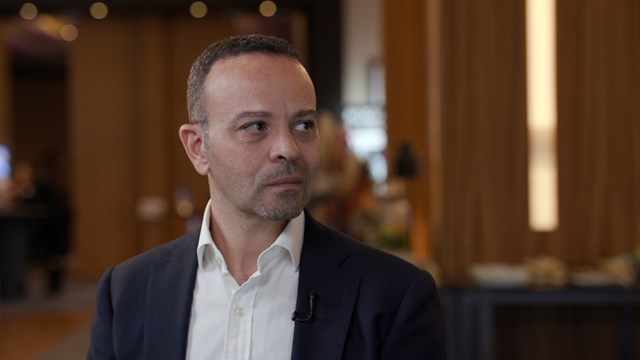
Maxime Flament, CTO, 5GAA
Maxime Flament, CTO at the 5GAA (5G Automotive Association), discusses the importance of widespread 5G standalone (5GSA) deployments and distributed edge architectures to the connected vehicle sector, the key frequency band considerations related to the potential of satellite communications for the auto industry, and much more.
Recorded March 2026
Email Newsletters
Sign up to receive TelecomTV's top news and videos, plus exclusive subscriber-only content direct to your inbox.