To embed our video on your website copy and paste the code below:
<iframe src="https://www.youtube.com/embed/VAiiGiXNEjU?modestbranding=1&rel=0" width="970" height="546" frameborder="0" scrolling="auto" allowfullscreen></iframe>
Clarence Reynolds, TelecomTV (00:08):
I'm Clarence Reynolds at MWC26. Nokia's anyRAN strategy is transitioning from concept to a global blueprint, driving disaggregation and AI-native capabilities across the network. Aji Ed, VP, Head of Cloud RAN and SMO at Nokia, and Paul Miller, CTO at Wind River, join us to discuss how this virtualised architecture is redefining performance, supply chain resilience, and the road to 6G. Thank you both for being with us today. Aji, you call anyRAN a global blueprint. What drives this shift toward disaggregation and why are cloud and AI RAN so central to your future?
Aji Ed, Nokia (00:45):
Yeah, thank you, Clarence. I think it's a very important question from our side. Now, if you look at anyRAN, from our perspective, it's all about software-defined architecture. And that's the direction that we are going forward. So which means we can use the same software on any platform. So be it cloud, be it purpose-built, we will use the same software. And that's why the anyRAN software, which is built on this accelerated computing platform, which is what we call as AI RAN. That is the direction in which we are proceeding to have the same feature parity, same performance across multiple platforms, but with the same software.
Paul Miller, Wind River (01:23):
Yes. And of course, Nokia is world-renowned for your Layer 1 performance and your RAN capabilities.
Aji Ed, Nokia (01:28):
Exactly.
Paul Miller, Wind River (01:29):
Bringing in the latest AI RAN capabilities are really exciting to see the industry transform around enabling
Aji Ed, Nokia (01:34):
That. Absolutely. I think we are excited about this opportunity, what's coming up. And I think the way the industry is moving forward, it's about how we build the AI-native architecture for the future. I mean, I don't think there's a way out. No. And just a matter of time, we just need to prepare for it. And the faster we prepare, the sooner we prepare, the better.
Paul Miller, Wind River (01:57):
Yes.
Aji Ed, Nokia (01:57):
So I think there is no other option. No,
Paul Miller, Wind River (02:00):
I think we've seen transitions happen in the market so far. We went from NFV to cloud-native virtualisation and vRAN, then to Open RAN. AI RAN is the next evolution of that trajectory. And it makes complete sense that that's where we're headed.
Aji Ed, Nokia (02:13):
Exactly.
Clarence Reynolds, TelecomTV (02:14):
So what makes Nokia's AI RAN strategy unique and how does this approach accelerate new service delivery?
Aji Ed, Nokia (02:21):
Yeah. I mean, like we were talking about, we moved from voice in 3G networks to data in 4G networks, to videos in 5G networks. Now the next dimension is coming with AI. I mean, whether we like it or not, this is the direction it's going. I mean, AI is becoming the real fourth workload which is coming into the network. So we need to definitely prepare for it. And that's the reason we have been really collaborating with the different partners in the ecosystem to figure out what is the right approach for building this AI-native architecture. That's the announcement which we did collaboration together with NVIDIA, which we announced in October last year at the GTC in Washington DC. So announcement is we are building a platform which is based on NVIDIA Aerial platform, which is Aerial RAN Compute platform, which is a GPU-accelerated computing, and we build the software on top of it.
(03:22):
And our RAN software, like I explained, so anyRAN software which will run on top of this platform. And this will give you the spectral efficiency, unlimited amount of opportunities to create new algorithms for GPU-based algorithms, because GPUs are meant for AI inferencing, better AI inferencing for sure. So this gives a lot of opportunities to create new workloads, new spectral efficiency opportunities, improvements, new beamforming techniques, new algorithms like advanced channel estimation, RKHS, and many more. So we definitely see this is the kind of platform we need to create a flexible architecture, flexible software demand architecture for defining or creating an AI-native architecture for 6G, part toward 6G.
Paul Miller, Wind River (04:10):
Yeah, that's absolutely correct. And we're incredibly excited as well. We're seeing with NVIDIA, we're running NVIDIA Aerial here at the show this year, very innovative platform and seeing NVIDIA lean in to the RAN market and to the partnership with Nokia, we think is incredibly important. We're seeing applications like dynamic beamforming and power savings that would be unattainable with any other method. And I think it is the next evolution of the radio access network technology, and we're really excited to see that. We're also excited to see on the operations side of the house, the ability to use AI and agentic AI to manage these systems. As we worked in Open RAN together and now in AI RAN, these are complex systems and the ability for the service provider to manage the deployment, to debug problems. So not only operating AI in the RAN and the compute node and the DU and the far edge, but also in the operations assets and the core of the network.
(05:02):
So I think we'll see AI pervasively throughout the telco market.
Aji Ed, Nokia (05:06):
Yeah, absolutely. 100% agree.
Clarence Reynolds, TelecomTV (05:08):
Paul, what specific performance or scale factors such as automated lifecycle management made Wind River the right partner for this blueprint?
Paul Miller, Wind River (05:16):
Well, so Wind River now for many years is the leading provider of Open RAN infrastructure globally. We have massive deployments in North America and Europe and in Japan and heading into Latin America. So we're widely recognised as that primary infrastructure provider. We don't provide the RAN applications. So we partner with our partners such as Nokia to provide the full stack solution. And then with silicon vendors such as Intel and AMD on platforms like Dell and HPE. So that creates the full stack solution that's necessary to implement that. And obviously as the premier provider of Open RAN infrastructure, as we move from vRAN to O-RAN to now AI RAN, we're making the changes in our platform to support NVIDIA and the AI features that are necessary. There's a lot of things like CPU allocation and GPU time slicing and a lot of features that are done in the platform that enable the application from Nokia to run at its maximum efficiency.
Clarence Reynolds, TelecomTV (06:10):
So how critical is ecosystem maturity to your deployment decisions and how do you see the partner landscape evolving in 2026?
Paul Miller, Wind River (06:19):
It's obviously critical, right? As we've moved from, if you think about the old days 3G going into 4G, the telecommunications market was a single vendor provided solution. No ecosystem was really necessary. Now as we move to these more advanced cloud-based architectures, a company like Wind River is working with a company like Nokia, and as I mentioned, Intel or AMD to implement a full stack solution. So by definition, it's an ecosystem and we have to work together. We have learned over the past years doing Open RAN, for example, Nokia and Wind River working together to shift left the integration so that we're integrating our systems in our labs so when the customer receives this complex ecosystem-based solution, it's rock solid and works.
Aji Ed, Nokia (07:00):
Yeah, I can only 100% I agree with what Paul said because ecosystem is the key because no single vendor can provide the entire solution. There's no way. And that's also the reason when we started building this ecosystem as a model, two, three years ago, I think that's when we started really collaborating strongly with the Wind River and similar companies, similar partners. I mean, we definitely see the advantage of bringing the kind of solutions together from the entire ecosystem, because that's the only way that we can really build this AI RAN journey forward, AI-native networks, because started with traditional RAN, Open RAN, the next journey is going into the AI RAN. So there is no way we can do it together alone. So we need to have with the ecosystem, extremely important.
Paul Miller, Wind River (07:45):
And our particular relationship between Nokia and Wind River goes back over 15 years, because even in the days predating Open RAN and virtualisation, we provided the Linux technology to Nokia to build their platform. So we've had a longstanding relationship, very successful relationship.
Clarence Reynolds, TelecomTV (08:02):
With 6G looming, what is the next major milestone for AI-native networks and why is selecting a mission-critical partner so vital to that journey?
Aji Ed, Nokia (08:11):
Yeah. So see, I think the 6G, of course, probably that's some way to go, but at the end of the day, it has to start today. This journey has to start today because otherwise we are too late for getting ready for the AI-native networks. Yes. For me, this is the journey that we take from now starting with the 5G network, we don't wait for 6G because we need to start building this AI-native capabilities from today. That's exactly why when we announce this partnership with NVIDIA, we say this is not a revolution. This is an evolution, an incremental evolution to the path towards the AI-native 6G network. So we start from 5G with a seamless integration with these new platforms, with the partners such as Wind River and many other partners, we create this solution together. So at the end of the day, this is the journey we are starting now and the path towards AI and 6G.
Paul Miller, Wind River (09:04):
Yeah. And I think you have to recognise with 6G that think about the timelines here. With 4G, all deployments were appliance-based. As we headed into 5G, it was a battle with vRAN and O-RAN versus the appliance-based method. So there's a bit of a battle going on through the 5G deployment, but everyone now has basically solved these problems. We have vRAN and O-RAN deployed at scale, AI RAN now entering deployment. As we look to 6G, perhaps a 2028 to 2030 kind of timeframe, it's a bit of ways, but the interesting thing is now it will be 100% virtual. Everybody understands that that is the platform of the future. So as we talk with our service provider customers, they're using this 5G timeframe with AI RAN and Open RAN to train their teams to develop the expertise on Kubernetes and cloud-native principles and AI so that as 6G comes to the market, they're fully prepared for that new architecture.
Aji Ed, Nokia (09:53):
Yeah. Adding to what Paul said. So this is the platform that we're building right now, this will be a simply software upgradable for 6G. So that's why it's extremely critical that we start really working out together this kind of a joint solutions and really bringing that forward, making the networks ready for 6G. And
Paul Miller, Wind River (10:12):
In many cases, the move from 5G to 6G will therefore be a software upgrade, and that'll be nice to see.
Clarence Reynolds, TelecomTV (10:19):
Well, thank you both for your insights, Aji and Paul, of course.
Paul Miller, Wind River (10:23):
Thank you.
Aji Ed, Nokia (10:23):
Thank you.
I'm Clarence Reynolds at MWC26. Nokia's anyRAN strategy is transitioning from concept to a global blueprint, driving disaggregation and AI-native capabilities across the network. Aji Ed, VP, Head of Cloud RAN and SMO at Nokia, and Paul Miller, CTO at Wind River, join us to discuss how this virtualised architecture is redefining performance, supply chain resilience, and the road to 6G. Thank you both for being with us today. Aji, you call anyRAN a global blueprint. What drives this shift toward disaggregation and why are cloud and AI RAN so central to your future?
Aji Ed, Nokia (00:45):
Yeah, thank you, Clarence. I think it's a very important question from our side. Now, if you look at anyRAN, from our perspective, it's all about software-defined architecture. And that's the direction that we are going forward. So which means we can use the same software on any platform. So be it cloud, be it purpose-built, we will use the same software. And that's why the anyRAN software, which is built on this accelerated computing platform, which is what we call as AI RAN. That is the direction in which we are proceeding to have the same feature parity, same performance across multiple platforms, but with the same software.
Paul Miller, Wind River (01:23):
Yes. And of course, Nokia is world-renowned for your Layer 1 performance and your RAN capabilities.
Aji Ed, Nokia (01:28):
Exactly.
Paul Miller, Wind River (01:29):
Bringing in the latest AI RAN capabilities are really exciting to see the industry transform around enabling
Aji Ed, Nokia (01:34):
That. Absolutely. I think we are excited about this opportunity, what's coming up. And I think the way the industry is moving forward, it's about how we build the AI-native architecture for the future. I mean, I don't think there's a way out. No. And just a matter of time, we just need to prepare for it. And the faster we prepare, the sooner we prepare, the better.
Paul Miller, Wind River (01:57):
Yes.
Aji Ed, Nokia (01:57):
So I think there is no other option. No,
Paul Miller, Wind River (02:00):
I think we've seen transitions happen in the market so far. We went from NFV to cloud-native virtualisation and vRAN, then to Open RAN. AI RAN is the next evolution of that trajectory. And it makes complete sense that that's where we're headed.
Aji Ed, Nokia (02:13):
Exactly.
Clarence Reynolds, TelecomTV (02:14):
So what makes Nokia's AI RAN strategy unique and how does this approach accelerate new service delivery?
Aji Ed, Nokia (02:21):
Yeah. I mean, like we were talking about, we moved from voice in 3G networks to data in 4G networks, to videos in 5G networks. Now the next dimension is coming with AI. I mean, whether we like it or not, this is the direction it's going. I mean, AI is becoming the real fourth workload which is coming into the network. So we need to definitely prepare for it. And that's the reason we have been really collaborating with the different partners in the ecosystem to figure out what is the right approach for building this AI-native architecture. That's the announcement which we did collaboration together with NVIDIA, which we announced in October last year at the GTC in Washington DC. So announcement is we are building a platform which is based on NVIDIA Aerial platform, which is Aerial RAN Compute platform, which is a GPU-accelerated computing, and we build the software on top of it.
(03:22):
And our RAN software, like I explained, so anyRAN software which will run on top of this platform. And this will give you the spectral efficiency, unlimited amount of opportunities to create new algorithms for GPU-based algorithms, because GPUs are meant for AI inferencing, better AI inferencing for sure. So this gives a lot of opportunities to create new workloads, new spectral efficiency opportunities, improvements, new beamforming techniques, new algorithms like advanced channel estimation, RKHS, and many more. So we definitely see this is the kind of platform we need to create a flexible architecture, flexible software demand architecture for defining or creating an AI-native architecture for 6G, part toward 6G.
Paul Miller, Wind River (04:10):
Yeah, that's absolutely correct. And we're incredibly excited as well. We're seeing with NVIDIA, we're running NVIDIA Aerial here at the show this year, very innovative platform and seeing NVIDIA lean in to the RAN market and to the partnership with Nokia, we think is incredibly important. We're seeing applications like dynamic beamforming and power savings that would be unattainable with any other method. And I think it is the next evolution of the radio access network technology, and we're really excited to see that. We're also excited to see on the operations side of the house, the ability to use AI and agentic AI to manage these systems. As we worked in Open RAN together and now in AI RAN, these are complex systems and the ability for the service provider to manage the deployment, to debug problems. So not only operating AI in the RAN and the compute node and the DU and the far edge, but also in the operations assets and the core of the network.
(05:02):
So I think we'll see AI pervasively throughout the telco market.
Aji Ed, Nokia (05:06):
Yeah, absolutely. 100% agree.
Clarence Reynolds, TelecomTV (05:08):
Paul, what specific performance or scale factors such as automated lifecycle management made Wind River the right partner for this blueprint?
Paul Miller, Wind River (05:16):
Well, so Wind River now for many years is the leading provider of Open RAN infrastructure globally. We have massive deployments in North America and Europe and in Japan and heading into Latin America. So we're widely recognised as that primary infrastructure provider. We don't provide the RAN applications. So we partner with our partners such as Nokia to provide the full stack solution. And then with silicon vendors such as Intel and AMD on platforms like Dell and HPE. So that creates the full stack solution that's necessary to implement that. And obviously as the premier provider of Open RAN infrastructure, as we move from vRAN to O-RAN to now AI RAN, we're making the changes in our platform to support NVIDIA and the AI features that are necessary. There's a lot of things like CPU allocation and GPU time slicing and a lot of features that are done in the platform that enable the application from Nokia to run at its maximum efficiency.
Clarence Reynolds, TelecomTV (06:10):
So how critical is ecosystem maturity to your deployment decisions and how do you see the partner landscape evolving in 2026?
Paul Miller, Wind River (06:19):
It's obviously critical, right? As we've moved from, if you think about the old days 3G going into 4G, the telecommunications market was a single vendor provided solution. No ecosystem was really necessary. Now as we move to these more advanced cloud-based architectures, a company like Wind River is working with a company like Nokia, and as I mentioned, Intel or AMD to implement a full stack solution. So by definition, it's an ecosystem and we have to work together. We have learned over the past years doing Open RAN, for example, Nokia and Wind River working together to shift left the integration so that we're integrating our systems in our labs so when the customer receives this complex ecosystem-based solution, it's rock solid and works.
Aji Ed, Nokia (07:00):
Yeah, I can only 100% I agree with what Paul said because ecosystem is the key because no single vendor can provide the entire solution. There's no way. And that's also the reason when we started building this ecosystem as a model, two, three years ago, I think that's when we started really collaborating strongly with the Wind River and similar companies, similar partners. I mean, we definitely see the advantage of bringing the kind of solutions together from the entire ecosystem, because that's the only way that we can really build this AI RAN journey forward, AI-native networks, because started with traditional RAN, Open RAN, the next journey is going into the AI RAN. So there is no way we can do it together alone. So we need to have with the ecosystem, extremely important.
Paul Miller, Wind River (07:45):
And our particular relationship between Nokia and Wind River goes back over 15 years, because even in the days predating Open RAN and virtualisation, we provided the Linux technology to Nokia to build their platform. So we've had a longstanding relationship, very successful relationship.
Clarence Reynolds, TelecomTV (08:02):
With 6G looming, what is the next major milestone for AI-native networks and why is selecting a mission-critical partner so vital to that journey?
Aji Ed, Nokia (08:11):
Yeah. So see, I think the 6G, of course, probably that's some way to go, but at the end of the day, it has to start today. This journey has to start today because otherwise we are too late for getting ready for the AI-native networks. Yes. For me, this is the journey that we take from now starting with the 5G network, we don't wait for 6G because we need to start building this AI-native capabilities from today. That's exactly why when we announce this partnership with NVIDIA, we say this is not a revolution. This is an evolution, an incremental evolution to the path towards the AI-native 6G network. So we start from 5G with a seamless integration with these new platforms, with the partners such as Wind River and many other partners, we create this solution together. So at the end of the day, this is the journey we are starting now and the path towards AI and 6G.
Paul Miller, Wind River (09:04):
Yeah. And I think you have to recognise with 6G that think about the timelines here. With 4G, all deployments were appliance-based. As we headed into 5G, it was a battle with vRAN and O-RAN versus the appliance-based method. So there's a bit of a battle going on through the 5G deployment, but everyone now has basically solved these problems. We have vRAN and O-RAN deployed at scale, AI RAN now entering deployment. As we look to 6G, perhaps a 2028 to 2030 kind of timeframe, it's a bit of ways, but the interesting thing is now it will be 100% virtual. Everybody understands that that is the platform of the future. So as we talk with our service provider customers, they're using this 5G timeframe with AI RAN and Open RAN to train their teams to develop the expertise on Kubernetes and cloud-native principles and AI so that as 6G comes to the market, they're fully prepared for that new architecture.
Aji Ed, Nokia (09:53):
Yeah. Adding to what Paul said. So this is the platform that we're building right now, this will be a simply software upgradable for 6G. So that's why it's extremely critical that we start really working out together this kind of a joint solutions and really bringing that forward, making the networks ready for 6G. And
Paul Miller, Wind River (10:12):
In many cases, the move from 5G to 6G will therefore be a software upgrade, and that'll be nice to see.
Clarence Reynolds, TelecomTV (10:19):
Well, thank you both for your insights, Aji and Paul, of course.
Paul Miller, Wind River (10:23):
Thank you.
Aji Ed, Nokia (10:23):
Thank you.
Please note that video transcripts are provided for reference only – content may vary from the published video or contain inaccuracies.
Aji Ed, Nokia & Paul Miller, Wind River
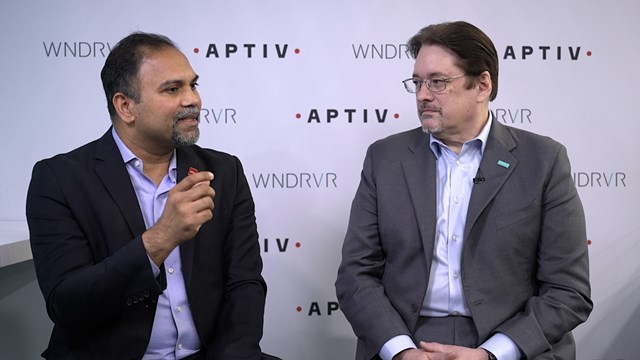
At MWC26, Aji Ed, VP and head of cloud RAN and SMO at Nokia, and Paul Miller, CTO at Wind River, discuss Nokia’s anyRAN strategy, a global virtualised architecture blueprint for network disaggregation powered by AI and cloud technologies, and the road to 6G.
Featuring:
- Aji Ed, VP, Head of AI RAN, Cloud RAN and SMO, Nokia
- Paul Miller, CTO, Wind River
Recorded March 2026
Email Newsletters
Sign up to receive TelecomTV's top news and videos, plus exclusive subscriber-only content direct to your inbox.