MWC26: Telenor’s CTO on sovereignty and smarter networks

By Ray Le Maistre
Mar 12, 2026
To embed our video on your website copy and paste the code below:
<iframe src="https://www.youtube.com/embed/2N7at40gLU8?modestbranding=1&rel=0" width="970" height="546" frameborder="0" scrolling="auto" allowfullscreen></iframe>
Ray Le Maistre, TelecomTV (00:07):
We're in Barcelona. It's MWC26. I'm here with Cathal Kennedy. He is Group CTO at the Telenor Group. Cathal, great to see you and for you to take your time out of your busy agenda to be here.
Cathal Kennedy, Telenor (00:20):
It's great to be here, Ray. And of course, Barcelona is a place where we get lots of inspiration and energy. So I'm looking forward to the conversation.
Ray Le Maistre, TelecomTV (00:26):
Even on day three.
Cathal Kennedy, Telenor (00:27):
Even on day three.
Ray Le Maistre, TelecomTV (00:29):
Can you tell us how has Telenor's network technology strategy evolved in the past couple of years with regards to the impact of cloud native telco processes and virtualisation? Because it's kind of the bedrock of what's going on in the industry right now.
Cathal Kennedy, Telenor (00:44):
Yeah. So I think we were very early out on virtualisation. We did a lot of work to try to virtualise our network. We did that quite fast back in the day. And then of course, now we're moving into newer technologies, Cloud RAN and all of these wonderful dream pipes that we have ahead of us. But fundamentally, we have in the Nordic region to deal with sovereignty. And that means we really need to have cloud native sovereign solutions that we're able to operate and deploy across our region. So we play an important role for providing that sovereignty and we need then partners and others to actually help us deliver on that. So cloud native operations is critical for our success going forward. In Capital Markets Day this year, we launched our new strategy. And there we actually talk not just about cloud as a simplifier of our operation, but also about trying to drive smarter networks.
Ray Le Maistre, TelecomTV (01:44):
Okay. Now as part of, you mentioned sovereignty there, smarter networks. Everybody is now in the telecom operator community kind of looking beyond traditional telecom networks at the broader sphere of things, especially in terms of AI infrastructure. Now Telenor was one of the first out of the traps with an AI factory. What role does Telenor's AI factory play in the CTO office's strategy? And are you well placed then to meet these sovereign service demands that you're obviously seeing in the Nordics?
Cathal Kennedy, Telenor (02:23):
Yeah. So it's actually two years ago. Barcelona, two years ago, we announced our sovereign factory, our AI factory. And I was really delighted because we were early out. We understood that if we're going to tap into AI in our networks, it needed to be in a sovereign solution. So one thing is you can buy a GPU and put it in your data centre. The other thing is we understood that actually for us to be able to utilise this, we should take it from a product perspective. So meeting the customer, meeting our own demands, that was our starting point. Now two years in, we've got enough customers for us to actually be satisfied with, and we've got to build the capability to put our own workloads. So we're able to drive our own network development. I think this has been a really innovative journey for Telenor.
(03:13):
We've tried to shape it differently. We've built it as an MVP. We took it to market much earlier than we normally would. We're not the company that has bought 10,000 GPUs. We're buying hundreds of GPUs and we're scaling with our customers. And the other aspect is that I believe that our partners, NVIDIA and others have learnt a lot from working with us because we've had to wrap telco-grade security around it and really make it work in a sovereign state.
Ray Le Maistre, TelecomTV (03:39):
Okay. Well, and these are the examples that everybody's looking for because everybody's talking about how AI can not only help them to be more efficient, but also to drive new revenue and business potential. And that's a key part of the equation here, isn't it?
Cathal Kennedy, Telenor (03:57):
Yeah. So that's why when we talk about smarter networks, it's not one thing is for us to increase our autonomous networks. And I think everybody's trying to achieve level four and working towards the same goals, but actually a smarter network needs to be a network that's enabling our customers' business better. It's about the customer experience. So it's about uplifting the right capabilities for the customer when they need it and driving that forward. And if you've been to our stands, I've seen that we have done quite a few interesting experiments with regard to AI slices, with regard to what we do with the maritime using AI and RAN, because these are opportunities for us to really explore that new capability before we can actually build and scale across our networks.
Ray Le Maistre, TelecomTV (04:42):
Okay, fantastic. Now, of course, AI touches a lot of points of everybody's business, including a telecom operator. So in a broader sense, how is AI impacting Telenor's overall operations?
Cathal Kennedy, Telenor (04:58):
Yeah. So again, I think we have stated very clearly we want to do AI for employees, so we actually all need to adopt it. That means that we're driving what we call an initiative for 10,000 technologists, that everybody in the company becomes a technologist. It's a great leveller. With AI tools, you're able to do things that previously would actually put on a backlog for demand for an IT developer. So that's on that level. When it comes to AI for networks or network operation, we're really building very clear capabilities for specific use cases, particularly in around some of our security domains, but also in operations to be able to make it much more efficient. And then I think finally, it's about AI in the productivity of the, let's call it the software developers because coming from that background myself, what software developers really love to do is to create.
(06:02):
They are super creative people, and what we really need to do is give them the tools to enable that creativity. And it's just amazing how fast AI is actually adopting into that domain. So we're really driving along those lines there.
Ray Le Maistre, TelecomTV (06:15):
Okay. I mean, it is an exciting time for this industry and AI is having a real impact on so many companies now. But of course we're at MWC. There is a lot of talk about AI, but at the end of the day, historically, this is a mobile show and we're still talking about mobile networks. So what are the next steps for 5G at Telenor? And are you at a stage now where you're spending a lot of time thinking about 6G as well?
Cathal Kennedy, Telenor (06:45):
So I think with 5G, as was stated in the keynote, we need to continue to succeed. We have built amazing 5G networks. Our coverage is impeccable. There's a competition among our opcos. I think we won 75 or something OpenSignal awards. So we have really great quality networks. So what's next is key is then about how do we actually build the new services for customers. We're working on some interesting projects that in time we will be able to talk more openly about. But I think when you look at 6G, and what does that mean? I think like most operators, I would much rather we talked about a release. Why are we talking about 6G? But I'm afraid that that train has left the station.
(07:32):
So what's actually important now for us with 6G is it needs to be an upgradable capability. We don't want to have to really drive those investment levels we've had in the past. And I think the second aspect is it needs to actually live up to the dreams of automation that we're talking about. So it should be the enabler. I think the industry needs to help stop selling us boxes and start solving the problems that we have to scale because I have operations in the four Nordic countries and in Asia and a use case by use case approach will give us a lot of learning, but it needs to stretch across the region. Otherwise, we don't have that ability to scale and then we're always behind. So our view now is to drive our smarter networks with really finding those stretching capabilities to go across regions.
Ray Le Maistre, TelecomTV (08:26):
Okay. Well, I think you're echoing the sentiments of a lot of your peers there and what you've just said about the way things are evolving. I think when you look around this show, maybe there's still that tendency to try and push things a little faster than maybe makes sense, but we'll see in the next couple of years. And finally, another topic, and I have noticed that this has really ramped up the agenda at MWC this year is around the impact of quantum computing and the impact that will have on security. How much consideration are you giving to that impact of quantum computers and what that will do or the impact that will have around your network security strategy? And do you have a quantum safe strategy in place?
Cathal Kennedy, Telenor (09:12):
So our research team, we have actually PhDs that have PhDs in quantum computing. So we have brought that capability into our company because we know that we need to be quantum safe in the future. So we're well on a journey to preparing for quantum safe. I think the question then is when and how to actually implement that. That's still a challenging journey. In Norway now, we have actually joined a quantum centre and we're really starting to work to prepare one thing as our own security, but also to help our customers understand what's coming. I think that's a role we need to take in society to start to prepare them as well, because Quantum Safe Networks is actually about Quantum Safe customers.
Ray Le Maistre, TelecomTV (09:55):
Yeah. No, absolutely. And that's a great approach because nobody wants to get to Q day and then go, "Oh, what do we need to do about it because it's just too late then?" Cathal, great to talk to you. Thanks very much for your insights and enjoy the rest of MWC26.
Cathal Kennedy, Telenor (10:11):
Wonderful. I love TelecomTV. Thank you.
Ray Le Maistre, TelecomTV (10:13):
Fantastic. Thank you.
We're in Barcelona. It's MWC26. I'm here with Cathal Kennedy. He is Group CTO at the Telenor Group. Cathal, great to see you and for you to take your time out of your busy agenda to be here.
Cathal Kennedy, Telenor (00:20):
It's great to be here, Ray. And of course, Barcelona is a place where we get lots of inspiration and energy. So I'm looking forward to the conversation.
Ray Le Maistre, TelecomTV (00:26):
Even on day three.
Cathal Kennedy, Telenor (00:27):
Even on day three.
Ray Le Maistre, TelecomTV (00:29):
Can you tell us how has Telenor's network technology strategy evolved in the past couple of years with regards to the impact of cloud native telco processes and virtualisation? Because it's kind of the bedrock of what's going on in the industry right now.
Cathal Kennedy, Telenor (00:44):
Yeah. So I think we were very early out on virtualisation. We did a lot of work to try to virtualise our network. We did that quite fast back in the day. And then of course, now we're moving into newer technologies, Cloud RAN and all of these wonderful dream pipes that we have ahead of us. But fundamentally, we have in the Nordic region to deal with sovereignty. And that means we really need to have cloud native sovereign solutions that we're able to operate and deploy across our region. So we play an important role for providing that sovereignty and we need then partners and others to actually help us deliver on that. So cloud native operations is critical for our success going forward. In Capital Markets Day this year, we launched our new strategy. And there we actually talk not just about cloud as a simplifier of our operation, but also about trying to drive smarter networks.
Ray Le Maistre, TelecomTV (01:44):
Okay. Now as part of, you mentioned sovereignty there, smarter networks. Everybody is now in the telecom operator community kind of looking beyond traditional telecom networks at the broader sphere of things, especially in terms of AI infrastructure. Now Telenor was one of the first out of the traps with an AI factory. What role does Telenor's AI factory play in the CTO office's strategy? And are you well placed then to meet these sovereign service demands that you're obviously seeing in the Nordics?
Cathal Kennedy, Telenor (02:23):
Yeah. So it's actually two years ago. Barcelona, two years ago, we announced our sovereign factory, our AI factory. And I was really delighted because we were early out. We understood that if we're going to tap into AI in our networks, it needed to be in a sovereign solution. So one thing is you can buy a GPU and put it in your data centre. The other thing is we understood that actually for us to be able to utilise this, we should take it from a product perspective. So meeting the customer, meeting our own demands, that was our starting point. Now two years in, we've got enough customers for us to actually be satisfied with, and we've got to build the capability to put our own workloads. So we're able to drive our own network development. I think this has been a really innovative journey for Telenor.
(03:13):
We've tried to shape it differently. We've built it as an MVP. We took it to market much earlier than we normally would. We're not the company that has bought 10,000 GPUs. We're buying hundreds of GPUs and we're scaling with our customers. And the other aspect is that I believe that our partners, NVIDIA and others have learnt a lot from working with us because we've had to wrap telco-grade security around it and really make it work in a sovereign state.
Ray Le Maistre, TelecomTV (03:39):
Okay. Well, and these are the examples that everybody's looking for because everybody's talking about how AI can not only help them to be more efficient, but also to drive new revenue and business potential. And that's a key part of the equation here, isn't it?
Cathal Kennedy, Telenor (03:57):
Yeah. So that's why when we talk about smarter networks, it's not one thing is for us to increase our autonomous networks. And I think everybody's trying to achieve level four and working towards the same goals, but actually a smarter network needs to be a network that's enabling our customers' business better. It's about the customer experience. So it's about uplifting the right capabilities for the customer when they need it and driving that forward. And if you've been to our stands, I've seen that we have done quite a few interesting experiments with regard to AI slices, with regard to what we do with the maritime using AI and RAN, because these are opportunities for us to really explore that new capability before we can actually build and scale across our networks.
Ray Le Maistre, TelecomTV (04:42):
Okay, fantastic. Now, of course, AI touches a lot of points of everybody's business, including a telecom operator. So in a broader sense, how is AI impacting Telenor's overall operations?
Cathal Kennedy, Telenor (04:58):
Yeah. So again, I think we have stated very clearly we want to do AI for employees, so we actually all need to adopt it. That means that we're driving what we call an initiative for 10,000 technologists, that everybody in the company becomes a technologist. It's a great leveller. With AI tools, you're able to do things that previously would actually put on a backlog for demand for an IT developer. So that's on that level. When it comes to AI for networks or network operation, we're really building very clear capabilities for specific use cases, particularly in around some of our security domains, but also in operations to be able to make it much more efficient. And then I think finally, it's about AI in the productivity of the, let's call it the software developers because coming from that background myself, what software developers really love to do is to create.
(06:02):
They are super creative people, and what we really need to do is give them the tools to enable that creativity. And it's just amazing how fast AI is actually adopting into that domain. So we're really driving along those lines there.
Ray Le Maistre, TelecomTV (06:15):
Okay. I mean, it is an exciting time for this industry and AI is having a real impact on so many companies now. But of course we're at MWC. There is a lot of talk about AI, but at the end of the day, historically, this is a mobile show and we're still talking about mobile networks. So what are the next steps for 5G at Telenor? And are you at a stage now where you're spending a lot of time thinking about 6G as well?
Cathal Kennedy, Telenor (06:45):
So I think with 5G, as was stated in the keynote, we need to continue to succeed. We have built amazing 5G networks. Our coverage is impeccable. There's a competition among our opcos. I think we won 75 or something OpenSignal awards. So we have really great quality networks. So what's next is key is then about how do we actually build the new services for customers. We're working on some interesting projects that in time we will be able to talk more openly about. But I think when you look at 6G, and what does that mean? I think like most operators, I would much rather we talked about a release. Why are we talking about 6G? But I'm afraid that that train has left the station.
(07:32):
So what's actually important now for us with 6G is it needs to be an upgradable capability. We don't want to have to really drive those investment levels we've had in the past. And I think the second aspect is it needs to actually live up to the dreams of automation that we're talking about. So it should be the enabler. I think the industry needs to help stop selling us boxes and start solving the problems that we have to scale because I have operations in the four Nordic countries and in Asia and a use case by use case approach will give us a lot of learning, but it needs to stretch across the region. Otherwise, we don't have that ability to scale and then we're always behind. So our view now is to drive our smarter networks with really finding those stretching capabilities to go across regions.
Ray Le Maistre, TelecomTV (08:26):
Okay. Well, I think you're echoing the sentiments of a lot of your peers there and what you've just said about the way things are evolving. I think when you look around this show, maybe there's still that tendency to try and push things a little faster than maybe makes sense, but we'll see in the next couple of years. And finally, another topic, and I have noticed that this has really ramped up the agenda at MWC this year is around the impact of quantum computing and the impact that will have on security. How much consideration are you giving to that impact of quantum computers and what that will do or the impact that will have around your network security strategy? And do you have a quantum safe strategy in place?
Cathal Kennedy, Telenor (09:12):
So our research team, we have actually PhDs that have PhDs in quantum computing. So we have brought that capability into our company because we know that we need to be quantum safe in the future. So we're well on a journey to preparing for quantum safe. I think the question then is when and how to actually implement that. That's still a challenging journey. In Norway now, we have actually joined a quantum centre and we're really starting to work to prepare one thing as our own security, but also to help our customers understand what's coming. I think that's a role we need to take in society to start to prepare them as well, because Quantum Safe Networks is actually about Quantum Safe customers.
Ray Le Maistre, TelecomTV (09:55):
Yeah. No, absolutely. And that's a great approach because nobody wants to get to Q day and then go, "Oh, what do we need to do about it because it's just too late then?" Cathal, great to talk to you. Thanks very much for your insights and enjoy the rest of MWC26.
Cathal Kennedy, Telenor (10:11):
Wonderful. I love TelecomTV. Thank you.
Ray Le Maistre, TelecomTV (10:13):
Fantastic. Thank you.
Please note that video transcripts are provided for reference only – content may vary from the published video or contain inaccuracies.
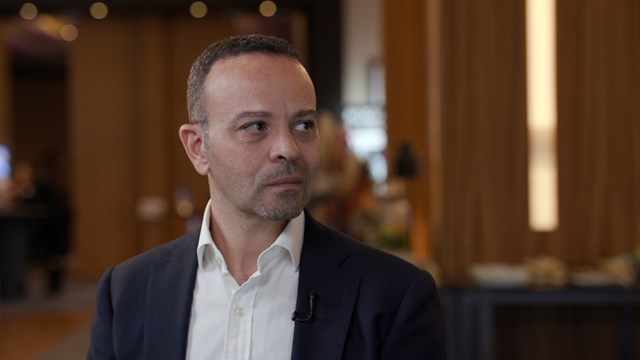
Cathal Kennedy, Group CTO, Telenor
Cathal Kennedy, group CTO at Telenor, discusses the evolution of the network operator’s technology strategy, the importance and impact of sovereignty, the strategic role of Telenor’s AI factory, how to develop and run smarter networks, and more.
Recorded March 2026
Email Newsletters
Sign up to receive TelecomTV's top news and videos, plus exclusive subscriber-only content direct to your inbox.