How Red Hat OpenShift enables common neutrality across clouds

By Charlotte Kan
Mar 4, 2025
To embed our video on your website copy and paste the code below:
<iframe src="https://www.youtube.com/embed/Q4hqb7LWAuo?modestbranding=1&rel=0" width="970" height="546" frameborder="0" scrolling="auto" allowfullscreen></iframe>
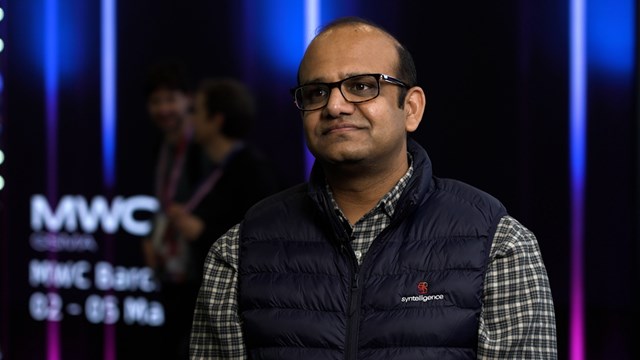
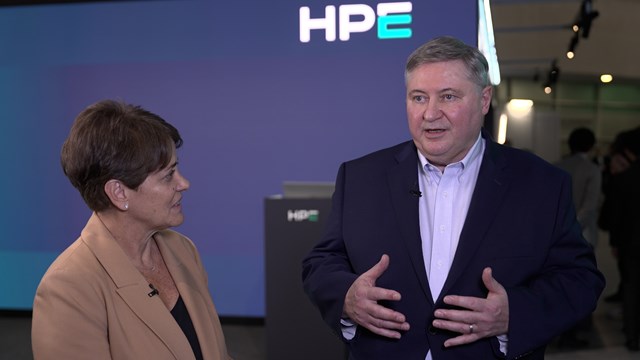
Hello and welcome to MWC 2025 here in Barcelona where we discuss Telco transformation and the switch to cloud native. Joining us today are Ayush Sharma, chief Technology Officer at StarHub and Ian Hood, who's Chief Technology Officer, telecommunications at Red Hat. Welcome to both of you.
Ian Hood, Red Hat (00:27):
Thank you.
Charlotte Kan, TelecomTV (00:28):
And first of all, congratulations as it was announced today that StarHub has elected Red Hat OpenShift as a primary reference platform for hybrid cloud transformation. So I used to start with could you tell us a bit more about StarHub and also Cloud Infinity? What is it all about?
Ayush Sharma, StarHub (00:46):
Well, thank you. So we are about $2.3 billion Singapore dollar company based out of Singapore, offering a wide range of services starting from broadband connectivity, mobile cyber enterprise it, and so on and so forth. And the two years back, we decided to embark on this bold and ambitious journey of transforming the company to become a customer-centric digital service operator. Very, very bold move, and it was also labeled as audacious in many ways. And then we applied some group thinking and that strategic thinking led to a business blueprint with the specific outcomes and specific milestones. And then quickly, the cloud infinity idea was seeded and it was born to ratify and simplify our tech stack. That tech stack we had was like any other telco, we have multiple tech stacks with mobile fixed enterprise IT data, so to become a digital service operator. So we had to kind of put a radical thinking in place from architecture standpoint.
(01:59):
So cloud infinity was centered around StarHub fabric, where we retain telco differentiation, but still leveraged harness the power of two massive platform of innovation, which is cloud in the internet. So the StarHub fabric evolved to become our sort of solid differentiation. And Red Hat OpenShift is the front and center of our StarHub fabric. It brings neutrality, it brings standardization, it brings the common operating model, and it allows us to struggle our workloads between different hyperscalers. So today, fast forward two years, and as on today we have 70% of network cyber content, IT data and AI stacks running on this hybrid multi-cloud. And we have four cloud environments fully integrated into star hub fabric. So I'm super excited about the possibilities and grateful for this partnership and we are very excited about it.
Charlotte Kan, TelecomTV (03:00):
So very exciting developments for Red Hat, of course. Ian, what are your thoughts on how StarHub is using Red Hat OpenShift and what differentiators are most striking to you?
Ian Hood, Red Hat (03:12):
So really the key thing that StarHub is doing that's really quite different from a lot of our other customers is they're taking the platform from where they started in a managed service kind of offering on a public cloud, and then they've gone onto a private cloud. And the key thing is that they're able to actually decide where the workloads can live, the data sensitive ones, the network ones on the private cloud, the commodity SaaS ones on the public cloud. And now what they can do is they can actually take this and drive those services to the edge out to the regions, to the financial industry, the healthcare industry, and go drive that business that way. So they're really kind of taking the full blown forward approach of the complete platform and expanding to their entire business and making them not just a telco, but what we call a cloud native digital TechCo, right? That's really kind of differentiation and they're improving their own business efficiency by doing so.
Charlotte Kan, TelecomTV (04:04):
Fantastic. Now a barcel is of course MWC, always the opportunity to share some good news. So you've made recent announcements in terms of customer successes. Could you share some positive stories with us?
Ayush Sharma, StarHub (04:17):
Yeah, absolutely. So maybe I'll give a concrete example, which we are demonstrating at Mobile World Congress here in Barcelona. So we are running a production grade open ran network, and we are using gen AI to automate the operations. So for a lack of better term autonomous networks, it's running on a cloud native packet, core cloud infinity, integrated packet core, and that is powering this. So it's super powerful because it allows us to Ian's point, it allows us to extrapolate the value, extrapolate the data, and pass those values by using genai to the enterprise customers. So when we were building this cloud infinity infrastructure with these use cases with open ran and ai, when we were solving the problem, of course we were meeting the business benefits or the project outcomes was something came out a nice surprise was the problems we were solving started to resonate a lot with our enterprise customers.
(05:16):
So when we are having a dialogue with them, we said, look, I mean these are the problems, common problems we are having in the critical infrastructure. We need to have a common data stack for us to apply the AI for better efficiencies, better experiences in the outcomes and so forth. We started to kind of accentuate an externalized cloud infinity architecture principles, playbooks tool set to the enterprise customer. So one of the large airport in Singapore and Singapore is airport is a global standard and benchmark, and we are very proud of that, is also engaging with us in terms of how to leverage cloud infinity, multi-tenancy architecture, the tool set, which is operating on Red Hat OpenShift to allow the fullest benefits for operational excellence, but also for value creation. So similarly, there is a large bank, again, large Singaporean bank, which has a regional presence also started to look into their architecture and started to reapply and rethink that.
(06:17):
So I think what we are excited about is the whole hive mind started to get into that top leadership play where we are dabbling into new initiatives, which creates new values, new ways of working, new operating principles, and most importantly then at telco industry becomes more relevant for AI as opposed to vertically integrated stacks, which were in silos and there was no common data layer and the AI was applied in piecemeal of customer ops and so on and so forth. To leverage that, I'm super proud that we are able to generate something substantial. There are a lot of use cases. I mean, one use case is where we drove the efficiency from reducing the power and carbon footprint for sustainability point of view for by selective beam forming, selective power usage, et cetera. The other benefit for the enterprise customer is that how we were able to use location-based services to provide proximity marketing for a shopping mall, for instance, with the brands and then also using AI as a result of this stack, we are able to hyper-personalized and provide these experiences which are very tailor-made to the consumers. So it just kind of straddles all across different verticals and powers and spawns more innovation. And we are very excited about the possibilities.
Charlotte Kan, TelecomTV (07:37):
Ian, I assume you are equally excited about the transformative power of ai, especially for the telco sector. So how do you think the cloud infinity approach can capitalize on the use of AI and the way that they built this architecture and how it's given them an AI advantage?
Ian Hood, Red Hat (07:54):
So as I said, what they've been able to do is to take the AI and apply it to the radio access network and improve efficiency there because the power consumption of that part of the network is the highest. So we need to kind of be sustainable there. So that's the first piece. But then because we can now actually apply AI for the enterprise at the edge on that same architecture, now I can actually the inference approach closer to where the customer is. And another really key point about having this on a common fabric on a private 5G edge architecture as well as the public cloud managed services. I can actually draw my own business processes for myself as StarHub as he is doing, but he can also deliver those same kinds of AI business efficiencies for their customers so they can improve how their business are operating as well. So they can kind of cover it from all angles in terms of how they do this. So this is really what makes me excited about this partnership with Ian Startup.
Ayush Sharma, StarHub (08:52):
If I could piggyback on that, Ian, so if you don't mind. So this is actually a brilliant use case and a very, very specific use case which tackles enterprise problems. So for instance, we are using ServiceNow as a multi-tenancy platform on cloud Infinity, and the enterprises have problems of doing inventory management, risk assessment, security posture, and so on and so forth now. So think about it, just the whole idea of amplifying ServiceNow a platform and providing that as a service to solve their inventory, their asset, their risk profile, their help desk services, it's amazing and they're loving it because now you don't have to worry about managing a dedicated tech stack, having an operational team to do this. So the whole idea of as a service, it just,
Ian Hood, Red Hat (09:42):
Well, and actually, so that really jumps on the other piece that people are talking about at this event, which is how we deliver network as a service, as a self-service approach to go get things done. And the way that that's being done is with these open APIs to allow us to deliver that. So if the people can go self-service, my new capabilities, ServiceNow, being attached to an API back into the same platform architecture allows us to go deliver these much faster to our customers.
Charlotte Kan, TelecomTV (10:08):
Now, listening to you two, I've got a great feeling about this partnership, but to conclude with ayush, what guidance would you give to other telcos you are working on disrupting and transforming their tech stacks and are moving from telcos to tech? Cos
Ayush Sharma, StarHub (10:25):
Oh, I mean, I could talk about from our experience and the journey, what we've been had on it was full of highs and lows. When you try to do anything disruptive and innovative, it's bound to be like that and it should be like that. Transformation is all about managing change. It's how you manage the change and how do you, tech stack is only one element of it. So I think it's very, very important is that you don't start from the tech stack, but you start from the customer, what's your core product? What's your core value? Where you want to get to, right? To have a business buy-in, have a business architecture and tech stack or tech architecture aligned to that vision is very, very important. So I think that worked really well for us. I think second part is operating model, so that you've been as a telco managing multiple telco stacks with a very specialized domain knowledge and skills and operating model and practices and tool set in place.
(11:19):
And that comes with a whole shebang of its whole operating expenses and complexity. And as you start to integrate, it starts to create that whole lot of, you forget the end goal, which is to deliver the services to the customer. You become more of a domain and technology centric person. So I think that is very, very important to have that business architecture principles and technology architecture principle, which becomes your guiding framework. And third thing is openness and ecosystem. So you can't just do it alone nowadays, and you have to leverage the power of open source and no better company than Red Hat who knows how to deal with the open source. But when it comes to adopting open source in open APIs or OpenShift, it is super, super important that you have some governing principles, you have some guardrails, and your organization is fit for purpose to use open source.
(12:16):
So I think that was a very, very good lesson we learned during this process that operating model and open source being integral part of it. And then you also need to make sure that you're creating your own differentiation on that layer so that you can provide a value out of that. So to me, kind of sum it up, it's very important to have that vision where you want to go, business and technology, architecture, alignment, openness, and it can't be done. The room wasn't built in a day and it wasn't built by one entity. So you need a whole ecosystem. You need a whole village to raise a child. So it's super, super important to have that partnership, but with the right framework, with the right guiding principle, right governance and operating model for you to be successful. And don't be afraid to do trial and error, have some room for innovation and experimentation because without that, nothing's going to change.
Charlotte Kan, TelecomTV (13:11):
So the key to success, vision, openness, and of course a great collaboration.
Ayush Sharma, StarHub (13:16):
Absolutely
Charlotte Kan, TelecomTV (13:17):
Fantastic. Thank you both. Thank you Ayush and Ian for your thoughts today here at MWC 2025.
Please note that video transcripts are provided for reference only – content may vary from the published video or contain inaccuracies.
Ian Hood, Red Hat and Ayush Sharma, StarHub
At MWC 2025 in Barcelona, Ayush Sharma, chief technology officer at StarHub, and Ian Hood, chief technology officer for telecommunications at Red Hat, discussed why StarHub recently selected Red Hat OpenShift as a primary reference platform for hybrid cloud transformation.
For more information please visit - StarHub Selects Red Hat OpenShift as Primary Reference Platform for Hybrid Cloud Transformation
Featuring:
- Ian Hood, CTO of Telecommunications, Red Hat
- Ayush Sharma, CTO, StarHub
Recorded: March 2025
Email Newsletters
Sign up to receive TelecomTV's top news and videos, plus exclusive subscriber-only content direct to your inbox.