The Slice – MWC Day 2: Quantum, AI, Open RAN and 6G

By Guy Daniels
Mar 3, 2026
To embed our video on your website copy and paste the code below:
<iframe src="https://www.youtube.com/embed/cb5MW2CcMSc?modestbranding=1&rel=0" width="970" height="546" frameborder="0" scrolling="auto" allowfullscreen></iframe>
Guy Daniels, TelecomTV (00:05):
It's Tuesday, the 3rd of March, and this is The Slice. On the program today, ensuring security in a quantum world, the language models behind Open Telco AI, ORAN Alliance prepares for an early 6G future and a cautionary take on AI and next gen deployments. Hello, you're watching Telecom TV. I'm Guy Daniels, and welcome to Tuesday's edition of The Slice. Over the course of this week, I'll be reporting from the telecom TV studio while my colleagues, Ray La Maistre and James Pearce will be providing coverage from the show floor. So let's hear now from James with the latest daily news and analysis.
James Pearce, TelecomTV (01:02):
After a first day at MWC that was at least in part under a geopolitical cloud, day two saw several announcements that looked to the sky as satellites continue to be one of the most talked about technologies in Barcelona. After the launch of Rival Satellite Connect Europe last week, SpaceX's Starlink counted by announcing that has renamed its direct to device constellation and service as Starlink Mobile as it prepares for the next version of its cell phone tower and space satellite technology into orbit. Starlink already has 650 direct to device satellites in orbit and is providing the service to the likes of T-Mobile US, KDBI, Telstra, and more. But its next generation of satellites, which will simply be called V2, will be capable of delivering mobile broadband data speeds, which exteriored by SpaceX VP for satellite engineering Michael Nichols during his keynote speech at the show. Starlink will start putting its V2 satellites into orbit in mid 2027, and it aims to have a constellation of 1,200 V2 satellites in place within six months of the first launch.
(02:07):
One of the mobile operators already signed up as a V2 partner is joined to telecom, which plans to launch direct advice services across 10 European countries starting in 2028. Sticking with satellites, Vodafone and Amazon Leo revealed an expansion of their deal to connect more 4G and 5G mobile sites across Europe and Africa starting later this year. Vodafone will use Amazon Leo to connect geographically dispersed mobile based stations back into its core networks in Germany and other European countries before deploying the service across Africa through Vodacom. If one phrase is emerging as the key line at this year's conference, it is AI native, with much of the discussion around how 5G can support AI and the industry can ensure that future networks such as 6G have this functionality at its heart. That term cropped up its Samsung networks and built a virtualized brand trial with Vodafone, which saw the operator carry out the first call using Samsung's VRAN solution building on the open RAN agreement announced by the two companies last year.
(03:08):
They also revealed that German city of Vismar will become Vodafone's first city in the country to become fully equipped with Open RAM. And sticking with Germany, Deutsche Telekom has expanded its collaborative relationship with Nokia, which is one of the Telco's key open RAN partners to accelerate the development of cloud-based, disaggregated, and AI-native radio access network technologies. As part of the relationship, Nokia will become DT's strategic co-creation partner for AI-native brand development.
Guy Daniels, TelecomTV (03:42):
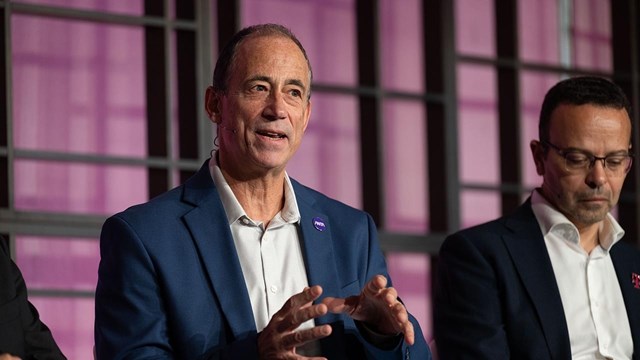
That was Telecom TV's editor, James Pearce, with his exclusive report from the MWC show floor. And don't forget to sign up for our daily 7:00 AM insights newsletter for more detailed coverage. Telecom TV has been reporting regularly on post quantum security and post quantum communications, which is becoming vital to large enterprises and to the network operators that are going to be able to provide this level of sophisticated security. Abdu Mudesir, board member for product and technology at Deutsche Telekom, explain to us how they continue to research and develop practical solutions and applications.
Abdu Mudesir, Deutsche Telekom (04:27):
We have our telecom labs where we really go out and do research, early research to see how can we help our customers remain secure even in a quantum world, which is going to be extremely complex. And we've worked on quantum key distribution. We've been in the forefront, including deploying some of that technology. Now we've done recently what we have announced is also our work on quantum teleportation, which means by using our research in quantum intelliment where we say that quantum photons that are really integrated, they cannot be broken because the minute you touch it, it basically is broken. It's so sensitive. And that means it's secure and it allows us actually to transport these qubits, the states, actually this quantum photons over 30 kilometer rabbis on our existing fibers.
Guy Daniels, TelecomTV (05:24):
Abdu also talks extensively about AI and the need for telcos to reinvent themselves end to end for the AI era, and you can watch that on telecom TV. Now, as we reported yesterday, the GSMA has launched its open telco AI initiative. Most of the major foundational models have relied heavily on training data from the internet and academia and fall short for detailed domain specific work. We asked Lewis Powell, director of AI initiatives at the GSMA about the barriers to telco specific model development and how this new initiative intends to fix the problem.
Louis Powell, GSMA (06:09):
It's hugely complicated. It's very driven by different vendors, equipment manufacturers, it's fragmented, that data is in different formats and also it's not readily available. So whilst these models have pioneered and moved ahead on openly available data, they've struggled to have access to what telcos really provide, which is that deep network knowledge and expertise. What we are trying to do is break down some of those barriers so we can get the best of AI for the best of telco. AT&T have worked with us to launch 30 different models, all designed for telecoms. So we collaborated with about 14 different research academic partners across the globe and worked within AT&T to then design a family of models that operators the industry can use, open source in their systems to improve how their models understand telecoms. So these are complimentary to their models. They allow them to deeply understand telco, and that's a whole suite of models they've released.
(07:07):
These are called open telco hotel models.
Guy Daniels, TelecomTV (07:10):
If you want to learn more about the open telco AI initiative and the roles of NVIDIA and AMD, then I really recommend you watch the full interview with Lewis on telecom TV later this week. The ORAN Alliance held its annual summit at MWC this morning with a lot of attention focused on upcoming massive MIMO integrations and supporting tier two operators with their Open RAN activities. O-RAN Alliance chairman, Thomas Lips, presented a progress report on the substantial amount of work done to date by the Alliance members, but warns that more is still required.
Thomas Lips, O-RAN Alliance & Deutsche Telekom (07:53):
So is the work done? No, not at all. I'm not sure when we can say the work is done because 6G is coming and it's faster coming than most of us would admit. I can tell you, you will see early deployments, probably even in 28 in some operators might not be complete standard. So it was important for us to kick off this journey and having our first, this was done in February now, and having done our first items, work items on 6G now going forward, going hand in hand with 3GPP and with that one really being open from day one.
Guy Daniels, TelecomTV (08:44):
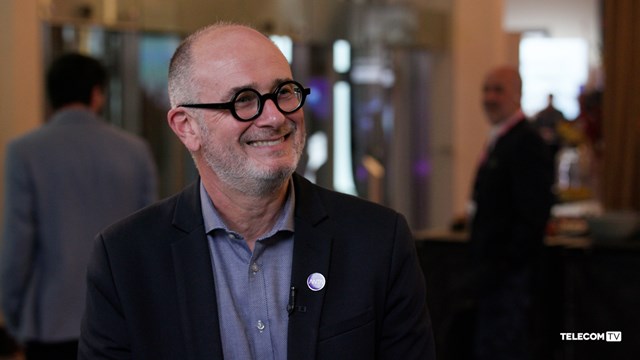
If you miss this morning's summit, then head over to the O-RAN Alliance website to catch up on the latest news and developments. With AI dominating MWC this year, every vendor and operator wants to be seen leading the field, yet AI and ML have been used in networks for decades. So what's changed now and how can telcos capitalize on the opportunity? Well, after 42 years in the industry, Howard Watson, the outgoing chief security and networks officer for BT shared his thoughts about telco AI.
Howard Watson, BT (09:22):
We've been doing sort of algorithmic AI for a long time. I mean, generative AI is a revolutionary step forward and that'll evolve into a gentic AI. The way we look at it is what's AI for networks? And I do think there's a lot of discussion here actually this week about autonomous networks and AI will certainly be really important in that self-healing and making them more intent-based. My view generally on AI is about augmenting the human that's still in the loop as opposed to automating the human away. And I think that is really important in networks as well.
Guy Daniels, TelecomTV (10:03):
Howard also had some cautionary words about 6G and whether external pressures could lead to some pre-standards deployments or worse, another non-standalone approach like we saw with 5G.
Howard Watson, BT (10:17):
I really hope we don't do what happened last time and that four or five operators go completely pre-standards. And I don't think they will. I think it's right that now we really do put the effort into getting the standards right, ensuring it's an evolution with backwards compatibility from 5G to 6G and not a complete change. And we are strong supporters of NGMN and working with the operators there to put our input in on that.
Guy Daniels, TelecomTV (10:49):
Greg McCall takes over the role as BT's chief security and networks officer this month. And all of us here at Telecom TV send Howard our very best wishes for his retirement. In two weeks time, the aftershow returns. I'll be analyzing the major developments from MWC with our special studio guests. Here at MWC, we've also been speaking with several of our industry partners about the latest opportunities for telcos and the solutions available. So let's hear from some of them now, starting with the views of HPE on scaling AI connectivity.
AE Natarajan, HPE (11:32):
AI connectivity now is transforming itself in more than two dimensions. We always talked about AI where you scale up within a rack where you increase the power of the GPUs and everything else. You scale out within an AI cluster data center, but now you're talking about scale across. And the reason you have to do that is because no longer you can hold GPU clusters that need to do AI workloads, whether it is ingest for training or it is for inferencing, now has to be geographically distributed because of power, because of space, because of all the other challenges. And that scaling model is interesting because networking and network connectivity becomes critical and core, like what you mentioned in terms of what AI is transforming.
Guy Daniels, TelecomTV (12:27):
We also asked HPE what this fundamental shift means for network security.
David Hughes, HPE (12:34):
It's a great question. As you know, AI is changing everything. And so the value of data is increasing. People want to have more telemetry so they're collecting more data. All of that, those feeds need to be secured. They're bringing it to central sites to do training. We've got to make sure that they're training infrastructure secured. And then those results are being distributed out to the edge for inference. And again, that edge infrastructure has to be secured. And so we're really shifting from a point where the network connects anything to anything and then you try to block bad guys to where security needs to be built in. It needs to be intrinsic in the network so that we're thinking about security first as we deploy it.
Guy Daniels, TelecomTV (13:18):
With Telcos investing heavily in agentic AI, we asked Totogi why operators are experiencing problems when they try to deploy at scale.
Danielle Rios, Totogi (13:28):
Yeah, I'll say it in one word and that's context. A lot of people think that getting AI right is garbaging, garbage out is all about the data. It's about the context. If you have garbage context, you're going to have garbage output. And so the key here is for telcos to start thinking about how are they going to build, manage, and maintain their context across all of their AI applications. We're not talking about a handful. We're probably talking about hundreds, if not thousands of applications across a large telco. And so getting that context right with something like the Tokyoontology, that's really what we're focused on is helping those telcos manage their context, their business rules, their decision making process so that AI won't make a mistake. And that will stop everyone from being worried about hallucinations or wrong decisions. We won't have to have human in the loop on every single AI thing we build, and we can get that value that everyone is trying to find with AI.
Guy Daniels, TelecomTV (14:20):
We'll be bringing you interviews with leading CSPs and industry executives throughout the week, adding the videos to our spotlight on 5G series on telecom TV. Before we go, it's time to update our MWC Bingo card, and you can get your very own copy by downloading our special MWC preview report, which is full of valuable insights and recommendations, and of course, our own version of Buzzword Bingo. Lots more words to tick off today. So let's see what this does to our card. Well, it's filling up fast, but there are still some tricky ones we have yet to hear on the slides. Let's see if we can complete the card by the end of the week. Well, that's all for today's edition of The Slice. Join us again on Wednesday for another report from Barcelona on day three of MWC. Until then, from all the team here at Telecom TV, thank you for watching and goodbye.
It's Tuesday, the 3rd of March, and this is The Slice. On the program today, ensuring security in a quantum world, the language models behind Open Telco AI, ORAN Alliance prepares for an early 6G future and a cautionary take on AI and next gen deployments. Hello, you're watching Telecom TV. I'm Guy Daniels, and welcome to Tuesday's edition of The Slice. Over the course of this week, I'll be reporting from the telecom TV studio while my colleagues, Ray La Maistre and James Pearce will be providing coverage from the show floor. So let's hear now from James with the latest daily news and analysis.
James Pearce, TelecomTV (01:02):
After a first day at MWC that was at least in part under a geopolitical cloud, day two saw several announcements that looked to the sky as satellites continue to be one of the most talked about technologies in Barcelona. After the launch of Rival Satellite Connect Europe last week, SpaceX's Starlink counted by announcing that has renamed its direct to device constellation and service as Starlink Mobile as it prepares for the next version of its cell phone tower and space satellite technology into orbit. Starlink already has 650 direct to device satellites in orbit and is providing the service to the likes of T-Mobile US, KDBI, Telstra, and more. But its next generation of satellites, which will simply be called V2, will be capable of delivering mobile broadband data speeds, which exteriored by SpaceX VP for satellite engineering Michael Nichols during his keynote speech at the show. Starlink will start putting its V2 satellites into orbit in mid 2027, and it aims to have a constellation of 1,200 V2 satellites in place within six months of the first launch.
(02:07):
One of the mobile operators already signed up as a V2 partner is joined to telecom, which plans to launch direct advice services across 10 European countries starting in 2028. Sticking with satellites, Vodafone and Amazon Leo revealed an expansion of their deal to connect more 4G and 5G mobile sites across Europe and Africa starting later this year. Vodafone will use Amazon Leo to connect geographically dispersed mobile based stations back into its core networks in Germany and other European countries before deploying the service across Africa through Vodacom. If one phrase is emerging as the key line at this year's conference, it is AI native, with much of the discussion around how 5G can support AI and the industry can ensure that future networks such as 6G have this functionality at its heart. That term cropped up its Samsung networks and built a virtualized brand trial with Vodafone, which saw the operator carry out the first call using Samsung's VRAN solution building on the open RAN agreement announced by the two companies last year.
(03:08):
They also revealed that German city of Vismar will become Vodafone's first city in the country to become fully equipped with Open RAM. And sticking with Germany, Deutsche Telekom has expanded its collaborative relationship with Nokia, which is one of the Telco's key open RAN partners to accelerate the development of cloud-based, disaggregated, and AI-native radio access network technologies. As part of the relationship, Nokia will become DT's strategic co-creation partner for AI-native brand development.
Guy Daniels, TelecomTV (03:42):
That was Telecom TV's editor, James Pearce, with his exclusive report from the MWC show floor. And don't forget to sign up for our daily 7:00 AM insights newsletter for more detailed coverage. Telecom TV has been reporting regularly on post quantum security and post quantum communications, which is becoming vital to large enterprises and to the network operators that are going to be able to provide this level of sophisticated security. Abdu Mudesir, board member for product and technology at Deutsche Telekom, explain to us how they continue to research and develop practical solutions and applications.
Abdu Mudesir, Deutsche Telekom (04:27):
We have our telecom labs where we really go out and do research, early research to see how can we help our customers remain secure even in a quantum world, which is going to be extremely complex. And we've worked on quantum key distribution. We've been in the forefront, including deploying some of that technology. Now we've done recently what we have announced is also our work on quantum teleportation, which means by using our research in quantum intelliment where we say that quantum photons that are really integrated, they cannot be broken because the minute you touch it, it basically is broken. It's so sensitive. And that means it's secure and it allows us actually to transport these qubits, the states, actually this quantum photons over 30 kilometer rabbis on our existing fibers.
Guy Daniels, TelecomTV (05:24):
Abdu also talks extensively about AI and the need for telcos to reinvent themselves end to end for the AI era, and you can watch that on telecom TV. Now, as we reported yesterday, the GSMA has launched its open telco AI initiative. Most of the major foundational models have relied heavily on training data from the internet and academia and fall short for detailed domain specific work. We asked Lewis Powell, director of AI initiatives at the GSMA about the barriers to telco specific model development and how this new initiative intends to fix the problem.
Louis Powell, GSMA (06:09):
It's hugely complicated. It's very driven by different vendors, equipment manufacturers, it's fragmented, that data is in different formats and also it's not readily available. So whilst these models have pioneered and moved ahead on openly available data, they've struggled to have access to what telcos really provide, which is that deep network knowledge and expertise. What we are trying to do is break down some of those barriers so we can get the best of AI for the best of telco. AT&T have worked with us to launch 30 different models, all designed for telecoms. So we collaborated with about 14 different research academic partners across the globe and worked within AT&T to then design a family of models that operators the industry can use, open source in their systems to improve how their models understand telecoms. So these are complimentary to their models. They allow them to deeply understand telco, and that's a whole suite of models they've released.
(07:07):
These are called open telco hotel models.
Guy Daniels, TelecomTV (07:10):
If you want to learn more about the open telco AI initiative and the roles of NVIDIA and AMD, then I really recommend you watch the full interview with Lewis on telecom TV later this week. The ORAN Alliance held its annual summit at MWC this morning with a lot of attention focused on upcoming massive MIMO integrations and supporting tier two operators with their Open RAN activities. O-RAN Alliance chairman, Thomas Lips, presented a progress report on the substantial amount of work done to date by the Alliance members, but warns that more is still required.
Thomas Lips, O-RAN Alliance & Deutsche Telekom (07:53):
So is the work done? No, not at all. I'm not sure when we can say the work is done because 6G is coming and it's faster coming than most of us would admit. I can tell you, you will see early deployments, probably even in 28 in some operators might not be complete standard. So it was important for us to kick off this journey and having our first, this was done in February now, and having done our first items, work items on 6G now going forward, going hand in hand with 3GPP and with that one really being open from day one.
Guy Daniels, TelecomTV (08:44):
If you miss this morning's summit, then head over to the O-RAN Alliance website to catch up on the latest news and developments. With AI dominating MWC this year, every vendor and operator wants to be seen leading the field, yet AI and ML have been used in networks for decades. So what's changed now and how can telcos capitalize on the opportunity? Well, after 42 years in the industry, Howard Watson, the outgoing chief security and networks officer for BT shared his thoughts about telco AI.
Howard Watson, BT (09:22):
We've been doing sort of algorithmic AI for a long time. I mean, generative AI is a revolutionary step forward and that'll evolve into a gentic AI. The way we look at it is what's AI for networks? And I do think there's a lot of discussion here actually this week about autonomous networks and AI will certainly be really important in that self-healing and making them more intent-based. My view generally on AI is about augmenting the human that's still in the loop as opposed to automating the human away. And I think that is really important in networks as well.
Guy Daniels, TelecomTV (10:03):
Howard also had some cautionary words about 6G and whether external pressures could lead to some pre-standards deployments or worse, another non-standalone approach like we saw with 5G.
Howard Watson, BT (10:17):
I really hope we don't do what happened last time and that four or five operators go completely pre-standards. And I don't think they will. I think it's right that now we really do put the effort into getting the standards right, ensuring it's an evolution with backwards compatibility from 5G to 6G and not a complete change. And we are strong supporters of NGMN and working with the operators there to put our input in on that.
Guy Daniels, TelecomTV (10:49):
Greg McCall takes over the role as BT's chief security and networks officer this month. And all of us here at Telecom TV send Howard our very best wishes for his retirement. In two weeks time, the aftershow returns. I'll be analyzing the major developments from MWC with our special studio guests. Here at MWC, we've also been speaking with several of our industry partners about the latest opportunities for telcos and the solutions available. So let's hear from some of them now, starting with the views of HPE on scaling AI connectivity.
AE Natarajan, HPE (11:32):
AI connectivity now is transforming itself in more than two dimensions. We always talked about AI where you scale up within a rack where you increase the power of the GPUs and everything else. You scale out within an AI cluster data center, but now you're talking about scale across. And the reason you have to do that is because no longer you can hold GPU clusters that need to do AI workloads, whether it is ingest for training or it is for inferencing, now has to be geographically distributed because of power, because of space, because of all the other challenges. And that scaling model is interesting because networking and network connectivity becomes critical and core, like what you mentioned in terms of what AI is transforming.
Guy Daniels, TelecomTV (12:27):
We also asked HPE what this fundamental shift means for network security.
David Hughes, HPE (12:34):
It's a great question. As you know, AI is changing everything. And so the value of data is increasing. People want to have more telemetry so they're collecting more data. All of that, those feeds need to be secured. They're bringing it to central sites to do training. We've got to make sure that they're training infrastructure secured. And then those results are being distributed out to the edge for inference. And again, that edge infrastructure has to be secured. And so we're really shifting from a point where the network connects anything to anything and then you try to block bad guys to where security needs to be built in. It needs to be intrinsic in the network so that we're thinking about security first as we deploy it.
Guy Daniels, TelecomTV (13:18):
With Telcos investing heavily in agentic AI, we asked Totogi why operators are experiencing problems when they try to deploy at scale.
Danielle Rios, Totogi (13:28):
Yeah, I'll say it in one word and that's context. A lot of people think that getting AI right is garbaging, garbage out is all about the data. It's about the context. If you have garbage context, you're going to have garbage output. And so the key here is for telcos to start thinking about how are they going to build, manage, and maintain their context across all of their AI applications. We're not talking about a handful. We're probably talking about hundreds, if not thousands of applications across a large telco. And so getting that context right with something like the Tokyoontology, that's really what we're focused on is helping those telcos manage their context, their business rules, their decision making process so that AI won't make a mistake. And that will stop everyone from being worried about hallucinations or wrong decisions. We won't have to have human in the loop on every single AI thing we build, and we can get that value that everyone is trying to find with AI.
Guy Daniels, TelecomTV (14:20):
We'll be bringing you interviews with leading CSPs and industry executives throughout the week, adding the videos to our spotlight on 5G series on telecom TV. Before we go, it's time to update our MWC Bingo card, and you can get your very own copy by downloading our special MWC preview report, which is full of valuable insights and recommendations, and of course, our own version of Buzzword Bingo. Lots more words to tick off today. So let's see what this does to our card. Well, it's filling up fast, but there are still some tricky ones we have yet to hear on the slides. Let's see if we can complete the card by the end of the week. Well, that's all for today's edition of The Slice. Join us again on Wednesday for another report from Barcelona on day three of MWC. Until then, from all the team here at Telecom TV, thank you for watching and goodbye.
Please note that video transcripts are provided for reference only – content may vary from the published video or contain inaccuracies.
News analysis for Tuesday 3rd March
Join TelecomTV’s Guy Daniels and James Pearce for our daily dedicated news show during MWC26, where we bring you the most important breaking news and discuss the latest industry announcements. On today’s show…
- Ensuring security in a quantum world…
- The language models behind Open Telco AI…
- O-RAN Alliance prepares for an early 6G future…
- And a cautionary take on AI and next-gen deployments…
Featuring:
- Abdu Mudesir, Board Member, Deutsche Telekom
- Howard Watson, Chief Security and Networks Officer, BT
- Louis Powell, Director of AI Initiatives, GSMA
- Thomas Lips, Chairman, O-RAN Alliance
First Broadcast: March 2026