The Slice - MWC Day 1: New AI initiative from GSMA

By Guy Daniels
Mar 2, 2026
To embed our video on your website copy and paste the code below:
<iframe src="https://www.youtube.com/embed/OtyWSyiG4Ec?modestbranding=1&rel=0" width="970" height="546" frameborder="0" scrolling="auto" allowfullscreen></iframe>
Guy Daniels, TelecomTV (00:05):
It's Monday, the 2nd of March, and this is The Slice. On the program today, AI grabs the headlines as MWC 2026 opens in Barcelona. VMO2 goes direct to cell with Starlink. KPN embraces the challenge of digital sovereignty and Finland demonstrates its green credentials. Hello, you're watching telecom TV. I'm Guy Daniels and welcome to Monday's edition of The Slice. We're back for another year of MWC with our essential daily coverage. And once again, I'll be reporting from the telecom TV studio while my colleagues, Ray Le Maistre and James Pearce will be providing coverage from the show floor. And it may only be day one of MWC, but there is already much to report. So let's hear now from Ray with our latest daily news and analysis.
Ray Le Maistre, TelecomTV (01:17):
MWC26 has opened its doors today in the shadow of military action in Iran and the broader Middle East. And while most conversations here in Barcelona on Sunday and this morning have still mostly been about one AI native telco angle or another, they've also nearly always included a reference to the global situation. The impact of that military action will of course impact MWC-26 as attendees from the Middle East, unless they traveled early, will not be here. While others traveling from Asia and connecting through Dubai, a major airline hub have found their travel plans canceled. It's hard to know yet what kind of impact this will have on this week's show, but of course that is not the main concern on people's minds. This, however, is still going to be a very busy show, as you can see. Now, in the telecom bubble that is Barcelona, the unofficial day's era of the show, also known as Sunday, was a wash with announcements with AI, as you'd expect the dominant topic.
(02:18):
Though 6G was also at the heart of a number of new developments. Deutsche Telekom and T-Mobile US are pooling their R&D resources in a 6G innovation hub that has a key focus on physical AI. While Erickson is claiming bragging rights on having achieved the world's first 6G prestandard over the air session at its 5G smart factory in Lewisville, Texas. NVIDIA meanwhile has gathered together a number of big telecom names, major operators, as well as vendors, to commit to build 6G networks on open and secure AI native platforms. You can find out more details about these 6G developments in the new section on telecom TV. And AI RAN is slowly gaining more traction with operators. Nokia and Nvidia are pushing hard to get telcos on board with the concept, and as well as making advances with long-time AI-ran advocates such as T-Mobile US, Japan SoftBank, and Indonesia's IOH, the likes of BT, Elisa, NTT Docomo, and Vodafone are also engaged with the vendors.
(03:28):
But it's not all AI and 6G. Satellite communications developments are going to make headlines too this week. Last week, Vodafone and AST Space Mobile gave their wholesale director device SATCO a proper name, Satellite Connect Europe, and fleshed out the details of the venture. Now with MWC's doors open, the venture's operator partners, the ones that will actually use the wholesale service to offer satellite to smartphone services to their customers are being revealed. As well as Vodafone's operations in the UK, Ireland and Romania, Orange has signed an all market agreement with initial testing in Romania, while Telefonica has also signed up for its operations in Spain and Germany. In addition, CK Hutchinson has agreed a deal for its operations in Austria, Denmark, Ireland, Italy, and Sweden.
Guy Daniels, TelecomTV (04:28):
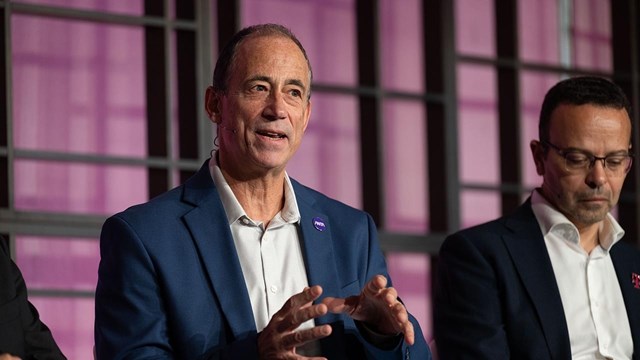
That was Telecom TV's editorial director, Ray Le Maistre, with his exclusive report from the MWC show floor. And don't forget to sign up for our daily 7:00 AM insights newsletter for more detailed coverage. Tomorrow, James will be joining us the first time with further news and analysis direct from Barcelona. New GSMA Director General Vivek Badrinath opened this year's event with the announcement of its open telco AI initiative. He explained that the motivation is to accelerate telco grade AI through open collaboration across operators, vendors, AI developers, and academic institutions.
Vivek Badrinath, GSMA (05:14):
So if we want to unlock the full benefits of AI for telco, we need telco grade AI. So this morning we announced open telco AI, and that's a new initiative where we will work with partners to launch a suite of open telco models and data sets, open access to more compute so that models can be trained for telco needs and benchmark progress across what we call the telco capability index. And through this, build a community to improve AI for telco.
Guy Daniels, TelecomTV (05:54):
Vivek was joined on stage by John Stankey, who is chairman and CEO of AT&T. And he asked him about how telcos can move beyond AI for cost savings and efficiency gains.
John Stankey, AT&T (06:07):
How do you do things that give you some strategic advantage? And that's the next step. And so using our data, our insights, what we know that somebody else doesn't know, I think that's the next great frontier. First, you've got to make sure that your networks are open so that you can actually plug that kind of logic in and begin to do things. We've been working really hard in both our packet core and what we're doing in our wireless network to enable that to happen. And then you have to actually start to build the applications.
Guy Daniels, TelecomTV (06:36):
The MWC keynotes continue all week and you can watch them live on the Mobile World Live website. We're worth catching up the full replay of the opening keynote if you can. In the first of our series of telco executive interviews this week, we spoke with Rob Joyce, director of mobile access engineering at Virgin Media O2. We asked Rob about the launch last week of O2 satellite. It's UK direct to sales service with NTN provider, Starlink.
Rob Joyce, VMO2 (07:10):
They've got the biggest D2D constellation currently. 650 satellites in that constellation. Each satellite has about 40 spot beams on it, and then we're dedicating five megs of our 1,800 to the satellite. So it can do text, it can do WhatsApp, it can do WhatsApp calls. It's probably about up to about four megabits per second per SpotBeam. So it's a decent 4G data service. Clearly it's aimed for areas outside of the terrestrial area and it makes more sense to cover the far rural areas using satellite than building new powered infrastructure on the ground.
Guy Daniels, TelecomTV (07:51):
Rob also spoke about developments in 5G AI sustainability and of course the road to 6G. And you can watch the full interview on demand on telecom TV. The role of telcos within digital sovereignty has become a major topic during the past year. Definitions may vary from country to country, as do users needs, but it is already proving strategically important to telcos. The Netherlands operator KPN is relishing its role as a trusted national partner, as we discovered when we spoke to its chief strategy and growth officer earlier today.
Benji Coetzee, KPN (08:31):
It's always been part of how we work, right? So we're a national operator. We operate local infrastructure, local data centers, local applications, store data locally. So we've always been a sovereign player and always been a sovereign supporter. We just never positioned it always that way. So from that perspective, we welcome the opportunity to be recognized as a sovereign player, and we welcome the European position on what sovereignty actually means. It does not mean that we do not partner or work with international companies, et cetera, but how and where you put your platforms, your products, your portfolio, your customer's data also based on their preferences is very, very, very important.
Guy Daniels, TelecomTV (09:13):
Benji also provides us with an update on KPN's connect, activate, and grow strategy, along with the changing needs of customers and the focus on security. Do try and watch the full interview. Now, how do you turn telecom infrastructure and the batteries of run sites into a virtual power plant? Gridle, part of Finland-based software solutions provider, Elisa Industriq, believes it has the answer. It is already demonstrating significant improvements to Elisa's service continuity and is now focusing on delivering economic gain.
Jukka-Pekka Salmenkaita, Gridle/Elisa Industriq (09:53):
So like the resilience has been increased dramatically compared to the regulatory requirements. Then the second is economic. The combination of this smarter use of the renewable energy when it is inexpensive and providing the services for the transmission system operate, the end result of both of these items is that the effective energy cost is reduced to half. So 50% savings of the energy opex as a combination of smart energy purchasing and then providing the flexibility services for the SO.
Guy Daniels, TelecomTV (10:28):
And you can learn more about this new business model by watching the full interview, which you can find on our spotlight on 5G webpage. In two weeks time, the aftershow returns. I'll be analyzing the major developments from MWC with our special studio guests. Here at MWC, we have also been speaking with several of our industry partners about the latest opportunities for telcos and the solutions available. So let's start by hearing today from the NGMN Alliance and board director, Bernard Bureau of TELUS.
Bernard Bureau, TELUS (11:08):
As we head towards MWC, our operating models are evolving. The next decades won't be about only new internet technology and incremental upgrades. It's going to be a lot about intelligence, resilience, and making sure that every investment delivers value. A top priority and a major focus area is to transition to true cloud native solutions and agentic AI-based operating models. And at MWC, we'll be very clear about the frameworks that we are releasing and what the industry needs to do to make this a reality.
Guy Daniels, TelecomTV (11:44):
And we'll be covering the NGMN press conference later in the week. We will also be featuring the O-RAN Alliance Summit, which will take place at MWC on Tuesday morning, and here's what you can expect.
(12:23):
And don't forget, you can watch the live stream of the ORAN Alliance Summit tomorrow, Tuesday from 9:30 CET. Before we go, it's time to update our MWC Bingo card. You can get your very own copy by downloading our special MWC preview report, which is full of valuable insights and recommendations, and of course, our own version of Buzzword Bingo. So here is the grid of keywords and phrases, and today we can mark off, thanks to the slice, the following. Not a bad start, so let's see if we can complete the card by the end of the week. Well, that's all for today's edition of The Slice. Join us again on Tuesday for another report from Barcelona on day two of MWC. Until Len from all the team here at Telecom TV, thank you for watching and goodbye.
It's Monday, the 2nd of March, and this is The Slice. On the program today, AI grabs the headlines as MWC 2026 opens in Barcelona. VMO2 goes direct to cell with Starlink. KPN embraces the challenge of digital sovereignty and Finland demonstrates its green credentials. Hello, you're watching telecom TV. I'm Guy Daniels and welcome to Monday's edition of The Slice. We're back for another year of MWC with our essential daily coverage. And once again, I'll be reporting from the telecom TV studio while my colleagues, Ray Le Maistre and James Pearce will be providing coverage from the show floor. And it may only be day one of MWC, but there is already much to report. So let's hear now from Ray with our latest daily news and analysis.
Ray Le Maistre, TelecomTV (01:17):
MWC26 has opened its doors today in the shadow of military action in Iran and the broader Middle East. And while most conversations here in Barcelona on Sunday and this morning have still mostly been about one AI native telco angle or another, they've also nearly always included a reference to the global situation. The impact of that military action will of course impact MWC-26 as attendees from the Middle East, unless they traveled early, will not be here. While others traveling from Asia and connecting through Dubai, a major airline hub have found their travel plans canceled. It's hard to know yet what kind of impact this will have on this week's show, but of course that is not the main concern on people's minds. This, however, is still going to be a very busy show, as you can see. Now, in the telecom bubble that is Barcelona, the unofficial day's era of the show, also known as Sunday, was a wash with announcements with AI, as you'd expect the dominant topic.
(02:18):
Though 6G was also at the heart of a number of new developments. Deutsche Telekom and T-Mobile US are pooling their R&D resources in a 6G innovation hub that has a key focus on physical AI. While Erickson is claiming bragging rights on having achieved the world's first 6G prestandard over the air session at its 5G smart factory in Lewisville, Texas. NVIDIA meanwhile has gathered together a number of big telecom names, major operators, as well as vendors, to commit to build 6G networks on open and secure AI native platforms. You can find out more details about these 6G developments in the new section on telecom TV. And AI RAN is slowly gaining more traction with operators. Nokia and Nvidia are pushing hard to get telcos on board with the concept, and as well as making advances with long-time AI-ran advocates such as T-Mobile US, Japan SoftBank, and Indonesia's IOH, the likes of BT, Elisa, NTT Docomo, and Vodafone are also engaged with the vendors.
(03:28):
But it's not all AI and 6G. Satellite communications developments are going to make headlines too this week. Last week, Vodafone and AST Space Mobile gave their wholesale director device SATCO a proper name, Satellite Connect Europe, and fleshed out the details of the venture. Now with MWC's doors open, the venture's operator partners, the ones that will actually use the wholesale service to offer satellite to smartphone services to their customers are being revealed. As well as Vodafone's operations in the UK, Ireland and Romania, Orange has signed an all market agreement with initial testing in Romania, while Telefonica has also signed up for its operations in Spain and Germany. In addition, CK Hutchinson has agreed a deal for its operations in Austria, Denmark, Ireland, Italy, and Sweden.
Guy Daniels, TelecomTV (04:28):
That was Telecom TV's editorial director, Ray Le Maistre, with his exclusive report from the MWC show floor. And don't forget to sign up for our daily 7:00 AM insights newsletter for more detailed coverage. Tomorrow, James will be joining us the first time with further news and analysis direct from Barcelona. New GSMA Director General Vivek Badrinath opened this year's event with the announcement of its open telco AI initiative. He explained that the motivation is to accelerate telco grade AI through open collaboration across operators, vendors, AI developers, and academic institutions.
Vivek Badrinath, GSMA (05:14):
So if we want to unlock the full benefits of AI for telco, we need telco grade AI. So this morning we announced open telco AI, and that's a new initiative where we will work with partners to launch a suite of open telco models and data sets, open access to more compute so that models can be trained for telco needs and benchmark progress across what we call the telco capability index. And through this, build a community to improve AI for telco.
Guy Daniels, TelecomTV (05:54):
Vivek was joined on stage by John Stankey, who is chairman and CEO of AT&T. And he asked him about how telcos can move beyond AI for cost savings and efficiency gains.
John Stankey, AT&T (06:07):
How do you do things that give you some strategic advantage? And that's the next step. And so using our data, our insights, what we know that somebody else doesn't know, I think that's the next great frontier. First, you've got to make sure that your networks are open so that you can actually plug that kind of logic in and begin to do things. We've been working really hard in both our packet core and what we're doing in our wireless network to enable that to happen. And then you have to actually start to build the applications.
Guy Daniels, TelecomTV (06:36):
The MWC keynotes continue all week and you can watch them live on the Mobile World Live website. We're worth catching up the full replay of the opening keynote if you can. In the first of our series of telco executive interviews this week, we spoke with Rob Joyce, director of mobile access engineering at Virgin Media O2. We asked Rob about the launch last week of O2 satellite. It's UK direct to sales service with NTN provider, Starlink.
Rob Joyce, VMO2 (07:10):
They've got the biggest D2D constellation currently. 650 satellites in that constellation. Each satellite has about 40 spot beams on it, and then we're dedicating five megs of our 1,800 to the satellite. So it can do text, it can do WhatsApp, it can do WhatsApp calls. It's probably about up to about four megabits per second per SpotBeam. So it's a decent 4G data service. Clearly it's aimed for areas outside of the terrestrial area and it makes more sense to cover the far rural areas using satellite than building new powered infrastructure on the ground.
Guy Daniels, TelecomTV (07:51):
Rob also spoke about developments in 5G AI sustainability and of course the road to 6G. And you can watch the full interview on demand on telecom TV. The role of telcos within digital sovereignty has become a major topic during the past year. Definitions may vary from country to country, as do users needs, but it is already proving strategically important to telcos. The Netherlands operator KPN is relishing its role as a trusted national partner, as we discovered when we spoke to its chief strategy and growth officer earlier today.
Benji Coetzee, KPN (08:31):
It's always been part of how we work, right? So we're a national operator. We operate local infrastructure, local data centers, local applications, store data locally. So we've always been a sovereign player and always been a sovereign supporter. We just never positioned it always that way. So from that perspective, we welcome the opportunity to be recognized as a sovereign player, and we welcome the European position on what sovereignty actually means. It does not mean that we do not partner or work with international companies, et cetera, but how and where you put your platforms, your products, your portfolio, your customer's data also based on their preferences is very, very, very important.
Guy Daniels, TelecomTV (09:13):
Benji also provides us with an update on KPN's connect, activate, and grow strategy, along with the changing needs of customers and the focus on security. Do try and watch the full interview. Now, how do you turn telecom infrastructure and the batteries of run sites into a virtual power plant? Gridle, part of Finland-based software solutions provider, Elisa Industriq, believes it has the answer. It is already demonstrating significant improvements to Elisa's service continuity and is now focusing on delivering economic gain.
Jukka-Pekka Salmenkaita, Gridle/Elisa Industriq (09:53):
So like the resilience has been increased dramatically compared to the regulatory requirements. Then the second is economic. The combination of this smarter use of the renewable energy when it is inexpensive and providing the services for the transmission system operate, the end result of both of these items is that the effective energy cost is reduced to half. So 50% savings of the energy opex as a combination of smart energy purchasing and then providing the flexibility services for the SO.
Guy Daniels, TelecomTV (10:28):
And you can learn more about this new business model by watching the full interview, which you can find on our spotlight on 5G webpage. In two weeks time, the aftershow returns. I'll be analyzing the major developments from MWC with our special studio guests. Here at MWC, we have also been speaking with several of our industry partners about the latest opportunities for telcos and the solutions available. So let's start by hearing today from the NGMN Alliance and board director, Bernard Bureau of TELUS.
Bernard Bureau, TELUS (11:08):
As we head towards MWC, our operating models are evolving. The next decades won't be about only new internet technology and incremental upgrades. It's going to be a lot about intelligence, resilience, and making sure that every investment delivers value. A top priority and a major focus area is to transition to true cloud native solutions and agentic AI-based operating models. And at MWC, we'll be very clear about the frameworks that we are releasing and what the industry needs to do to make this a reality.
Guy Daniels, TelecomTV (11:44):
And we'll be covering the NGMN press conference later in the week. We will also be featuring the O-RAN Alliance Summit, which will take place at MWC on Tuesday morning, and here's what you can expect.
(12:23):
And don't forget, you can watch the live stream of the ORAN Alliance Summit tomorrow, Tuesday from 9:30 CET. Before we go, it's time to update our MWC Bingo card. You can get your very own copy by downloading our special MWC preview report, which is full of valuable insights and recommendations, and of course, our own version of Buzzword Bingo. So here is the grid of keywords and phrases, and today we can mark off, thanks to the slice, the following. Not a bad start, so let's see if we can complete the card by the end of the week. Well, that's all for today's edition of The Slice. Join us again on Tuesday for another report from Barcelona on day two of MWC. Until Len from all the team here at Telecom TV, thank you for watching and goodbye.
Please note that video transcripts are provided for reference only – content may vary from the published video or contain inaccuracies.
News analysis for Monday 2nd March
Join TelecomTV’s Guy Daniels and Ray Le Maistre for our dedicated daily news show during MWC26, where we bring you the most important breaking news and discuss the latest industry announcements. On today’s show…
- AI grabs the headlines as MWC26 opens in Barcelona…
- VM02 goes Direct to Cell with Starlink…
- KPN embraces the challenge of digital sovereignty…
- And Finland’s Elisa demonstrates its green credentials.
Featuring:
- Rob Joyce, Director of Mobile Access Engineering, Virgin Media O2
- Benji Coetzee, Chief Strategy and Growth Officer, KPN
- Jukka-Pekka Salmenkaita, Managing Director, Gridle/Elisa Industriq
First Broadcast: March 2026