- Nvidia pumps billions into optical component vendors
- SK Telecom unveils Sovereign AI Package
- Telenor’s AI factory tries Red Hat on for size
In today’s industry news roundup: Nvidia invests $2bn in optical components vendor Cohere and the same amount in another optical specialist, Lumentum; SK Telecom launches Sovereign AI Package that combines its AI datacentre infra, sovereign AI foundation model and enterprise AI services; Telenor’s AI factory turns to Red Hat for help with its AI agents and applications; and much more!
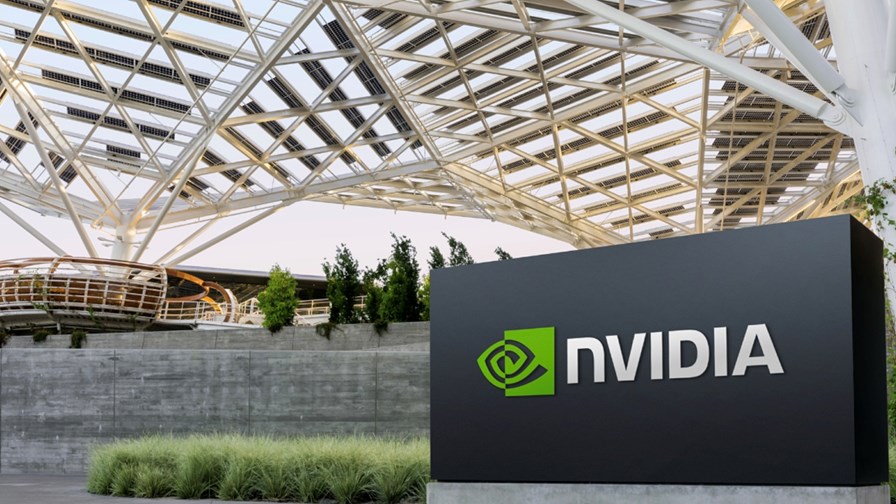
Nvidia is taking stakes in two optical component vendors, Coherent and Lumentum, as it looks to secure key relationships with the developers and suppliers of networking technology that will enable efficient, scalable AI infrastructure deployments. Nvidia is investing $2bn in Coherent “to support research and development, future capacity and operations as Coherent builds out its US-based manufacturing capabilities.” The relationship includes an Nvidia “multibillion-dollar purchase commitment and future access and capacity rights for advanced laser and optical networking products.” Jensen Huang, founder and CEO of Nvidia, noted: “Computing has fundamentally changed. In the age of AI, software runs on intelligence with tokens generated in real time by AI factories for every interaction and every context. With Coherent, Nvidia is pioneering next-generation silicon photonics to enable AI infrastructure at unprecedented scale, speed and energy efficiency.”
Nvidia’s agreement with Lumentum is almost identical. The AI tech giant has made a “multibillion purchase commitment”, has secured “future capacity access rights for advanced laser components” and is investing $2bn in Lumentum “to support R&D, future capacity and operations as the company builds out its US-based manufacturing capabilities in a new fab.” Nvidia CEO Huang noted: “AI has reinvented computing and is driving the largest computing infrastructure buildout in history. Together with Lumentum, Nvidia is advancing the world’s most sophisticated silicon photonics to build the next generation of gigawatt-scale AI factories.”
SK Telecom (SKT) has unveiled its Sovereign AI Package, which integrates AI datacentre (AIDC) infrastructure built on SK Group capabilities, SKT’s sovereign AI foundation model – A.X K1 – and AI services tailored for industrial and enterprise use. “This strategy involves building a proprietary AI foundation model that understands local language and culture on infrastructure that is controlled and operated domestically, taking data sovereignty into account, and providing integrated AI services that have been validated in real industrial settings,” noted the operator in this announcement. “Through this approach, SKT aims to protect national AI sovereignty while accelerating business innovation,” it added. The package was announced by SKT’s CEO, Jung Jai-hun, at the South Korean operator’s AIDC conference at MWC26, which was attended by senior executives from e&, NTT, Singtel and more. “Telecom operators’ proprietary infrastructure and operational expertise are key to building AI infrastructure and expanding AI services, and… telcos must move beyond the rapid and secure delivery of data to play a leading role in shaping AI infrastructure,” noted SKT’s CEO.
Telenor has selected Red Hat’s cloud-native and AI platforms to help manage its Nvidia-powered sovereign AI factory, a Norwegian owned and operated service that aims to deliver secure, efficient, and scalable AI infrastructure and services to companies in the Nordic country. As the demand for AI grows, “Telenor is tapping its decades of experience in operating critical infrastructure to help meet the stringent national and EU requirements around data controls and digital resilience,” noted Red Hat in this announcement. Telenor AI Factory, which currently has two sites in Norway running on renewable energy, selected Red Hat OpenShift AI as the core environment for building, training and deploying AI-based agents and applications, including retrieval-augmented generation (RAG) and agentic workflows with LlamaStack. The open-source company’s consulting arm is also working with Telenor to design and implement architecture capable of delivering AI services to external companies. Kaaren Hilsen, CEO at Telenor AI Factory, stated: “Telenor is focused on delivering dependable technologies for organisations looking to enhance operational resilience and drive AI-powered innovation. Telenor AI Factory and Red Hat collaborate as one team – we get in rooms together to jointly problem-solve and push forward. We are building Telenor AI Factory for flexibility and portability, no lock-in, and Red Hat is a key part of this with its open software and principles.”
Red Hat is also working with Telefónica Spain to standardise its IT workloads and cloud-native network functions. The partnership will also see the Spanish operator integrate Red Hat OpenStack Services on OpenShift to modernise its virtualised infrastructure on a single, unified foundation. This, according to Red Hat, will help Telefónica streamline management across multiple environments, allowing virtual machines to run side-by-side with cloud-native applications without negatively impacting the deployment of new 5G or edge services. Telefonica’s move to Red Hat OpenShift is already underway, it said, with a high number of residential customer management processes already deployed on the platform: This, Red Hat claims, has seen application deployment times reduce from a window of eight hours to as little as 90 minutes. Marina Huertas García, head of IT systems and transformation at Telefónica Spain, said: “At Telefónica, we are committed to [using] enterprise open source as rocket fuel for the transformation of our systems. Through several years of strategic collaboration with Red Hat we have been able to contribute our real-world requirements into community development and see them transform into features and functions in Red Hat OpenShift. The operational maturity and expertise we have built with Red Hat positions us to move beyond simple digitalisation.”
Ziff Davis has sold its connectivity brands, including independent network performance analysis firm Ookla, along with Speedtest, Ekahau, Downdetector and RootMetrics, to Accenture for $1.2bn in cash. Accenture noted in its announcement about the deal that the acquisition will enable it to “help communications service providers (CSPs), hyperscalers and enterprises optimise the mission-critical Wi-Fi and 5G networks that power their digital core.” It added: “Network data is no longer just a lifeline for the telecoms industry; it now creates significant value across all sectors. As AI scales, the insights captured at the network, device and application layers are essential to enhance fraud prevention in banking, smart home analytics in utilities, and traffic optimisation in retail. Ookla’s platform, which captures more than 1,000 attributes per test, provides the foundation for these insights.” Accenture’s chair and CEO, Julie Sweet, stated: “Modern networks have evolved from simple infrastructure into business-critical platforms. Without the ability to measure performance, organisations cannot optimise experience, revenue or security. By acquiring Ookla, we will help our clients across business and government scale AI safely and build the trusted data foundations they need to deliver the reliable, seamless connectivity that creates value.”
Vodafone Group and low-earth orbit (LEO) satellite operator Amazon Leo have announced an expansion of their deal to connect 4G and 5G mobile sites across Europe and Africa. Starting later this year, Vodafone will use Amazon Leo to connect geographically dispersed mobile base stations back to its core networks in Germany and other European countries, before deploying the service across Africa through Vodacom. See this announcement for further details.
– The staff, TelecomTV
Email Newsletters
Sign up to receive TelecomTV's top news and videos, plus exclusive subscriber-only content direct to your inbox.