Protecting the intelligent network: Security highlights

By Guy Daniels
Nov 5, 2026
To embed our video on your website copy and paste the code below:
<iframe src="https://www.youtube.com/embed/c9EKeyYNbvc?modestbranding=1&rel=0" width="970" height="546" frameborder="0" scrolling="auto" allowfullscreen></iframe>
Hello, you're watching TelecomTV and our special programme on protecting the intelligent network - security for SMO, RAN and beyond. We will explore the complexities of open ecosystems and rApps, and we'll also discuss advanced strategies for securing autonomous networks well beyond traditional boundaries.
Amy Zwarico, AT&T (00:57):
The harvest now decrypt later, which is related to PQC. The advent of practical quantum computers is quickly approaching, so we need to have all the ciphers updated so that we're not vulnerable to those types of attacks.
Scott Poretsky, Ericsson (01:14):
Post-quantum cryptography as Amy just spoke of. There's advanced persistent threats. We have the frontier AI such as the Mythos model that's revealed itself and Amy spoke to that. And then also we have agentic AI now being introduced into our networks for intelligent automation.
Hans-Rudolf Steiger, Swisscom (01:37):
I see two sides of the SMO. First, the SMO itself must be protected because it's a very important part at the heart of the network. It has access to different elements in the network. Second, the SMO can help improve security. It provides visibility, automation, and that central approach of managing all the components.
Dmitrii Krovnin, Ericsson (02:04):
From my point of view, it's exactly the openness that changes the game and changes the security model. As we introduce more vendors, we introduce more applications, we introduce more APIs - especially across multiple domains - we cannot assume that every component should be equally trusted or have the same level of access. So I think SMO needs to become a security control point for the whole system, and it's extremely important to protect the platform itself.
Scott Poretsky, Ericsson (02:37):
...open networks versus closed networks being more secure than the other to be over. That debate is over, and that's because experience now has shown us that both open networks and closed networks have their own unique security risks that need to be mitigated by product vendors and network operators.
Hans-Rudolf Steiger, Swisscom (03:01):
The key here is also to have this fast software cycle. So we are not able to wait for three releases every year - there needs to be a change in how software is delivered, how fast it is rolled out, just to keep up with the pace AI will bring.
Dmitrii Krovnin, Ericsson (03:23):
SMO should provide some framework to assess the risk of each and every operation. And if this is a small, reversible action from the agent, probably we can allow the agent to execute it autonomously. But if an agent wants to make a large-scale network change with thousands of nodes, cells and sites impacted, of course we need human approval.
Amy Zwarico, AT&T (03:53):
In order to have this agent-driven automation, what we have to have is the ability to execute the security controls at machine speed. We've got to really focus on defining guardrails on agents.
Hans-Rudolf Steiger, Swisscom (04:08):
We really need to understand what agents are doing and track their actions and make sure they operate within clearly defined boundaries. So I assume we will have some agent policies restricting them to the part which they should do in our network. And then of course we need this closed loop to continuously watch the changes and raise alarms if anything seems to be going in the wrong direction.
Guy Daniels, TelecomTV (04:42):
And for further information on the topics covered in this programme and to watch other videos in our One Vision Multiple Views series, please click and follow the links in the text below. For now though, thank you for watching and goodbye.
Please note that video transcripts are provided for reference only – content may vary from the published video or contain inaccuracies.
Panel discussion
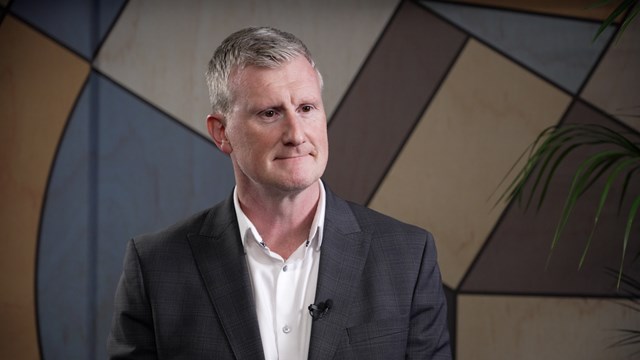
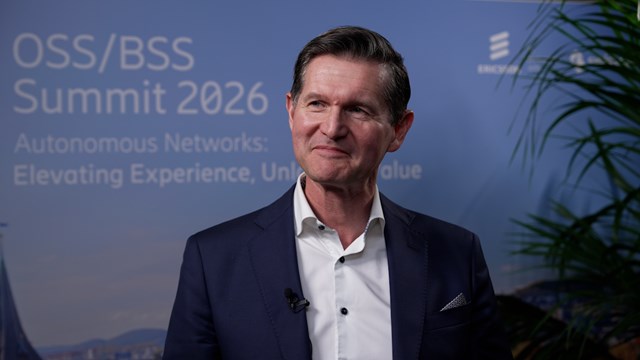
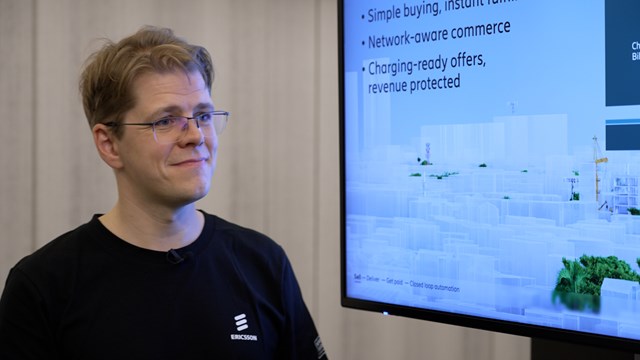
Watch the highlights from this cross-industry panel discussion on protecting the intelligent network, in which experts from AT&T, Swisscom and Ericsson examine security for service management orchestration (SMO), the radio access network (RAN) and beyond. They explore the new threats of post-quantum cryptography, frontier AI and agentic AI, and the central role of the SMO as a security control point. They also reveal why the open-versus-closed debate is over, the need for faster software cycles, and the guardrails, risk-based control and human oversight required for agent-driven automation.
Featuring:
- Amy Zwarico, Expert, Cybersecurity, AT&T
- Dmitrii Krovnin, Security Product Manager, Ericsson
- Hans-Rudolf Steiger, System & Security Architect, Swisscom
- Scott Poretsky, Director of Security Policy and Standards, Ericsson
Recorded: October 2026