Ericsson’s AI voice services tackle fraud detection, scams and deepfakes

By James Pearce
Jun 23, 2026
To embed our video on your website copy and paste the code below:
<iframe src="https://www.youtube.com/embed/oUscj8ZVDHg?modestbranding=1&rel=0" width="970" height="546" frameborder="0" scrolling="auto" allowfullscreen></iframe>
I'm delighted to be joined today by Camilo Morales, who's going to be talking to us about AI voice services. Camilo, over to you.
Camilo Morales, Ericsson:
Hi, James. We are introducing from Ericsson three services that are dealing with AI voice. Two of them are related to the consumer segment. One of them is more oriented towards the enterprise segment. We have here, for example, the first one, which we call deepfake detection. This is the one that will allow someone — and actually a family — to subscribe to the service. Let's assume that I'm calling my grandma. So grandma has subscribed to the service; therefore she will see on her screen that the service is protecting her. And whilst I'm speaking, it will notice and it will let her know that the service has confirmed that the voice being received on this handset is the voice connected to my voice — it's my voiceprint, actually. That's, I would say, a positive case. But if you, James, want to call grandma yourself, then we will see what happens, because you are calling grandma.
Camilo Morales, Ericsson:
Hi grandma.
James Pearce, TelecomTV:
Hi grandma. How are you doing today?
Camilo Morales, Ericsson:
And around — if you can —
James Pearce, TelecomTV:
Yeah, this is Camilo and I'm calling to talk about AI voice services.
Camilo Morales, Ericsson:
Exactly. And look at what happens. So now the service has recognised that the one who is talking on that phone is not the one associated — the voice is not the one associated with that number. Therefore, it is informing grandma. It is always her decision to pick up the call, and afterwards she gets the warning if she wants to drop the call. That's, I would say, a family profile that we want to promote — that inside the family, calls are done in a way that you can trust who is calling you. But we also have one case where we want to show that there is scam detection, not only of who is calling, but also of what is being said in the conversation. So in this case I am subscribed to the service. The service will check what I'm saying.
Camilo Morales, Ericsson:
The bad actors — the fraudsters — are trying to trick me. This is AI; they have scripts and they know what to say when I answer something. They say, "Clarify what you mean. Yeah, well, tell me what is going on." And normally they say, "Okay, there is a suspicious transaction with your credit card," et cetera. The service will then check what is being said. Therefore, when it notices what's going on with my credit card, the service should detect that they are trying to trick me and it will inform me that it's a dangerous situation — please be aware that you might be tricked. And the third service is the one that we have here in the background. Maybe we can make one more call. This service is for the enterprise segment. Here we have an avatar which is taking care of incoming calls to an enterprise.
Camilo Morales, Ericsson:
So this is Corina. She is our expert on the IMS portfolio and we can ask her any questions. So we can say: "Corina, can you please tell us what the latest services on AI voice from Ericsson are?"
"Corina":
Ericsson's latest AI voice services include agentic avatar assistance for enterprises, deepfake voice detection linked to trusted voiceprints, and real-time scam detection for secure premium voice bundles. These enable operators to generate new revenues while reducing fraud and churn.
Camilo Morales, Ericsson:
We have trained her with the whole IMS portfolio, including, of course, our latest developments. So the same thing that Corina is doing right now here, any enterprise can do by training the avatar with the portfolio that they have — for services, for products, et cetera. And what we see here is that the enterprise itself can use this for customer engagement. We have here in this demo — and by the way, all of these are live demos, so we are connecting to Sweden and Canada — Ericsson on the core network, of course.
Camilo Morales, Ericsson:
There is a company called Tavus; they are experts on the avatars. Cartesia is a company that Ericsson invested in for the text-to-speech piece, because everything that the avatar receives has to be converted. And we also have Pipecat, which acts like a virtual room where I am one participant and the avatar is another participant. We consider that this will offload work from enterprises and help them to have twenty-four-seven support for their services.
James Pearce, TelecomTV:
Fascinating. Thank you so much for joining us.
Camilo Morales, Ericsson:
You're welcome, James.
Please note that video transcripts are provided for reference only – content may vary from the published video or contain inaccuracies.
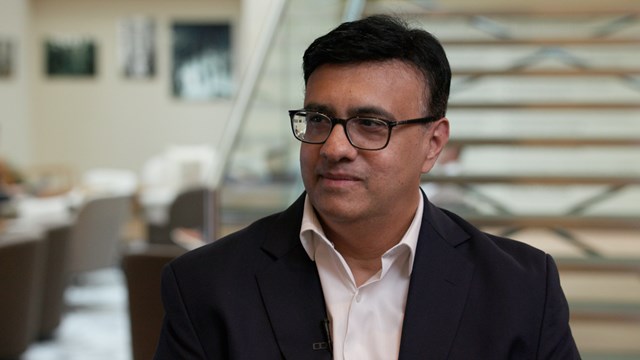
Camilo Morales, Sales Director IMS, Ericsson
Ericsson has developed three AI voice services targeting consumer protection and enterprise automation. The deepfake detection service uses voice prints to verify caller identity, alerting recipients when voices don’t match registered numbers. A scam detection service monitors conversations in real time to warn users of potential fraud attempts. For enterprises, an AI avatar provides 24/7 customer support, trained on company portfolios to handle incoming calls. The demonstration shows live connections to Sweden and Canada, integrating Ericsson’s core network with partners including Tavus for avatars and Cartesia for speech-conversion technology.
For more info: 5G Voice - Make your mobile network ready
Recorded May 2026
Email Newsletters
Sign up to receive TelecomTV's top news and videos, plus exclusive subscriber-only content direct to your inbox.