To embed our video on your website copy and paste the code below:
<iframe src="https://www.youtube.com/embed/OxYqzVuyg7w?modestbranding=1&rel=0" width="970" height="546" frameborder="0" scrolling="auto" allowfullscreen></iframe>
The final session for this morning is called Financial Services: Building Trust.. Now, financial services invest heavily in IT and compliance, yet telcos capture minimal value beyond commodity connectivity. And despite possessing unique fraud prevention assets like SIM swap detection, et cetera, telcos remain peripheral utilities in this sector rather than trusted strategic security partners to banks and other financial companies. So let's meet our panelists and get them to introduce themselves starting at the far end with Itsuma.
Itsuma Tanaka, NTT DOCOMO (01:13):
Hey, hello everybody. It's Itsuma Tanaka from NTT DOCOMO. Nice to meet you.
Ray Le Maistre, TelecomTV (01:19):
Sandra.
Alessandro Bovone, JT Group (01:19):
Yeah. Alessandro Bovone. I'm from Jersey Telecom. I'm the CTO there.
Lasha Tabidze, VEON (01:24):
Hello. I'm Lasha. I'm from VEON Group, Chief Digital Operations Officer of the group.
Ray Le Maistre, TelecomTV (01:30):
Okay, great. Thanks for joining us today. Now, Lasha is our co-host for this session. So he's going to give a few brief introductory remarks before we get into the discussion. So Lasher, the floor is yours.
Lasha Tabidze, VEON (01:42):
Yeah. Thank you, Ray. And good afternoon, everyone. One thing I wanted to focus today, when we speak about financial services, we all understand that telecoms on top of sitting on huge data, what we were speaking last two days, we're having also access and are sitting on the major real-time signals like location, identity, device or gadgets and et cetera. But largely telcos all over the world are still considered to sit at the edge of the financial ecosystem. And this is actually the case where we definitely need to move from edge to the core. And there are different ways how to do it. And I think today we will be exploring some of these ways. Just I want to underline two of them, which are very obvious. One is moving from connectivity into the signals and integration of the financial ecosystem or the second one by the way, which we at VEON choose a couple of years ago to really fight for our place in the financial ecosystem.
(02:58):
And just to give you example, what we built in couple of years, and of course I want to underline this is in emerging markets, which are different. We started with customers and financial inclusion to really bank the unbanked, to really give the population possibility to use the goods of financial ecosystem. And we're standing today more than 60 million people using our FinTech on a daily basis and issuing 200,000 loans a day. So it's huge. It's like FinTech at scale. It's not extension of the telecom, it's FinTech at scale. But why I wanted to tell you this, because if you think about how excited we are getting some times with all big FinTech names around the world, like the fact is that these companies started as a product. They had no data. They started as a great product. Then they were getting the customer data and then they were creating the use cases.
(03:57):
Any FinTech which disrupted the banking industry around the world, that's how they started. And the telecom, as I mentioned, we have the data, we have the real time signals and we have the best distribution network in the world for any product, the cheapest way for customer acquisition. So with this thought leaving to the audience, I'll get back to my co-panelists and happy to discuss together with URA. Okay.
Ray Le Maistre, TelecomTV (04:24):
Fantastic. Okay. So we're actually going to start this panel just by getting the perspective within the financial services sector of our three panelists here, because each of them come with a slightly different strategic position in terms of their relationship with the financial services sector and also financial services customers. So it's Sumer, if we can start with you, if you can give us a sense of how financial services fits into the entity Docomo strategy.
Itsuma Tanaka, NTT DOCOMO (05:08):
Thank you, Ray. Well, simply put, we bought a bank and I think there was a telecom TV coverage on this. I think that was your article, Ray.
Ray Le Maistre, TelecomTV (05:20):
Yeah.
Itsuma Tanaka, NTT DOCOMO (05:22):
We recently bought a bank and that's part of a big strategy in Japan. Well, probably the problem is similar to everybody around the world. Connectivity alone is not as profitable as before. We keep investing on 5G strengthening the network, but the profit coming from connectivity along is not proportional. Therefore, we need to find a strategy to monetize something beyond traditional connectivity. So that's part of the plan, the big plan. That's the big plan. And so what we do here is we build digital live platform including like e-commerce, payments, entertainment, and now the banking is on the list in our big portfolio. And together with that, on top of connectivity, we have a digital platform, that digital trust platform where customers engage with us on a daily basis with the banking even more frequently and gives us more customer insights. We collect data together with the AI.
(06:45):
We cook it, provide useful insights to the customer or the enterprise, the businesses for their marketing insights and so on. And so that's where our decision to buying a bank fits in. It's a big part of the strategy to create a big trust platform.
Ray Le Maistre, TelecomTV (07:08):
Okay. And just to point out here because telcos investing in or acquiring banks is something we've seen before with different levels of success, but this isn't a traditional bank that NTT has invested in, is it? It's a FinTech basically, isn't
Itsuma Tanaka, NTT DOCOMO (07:30):
It? Yeah. Of course, FinTech plays a big role. The bank we purchased is BI neobank. It's relatively new, but in business for like 30 years, started as an originally started at online banking, online bank.
Ray Le Maistre, TelecomTV (07:47):
Right. So you haven't bought a company that's running a whole load of retail outlets in different cities, blah, blah, blah. So this is a digital banking platform. Yes. Okay, fantastic.
Lasha Tabidze, VEON (08:00):
If I may build on that, because sooner or later you will also have to buy a bank. It depends how you start because behind your huge scale of financial ecosystem, transactions and everything, you need a bank and iBank systems and everything sitting behind it. So you start as a partnership and then you go there and then with the transformation, you can tap even with a traditional bank, then you transform it into the digital bank. So there are different ways, but one thing I wanted to add, which is most important here. So
(08:39):
I don't want to say or assume for anyone here in the room that when you buy a bank, you have like two entities working together and all the data together. No way. There is different regulation, there is different AML aspects, KYC and et cetera. What it gives you from the banking perspective, it gives you capital intensity to go in deeper into the crediting, BMPL or any kind of business you want. But what's built on the front, this is what customers need. And very honestly, as I've said, yes, in emerging markets, our target and goal is financial inclusion, cashless economy, bringing women into the financial ecosystem with the SME crediting for their businesses, but this is the core. But at the end of the day, even here in UK or Europe or in the Western part of the world, we see many players who really help people with bad scoring, let's name it so, to still be part of the ecosystem because banking ecosystem itself is very strict and with the alternative scoring models we have, you can still reach the customers, of course, with different levels of NPL like non-performing loans, but still you can create value for customers at the right time.
Ray Le Maistre, TelecomTV (09:57):
Okay. We'll maybe come back to the different things you're doing at the VEON is doing in a moment last year Alessandro, if you can give us a background to JT Group. I think people may have heard the name a bit more in the last few days as you concluded an acquisition, but JT has been working on the development of APIs for quite a while now. So can you give us a background about the JT group's relationship with the financial sector?
Alessandro Bovone, JT Group (10:37):
Yeah, absolutely. I come from a bit of different perspective. Of course, if I say to my board, we are going to buy a bank, they're looking a bit, this was crazy completely, but we work in a different environment. We are crown dependency, of course, Jersey Telecom and so on always be about finance because where we sit, finance is the big things that happen in the crown dependency. And the point of this debate is why the financial institution, banks, insurance, but also the ecosystem around lawyers, firm and so on that they are all working in this environment. They're looking at telcos as just, "Oh, I need connectivity. I need idea. I need another piece of connection or I have a new affiliate for international offshore somewhere else in another jurisdiction. Can we have a connectivity and so on? " Fine, we do that. It's telco. We heard multiple times in yesterday and today as telco, we connect.
(11:37):
We still connect and remember the old Nokia, my ex company brand, connecting people. Now we connected things, connected AI, we connect everything. We are there. And the point is we need to build the trust. We build the trust on, I will say, on the consumer side, on the enterprise and so on, the financial as in any other vertical, we need to show what we can do for the financial. And it's not just for me going and talk with the CIO of a financial bank that maybe is an offshore banking in Jersey, wherever I say, "Look, I got a 5G solution for you. " Doesn't make sense. We need, first of all, to show why we are important for them. And that one is where we come Jersey Telecom with the API exposure and so on, what we do in term of mobile intelligence. And of course we need scale.
(12:33):
And of course, again, we sit in very small jurisdiction. So the scale for me come from globalization or aggregation of everything come from all around the world, from all the operators. This is why we embrace partnership with the like of Adoona, the Ericsson and the Norcas Code, because the bank that I serve, they not just only look at one jurisdiction, they're global. They are looking to have the same service in many other jurisdiction. If I can replicate, yeah, it's the point.
Ray Le Maistre, TelecomTV (13:01):
It's that
Alessandro Bovone, JT Group (13:01):
Portability
Ray Le Maistre, TelecomTV (13:02):
Thing again, isn't it?
Alessandro Bovone, JT Group (13:03):
Exactly. But that one is only one phase of our approach to the bank. So we set the connectivity, help them with the API exposure and so on to do fraud, detection, all these nice things and so on. The next level is how we can help to be the trusted advisor or support them in scale up or become the digital bank because a lot of bank, they're still traditional, all the fact. And that one started with one observation. I remember 2017, 18, everybody was going to outsource everything on the cloud, public cloud is the solution. Then that now what we see repatriation, everything come back. The point that I can see from a point of view of JT also owning data center and so on, we had a kind of wave, everybody leaving because now it's all on the public and so on. And what's happening superior, everybody come back with different, I will say on premises cloud that now we put also the big banner of sovereigns and so on is another discussion that we had the talk yesterday.
(14:07):
I think last year you were there. I really like also the presentation there, but they're back and it's an advantage now because they need to go somewhere and what best place to go in the telco infrastructure environment and that one is why we start to build service for security because at the end we are the first one. The first level of security for everything is connectivity. And also just to say, I wanted to talk with some of CIO of this institution and they talk about, oh, I need now the new level of security because you know the new legislation here and there. Yeah, we know telco. We are so regulated looking UK with the TSA and so on what we had to do. Now move to another industry. We have done it. And the question was, you know what? I need to find the people in the island to do the SOC for security and so on.
(14:55):
I say, "Hey, I had to do it. I got the people. " We can talk, we can work together because at the end is a function that you can really translate to the other sector. So now manage service for, for example, security and so on in the financial institution, understanding what they are looking for is really key. I think as a telco globally, all of us have a lot of opportunity, not just only because where I sit, but it's because what we said we own practically, thinking if you go down,
Ray Le Maistre, TelecomTV (15:27):
What do they
Alessandro Bovone, JT Group (15:27):
Do? No transaction.
Ray Le Maistre, TelecomTV (15:30):
And we're going to get into a bit more of that relationship in just a minute or so. Lasher, did you want to add any more on what you've already said and in particular the nature of the relationship between VEON and the customers and what these kind of financial services that you provide mean to that and mean to the customers?
Lasha Tabidze, VEON (15:55):
Yeah, right absolutely. Just before speaking about that part, it's very interesting and I fully support and I can give as an example as we all know the OpenGateway initiative from GSMA and this is by the way, a big initiative because if we standardize this API connection put it out for the big multinational banks or like financial institutions like Visa or MasterCard, it's a big opportunity to become the part of this financial ecosystem. And then you have like lots of use cases like obvious ones like fraud prevention, device detection and et cetera. This is clear, but you can build more and more. So this is there. So how we started, right? We were doing things like API connectivity and creating the use cases to help the banks and financial institutions. Then we realized what we just said. So we started to aggregate our data, what we had and then we looked at the market opportunity and customer needs.
(16:57):
And as I've said, and once again, so we had a couple of discussions during the break and of course when you look at the Pakistan, it's like huge market, like 256 million people and like there are, by the way, like lots of banks, but people were unbanked. They could not do it. So we identified this problem. We wanted to solve this problem. So we made a step having all the use cases already and supporting the banks, we made another move. We created a wallet, then we made another move. We bought a bank and now we are the biggest financial service provider in the market. We transact 15% of the GDP of Pakistan and now we're
Ray Le Maistre, TelecomTV (17:40):
Doing the
Lasha Tabidze, VEON (17:40):
Same in Bangladesh, but I can give you same example. We did the same in Kazakhstan and Uzbekistan. And Kazakhstan, by the way, is one of the well advanced banking ecosystem in the world. It's like better than some of the Western countries, like with huge players like Kaspi, maybe some of you have heard about Kaspi ecosystem, they are huge and others. But when you have the customer needs as the center, we are already having like more than three million people using our financial services. And in Uzbekistan, we did the same just two years ago. We replicated our knowledge, put it there. We reached more than 5% of the market share right now just in two years. But at the end, what I want to add here, like as I've said, so it's not about you buy a bank and try to lead this in a telcom model, no way many times and very often we do the acquisitions to also attract the talent and get new skillset.
(18:39):
Within two days there was huge discussion that we have lots of data, but unfortunately we don't know half of how to use this data. That's why this new acquisitions tapping into the new businesses and new people coming and working with this data is giving the opportunity to serve the customers, countries, and drive the economies.
Ray Le Maistre, TelecomTV (19:01):
Okay. And obviously one of the other sectors that has an awful lot of data as well as the financial services sector and we had a conversation last year, SP Leaders World Forum about the relationship between the financial sector and the telcos. And the key takeaway really was that the conversations are happening maybe not at the right levels. The language used is not the same and that the interaction between that particular vertical and telecom is not what it could be. So you put in some great points, Lasher, ahead of this session to say that to ask whether banks are underestimating what the telcos can bring to that sector or whether the telcos have actually not done a good job in productizing the capabilities they have in a way that the banks are able to consume it. So how can we get over this hurdle of bringing the two sectors together and understanding how the two can work together as well as in addition to service providers, communication service providers launching their own services.
(20:24):
So what are the ways that we can integrate what the telcos have with what the financial services sector has? Consumer. Oh, right. No, go ahead Itsuma.
Itsuma Tanaka, NTT DOCOMO (20:37):
Two aspects. I mean to answer your question, it's both. Okay. Maybe telecom could have done better and banking, they also have a, from their perspective, they have a different view of the telecoms. So from telecom perspective, as you said, well we speak different language first of all and so technical jargons, what we value from telecom may not really apply that requires a lot of conversation and how we want the product, I mean make it as a holistic product easy for them to understand, that's for sure. But looking from the other side, from the bank's point of view, they don't really care if their customers use Docomo or other networks. They're like multi-operator customers. So when we proposed them to adapt our API solutions, they don't like it if it only works for us because what they don't follow, the banks, they don't really care if the customers use us or the other ones and they want universal access to everybody or the customers.
(21:54):
So that's where I see the gap is. And let's talk about maybe SMS, like one time password, it's still used everywhere. I mean, security wise has lots of problems, SMS phishing, it's everywhere and it's a big problem in the finance sector as well as teleco sector, but why are they still keep using SMS? Because it's universal. I mean, as long as you have the telephone number, you can send it so it's convenient and from developer point of view as well, make an app on a cloud and you have an API to use, use the authentication API SMSent. So that's where the big gap is and we need somehow to fill it and I think we already touched upon potential network API standardized ones. Standardization is definitely important. I mean, makes it super easier for the banks to adapt to adapt new technology, but at the same time all the telecos, all the networks must deploy them at the same pace.
(23:11):
I think that's also another challenge there. So unless that's happening, banks are kind of hesitant to, I mean, they're kind of seeing us as just a connectivity provider at the moment.
Ray Le Maistre, TelecomTV (23:24):
Sure. And Alessandra, you're right in the heart of that conversation. Yeah.
Alessandro Bovone, JT Group (23:27):
Oh, absolutely. I think that we need to chat about what we do because this is exactly try to solve the problem of in jurisdiction where you have multiple operator aggregate and give to the bank what they need. It is on solution for all. They don't need it to plug on all the different areas. This is why I mentioned that the Adoona concept and the network is a code for Nokia. For me, they are the starting point to aggregate and so on. Yes, all the standard API and so on, but guess what? Banks, they have also different requirements between themselves because of where they sit and so on could be a bank in one jurisdiction, the other or what they do internally or how they see things. And that one means that for us as JT doesn't make sense to go talk directly to the bank about how we can use the fraud detection and so on.
(24:16):
But it's talk with the application layer in the middle. So it is why the partnership that we have as JT with a big player like FICO, ACI, Cisco as well, that they provided to the bank is aggregation of API for the fraud allow all the fact that the bank not to have all the discussion about is operator ABC, is this person on this net or the other? Don't care. They want to just resolve. Normally the answer is yes or no about transaction. So that one is where we are moving. And again, use a bit where we sit as a JT and so on, that they always call it a bit the Switzerland of operators sometimes. We are quite neutral because where we are so we can operate in multiple jurisdiction this way and help each other because operators that raise on the API, of course, suppose API means revenue stream for operators ingesting these API and build what the banks require via FICO, ACI and so on, make another kind of capability or additional value that we have.
(25:22):
And after that, the bank, they see exactly the result that we want. So that one is an area that we are very comfortable to say. We started many years ago when standardization wasn't there. No standardization with Camara allow many operator to expose. I agree with Itsuma, we need all the operators to start to expose properly and I think it was somebody from Omni that said we should just flood the market with API that I think is the real need that we have because we talk about financial, but we can do in many other sector a lot, a lot of things. And we were talking about vehicle and so on. It's another one that can benefit from this kind of capability to aggregate. So definitely is a lot there. It's a lot to understand how we can move forward to other services. This is why I mentioned it's not just only again, connectivity, one thing, the API exposure and so on, all this stuff good, but now is provide also the service for security, for example, or the service to build a new infrastructure.
(26:22):
So I'm looking really to become this kind of trusted, I would say supplier for banks to build IT infrastructure in this new sovereign domain and build with them the capability that they need for the future because most of the banks, as you said, they move from a traditional to digital. And to digitalize, again, is a journey that we tell. We have done it. Since I'm in JT, we have digitalized nearly everything we are doing, digitalize all the consumers journey and all the stuff. So we have done already. Some banks, they are more advanced than others, but hey, it's a kind of marriage that can happen in heaven and could generate a lot of potential new revenue stream for the tech, but also for the bank themselves. And we start to see that with some banks now start to become MVNO, but that one is another story.
(27:17):
Yeah,
Lasha Tabidze, VEON (27:18):
But that's also how it's going on. Look, like echoing what you just said, just want to ad one thought on this. So of course banks are like much older enterprises than any telecom, but two things we have in common in my opinion. One is our arrogance because with high margins, like we were happy, everything was there interconnection for us for them as well and we did nothing. They were disrupted by revolution of this world. We were disrupted by OTTs of this world. So happy life now. So another thing what's happening and what I really think even telcos have to think is neither banks n telcos. We're focused on customer, I mean B2C customer use cases and products. Even within these two days we're always discussing, by the way, in the right way, what we do for the enterprises. We speak about B2B, our capability for the bank, our capability for something.
(28:19):
And then just an example with huge respect to revenue, they come in, they started as a bank, disrupt the whole banking industry here and now they are starting the telecom.
(28:30):
So that's where I mean that I wanted to bring to this discussion that this is important on top of that great API services you create, we create. We all do. We standardize why don't we build something on top of this? And just an example, like one short example I want to give, we just tested as an MVP as a result of one of the hackathons within our group we started insurance brokerage company and we didn't care which insurance will be sold at the end. We just made it very smooth and seamless for the customer how to get the insurance and any kind of insurance. By this, I mean like from car to healthcare and et cetera. And when we saw the progress, how many people were interested in this solution, now we went and bought the insurance company and that's what I'm saying. I'm not saying so we're doing only the right thing someone else.
(29:25):
No, we have to do B2B, B2C enterprise, but we have to really wake up because on a previous session, Ray asked the right question, do we still want to stay as a connectivity or connecting layer in terms of a pipe or do we want to really face the customers and bring something new as a value?
Ray Le Maistre, TelecomTV (29:45):
Yeah. Which is why we've been talking about the digital service provider at this event. So
Alessandro Bovone, JT Group (29:50):
Many times.
Ray Le Maistre, TelecomTV (29:51):
Yeah. Now of course, given all that, the relationship between the banks and the telcos is very strong. I mean Banks increasingly rely on the telco signals to detect and prevent fraud. And for us as individuals, there's hardly a bigger challenge right now than dealing with the fraud that's coming in these days through different channels. But the challenge, and you've pointed out this out in your notes, Lasher, lies in transforming the fragmented data into actionable intelligence. So the real opportunity is not just in collecting the signals, but in creating a unified trust layer that banks and financial institutions can depend on. So which kind of telco generated signals are most critical for the banks in identifying and preventing fraud and how can these be inserted into a better relationship between the two sectors?
Lasha Tabidze, VEON (30:54):
Look, that's a great question, big question and very challenging one because I'll honestly say that telcos are not there yet because yes, we try to do through any unified sanitized protocol or whatever, like fraud prevention or seam change, seamswap and many things. We're good in that. We have these signals we provide it, but look at the reality nowadays with the AI. AI is good and AI is also for bad, right?
(31:26):
And when we speak about, it's not anymore like SMS phishing. It's calling, video calling, voice coming there. And that are the real need now for everyone. For us as a people who use the banking services that Telcos must solve and this will be next level of the product which will be really, really valuable, not only for the banks, but many other institutions as well. So I would say firstly, the layer you create, there have to be products and use cases, but it has to be single API connection to the services what they need from you at this stage. If you put on top scoring models and et cetera, like alternative scoring models and banks can knock on your door when they have some, I don't know, like C level of credit history of someone, they knock on your door, you give them additional information and or yes, like they move them to B or A category and give the credit.
(32:26):
This is business upside. But for the layer side, as I've said, so on creating signals about location, seam swap, fraud, like behavior patterns, these kind of things, but emerging now where we need to focus now and go there is this new type of phishing and fraud, which is happening by calls. And nowadays more than 50% already generated by AI. When my voice AI guy is calling you and asking for 100 bucks, this kind of stuff.
Ray Le Maistre, TelecomTV (33:00):
Sure. Of
Lasha Tabidze, VEON (33:01):
Course.
Ray Le Maistre, TelecomTV (33:01):
But yeah, no, absolutely. Where are we in terms of developing this trust layer and strengthening this relationship?
Alessandro Bovone, JT Group (33:13):
Well, from a JD perspective, we still have quite a lot to do with what is available today because yes, it's coming up. But if I look, for example, this comes in one of the big API that we build for banks and we use and has produced quite a lot of benefit from a point of view of preventive fraud. The same we say is calm that is done by a real person on AI has the same kind of underneath the footprint that is the length of the call, most of the cases or the multiple previous call receivers by the same. So you have, from an investigation point of view, similarity that you can use, but of course now we need to understand was a real call or not, because now the AI is really something that can really mimic everything. And I think that a lot of companies are working on that as JT we don't have a focus on the specific bygay, I like to partner, I like to take advantage from others and there are companies that we have already seen that have already resulted to identify in less than I think 10 or 20 seconds if a call made to somebody is a code that is generated by AI or not in term of the sound and so
Ray Le Maistre, TelecomTV (34:31):
On. If
Alessandro Bovone, JT Group (34:31):
They try to replicate, for example, my son calling me and so on and asking for money and do the transfer, this kind of capability in existence can tell me in less than 20 seconds if that one was exactly my son or was generated by an AI artificial intelligence with different algorithms. So I've noticed capability inside my organization because where I sit and of course I have not a big R&D, somebody else is doing that. So we can partner, we can work together and building with what we have already in term of footprint and additional capability coming from them we can build in the next phase. So it's always about you can develop yourself, do it. Yeah, fantastic. You cannot find the right partner, find the right way to build this capability, understand. And I like what you say, Nasha. Sometimes we talk about B2B. It's true at the end we serve the customer, we serve the end customer.
(35:29):
We should always have in mind what's happened there, what the customer is looking for.
Ray Le Maistre, TelecomTV (35:34):
Absolutely. Now there's certain skills and capabilities that the communication service provider sector needs to be able to develop to enhance this relationship with the financial sector. Are there any particular capabilities say around identity, real time decision making, integration, developing a trust architecture that the telco community should focus on to enhance this potential for partnerships? It's sooner. And also we've got only eight minutes left, so if there's any questions from the audience, we'll come to that in a minute. So Tony, if you can get ready with the microphone, but Sue, what kind of capabilities do the telcos need to be bringing to this that can enhance the partnerships?
Itsuma Tanaka, NTT DOCOMO (36:32):
Our priority is definitely around security. So identification and fraud related APIs. I mean, telecoms and banks, common language, it's security first of all. And it's very important that we focus on that. I mean, that there's a clearly mutual interest in that and traditionally telco has been really good at identify when continuity breaks. What I mean by this is like when the customers tell number change, location changes, any anomaly, any glitches in their daily activities we can detect and we already have those capabilities. We haven't been able to or capitalize on this yet, but the API is a great opportunity to do that. I think that's where we first start.
Ray Le Maistre, TelecomTV (37:27):
Okay. Lasher, where do you think the focus should be next on enhancing the potential?
Lasha Tabidze, VEON (37:34):
So first of all, I would stay with having the APIs and standardized across the countries, across the industries, and of course staying within the security identity and the fraud management. But secondly, I would say we should start focusing on alternative scoring models, really as a models and as a platforms, because you find many markets and many opportunities where there are of course like scoring model players, but when you develop it on the data you have, on the experience you have and you add two other services, what you have, then you have a full suite, which is immediately very interesting for any financial institution.
Ray Le Maistre, TelecomTV (38:19):
Okay. I guess the other thing here, Alessandra, and I'm sure you know a lot about this from the past year, is that regulation plays a massive role in this and there's lots of compliance around financial services as well. So are these hurdles that can be overcome or is that part of what's limiting the potential relationship between telcos and financial services?
Alessandro Bovone, JT Group (38:53):
Look, we have always seen that is one in many different industry. When regulation come, the first I would say reaction is always, "Oh no, we can't do anything. Now we are blocking and so on. " But all the fact that we should embrace what is happening because the change is the only constant as everybody said. We continue to change. We continue to modify regulation, also change. The regulation of yesterday was really something that now create a heard to us and become very difficult to deliver the TSA for security now become a bit the way that we can present ourself to company like the financial because now we are so strict on what we have to do to now become our kind of business card because now we can say, yes, we follow, we have agreed to implement all this kind of capability-
Ray Le Maistre, TelecomTV (39:44):
Ticked a lot of boxes.
Alessandro Bovone, JT Group (39:45):
We tick a lot of boxes. Other regulation that come on the financial, of course it depends also the country, you have a different session that they can limit sometimes, but if it's a limit, normal is something that we can always try to avoid avoid not just going around, just working together to get to the next step because will be another limit at one point in time. So I think that working together, understand exactly what it is of regulation, what it is kind of new kind of legislation bring can also help. So we need to look on the other side as well and not always autism is difficult for us. We can't do it.
Itsuma Tanaka, NTT DOCOMO (40:27):
Can I add?
Ray Le Maistre, TelecomTV (40:28):
Yeah, no, absolutely.
Itsuma Tanaka, NTT DOCOMO (40:28):
So we bought a bank, right? What happens is as telecom and bank diffuses join together, there will be lots of new responsibility and regulations that we need to be compliant from the financial sector and it's quite a lot, but mainly around like auditability and explainability to our customers because while we handle data, what happens in decision making, they demand it and financial sector clearly demands more on that aspect. Those things will come so we really need to, well telco needs to be really ready to handle beyond what is in our traditional scope.
Ray Le Maistre, TelecomTV (41:12):
And that's getting acros to customers what it is you're offering when it's something really quite different, that must be a communication challenge and maybe a marketing challenge as well. I mean, Lasha, how has VEON dealt with that?
Lasha Tabidze, VEON (41:30):
Look, first of all, it's like clear communication. It used to be the challenge and by communication, I mean also like including the marketing, by which channels you communicate, how you get your customers on board at what time. And like one of the examples I was speaking about insurance tech, which is like part of the financial ecosystem we built, like the first use case we identified was when a car was getting close to the toll station where they have to pay, then we were like giving them insurance by kilometers, by time, like by day and et cetera. It was first use case and then we started. So I wouldn't say it's all time approach when you have to do mass marketing people to take it rather than of course you need advertising, marketing and communication, but at the same time, real time use cases. That's why I underlined that telecoms have lots of real time signals.
(42:30):
If you combine them with a use case and I reach you at the right time with the right product, then I don't need any kind of communication or marketing at all. Then word of mouth starts to work.
Ray Le Maistre, TelecomTV (42:42):
Okay. Yeah. Tony's got the mic. Any question? We've got three service providers on the stage here to take any questions, any hands up? Okay. We've got one at the front.
Alessandro Bovone, JT Group (42:57):
Remember that is lunch after.
Ray Le Maistre, TelecomTV (43:03):
Let's
Alessandro Bovone, JT Group (43:03):
Cut the connection.
Ray Le Maistre, TelecomTV (43:05):
And Tony's got a program to do as well, I'm sure. So yeah, quick question.
Robert Curran, Appledore Research (43:11):
Quick question. Are there any joint forums globally in which the finance industry and telecom sit down and look at and dissect global fraud and prioritize, here are some areas that we could look at jointly. Is there any such entity that does that?
Alessandro Bovone, JT Group (43:27):
As I'm aware, probably. As I'm aware, probably no, doesn't exist a specific forum. There's this a doc, I would say event and not really forum. It's not like the 5G AA for the vehicle, for example. No.
Lasha Tabidze, VEON (43:45):
Yeah, I can echo the same. The only thing I know is this initiative through the GSMA when we try to speak with big banks, Visa and MasterCard, went from one side is our industry and other side is financial industry. But I also can't recall any official static forum happening like twice a year where this kind of discussion is happening. I think
Itsuma Tanaka, NTT DOCOMO (44:06):
Every country has it. Like in Japan, we have official- The country has it, yes. ... framework, that financial institutions and telecom tech company get together, discuss about what they do next. But global scale, probably as you said, maybe the GSMA. Maybe
Alessandro Bovone, JT Group (44:20):
That is the only one probably.
Ray Le Maistre, TelecomTV (44:22):
Okay.
Robert Curran, Appledore Research (44:24):
Broad's the biggest business in the world.
Ray Le Maistre, TelecomTV (44:26):
Yeah, absolutely. And I think it's fair to say that in my view, I think the GSMA has really stepped up in recent years to bringing the industry together in a lot of different ways with various initiatives. So I think they're to be applauded on what they've been doing. But I can see Tony getting back to his stage there because we have reached the time for the end of this session and time for the start of his next session. So lunch does await. We have a break of about an hour and a quarter. So for those of you here in Windsor, we're back at 2:20 PM and online as well, of course. Back at 2:20 PM for the afternoon sessions. For those watching online, the next extra shot with Tony Poulos is coming up very shortly, so please stay tuned for that. For those of you here in the room in Windsor, we just been informed, oh wow, okay, that there may be a fire drill test at 1:00 PM.
(45:26):
So keep an eye on your watches, don't panic, see what time it is. If it's 12:45, please do what Guy said earlier, follow people, but at one o'clock there might be a test. A reminder that the pinball tournament resumes, the coffee cart is open again and for the pinball tournament this lunchtime session is the last time where you can enter the competition and as with yesterday, lunch is being served in the foyer. In the meantime, a round of applause for our panelists, please. Great insights. Thank you very much.
Please note that video transcripts are provided for reference only – content may vary from the published video or contain inaccuracies.
Panel Discussion
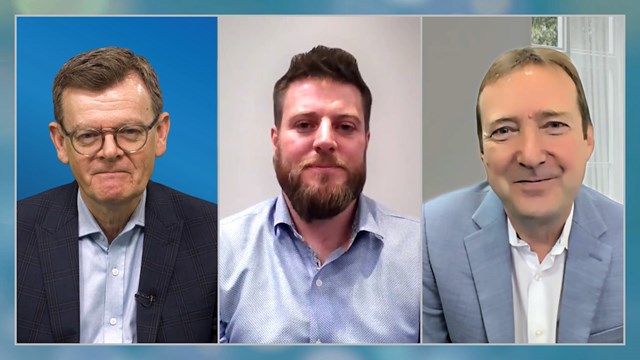
In this DSP Leaders World Forum session, experts from NTT Docomo, Jersey Telecom and Veon Group examine how telcos can shift from being peripheral players to central participants in financial ecosystems by leveraging their unique position with access to real-time signals, such as location, identity and device data. They suggest the two primary approaches are moving from connectivity into signals and financial ecosystem integration, or actively competing for position within the financial ecosystem.
Broadcast live 20 May 2026
Participants

CO-HOST
Lasha Tabidze
Group Chief Digital Operations Officer, VEON

Alessandro Bovone
Chief Technical Officer, JT Group

Itsuma Tanaka
President & CEO, Docomo Communications Laboratories Europe GmbH