- OpenAI is reportedly developing an AI smartphone
- Verizon makes a positive start to the year
- KDDI is to expand its D2D roaming reach
In today’s industry news roundup: OpenAI is reportedly working with chip giants Qualcomm and MediaTek on the development of an ‘AI-first smartphone’; Verizon breaks a 13-year bad streak in its first quarter; Japan’s KDDI is to offer its direct-to-device (D2D) service users the chance to use the service in more overseas countries by the end of 2026; and much more!
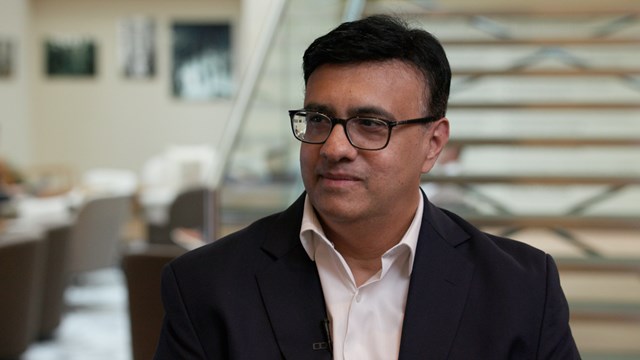
Apple, Samsung et al take note… OpenAI is reportedly aiming to develop its own “AI-first smartphone” and has enlisted the help of chip giants Qualcomm and MediaTek to develop the underlying technology for the device, according to Ming-Chi Kuo, an analyst at TF International Securities. Kuo, who reported the plans in this post on X, expects mass production of the OpenAI device in 2028. He stated in his post: “Only by fully controlling both the operating system and hardware can OpenAI deliver a comprehensive AI agent service. The smartphone is the only device that captures the user’s full real-time state, which is the most important input for real-time AI agent inference.” He added: “OpenAI’s advantages lie in its consumer brand, years of accumulated user data, and leading AI models. Smartphone hardware is already highly mature, so OpenAI can work with the supply chain to develop the device. On the business model side, OpenAI may bundle subscriptions with hardware and build a new AI agent ecosystem with developers.”
Verizon published better-than-expected first-quarter numbers on Monday, reporting a 2.9% year-on-year increase in total operating revenues to $34.4bn and a 6.7% increase in adjusted earnings before interest, taxes, depreciation and amortisation (EBITDA) to $13.4bn. And whatever the still relatively new CEO Dan Shulman is doing in terms of his new strategy to focus on customer value and experience, it seems to be resonating with consumers, as Verizon reported postpaid mobile phone customer net additions of 55,000, the first time the operator has reported such a gain during the first three months of the year since 2013. “Our first-quarter 2026 results show that our turnaround is not only progressing, it is gaining momentum," stated Schulman. "We are beginning to reclaim our market leadership by putting the customer at the centre of everything we do, reducing friction to increase loyalty and create genuine value. This disciplined approach is already delivering healthier economics, lower churn, and the first positive first-quarter postpaid phone net adds we've seen in over a decade. Given our strong performance and momentum, we are raising our 2026 adjusted EPS [earnings per share] guidance to year-over-year growth of 5% to 6%.”
KDDI is to expand direct-to-device (D2D) service roaming to three additional territories this year, having already launched such an offering for the US market in partnership with T-Mobile US. The three new markets where KDDI’s customers can use the au Starlink Direct service overseas are Canada (in partnership with Rogers Communications) starting in June, the Philippines (in partnership with Globe Telecom) by September, and New Zealand (in partnership with Spark) at an undetermined time later this year. All of the operators have Starlink as the satellite constellation partner that enables their D2D services.
Rob Shuter, whose telecom sector CV includes leading executive roles at Vodafone Group, MTN and BT Group, has resigned as a board member of Dutch national operator KPN “in light of his other commitments”. That appears to reference Shuter’s recent appointment as an executive advisor at private equity giant KKR, where he will support the investment firm’s digital infrastructure investment activities across Europe. Those activities include investments in fibre-to-the-home (FTTH) operations in the UK, Norway, Italy, Spain and the Netherlands, where KKR is the majority shareholder in wholesale fibre broadband network operator Open Dutch Fiber, which now passes 1.5 million homes across the country.
Google is to invest up to $40bn in AI developer Anthropic, with $10bn being invested now and up to $30bn later dependent on certain targets being hit, the companies have confirmed (following an initial report from Bloomberg). The relationship between the two companies is already close: Earlier this month, Anthropic announced it is taking “multiple gigawatts of next-generation TPU [tensor processing unit] capacity” from Google and Broadcom that it expects to start being used next year as demand for its Claude AI models grows to “unprecedented” levels and drives ever-higher revenue levels; and Google is one of the few companies to get its digital hands on Anthropic’s latest frontier large language model (LLM), Claude Mythos, which reportedly has next-level AI capabilities that can’t be allowed to fall into the hands of ‘bad actors’.
– The staff, TelecomTV
Email Newsletters
Sign up to receive TelecomTV's top news and videos, plus exclusive subscriber-only content direct to your inbox.