DSP Leaders Report panel examines cloud-native telco deployment progress

By Guy Daniels
Jun 19, 2026
To embed our video on your website copy and paste the code below:
<iframe src="https://www.youtube.com/embed/domjmDXxgD0?modestbranding=1&rel=0" width="970" height="546" frameborder="0" scrolling="auto" allowfullscreen></iframe>
Hello, you're watching TelecomTV and our coverage of the DSP Leaders Report series. I'm Guy Daniels and today's discussion looks at some of the highlights from our most recent report, Cloud Native Telco Strategies. If you're a registered viewer of TelecomTV, you can download the report now — there is a link in the text below this video. The report features detailed cloud native telco strategy insights from leading operators
(00:41):
BT Group, Deutsche Telekom, Orange, Rakuten Mobile, SK Telecom and Swisscom. And now that we have published the results, it's the perfect time to discuss our findings with our special guests. So joining me now on the programme are Neil McRae, who is Chief Technology and Information Officer for CityFibre, Paul Miller, Chief Technology Officer at Wind River, and Frances Hassen, Principal Analyst with Appledore Research. Hello, good to see you all again. Thanks so much for joining the programme. Now, we're going to focus on some specific points that came out of our research and I'd like to start with maturity. Just how mature is the cloud native telco ecosystem in 2026? Are all the pieces in place now? Does the operator community have a good in-depth understanding of what it actually takes to become a cloud native telco? So, Paul, it's a question we've asked a few times now, but here in 2026, what's your take?
Paul Miller, Wind River (01:51):
Yeah, thanks, Guy. I think it's really interesting. If we asked this question a few years ago, we'd get a very different answer. But now we have individual operators that have tens of thousands of cloud native nodes deployed and operating for years. So the technology and the ecosystem has reached a very high, stable rate of production and availability. The ecosystem has come together, as you asked, with respect to multiple vendors that provide applications on that type of infrastructure, deployed in a very high-availability manner with high quality results for customers.
(02:23):
So from a technology platform perspective, cloud native is de rigueur now. Nobody would deploy a cloud technology in their infrastructure without making it cloud native. The challenge that we still see is really on the operational side — the scaling up of the individuals who have to understand things like Kubernetes and virtual networking and some of the more esoteric software concepts that cloud native brings to bear. It's really about the personnel within the service provider and the services that can be brought to them to help them ramp up that skill level. So I think we're still learning there, but the technology is well-deployed and very
(02:56):
stable.
Guy Daniels, TelecomTV (02:58):
Great. Thanks very much, Paul. And we'll come on to some of those areas in more detail later in the show. But Frances, I'll come to you next. Do you think telcos now have a better and deeper understanding of what it takes?
Frances Hassen, Appledore Research (03:08):
Yes, I think they're very much in a place where, as Paul said, the technology is very much solved. I think the challenge — again repeating Paul — is an operational one. Cloud native is really a very fundamental change in the way you operate and deploy
(03:30):
networks. And I think it's almost worth stepping back a little and saying that cloud native at the end of the day is really a software architecture, and it's that software architecture that allows us to do things differently in our methodology of delivering it. I think a lot of the challenges become ones where the methodology doesn't keep pace — you're deploying something that is inherently potentially more complex, certainly much more rapid and
(04:02):
agile. But if you're still running it against the original business requirements and you're not leveraging that ability, often some of the challenges become those things of complexity and understanding what is going on. And I think a lot of the ability to make that next operational step is to tie the business benefits to what we can achieve with cloud native, rather than just a sort of badge-level achievement of cloud native in networks.
(04:34):
A final point I'll make is that cloud native isn't necessarily a uniform thing across the network. There are places — and we'll come on to this — where cloud native is very, very relevant. Other areas of the network, maybe it's not as relevant or not such a high priority. So we need to see a spectrum here.
Guy Daniels, TelecomTV (04:55):
Yeah, absolutely, Frances, and we will come on to that a bit later. Neil, you've been closely associated and involved with cloud native methodologies and approaches for a number of years now.
(05:05):
Do you think more telcos are now familiar with what it takes to become cloud native, and are all the tools and pieces there for them?
Neil McRae, CityFibre (05:13):
Yeah, absolutely. I mean, I started working on cloud native — although I didn't call it that — after the Olympics in 2012. So it's been a long journey, but it's been a hugely valuable one. I think the thing that I take away from that journey is this: amazing companies like Wind River, HPE and others have done a great job of literally being able to build a cloud
(05:40):
infrastructure that can deliver as your telco delivery platform. But I want to build on the point that was just made. In AI, we're hearing a lot about rewiring your business to drive AI. Well, actually, the same is true from a cloud native perspective. Cloud native gives you an instant way of getting things out there — through pipelines or through other methodologies that make deployments less risky, or where you can
(06:15):
fast-fail and rebuild. And I still think we've got a little bit of that rewiring to do in our teams. But I see it coming. We do network upgrades in mobile by firing up a new instance and migrating customers to it. Before, that was: stop the network, upgrade the network, restart the network. We don't have that anymore. And in a world where we want to make more and more of our customers dependent upon the network so that they can run their businesses and lifestyles, that's a crucial change.
(06:51):
And I think it's something that the hyperscalers and the cloud companies — and particularly Google, actually — have done a great job of sharing that technology with us and the ways of working around it. And it's put us in a great place for the next wave of telco services because we've now got a foundation for delivery. If I compare it to the good old days of telephony, this is akin to the IN platform that we used to use to programme all the weird stuff into voice.
(07:23):
We've now got a platform that allows us to do the same for today's telecom services.
Guy Daniels, TelecomTV (07:28):
Thanks very much, Neil. This is all good, positive news, and it's really pleasing to hear after following this for so long. I'd like to move on to one of the key findings from the responses we had to this report, which is that brownfield operators that have had to plot a transition from traditional telco infrastructure and siloed domains have started their cloud native journeys really
(07:54):
with a focus on core platforms. Does this focus on core platforms align with what you're seeing across the telco sector in general? Frances, I know you look at this very closely. Does this align with what you see?
Frances Hassen, Appledore Research (08:05):
Absolutely, Guy. I think we've been talking about cloud native architectures, certainly in our reports, for at least eight years, and there are very, very strong drivers for cloud native architectures for
(08:25):
core. And I don't think that should really be a surprise. It's probably the closest area in a network where you could describe it as almost the network application layer — the exposure layer. It's the place where you develop new customer engagement, new services, et cetera. It's probably the area that really benefits most from the flexibility of cloud native, the scalability of it — you develop a new service, you want it to scale.
(08:58):
Cloud native is your ideal vehicle for that. So I don't think it's any surprise that core is where this technology is being deployed first. It's probably also the lowest-risk domain to deploy in — it's at the higher layers of the network, and it's a much more flexible area in terms of 5G refresh cycles as well. So, yeah, it's the obvious place to start in a mobile network
(09:30):
and we shouldn't be surprised that it is leading the way with cloud native.
Guy Daniels, TelecomTV (09:38):
Great. Thanks, Frances. So, as you say, an obvious place to start for all those reasons. Neil, does this chime with what you see?
Neil McRae, CityFibre (09:44):
Yeah, absolutely. And the great news for me is that at CityFibre, we don't have any legacy. We're a modern technology telco. So I'm able to buy off the shelf a platform, whereas before I had to build it. And that was hard — in terms of skills, in terms of technical knowledge.
(10:03):
And that is really allowing us to take advantage very quickly and to use this as a platform for change and a platform to optimise things. Obviously, mobile core has been a software application for some time — it's been running on appliances, but ultimately software for some time. So migrating that to this model is a positive one. But quite often when we talk about cloud native, people just think about servers and
(10:37):
compute. Part of the cloud native philosophy, from my perspective, is how you weave that into the network and make the network dynamic. And that applies to all providers of telecommunication services — around QoS, around capabilities, around security, around delivering different workloads in different locations. So I really think that whole on-demand piece of this is going to
(11:07):
be the engine that powers telcos into this new service world. And this is the platform that's really going to deliver that.
Guy Daniels, TelecomTV (11:13):
Great. Thanks very much, Neil. And Paul, I know you wanted to come in on this question as well. You know, our researchers said that core platforms are the ideal place to start and that's where we're seeing a lot of activity. Does this align with what you see?
Paul Miller, Wind River (11:23):
Well, I may be a bit of the odd man out, but it actually doesn't match what we see.
(11:38):
Cloud native started back in 2014 with the release of Kubernetes and container technology. And we've actually been in active production deployment — carrying production traffic — for over six years now with highly scaled cloud native networks. That deployment started in the RAN. And the reason for it is what you asked about with the brownfield versus greenfield situation. Coming out of the NFV days where we were moving the core of the networks over to cloud technology — which was heavily based on OpenStack technology and virtual machines — that got fully built up and there was a lot of capacity there.
(12:11):
And so when the next layer of virtualisation got deployed, which was really in the RAN, people looked around for the technology they should use there and it was cloud native — Kubernetes and container technology. And so we saw that even in a brownfield context, because when you're going from 3G to 4G to 5G, it's really a greenfield deployment. You have the ability to learn that new technology and deploy it at the far edge of the network, bring it up at scale, and develop the expertise in your teams. Where I would agree is that in 2026, as we sit here today, the core is where that deployment is really starting.
(12:44):
And the reason is that the applications that were previously virtual machine-based have finally started to be modernised in the core of the network — IMS core, 5G core, UPF — these types of telco applications are finally being modernised. And as they're being modernised, they're being moved to a cloud native containerised implementation. And so we are seeing that core deployment now. But absolutely, it started where the service provider could most easily deploy at high scale. And that was the RAN.
Guy Daniels, TelecomTV (13:15):
That's probably because you were so far ahead of everyone else there, Paul. That's probably the reason why. But it's good to see that the core is prevalent now. The report also showed that it's not just about technology, and that the major challenges facing telcos who are adopting cloud native operations are rather more linked to how they adapt the way they operate and work on a daily basis. So how big a barrier is this for telcos, especially as they've got to maintain traditional operations while they go through this migration process?
(13:47):
Frances, what's the people angle here on the operational side?
Frances Hassen, Appledore Research (13:52):
The simple answer is yes — the challenge is operational. I think we need to understand that there are really two very contradictory methods and methodologies we're dealing with. Cloud native is a fundamental change to the way telcos operate, deploy software, and manage that software. It's also — to use a simplification — we're used to networks where we treat servers as pets, caring for them with five nines uptime in mind.
(14:27):
Cloud native is all about the cattle approach — where you destroy and bring them up again. So there's a whole set of behaviours tied to nurturing a network, which is the way we built things up, that are contradictory to the cloud native way. And that's pretty fundamental. It's not just the processes — it's also the willingness to take risk.
(14:59):
So I think the important thing is to say that whilst the operational challenges are the key ones, it's about bridging those often-duplicated processes, the cultural friction between processes, the risk processes — even at the level of procurement processes — because quite often in cloud native, if you're really going to benefit from it, you're going to be looking for multiple suppliers. And those multiple suppliers need to be tested together.
(15:32):
If you've worked in telco, you're used to endless lab testing before you deploy. That's a very different methodology to the cloud native approach. So I think we're going to see that tension for some time. I will come back to my earlier point, which is: the more it can be tied to what the business is actually trying to do, rather than just "I want to be a cloud native network" —
(16:02):
if I can tie it to that, and make it very clear that the operational processes I have within my existing network do not deliver that, that's the point at which you can drive organisational and process change.
Guy Daniels, TelecomTV (16:17):
Great. Thanks, Frances. And Paul, adapting the way they operate — identified as a significant barrier in our report. What are your thoughts?
Paul Miller, Wind River (16:24):
Yeah, I couldn't agree more, and I agree with everything Frances said.
(16:33):
Certainly the pets versus cattle situation has been a major shift for a lot of people. The challenge on the operational side came once the technology got stable and achieved high availability and a rich feature set. The real challenge came from an operations team that was used to a monolithic deployment from a single provider of technology — vertically integrated hardware, applications, infrastructure and so on. One of the challenges we had as a business for many years was taking the new cloud native architecture, which involved multiple vendors in an ecosystem — hardware coming from vendor A,
(17:07):
software from a vendor like ourselves, applications coming from multiple vendors — all coming together in the network and having to deploy and operate that. We found the challenge came when being compared against the legacy system during a network upgrade. You're three months into that upgrade and it's too slow — you had to match the same performance that the legacy equipment had in performing field upgrades and maintaining deployed systems. So what I'm really talking about is day-two operations. The initial technology looks good, the selection and deployment goes well — now you've got to live with it.
(17:39):
And so it took us years to build the automation and features like, for example, software pre-staging in a node so that you could distribute the software upgrades and then push a button and have a very minor service outage if you had to restart your applications. Doing things like that made the cloud native implementation more like the classical telco experience from a service outage, capability and high-availability perspective, and gave our customers the ability to maintain and deploy these systems at very, very high scale. And that took years to work through the system so that we now have cloud native technology that is operationally friendly.
(18:15):
And that really happened because the service providers leaned in to their technology partners and said: look, this technology is great, we're getting the commercial benefits we want, the time-to-market benefits are great, but we can't operate it. And so that was the second wave of improvements in the systems — really supporting the operations piece.
Guy Daniels, TelecomTV (18:40):
Okay, Paul, thanks for that. Having downplayed the role of technology, technology does, of course, still play a major part in cloud native telco strategies.
(18:46):
Have we reached the stage now where telcos can be confident of deploying and running their own telco cloud platforms using the hardware and software that delivers this greater overall efficiency that we're all calling for? Neil, are we at that stage now?
Neil McRae, CityFibre (18:58):
I think we are 90 to 95% of the way there. And the gap is when we really get to high-performance workloads, where the hardware — although we're trying to abstract it — there are certain aspects where we're offloading some of the workload to a specialised network card,
(19:25):
or in the future, maybe AI RAN or a RAN accelerator. And I think there's still some work to do there to make that a smoother journey. For something like 5G mobile core, I would say it's got to the place where it's literally plug and play. And in order to move in that direction — which is good for the vendors, because it's easier for them to build services that way — many of those vendors are providing the tools to run and operate the network.
(19:56):
But it does require you to engage and allow your engineering and operations teams to figure out how this works in this new world. But there is still a percentage of workloads where we have some work still to do. I think as workloads grow and the scale of what we can do on a platform grows, maybe that won't be an issue in the future.
(20:27):
But it's still an issue today — thinking about DPDK-type stuff, where there is a standard, there is a methodology, there's a set of ways of doing this, but people interpret them slightly differently, which means that when you hit 100% load — when Fortnite releases a new update and the network's really busy — you've got to be fine-tuning it for that. Or if you're in a stadium and you're trying to optimise, you need to be sure that it's going to work reliably in every kind of use case — be it at night time when you're powering things off, or during the day when you've got heavy business users that need the network just to work without question.
Guy Daniels, TelecomTV (21:09):
Great, that's really interesting, Neil. So we're narrowing in on those last few percentage points there. Frances, I'll come to you in a minute, but Paul, I'll come to you first for your thoughts.
Paul Miller, Wind River (21:18):
Yeah, thanks, Guy. I'd add a word of direct experience here. The answer is absolutely yes — totally ready. We've got networks now that have been running for years with many tens of thousands of nodes. We had networks last year run with those tens of thousands of nodes in excess of six nines, and in fact some at 100% availability. As Neil mentioned, performance is a key consideration.
(21:42):
The technology has gotten to the point where the accelerators are there. The overhead of the platform has been minimised to release the cores for the guest applications to the maximum potential possible. We're down to a single core of overhead, for example, in our cloud technology. So extremely mature, extremely highly available — it's almost push-button to deploy. And that applies to everything from core, near edge, RAN, MEC — pretty much any application you need to deploy can be deployed on cloud native today. It's a very, very mature landscape. As we've talked about today, the gap is really about a service provider starting to do this, learning their skills, and bringing services teams in to help them.
(22:20):
The operations piece is a bit new, but the technology is rock solid and totally there.
Guy Daniels, TelecomTV (22:26):
Great, thanks, Paul. It comes back to our first question on maturity there. Frances, I promised to come across to you as well. What are your views?
Frances Hassen, Appledore Research (22:34):
I'm going to take a slightly different approach here. I think absolutely the technology is delivering it — telcos can definitely run the cloud. Actually, the biggest challenge to telcos running their own cloud is not the technology. It's not even the operational processes. It's potentially the procurement and what I would term the insurance of these systems.
(22:52):
Quite a lot of people still want vertically integrated solutions — they want a single throat to choke. And quite a lot of this comes down to: running the telco cloud means taking that risk on yourself as a telco, rather than passing it off to an integrated supplier. I think a lot of it actually comes down to what are the benefits versus the safety-first instinct, which is: I have a single person or vendor that I've effectively outsourced the problem to.
(23:25):
I think also — to build on Neil's point — the opportunity of running a telco cloud is really in this esoteric network interface-level work. That's where the expertise in telco lies. And maybe that's the place where a telco cloud is differentiated from a general cloud out there.
Guy Daniels, TelecomTV (23:41):
Thanks very much for those additional views there, Frances. We've been talking about cloud native telco strategies,
(23:55):
but of course, the whole industry is now talking about becoming AI native. Do telcos need to be cloud native before they can even contemplate becoming AI native? Paul, I think I know what you're going to say — but let's hear your views on this.
Paul Miller, Wind River (24:08):
Well, I might surprise you a little. I think technically the answer is no — you could run an AI application in a virtual machine. But I would say that's not the way 100% of the software development world is building things.
(24:26):
They're using very modern approaches. So, for example, in our orchestration environment, we have the ability to dynamically update the container of the application separately from the AI model that's running on the system, and then dynamically update that model as the system learns from the deployed data, through analytics coming back from the system. So effectively the answer is yes, but really it's because modern software development and DevOps is using a concept called sense, think, act, and optimise. And the optimise piece is key — where you're collecting data from that edge system,
(24:58):
adjusting your AI model, and redeploying it to the system. That kind of virtuous loop of software development really is best enabled with cloud native principles. And we certainly see that. The other thing is that AI in telcos is really showing up in two areas. One is inference-based workloads — the actual execution of an AI application, typically used for dynamic beamforming or some advanced manipulation of traffic or networking. And then from the operations piece — the ability to run agentic AI in the core,
(25:29):
to automate API controls and reporting and analytics, to help people debug problems that are happening in the network in real time. These are the two areas where we're seeing AI deployed. Obviously, the greatest impact we're seeing is at the hardware layer, where people have to obtain the accelerators to run these things at scale — that's a bit challenging from a supply chain and operations perspective. But we're already in early days. So in effect, the answer is yes: you need to be cloud native to align with the modern software methodologies, and that's how it's being used in telco today.
Guy Daniels, TelecomTV (26:02):
Thanks very much, Paul. And Frances, do we have to become cloud native before we move to AI native?
Frances Hassen, Appledore Research (26:09):
I concur with Paul in terms of AI native definitely wanting to leverage the benefits of cloud native for scale. I think, as Paul already noted, it's perfectly possible to deliver AI on a virtual machine — telcos are already doing that. But the challenge again
(26:33):
is that if you've got a stable use case, you're quite limited — maybe to a root-cause analysis-type application. That type of AI is already being deployed in networks without cloud native. But if you want it to scale and become network-wide, that's where the cloud native underpinning becomes very, very key. The second point I'd make — and I'll go back to my original point from the beginning — is: what is the business actually trying to do?
(27:05):
I think these terms, both cloud native and AI native, are useful, but they need to be tied to what we're trying to do in the business. What does AI native do for us? Because it's that which will actually deliver the operational change and the changing mindset. AI changes the mindset of how you use things, how you go about things — just as cloud native does. And that ability to tie it to where the business wants to be in the future
(27:36):
will bring that strong story of why we're doing AI native and why we need cloud native underpinning it.
Guy Daniels, TelecomTV (27:43):
Yeah, nicely said. Frances, thanks very much indeed. Neil, we're almost out of time on the programme — this is going to be our last question. So I'm going to come to you for some final thoughts. As telcos look at AI and this move towards being AI native, is this a continuation of these existing cloud native strategies that we've been talking about?
Neil McRae, CityFibre (28:08):
I think it's an enhancement. In a presentation I did back in 2013, we had this cloud native view and we were using Mesos — which is what saved Twitter every time they ran out of capacity. That's when the cloud native movement really started. We were testing it to see if we could make it work in telco, and we were able to. And I think what was at the centre of that was a picture of a brain.
(28:44):
And all the pieces around the brain — network controls, network security, provisioning, automation — we understood all of that. But the piece that we were missing was the brain. We were doing some machine learning things with it, and then AI came along and in my mind provided a pivotal change in how we think about running our networks and servicing customers. Do you have to be cloud native for AI?
(29:14):
It's helpful. I don't think it's absolutely required, especially when a lot of telcos are using SaaS — which may already be cloud native — and adding AI capability every day of the week. From my perspective, one of the biggest opportunities in AI is all around task and process improvement, so that when a question comes in and you answer it manually, the next time you answer it with AI, or you use AI to improve the task or the process that you're doing.
(29:46):
And I think that's overlooked. But ultimately, cloud native was to get to the place where the hyperscalers have been for the last 20 years — they just run everything with very few people. That's where we need to get to, but also bringing the reliability that we in telco are superstars at. So yes, it's a build on that. It's one of the key missing pieces. I still think we're just out of the egg with AI. I think there's so much more exciting stuff to come
(30:17):
that's going to help us run our networks and provide customers with the service experience that we've dreamed about for years — almost being able to turn a network on instantly, having a new workload that negotiates the network it needs and builds that network literally on demand, without anyone having to do anything. For me, that's where the future is headed. And I have this belief that the better we make the network, the better all the applications become on it
(30:49):
and the more people need more network. And that means pushing the boundaries on cloud native so that literally, if we've got capacity we need to add, it just happens — it's fully extensible and fully elastic so that people can just get on and do the things they need to do. I think the big question for me is: what happens to the business model in this world? How do we trade with customers in a world where we're much more elastic,
(31:22):
much more on demand? I don't think we're thinking about that enough, because we potentially might be leaving some value on the table. And that's something we need to consider — we've had this kind of annualised or subscription-based model. Is that the right model for this? I'm not sure. And I have to believe that with the kind of change we're going through, surely the economic model needs to change with it. And for me, that's one of the more exciting parts
(31:53):
of this future over the next couple of years.
Guy Daniels, TelecomTV (31:58):
Great. Thanks, Neil. Yeah, there's a lot to come, a lot more for us all to consider, and a lot more cloud native still to come. But we've got to leave our discussion there for now. Thank you all very much indeed for taking part in today's programme. Now, if you haven't already done so, please go ahead and download the DSP Leaders Report — it's available now to all registered viewers of TelecomTV.
(32:24):
And as a reminder, the report features detailed cloud native telco strategy insights from BT, Deutsche Telekom, Orange, Rakuten Mobile, SK Telecom, and Swisscom. And don't forget to register for our flagship cloud native telco online summit, which will take place later this year in October. The link is below this video. For now, though, thank you for watching and goodbye.
Please note that video transcripts are provided for reference only – content may vary from the published video or contain inaccuracies.
Sponsored by:

Panel discussion
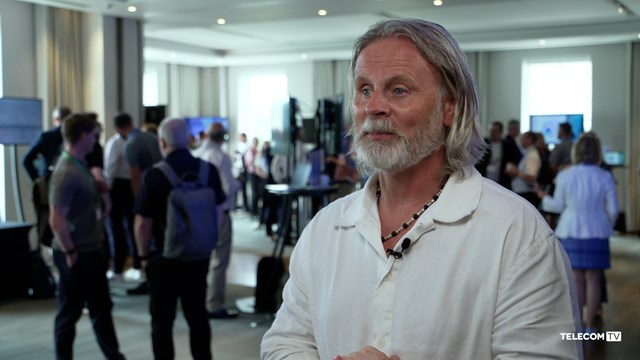
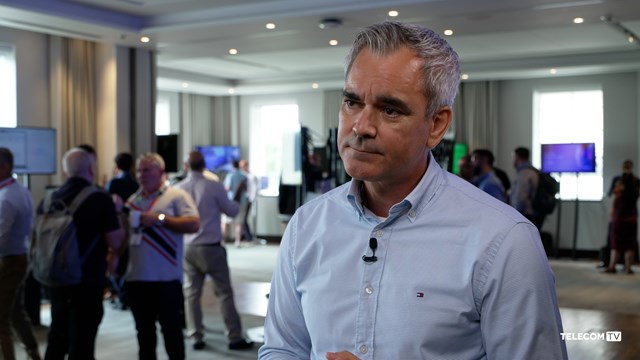
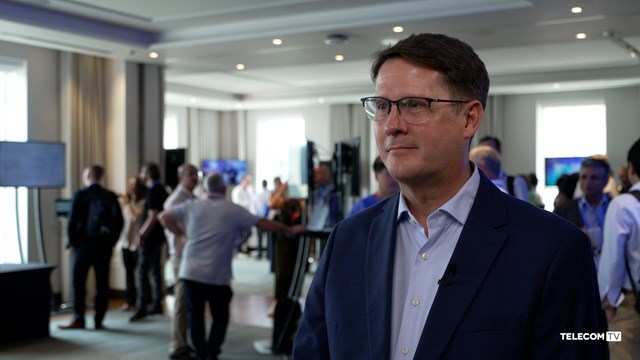
A panel of technology leaders from Appledore Research, CityFibre and Wind River examines the current state of cloud-native telco strategies, revealing that the technology ecosystem has reached production stability with operators deploying tens of thousands of cloud-native nodes. However, significant operational challenges remain, as telcos must adapt their working methodologies, develop new skills around Kubernetes and virtual networking, and manage the cultural shift from traditional ‘pets’ to cloud-native ‘cattle’ approaches. The discussion highlights how brownfield operators are focusing their cloud-native journeys on core platforms, which offer the lowest risk deployment domain and greatest flexibility for new service development.
Featuring:
- Francis Haysom, Principal Analyst, Appledore Research
- Neil McRae, Chief Technology and Information Officer, CityFibre
- Paul Miller, Chief Technology Officer, Wind River
To download the report - register using the form on the right