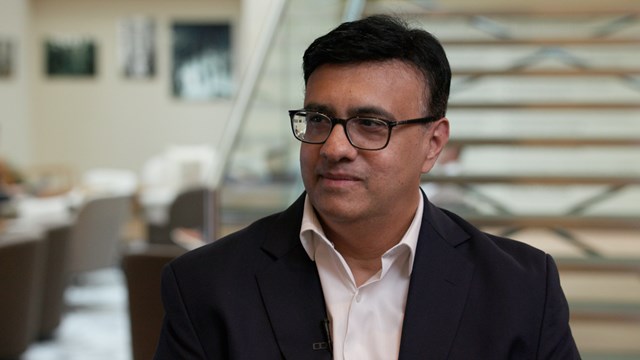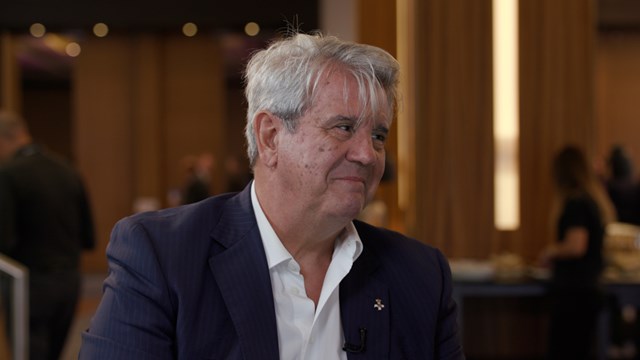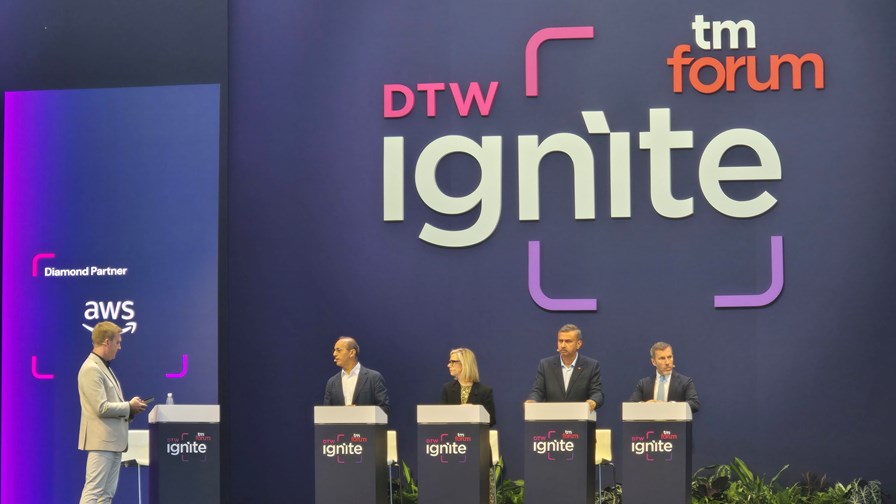
- Speakers from TIM and BT highlighted the role that trust is playing in their strategies
- TIM CEO Pietro Labriola says telcos need to build a “trust ecosystem” in the AI era
- BT Consumer chief Claire Gillies explained how AI is building customer trust
COPENHAGEN – DTW Ignite 2026 – Trust topped the agenda during the opening keynote here at the TM Forum’s annual event in Copenhagen, as operators set out the vital role AI is playing in the industry’s future.
Speaking as part of the keynote, TIM CEO and managing director Pietro Labriola outlined how the Italian telco giant is focused on building a “trust ecosystem” which positions itself as a vital, trusted connectivity partner, as concerns about digital sovereignty and AI usage grow.
“Without connectivity you have zero cloud, and with zero cloud you have zero AI. But connectivity is no longer enough,” he added. “We are moving from connectivity to trusted digital infrastructure.”
This is built on a “trust ecosystem” where speed is “not enough”, he explained. Customers are not asking how fast a connection is but how much they can trust the connectivity and the solution. As AI usage grows, this becomes increasingly important, especially for enterprises, noted Labriola.
TIM owns 417 datacentres, eight of which are Tier 4. The company also owns a significant backbone in Italy, although the operator is in the process of selling its subsea cable and international infrastructure unit Sparkle to a consortium made up of Retelit and the Italian government. TIM itself is currently the target of a major €10.8bn voluntary public takeover bid that was launched by the state-backed Italian postal and financial services group, Poste Italiane.
He also shared his thoughts on sovereignty and the growing demand from businesses, governments and even some consumers to understand how their data is being managed. TIM has positioned itself at the centre of Italy’s digital sovereignty strategy. Earlier this year, it announced a major partnership with Microsoft to drive innovation and digital sovereignty in the country.
In a complex geopolitical environment, sovereignty is almost becoming “a bad word”, claimed Labriola, but businesses increasingly want to understand where their data is stored, processed and under what jurisdiction those partners are working.
“When we talk about digital sovereignty, we are not talking about isolation, we are talking about the need to control things.”
AI trust
Trust is also playing a vital role in BT’s strategy, especially when it comes to the consumer market, explained Claire Gillies, CEO of BT Group’s Consumer unit. Speaking on the same panel as Labriola, Gillies, who joined BT from Bell Canada last year, said that in a competitive market like the UK, trust is vitally important if a company is to stand out.
She set out BT’s goal: To become “the UK’s most trusted national infrastructure provider” instead of “just a connectivity provider”.
“As we look at where infrastructure and telecom sit in consumers’ lives today, it is at the heart of almost everything we do personally and professionally, whether we are working, gaming, monitoring, playing – we sit at the core.”
This, however, poses a big challenge for telcos, she added, because consumers expect networks that work flawlessly, everywhere they go, no matter what time of day.
This is expounded by regulators and politicians who continue to put pressure on operators around affordability and accessibility. Last week, former Armed Forces minister Tom Tugendhat, MP for Tonbridge in London’s commuter belt, branded London’s connectivity “worse than Kabul 10 years ago”.
Gilles claimed AI will play a key role in helping BT achieve its goal. “AI can help us unlock new potential,” she added. “It helps us not only drive down costs in our business but also to create unique customer value that can drive us back to growth in the long-term and sustainable way to support the investments we’ve made in our network.”
She highlighted five customer value opportunities that leverage AI and, according to Gilles, will help the UK incumbent build trust with its consumer base. These are AI TV search (for EETV), call centre handling, next-best action, self-healing networks and scam protection.
She revealed that BT’s AI scam protection has already blocked more than 200 million scam messages.
“AI is embedded across every area of our business and it is allowing us to make changes at scale,” said Gilles. “It allows us to solve customer problems and that is at the core of everything we do.
“Trust is not a soft brand asset for BT. It’s a commercial driver. It’s something that’s fueling us to drive back to growth, to understand our customers’ needs, to protect them, and to anticipate what they’re looking for next.”
- James Pearce, Contributing Editor, TelecomTV
Email Newsletters
Sign up to receive TelecomTV's top news and videos, plus exclusive subscriber-only content direct to your inbox.