Netcracker on why AI is a business process, not an IT project

By Tony Poulos
Oct 2, 2026
To embed our video on your website copy and paste the code below:
<iframe src="https://www.youtube.com/embed/P3a4oOxxArA?modestbranding=1&rel=0" width="970" height="546" frameborder="0" scrolling="auto" allowfullscreen></iframe>
Tony Poulos, TelecomTV (00:08):
Hi, I'm Tony Poulos and I'm at the Telco AI Native Forum in Dusseldorf. It's a TelecomTV event. And with me today is Ari Banerjee, who is the chief strategy officer at Netcracker Technology. Ari, welcome. Good to catch up. Look, the NEC Netcracker acquisition of CSG has happened and it represents a major strategic moment, not just for the company, but for the broader telecoms industry because you're two very large players. But from your perspective, what value proposition can the combined company bring to the market?
Ari Banerjee, Netcracker Technology (00:40):
Look, Netcracker and CSG, the acquisition is one of the largest acquisitions in the history of BSS / OSS or Telecom IT. And this is very significant for the market. And for us, the thing that we want to bring to the market is an end-to-end AI native digital platform that touches upon autonomous operations. So network level, the resource level, the service level where orchestration and operations happen, the monetisation angle as well as customer engagement. So bring that whole life cycle together with AI on top of it to make the AI the operational layer, which runs across the entire value chain in the business process of the operators. Now remember, this is not just a play for the telecom industry. Of course it is. We have 250 plus customers. CSG has a whole bunch of customers like North America, very dominant there, but it's also a fantastic platform and an AI platform from the enterprise segment as well.
(01:37):
Formula One, CVS, Walgreens, JP Morgan, you name it, Chase, they're all customers of this combined Netcracker and CSG. So together I think it's a compelling and a very comprehensive AI native digital platform play for the market.
Tony Poulos, TelecomTV (01:54):
Well, we're at an AI native telco event and everyone's talking about becoming AI native. Yet many operators remain stuck with disconnected AI pilots. There seem to be so many of them happening. What's the biggest mistake operators make when trying to industrialise AI and what must they do differently to scale AI from experimentation into a real business market?
Ari Banerjee, Netcracker Technology (02:17):
Look, the biggest mistake that we see the operators making is that treating AI projects as an IT project. It's really not an IT project. It's a business process. It should be treated as a business proposition. It should be a business problem to be solved. And the small AI pilots here and there doesn't really cut it, it doesn't bring the benefit that they're looking for. And then the disillusionment happens. Is that, okay, it didn't give me enough results because I used a copilot on the side, I used something on the side. It needs to be connected. Your whole AI native, your AI programme need to be connected to end-to-end business processes. It needs to connect to all the layers of your systems. It needs to bring that benefit so that it's not just looking at one small piece of the puzzle, but looks at it from an end-to-end standpoint.
(03:03):
So it's not about doing small AI pilots, it's about rethinking the approach to our AI and making your organisation DNA change into a much more effective AI native organisation. Reskilling, training of your people, workforce management, rethinking how you deploy your solutions, rethinking how you use AI end-to-end across business processes. And all of these things will play into it to make it a much more success.
Tony Poulos, TelecomTV (03:30):
Given Netcracker's view of cost and revenue data, what do operators really have and what's missing from the AI business case?
Ari Banerjee, Netcracker Technology (03:38):
Let me tell you what operators have. They have a lot of data. They do have a lot of data. If you look at network systems, BSS and OSS and tons and tons of PowerPoint presentations from consultants who have come and said, "We're going to give you this hundred use cases that you're going to use it." What they're missing is really to be able to tie it all together, stitch it together to make it comprehensive with business outcomes. At the end of the day, nobody cares about technology. The board, the C-level, the market, they care about business outcomes. And the point is to how do you make that happen? How do we do that effectively? We at Netcracker, our point is to create that orchestration layer, the layer that enables this whole formation of how you can evolve from where you are today to the next level, to bring the right data in place and to process it correctly and to create the right agentic AI use cases, and that drives the business forward with KPIs and business benefits.
Tony Poulos, TelecomTV (04:39):
Well, it brings me right into the agentic AI argument because it's getting a lot of hype at the moment. Agentic AI here, agentic AI there. Where do you see it moving beyond chatbots and copilots?
Ari Banerjee, Netcracker Technology (04:51):
I think it has to move beyond just prescribing and providing an input to really becoming outcome driven and creating an action. By the way, you can't kick out humans out of the loop. You got to bring that into the loop as well. It's about business processes, about governance, it's about human in the loop, but you have to do it much more action oriented. So the agentic AI needs to create and close the business case to be able to do the right type of outcome that the business demands. And how can you do that in a secured way, in a governed way and so on? A human will be important because they're going to create the thresholds. They're going to look in the borderline. They're going to create at what point does a human needs to intervene into a process? All of that needs to be taken into account.
(05:36):
And the biggest thing, security, let's not forget. Yes, we are dealing with public data. We are dealing with private data. We are dealing with public data in cloud infrastructure. How do you govern data? How do you secure the data? How do you make sure that the valuable customer information does not get leaked into the World Wide Web? How do you do the obfuscation? You do the obfuscation of the data. That becomes very, very critical.
Tony Poulos, TelecomTV (05:59):
I don't know how people are sleeping at night worrying about all these issues, but the telecom industry has spent so many years modernising. We seem to be going over and over it again, modernising networks and digital channels. And AI is now forcing operators to rethink yet again the business itself, as you just mentioned. But where do you believe AI will create the biggest competitive divide between operators over the next three to five years, say?
Ari Banerjee, Netcracker Technology (06:24):
I don't think there's going to be an operative divide. What I think is that what the successful AI led operator or AI native operator will be the one who will embed AI into the DNA of the organisation. And when I say that, it's about not just about the IT level or the network level, but it's also at the organisation level. It's in their thinking. It's the way they have done business in the past. They need to rethink all of these to make this happen. This is not trivial. This is not easy. This takes a lot of effort, but that needs to happen. And only then you will have people who will say, "I don't care about AI within the organisation and I will not do anything with it versus people who are." I think that conversation's over. We know that we have to adopt AI.
(07:06):
Operators are being measured on their AI readiness. Vendors are being measured on AI readiness. RFIs and RFPs are demanding that vendors such as us to be AI ready because that becomes a gated criteria within the RFI process. But within the operators, they need to change their entire DNA so that it doesn't look like there's a divide, there's a unification.
Tony Poulos, TelecomTV (07:28):
Even more challenges for the industry as a whole.
Ari Banerjee, Netcracker Technology (07:30):
Absolutely.
Tony Poulos, TelecomTV (07:31):
We seem to go from one to another every year.
Ari Banerjee, Netcracker Technology (07:33):
Keeps us interesting.
Tony Poulos, TelecomTV (07:34):
Keeps us interesting. Ari, thanks for being with me today. It's been great.
Ari Banerjee, Netcracker Technology (07:37):
Thank you, Tony. Thanks for the time.
Hi, I'm Tony Poulos and I'm at the Telco AI Native Forum in Dusseldorf. It's a TelecomTV event. And with me today is Ari Banerjee, who is the chief strategy officer at Netcracker Technology. Ari, welcome. Good to catch up. Look, the NEC Netcracker acquisition of CSG has happened and it represents a major strategic moment, not just for the company, but for the broader telecoms industry because you're two very large players. But from your perspective, what value proposition can the combined company bring to the market?
Ari Banerjee, Netcracker Technology (00:40):
Look, Netcracker and CSG, the acquisition is one of the largest acquisitions in the history of BSS / OSS or Telecom IT. And this is very significant for the market. And for us, the thing that we want to bring to the market is an end-to-end AI native digital platform that touches upon autonomous operations. So network level, the resource level, the service level where orchestration and operations happen, the monetisation angle as well as customer engagement. So bring that whole life cycle together with AI on top of it to make the AI the operational layer, which runs across the entire value chain in the business process of the operators. Now remember, this is not just a play for the telecom industry. Of course it is. We have 250 plus customers. CSG has a whole bunch of customers like North America, very dominant there, but it's also a fantastic platform and an AI platform from the enterprise segment as well.
(01:37):
Formula One, CVS, Walgreens, JP Morgan, you name it, Chase, they're all customers of this combined Netcracker and CSG. So together I think it's a compelling and a very comprehensive AI native digital platform play for the market.
Tony Poulos, TelecomTV (01:54):
Well, we're at an AI native telco event and everyone's talking about becoming AI native. Yet many operators remain stuck with disconnected AI pilots. There seem to be so many of them happening. What's the biggest mistake operators make when trying to industrialise AI and what must they do differently to scale AI from experimentation into a real business market?
Ari Banerjee, Netcracker Technology (02:17):
Look, the biggest mistake that we see the operators making is that treating AI projects as an IT project. It's really not an IT project. It's a business process. It should be treated as a business proposition. It should be a business problem to be solved. And the small AI pilots here and there doesn't really cut it, it doesn't bring the benefit that they're looking for. And then the disillusionment happens. Is that, okay, it didn't give me enough results because I used a copilot on the side, I used something on the side. It needs to be connected. Your whole AI native, your AI programme need to be connected to end-to-end business processes. It needs to connect to all the layers of your systems. It needs to bring that benefit so that it's not just looking at one small piece of the puzzle, but looks at it from an end-to-end standpoint.
(03:03):
So it's not about doing small AI pilots, it's about rethinking the approach to our AI and making your organisation DNA change into a much more effective AI native organisation. Reskilling, training of your people, workforce management, rethinking how you deploy your solutions, rethinking how you use AI end-to-end across business processes. And all of these things will play into it to make it a much more success.
Tony Poulos, TelecomTV (03:30):
Given Netcracker's view of cost and revenue data, what do operators really have and what's missing from the AI business case?
Ari Banerjee, Netcracker Technology (03:38):
Let me tell you what operators have. They have a lot of data. They do have a lot of data. If you look at network systems, BSS and OSS and tons and tons of PowerPoint presentations from consultants who have come and said, "We're going to give you this hundred use cases that you're going to use it." What they're missing is really to be able to tie it all together, stitch it together to make it comprehensive with business outcomes. At the end of the day, nobody cares about technology. The board, the C-level, the market, they care about business outcomes. And the point is to how do you make that happen? How do we do that effectively? We at Netcracker, our point is to create that orchestration layer, the layer that enables this whole formation of how you can evolve from where you are today to the next level, to bring the right data in place and to process it correctly and to create the right agentic AI use cases, and that drives the business forward with KPIs and business benefits.
Tony Poulos, TelecomTV (04:39):
Well, it brings me right into the agentic AI argument because it's getting a lot of hype at the moment. Agentic AI here, agentic AI there. Where do you see it moving beyond chatbots and copilots?
Ari Banerjee, Netcracker Technology (04:51):
I think it has to move beyond just prescribing and providing an input to really becoming outcome driven and creating an action. By the way, you can't kick out humans out of the loop. You got to bring that into the loop as well. It's about business processes, about governance, it's about human in the loop, but you have to do it much more action oriented. So the agentic AI needs to create and close the business case to be able to do the right type of outcome that the business demands. And how can you do that in a secured way, in a governed way and so on? A human will be important because they're going to create the thresholds. They're going to look in the borderline. They're going to create at what point does a human needs to intervene into a process? All of that needs to be taken into account.
(05:36):
And the biggest thing, security, let's not forget. Yes, we are dealing with public data. We are dealing with private data. We are dealing with public data in cloud infrastructure. How do you govern data? How do you secure the data? How do you make sure that the valuable customer information does not get leaked into the World Wide Web? How do you do the obfuscation? You do the obfuscation of the data. That becomes very, very critical.
Tony Poulos, TelecomTV (05:59):
I don't know how people are sleeping at night worrying about all these issues, but the telecom industry has spent so many years modernising. We seem to be going over and over it again, modernising networks and digital channels. And AI is now forcing operators to rethink yet again the business itself, as you just mentioned. But where do you believe AI will create the biggest competitive divide between operators over the next three to five years, say?
Ari Banerjee, Netcracker Technology (06:24):
I don't think there's going to be an operative divide. What I think is that what the successful AI led operator or AI native operator will be the one who will embed AI into the DNA of the organisation. And when I say that, it's about not just about the IT level or the network level, but it's also at the organisation level. It's in their thinking. It's the way they have done business in the past. They need to rethink all of these to make this happen. This is not trivial. This is not easy. This takes a lot of effort, but that needs to happen. And only then you will have people who will say, "I don't care about AI within the organisation and I will not do anything with it versus people who are." I think that conversation's over. We know that we have to adopt AI.
(07:06):
Operators are being measured on their AI readiness. Vendors are being measured on AI readiness. RFIs and RFPs are demanding that vendors such as us to be AI ready because that becomes a gated criteria within the RFI process. But within the operators, they need to change their entire DNA so that it doesn't look like there's a divide, there's a unification.
Tony Poulos, TelecomTV (07:28):
Even more challenges for the industry as a whole.
Ari Banerjee, Netcracker Technology (07:30):
Absolutely.
Tony Poulos, TelecomTV (07:31):
We seem to go from one to another every year.
Ari Banerjee, Netcracker Technology (07:33):
Keeps us interesting.
Tony Poulos, TelecomTV (07:34):
Keeps us interesting. Ari, thanks for being with me today. It's been great.
Ari Banerjee, Netcracker Technology (07:37):
Thank you, Tony. Thanks for the time.
Please note that video transcripts are provided for reference only – content may vary from the published video or contain inaccuracies.
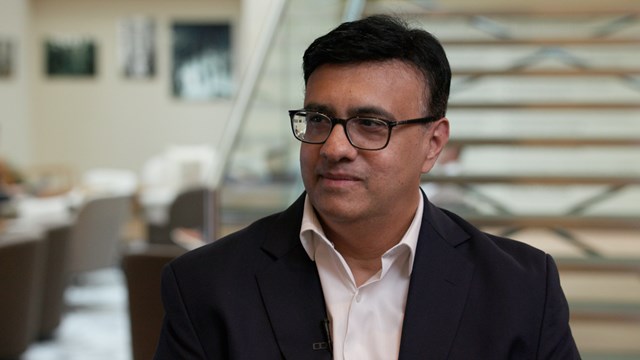
Ari Banerjee, Chief Strategy Officer, Netcracker Technology
Ari Banerjee, chief strategy officer at Netcracker Technology, discusses the value proposition of the combined Netcracker and CSG business, and why treating AI as an IT project rather than a business process is operators’ biggest mistake. He also explores how to scale AI from disconnected pilots to end-to-end business outcomes, where agentic AI must go beyond chatbots and copilots, the importance of human-in-the-loop, governance and data security, and much more.
Recorded September 2026