Can GEDI be a force in telco sector insight discovery?

By Ray Le Maistre
Jun 24, 2026
To embed our video on your website copy and paste the code below:
<iframe src="https://www.youtube.com/embed/A77W6sYWEJA?modestbranding=1&rel=0" width="970" height="546" frameborder="0" scrolling="auto" allowfullscreen></iframe>
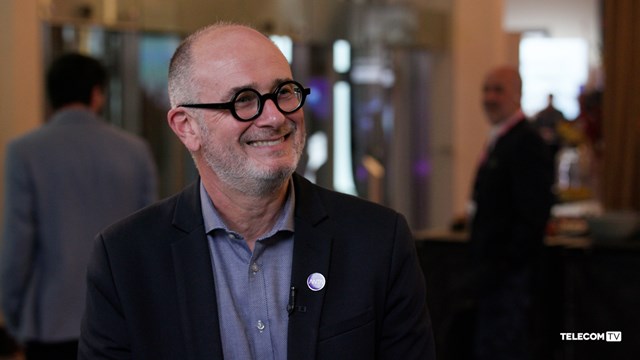
As we all know, AI is impacting pretty much every part of the telecom sector, and that includes general industry information discovery, with generative AI platforms now widely used to answer queries. But how do you know if you're getting the full picture from your platform of choice, and where is trustworthy information to be found? TelecomTV, surely. Well, let's find out. I'm talking today with Paul Nolan, co-managing director of public relations firm The Hoffman Agency, UK, which has developed a tool called GEDI to help its customers and its own team navigate the information discovery waters. Paul, thanks very much for joining us today. So tell us: what is GEDI and why was it developed?
Paul Nolan, The Hoffman Agency, UK (00:53):
Hi, Ray. And yeah, thanks for having me. So GEDI stands for Generative Engine Discovery Insights. And as you say, it was developed in-house here at The Hoffman Agency by a guy who's based in Japan called Takeo — he's our Chief Digital Officer for Asia Pacific. And the tool was developed just to help us solve an ongoing question, really, which is exactly as you described it: how do LLMs make decisions and how do they actually source information to be able to answer the questions that we as prompters are asking them? There has always been this accepted view that they are going to take a lot of their insights in the same way that search engine optimisation works, which is to trawl the internet and look for the most influential and reputable sources to help form their answers. And we wanted to understand the science behind that process a little better, knowing full well that GEO — or generative engine optimisation — is going to be the most important focus for marketing professionals moving forward.
(01:59):
And as an extension of that, as PR people, we believe that we have a role to play by understanding how much and to what degree earned media contributes to that discovery process.
Ray Le Maistre, TelecomTV (02:12):
Okay. And earned media — that's the likes of TelecomTV and the other business-to-business publications that you see around the industry, right?
Paul Nolan, The Hoffman Agency, UK (02:21):
Yeah, correct. I mean, earned media really is a collective term for all media whereby you have to earn the right to generate coverage in those publications, which obviously means from a commercial perspective we have to encourage the likes of you and your peers in the media to become engaged in the topics we're putting forward and the spokespeople we're putting forward, to understand what are the key developments in any particular industry.
(02:57):
So that premise sits behind why we have looked at what happens across all of our technology areas of specialism, which include telecoms. As you know, I'm the telecom specialist here at The Hoffman Agency and I've worked with you guys in the media for a long, long time. And I thought it would be a fun exercise just to see how much influence you guys as publications have on the LLMs and to what degree you are actually teaching the machines.
Ray Le Maistre, TelecomTV (03:20):
Okay. Well, big gulp here before we delve into that. So tell us: how does GEDI actually work? I mean, what kind of questions or prompts elicit a meaningful response?
Paul Nolan, The Hoffman Agency, UK (03:33):
Okay. Well, in principle, GEDI enables you to run a prompt across all of the major LLMs simultaneously. And by LLMs, the ones it covers — I'm talking predominantly about ChatGPT, Gemini, Claude and Perplexity.
(04:01):
It is also set up to analyse the Chinese LLMs, including DeepSeek too, but obviously as most of our prompting is done in English, there's limited value in expanding the prompts in those areas. But as you know, The Hoffman Agency has a huge footprint in Asia, so it's important that we have and develop that capability. GEDI works best — and this is how I've been using it most — by taking on the persona of our clients' customers.
(04:33):
So if you imagine what we do as an organisation, most of our portfolio is made up of vendors that sell to the key purchasing audience, which in our world is nine times out of ten the telco. So we therefore took on the persona of a CTO in a telco with technology buying responsibility, and we asked the LLMs some of the questions that we would probably expect them to ask when actually researching the different vendors across the ecosystem that develop technology to suit a particular purpose.
(05:09):
So we might choose to look at the leading vendors that are developing technology for network AI, for example, or look at the evolution in NTN and satellite communications, or look at the evolution of network slicing as it relates to 5G and beyond, for example. And then the more detail you feed it in terms of specifically what you're looking for, you're able to actually sync up with a lot of the industry categories that exist — that govern and define those particular opportunities — and enable us to look at which vendors are having the greatest influence in actually driving those LLMs towards making a particular decision.
(05:52):
And obviously as communications people at heart, we're very, very interested in trying to optimise that position for our clients. So a lot of the prompts that we would run would typically relate specifically to the areas that our clients occupy within the telecom space. And we can then authoritatively tell our clients that they are either set up for success as far as the LLMs are concerned, or that there's a lot of work that needs to be done to optimise their position so they become a more attractive proposition to a telco looking for a particular solution to a problem.
(06:17):
So that's the prompting, that's how it's engineered. Then the process that sits behind it is that you can add the prompts, you can run them, and you will get results from four LLMs at the same time. It will also provide a list of the citations — and by that I mean the references in terms of what the LLMs have looked at to arrive at their answers. It can provide URLs to those citations or references specifically.
(07:04):
It will also then provide a little bit more information from a more technical perspective around the metadata that supports that process. And then what is particularly useful for us as comms people — as well as obviously the list of references — is also the source format types. So not only will it tell us how many of the results come from earned media versus owned media versus industry associations, industry analysts, et cetera, it will also tell us what type of content it actually is — whether it be an industry report, whether it be a news article, whether it be an industry article.
(07:46):
So when we're trying to define communication strategies for our clients, we know specifically what type of content — as well as the language that is being used — and we know how we can actually orchestrate that most effectively to put our clients in the best possible position.
Ray Le Maistre, TelecomTV (07:36):
Okay. So that gives us a sense of what kind of results you get. Can you give us an example of a prompt and the resulting GEDI responses?
Paul Nolan, The Hoffman Agency, UK (07:48):
Yeah. I mean, I can give you a sense without being specific. So if I were to create a prompt on behalf of an operator CTO, it would sound something like: "Hi there, I'm a CTO in a tier-one operator. I'm looking for some innovative solutions that will help me drive efficiency in my network and look to harness the full capabilities of AI as it relates to delivering the most effective network service possible.
(08:51):
What different vendors do you recommend that are particularly innovative in this area?" For example, the more information you feed it, the better suited to your outcome the responses will be. And then that will return four sets of results — and each of the different LLMs works slightly differently, which is why if you run all of them simultaneously, you really do get the most comprehensive view of engine optimisation. And it will also tell you individually, on a per-LLM basis, how it has arrived at its conclusions and what are the different articles and reports and vendor content — white papers, technical overviews, holding pages — it can be all manner of different content types.
Ray Le Maistre, TelecomTV (09:38):
So can you just plug your latest query into your favourite GenAI platform to get a similar output?
Paul Nolan, The Hoffman Agency, UK (09:46):
Yes, you can, but we have to put ourselves in the shoes of our clients, right? We have to look at what are the kinds of challenges that marketers in these organisations face. And the objective is quite simple: they want to be as visible as possible to as many LLMs as possible.
(10:10):
So if you put yourself in their customers' shoes and start anticipating the kinds of questions that they would ask, that's a very thoughtful process — but also being able to go and show them results across all of the major LLMs in the US and Europe predominantly, you're getting a very, very holistic view of how effectively that organisation is influencing the LLMs. So that's the whole point. We want to be as all-encompassing as possible, and the best way to do that is to use a tool like GEDI that can help you bring all of the information together in a coherent way that can actually look at the trends across all four of the different LLMs all at once, look at the sources that they are all referencing, look at the overlap between them, and also determine which of the LLMs are actually delivering the best results for a particular organisation.
(11:11):
And GEDI helps you do all of those things at the same time, as well as gauge the types of article and the types of report, et cetera, that are really having the biggest impact.
Ray Le Maistre, TelecomTV (11:20):
Okay. Now, when we were chatting before this interview, you mentioned that the industry associations and industry bodies were actually showing up pretty well in the kinds of prompts you were putting in. So why do you think that is?
(11:43):
Why do you think industry bodies in particular have GenAI-friendly content?
Paul Nolan, The Hoffman Agency, UK (11:49):
I think that the trade associations are very good at collaboration, right? They are very good at actually bringing different parts of the industry together to serve a common purpose. If you look at the likes of the TM Forum, the GSMA, even 3GPP and ETSI, and all of those other different standards bodies — they all exist because they are trying to solve problems on a collaborative basis.
(12:17):
And the more different voices you get from within a trade association, and the more you look at the results of that effective collaboration, the more you actually realise that they are literally doing what a lot of these engines do anyway. In terms of what happens in SEO and what happens in GEO, they are taking authoritative voices from across the industry, bringing them all together, and using the prominence of the industry association — but also the collective of the different organisations and groups that serve within them — to give a definitive view on how entire industries come together for best practice.
(12:59):
And I think that that's a particularly influential view, and I don't think there's any real surprise that the domain authority is so high for the content that they are actually producing and creating.
Ray Le Maistre, TelecomTV (13:02):
And there's nothing particular about how they present their findings or their research or their content that's any different from anybody else?
Paul Nolan, The Hoffman Agency, UK (13:33):
No, I don't believe so. I think that an industry report from an industry analyst and a report from a trade association are quite similar in make-up.
(13:37):
The difference is that one is a collaboration of many, whereas the industry analyst will — through the lens of one person — try to be similarly collaborative and bring all of those sources together, but it'll do it through one person rather than a collective of many.
Ray Le Maistre, TelecomTV (13:02):
Okay. I guess they tend not to be behind a paywall, right? The trade association—
Paul Nolan, The Hoffman Agency, UK (13:09):
Correct. That's another good point.
(14:08):
Yeah. If it's commonly available, then the LLMs can actually access that information or scrape that information and present it back to you. If it's behind a registration wall or a paywall, they can't. And actually, I think that will force a lot of vendors with their own content and their own reports to make more of this stuff available to optimise that LLM process — or the optimisation of GEO.
Ray Le Maistre, TelecomTV (13:33):
So obviously the trade associations are doing things right.
(14:41):
What about the earned media, the trade media? They obviously play a role here. And of course, what I'm particularly interested in — how does TelecomTV fare?
Paul Nolan, The Hoffman Agency, UK (13:48):
I'll come back to TelecomTV in a sec. First of all, I just wanted to say that of all of the sector specialisms that we have at The Hoffman Agency — and I include telecoms in that along with cybersecurity, FinTech, enterprise AI, enterprise technology and enterprise hardware — across all of those different areas, we have found consistently that the telecoms media in general has the greatest influence on LLMs of all of our different sector specialisms.
(15:26):
I think there are a number of reasons behind that. I think that it's one of the biggest supporting media ecosystems that we serve. I also think that there's a lot of continuity in terms of the people that actually serve the telecoms industry through the earned media. If you consider how many of your peers have been doing this for such a long period of time — and I think that really makes a difference in terms of how much influence each individual journalist brings.
(16:00):
So if you actually bring all of those different sources together, we typically see that media is contributing around 30% — in some instances even a higher percentage — of overall citations for telco-directed searches, or prompts on behalf of the operator CTO. And if you consider that's almost a third — that's almost a third of all sources coming from earned media — I have to stress that each different prompt will vary according to how much that earned media source affects and impacts the results, but it's still evidence of an ecosystem that punches way above its weight if you consider how many people actually make up the staff or the teams within these different publications.
(16:48):
So specifically going back to what you said about TelecomTV — over the last month or so I've been running numerous different prompts on behalf of different clients and different publications, and consistently the same publications do very well. And I think that TelecomTV certainly is part of that. You are consistently in the top five of earned media sources that actually influence the results on a consistent basis. I think that can only be a good thing, both for us as a comms agency and for you as a publication, because we can actually prove the impact of your editorial and all of the work, time and effort that we invest on behalf of our clients into managing those relationships with the industry media ecosystem too.
(17:38):
And I think it's exactly what both sides need. If you consider the impact that AI is having on business models around the world — particularly in publishing and journalism — and also the impact it is going to have on how PR agencies work as well: if industry media sources can prove the impact they have on LLM influence, then I think you're only going to see more and more examples of publishers striking deals with big tech to ensure that all of the work being done in preserving editorial licence and independent thought is being protected, because you will continue to teach the machines well into the future, as far as I can see.
Ray Le Maistre, TelecomTV (17:18):
I guess as long as the output of the trade media is in itself original and not itself generated by AI — because I guess that's when you get into a vicious circle and reduce the authority of the output. I'm kind of guessing — I'm hoping — that's the case, and I'm sure it's probably a bit too early to have any sort of quantitative or qualitative evidence for that, but that would be my guess based on previous trends and changes in the trade media in the past.
Paul Nolan, The Hoffman Agency, UK (18:01):
I mean, yeah, absolutely. There is definitely science behind GEO optimisation. If you look at how we can measure influence, a lot of it is tied to the language that's being used and a lot of it is tied to the categories that are being created in different parts of the industry — whether it be something like AI, whether it be AI RAN, whether it be Open RAN, whether it be network slicing, et cetera.
(19:35):
There are numerous different categories that exist. And as long as vendors are using those categories — because it's likely that their customers are going to use those categories when trying to actually source vendors for any particular engagement, as it's the easiest way to fine-tune on a particular part of the industry — if the vendor language matches the customer buying language, then the LLMs will stitch those two things together and you will see a marked difference in how high up a particular vendor appears in the rankings and recommendations too.
(20:12):
But at the same time, this isn't just about LLM optimisation. We are still people and we still need to be entertained and engaged, and I think there is still a responsibility on us as PR people and you guys within the media to find your own style and your own approach and your own interpretation of a particular trend or opportunity, and obviously also to hold the industry to account too. I don't think those things will ever go away.
(20:45):
A compelling story will always be a compelling story and the world will always need them. And if we are going to descend from an industry that actually supports those stories — that have that additional depth — if we just become, let's face it, slaves to the machine, then this won't be a particularly enjoyable industry for us to work in, or for you guys either. So I think it's up to us to maintain that individualism around what makes a great story.
Ray Le Maistre, TelecomTV (20:21):
Yes. Amen to that. Keep the ridiculous human element — I'm all for that. So on that very positive note, Paul, thanks very much for joining us and telling us about GEDI. Obviously a great name — if you're going to come up with any kind of name, a well-regarded and well-thought-out cultural reference is always a good one to use. So well done on that, and I look forward to hearing more about the prompts in the future and how this develops. Thanks very much for joining us.
Paul Nolan, The Hoffman Agency, UK (20:55):
Thank you, Ray. Thanks very much.
Please note that video transcripts are provided for reference only – content may vary from the published video or contain inaccuracies.
Paul Nolan, Co-Managing Director, The Hoffman Agency, UK
With so much information being shared by the telecom sector every day, is it possible to identify the most trusted sources of industry insights? Public relations firm Hoffman has developed GEDI (Generative Engine Discovery Insights) to figure out how large language models (LLMs) make decisions, how they gather information, and which sources are deemed to be trusted by the generative AI platforms to deliver valuable responses to specific prompts, explains Paul Nolan, co-managing director at The Hoffman Agency UK.
Recorded June 2026
Email Newsletters
Sign up to receive TelecomTV's top news and videos, plus exclusive subscriber-only content direct to your inbox.