- Qualcomm acquires AI-native software specialist for $3.9bn
- Verizon’s CTO provides automated network progress
- TM Forum & GSMA team up on AI adoption
In today’s industry news roundup: Qualcomm is advancing its AI strategy with the acquisition of Modular; Yago Tenorio shares an update on Verizon’s progress towards autonomous networks; major trade bodies collaborate to aid the adoption of practical AI systems; and much more!
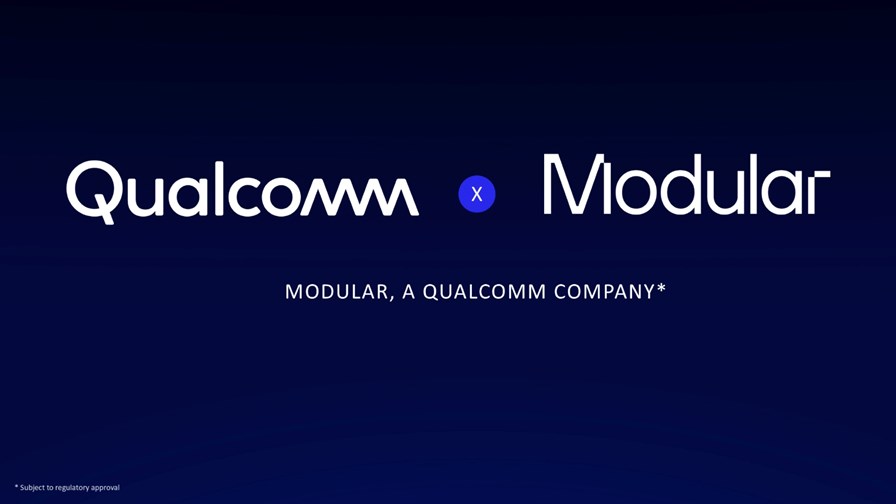
Chip giant Qualcomm has struck an all-stock deal worth about $3.9bn to acquire AI-native software stack developer Modular, a move that strengthens Qualcomm’s “software foundation for generative and agentic AI across datacentre and edge environments.” According to Qualcomm, “efficiency, not capability, becomes a constraint’ as AI scales, and Modular’s “open, AI-native software stack enables AI to run efficiently across hardware architectures. Built by engineers who helped create much of today’s AI infrastructure, Modular’s unified platform runs models with industry-leading performance across CPU, GPU, NPU and custom ASIC architectures without re-writes for each accelerator. For developers and enterprises, that means building once, deploying across any environment with lower total cost of ownership,” noted Qualcomm in this announcement. Cristiano Amon, Qualcomm’s president and CEO, stated: “This acquisition marks a pivotal moment not just for Qualcomm but for the AI industry. As agentic AI scales across datacentres and edge environments, the industry is moving toward disaggregated, multivendor architectures that demand a more open and modern software foundation. We believe the future belongs to developer-friendly, horizontal platforms that can run across diverse compute environments and give customers real choice in how and where they deploy AI. With Modular, we’re accelerating that shift, combining our scale and energy-efficient datacentre technologies with an open ecosystem approach to help drive the next chapter of AI.”
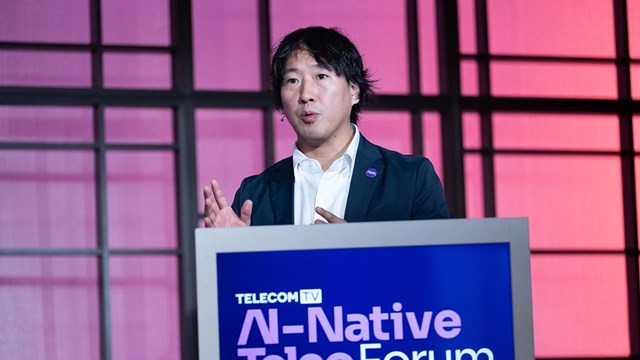
Verizon CTO Yago Tenorio has shared a blog that lays out how the US operator views the nature and role of its infrastructure in the AI era. Tenorio, who joined Verizon from Vodafone in October 2024, noted that the cloud started to change the telecom sector’s “static model”, but added that “as we are catapulting into a macro-era defined by generative, agentic and physical AI, yesterday’s static connectivity models are now quickly becoming obsolete. What we are building today is categorically different: AI is becoming the operational control system of the network itself.” The CTO continued: “At Verizon, we are redefining our future by building our networks purposefully and intentionally to serve as the preferred connectivity foundation for the world’s most responsive AI solutions. We are moving away from traditional hardware constraints to turn our infrastructure into a software-defined, self-organising reasoning engine that optimises itself in real time intentionally. We are not just adopting tools; we are engineering an AI-native enterprise,” noted Tenorio. “That approach will enable Verizon to achieve high-level cognitive automation. We are pushing hard towards Level 4 autonomy in critical segments of our core network. There is a sharp distinction between running automated scripts on a rigid schedule and true, decentralised autonomy. Autonomy means building an intelligent system that can reason about an unexpected, complex situation it was never explicitly programmed for, isolate the hidden root cause, and execute an architectural solution completely out of the human loop,” continued the CTO. He noted that Verizon’s closed-loop automation platforms executed over 70 million network configuration changes autonomously in 2025, helped to improve energy efficiency in a much more efficient way than previously possible, and reclaimed “thousands of operational labour hours and drives millions in direct capital savings, allowing our workforce to focus on high-value engineering judgement rather than digital chores.” He went on to explain how the US operator is doubling down on generative AI (GenAI) and embedding “frontier language models like Anthropic’s Claude into our internal operations, effectively democratising software development across our entire engineering workforce.” You can read Tenorio’s full blog here.
Autonomous networks is, of course, one of the major topics at the ongoing DTW Ignite 2026 show in Copenhagen and the event’s organiser, the TM Forum, has announced a new collaboration with the GSMA that aims to aid adoption of practical AI systems across a range of use cases within the telecoms industry. The announcement was made to coincide with the TM Forum’s event in the Danish capital and the GSMA’s own MWC Shanghai event, which run concurrently, with the industry organisations pledging to work together to help create open AI models and frameworks that are able to meet the sector’s very specific needs. Both have been running their own AI initiatives – the GSMA through its Open Telco AI Initiative, which was launched at this year’s MWC in March, while TM Forum is overseeing a number of accelerator and catalyst projects. Explaining the rationale for the closer ties between the organisations, GSMA director of AI initiatives Louis Powell and TM Forum EVP of products and services Andy Tiller argued that adoption of AI is more complex in the telecom sector than in other industries, and called for more alignment on “shared assets, common standards and practical implementation pathways”. You can read a blog co-authored by Powell and Tiller that outlines the extended partnership here.
Speaking of the GSMA, it has also unveiled a new guide designed to help policymakers develop clear, consistent and future-ready policy frameworks for the rapidly evolving satellite connectivity sector. The new guide provides “practical recommendations for regulators seeking to create harmonised, technology-neutral satellite frameworks that prioritise societal needs, consumer protection and sustainable investment”, according to the GSMA’s announcement, and comes at a time when satellite communication has been shaking up the industry, following a number of recent launches and the mega IPO of Starlink parent company SpaceX. Developed in collaboration with Access Partnership, the GSMA’s Playbook focuses on emerging satellite broadband and direct-to-device (D2D) services delivered directly to end users without mobile operator partnerships, where existing regulatory frameworks often leave gaps. According to the GSMA, when satcoms companies partner with mobile operators, existing regulations typically provide sufficient safeguards, but gaps can appear when companies offer direct services. The Playbook aims to offer regulators and governments guidance in developing technology-neutral regulation while promoting greater consistency in regulatory outcomes across markets.
Nokia says it has teamed up with Databricks for the successful completion of a “joint proof of concept (PoC) demonstrating a unified, substrate-agnostic data platform designed to support AI-driven autonomous networks.” According to Nokia, “the collaboration shows how telecommunication providers can simplify fragmented data environments and deploy real-time analytics at scale, enabling faster decision-making, improved network performance, and more efficient operations.” Nokia notes that telcos need a “common data platform that can run seamlessly across different cloud environments or on-premises infrastructure, without the need to rewrite code” in order to “truly harness AI and multi-agent systems”. Oguz Sunay, CTO of AI and autonomous networks at Nokia, noted: “Teaming up with Databricks represents a big step as we work towards building the types of data foundations required for next-generation autonomous networks. By enabling a common, flexible data platform across cloud environments, we can help operators accelerate the adoption of AI and create more efficient, resilient and sustainable networks.”
French operator Bouygues Telecom is expanding its use of the Expresse Access Network Assurance system developed by Irvine, California-based telecom software and digital twin platform developer Axon Networks. The telco will better support its DSL- and PON-based fixed broadband networks by replacing its legacy assurance platform with Axon’s solution, which features an “architecture focused on AI analysis, telemetry and modern GUI for efficient customer support,” noted Axon in this announcement. “This strategic shift will enable significantly deeper, real-time visibility across complex, multivendor network environments… by leveraging the AI-driven analytics and streaming telemetry of Expresse, Bouygues Telecom will enhance the quality-of-experience for approximately 6 million fixed broadband subscribers nationwide, while improving the management of field operations and accelerating issue resolution as Bouygues moves towards autonomous networking,” added Axon. Jean-Paul Arzel, CTO at Bouygues Telecom, noted: “As our network evolves towards greater scale and complexity, it has been essential to move beyond the limitations of traditional SNMP-based monitoring. Expresse from Axon Networks will provide the depth of visibility and multivendor telemetry capabilities we were looking for, enabling a more proactive and automated approach to service assurance. This path of evolution will play a key role in improving both operational efficiency and customer experience.”
Virgin Media O2 has announced it will begin to switch off its 2G mobile network in 2029, and plans to redeploy relevant spectrum for 4G and 5G services. The UK-based operator has already switched off O2’s 3G network – which it completed at the end of 2025 as part of its Mobile Transformation Plan – and will now focus on the decades-old 2G network, first launched in the 1990s when O2 was Cellnet. It recently joined rival operators in signing a voluntary government-led 2G ‘Switch-off’ charter, designed to ensure coverage is maintained and that consumers and businesses are supported throughout the switch-off. According to VMO2, less than 0.5% of all mobile data carried on its network runs through its 2G infrastructure, but the operator pledged to support those customers still using 2G services, either for internet of things (IoT) devices or handsets. The switch-off will also affect O2 Business customers and customers of its mobile virtual network operator (MVNO) partners, including Giffgaff, Tesco Mobile and Sky Mobile, which use the Virgin Media O2 network.
Bharti Airtel has, as planned, increased its stake in Airtel Africa by 16.3% to 79% as a result of a stock swap deal, it confirmed in a note to shareholders: The move was signalled last month when the giant Indian operator reported its fourth-quarter financials.
– The staff, TelecomTV
Email Newsletters
Sign up to receive TelecomTV's top news and videos, plus exclusive subscriber-only content direct to your inbox.