- UK fibre giants circle Netomnia
- VMO2 taps Starlink for D2D coverage in the UK
- John Malone steps down as Liberty Global chairman
In today’s industry news roundup: Virgin Media O2 (VMO2) and CityFibre have both been linked to potential takeover bids for UK fibre broadband altnet Netomnia; VMO2 reports a tepid Q3 and strikes a satellite deal with Starlink; cable veteran John Malone hands over to Mike Fries at Liberty Global; and much more!
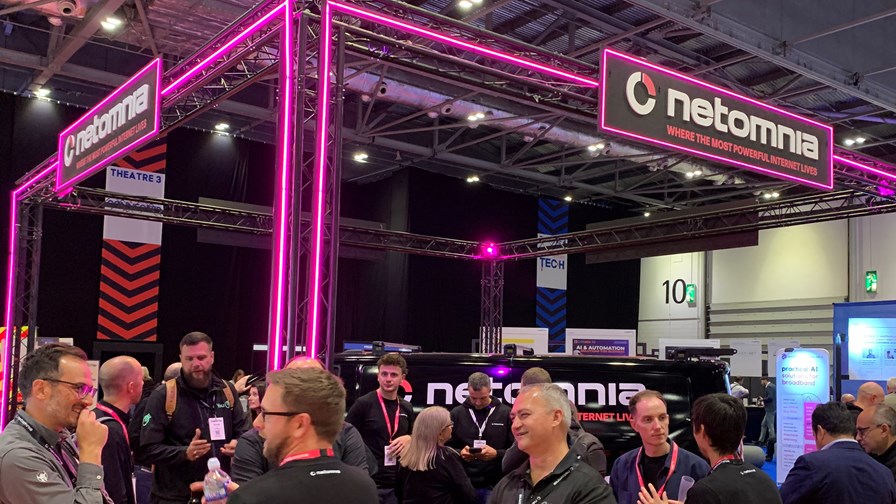
The race to acquire major UK fibre broadband altnet Netomnia is on, it seems. Consolidation activity in the sector is finally heating up, and while there are multiple small operators that are being sized up for their strategic assets (most have few customers and negligible revenues), Netomnia is one of the biggest altnets, has a smart and respected management team, a focused strategy, scale operations and has been growing both organically and via its own consolidation moves during the past year or two. In July, Netomnia, which is at the start of its revenue-generating journey, reported second quarter sales of £23.6m, up by 256% year on year, and adjusted EBITDA of £4.9m, up by 30% year on year. In September it raised £300m in ‘junior debt’ funding and said its network now reaches 2.7 million UK premises, of which 375,000 are connected for commercial services. It is on course to reach 3 million premises by the end of this year and hit 5 million by the end of 2027 and is always on the look out for strategic acquisitions that can help it gain further affordable scale. Now, perhaps not surprisingly, it is a takeover target itself. According to The Financial Times (subscription required), Virgin Media O2 (VMO2), the UK fixed and mobile operator co-owned by Telefónica and Liberty Global that is transitioning from a cable broadband infrastructure base to fibre access infrastructure, is in discussions regarding a potential £2bn bid for Netomnia, though none of the parties involved have confirmed any such talks and Netomnia declined to comment when contacted by TelecomTV. Meanwhile, the UK’s largest altnet, wholesale operator CityFibre, is also mulling a potential bid for Netomnia, according to the FT: CityFibre recently raised £2.3bn in fresh funding, some of which it said would be used for acquisitions – see CityFibre girds its M&A loins as it secures £2.3bn in funding.
The speculation came as VMO2 reported its third quarter financials. Revenues were down 5.6% year on year to £2.55bn while adjusted EBITDA increased by 2.2% to just over £1bn. The operator ended September with 5.7 million broadband customers (down slightly during the quarter) and just over 22.8 million mobile customers, down by about 134,000 during the quarter. CEO Lutz Schüler stated: “Despite an intensely competitive and tough market backdrop, we continue to be focused and execute against our core strategy with another quarter of profitability growth, stable consumer contract mobile additions and an improved trading picture on the fixed side compared to the last quarter. We have invested more than £1.6 billion so far this year in our networks and services, delivering sustained improvements in customer service and higher mobile network satisfaction, alongside a fully gigabit broadband network and 8 million fibre homes including nexfibre build. This connectivity is not only laying foundations for our future but is also the fuel that underpins the UK’s digital industries of today and tomorrow and is an essential ingredient in the country’s growth mission. Strategically, we remain in a strong long-term position with our network investments in 5G and fibre and three clear units across consumer, B2B and wholesale meaning we are well placed to trade hard, deliver for customers, innovate and seize the right opportunities.” For the full details, see this earnings release.
That wasn’t VMO2’s only news of the day. It has signed a multi-year deal with Elon Musk’s low-earth orbit (LEO) satellite operator Starlink for the delivery of direct to device (D2D) – aka direct to cell (D2C) – messaging and data, and, in due course, voice and video, services to customers in the UK. Starlink’s 650-strong D2C satellite constellation connects to the broader Starlink fleet of more than 8,000 satellites via the Starlink ‘laser mesh’, enabling coverage anywhere in the world. The D2C satellites are in orbit some 360 kilometres above the earth’s surface, considerably lower than any other system. They fly low to optimise the link between a smartphone handset and the satellite and Starlink claims the service will work “with existing LTE [4G] phones wherever you can see the sky – no changes to hardware, firmware or special apps are required.” VMO2 says it will exploit its new service, called O2 Satellite, to deliver space-based connectivity straight to smartphones and other devices using a part of O2’s licensed mobile spectrum. The service is expected to be commercially available “in the first half of 2026”. VMO2 expects subscribers will use O2 Satellite in “more rural areas” to further enjoy the full benefits of the UK’s (industry-funded) Shared Rural Network (SRN) programme, in which Virgin Media is a partner alongside BT Group’s EE and VodafoneThree. The operators share masts and other infrastructure to extend 4G coverage across the entire UK. VMO2 is building new "Total Not Spot" sites in areas with no existing coverage whilst upgrading "Partial Not Spot" areas with limited mobile services. The goal of the SRN was to bring 4G coverage to 95% of the UK by the end of this year: That target was met back in January 2025 when it was reported that 96% of the entire UK could connect to 4G.
One of the biggest names in the cable network sector, 84-year-old John Malone, is stepping down from his role as chairman at Liberty Global at the end of 2025. He will be replaced by Mike Fries, who will become chairman and CEO of the international network operator: Fries has been CEO since the company’s formation in 2005. Malone will become Chairman Emeritus, providing “active counsel and strategic insight” to the Liberty Global board. Malone stated: “Serving as chairman of Liberty Global over the past 20 years has been a tremendous journey. From our early investments to the creation of Liberty Global and the many chapters that followed, the return to long-term shareholders has been outstanding – and getting there has been, like the industry itself, never dull and a lot of fun. I’ve often said that if you live long enough you get to see everything twice and it feels like we’ve done just that at Liberty Global – with investments across 50 countries, more than $200bn in M&A, and a great company and culture. I’m particularly proud of how Mike and the team have navigated the profound changes in technology and market dynamics over that time – reshaping the portfolio, prioritizing national scale, and leading the way in digital television, gigabit broadband and fixed-mobile convergence. I have complete confidence in Mike to continue guiding the company forward, as he’s done over the past two decades. He and I have always seen eye-to-eye on how best to create value for shareholders, and I will remain one of Liberty Global’s largest.”
The news came as Liberty Global reported its third quarter financials: Revenues (not including the company’s joint venture operations in the UK and Netherlands (Virgin Media O2 and VodafoneZiggo) came in at $1.2bn, up 1% on a like-for-like basis, while adjusted EBITDA came in at $336.5m, down 5.7%. For the full details, see this earnings release. Liberty Global’s share price gained 5.3% to $11.28 in early trading on the Nasdaq on Thursday.
Still with the Liberty Global empire… European datacentre operator AtlasEdge has secured €253m in “green financing” to support the development of its datacentre campus on the edge of Lisbon, where it plans to invest €500m in its facilities. The campus will deliver 30 MW (megawatts) across three phases, with the first phase, LIS001, launched this week, with capacity already contracted by customers and service set to go live by the end of 2025. AtlasEdge, which is jointly owned by Liberty Global and DigitalBridge, plans to bring more than 150 MW to the European market in the coming years.
InterDigital, the Nasdaq-listed US tech company that provides wireless and video technologies for mobile devices, networks, and services worldwide, has acquired London, UK-based AI startup Deep Render for an undisclosed sum. Founded in 2018, Deep Render specialises in video codecs and image compression and has raised about $15m in funding. The buyout will boost Interdigital’s existing AI and AI-native video research and development. Liren Chen, the president and CEO of InterDigital, stated: “With Deep Render’s strong focus on research and engineering, and on solving some of the most complex challenges in video, we believe this acquisition is an excellent fit for InterDigital. The transaction deepens our talent pool in AI and video and extends InterDigital’s leadership in the efficient delivery of high-quality video, which enables consumers to enjoy content on a range of devices and a growing range of streaming and other video-based services.” Sebastjan Cozen, head of engineering at Deep Render, added: “InterDigital is the perfect home for Deep Render’s end-to-end AI-based video compression technology. Our world-class research and engineering team shares InterDigital’s commitment to advancing video innovation, and together we are uniting decades of video research with cutting-edge AI to drive the next generation of compression technologies and shape the future of how video content is delivered.” The news came as InterDigital reported a 28% year on year increase in third quarter revenues to $164.7m and a 62% increase in adjusted EBITDA to $104.9m. Net profit grew by 97% to $67.5m. “This was another outstanding quarter for InterDigital with annualized recurring revenue up 49% year-over-year to an all-time high of $588m and net income and diluted EPS up 97% and 69% respectively,” stated Chen. “Among numerous business highlights, we completed the Samsung smartphone arbitration, closed four new license agreements, appointed a new chief licensing officer, once again demonstrated our leadership in key technology standards, and deepened our AI expertise,” he added.
Equinix is to invest £4bn in a massive 250 MWC (megawatt) AI datacentre in the UK, Sky News reports. The new 85-acre site will be built in an unlovely and largely unloved “grey belt” area just north of London and will be sited hard by the South Mimms motorway services station, where weary travellers can queue up to buy expensive petrol, oil and massively overpriced snacks. Britain’s Labour government, keen to attract what used to be called “socially divisive projects”, have made it considerably easier for companies to obtain quick authorisation for some hefty, capital-intensive projects intended to be constructed on “grey belt" land, which used to be untouchable tracts of virgin green belt land but which are now earmarked as available for development because they are “close to existing settlements, roads, and other existing infrastructure”. The triangular wedge of land currently supports an annual crop of rapeseed oil plants in between the M25 London-orbital motorway, the AI (M) Great North Road and the commuter town of Potters Bar. California, US-based Equinix plans to have the full 250 MW of processing capacity up and running by 2030, a feat that would double the company’s processing power in the UK. Describing Equinix’s plans as “ a huge vote of confidence in Britain", the UK government’s Technology Secretary, Liz Kendall, said the datacentre will provide hundreds of construction jobs and employment for thousands of people in London and the financial institutions of The City. The site comes ready-equipped with immediate access to a major electricity supply facility. It will also also be air-cooled and Equinix says the buildings will place no “extraneous demand on water.”
It’s not often that web portal and online service provider AOL and the illusionist (and self-proclaimed psychic) Uri Geller get mentioned in the same sentence in a TelecomTV article, but today’s the day! Geller gained fame for his apparent ability to change the shape of spoons from straight to extremely bent simply by looking at them and stroking them gently with magic finger and, now, Forbes has reported that an Italian company called Bending Spoons has paid $1.5bn to buy AOL from private equity outfit Apollo. America Online was once the most popular way to access the internet for millions of Americans during the original dot.com boom. It is still used by more than 30 million people every month. Apollo acquired AOL in 2021 as part of a $5bn buyout of Yahoo and its assets from US telco Verizon. Bending Spoons is building a name for itself by buying old tech companies. Last month it bought the video platform Vimeo for $1.38 bn. What it plans to do with its latest acquisitions remains to be revealed.
– The staff, TelecomTV
Email Newsletters
Sign up to receive TelecomTV's top news and videos, plus exclusive subscriber-only content direct to your inbox.