Telcos must shake off their legacy shackles for the AI era

By Tony Poulos
Nov 10, 2025
To embed our video on your website copy and paste the code below:
<iframe src="https://www.youtube.com/embed/v4sdjlMNcgE?modestbranding=1&rel=0" width="970" height="546" frameborder="0" scrolling="auto" allowfullscreen></iframe>
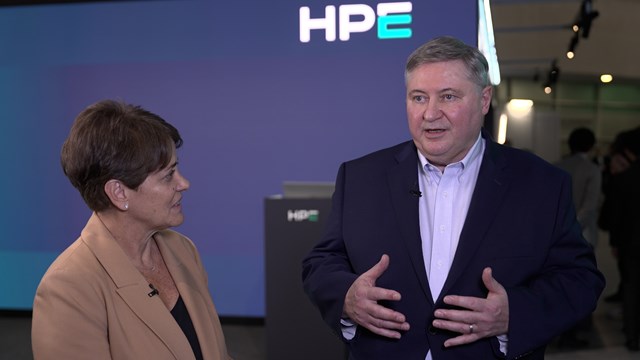
I am Tony Poulos and I'm at the AI Native Telco Forum in Dusseldorf. And with me today, I have Philippe Ensaguet from Orange, who has been today at the conference. I'd like to know what are your first impressions of this new event?
Philippe Ensarguet, Orange (00:28):
Oh, so much energy. Very interesting learning. I love the sharing. Extremely pragmatic, extremely focused, and I can't wait for the session of the afternoon.
Tony Poulos, TelecomTV (00:39):
Is there something that stood out today in the presentations and panels that really stuck with you?
Philippe Ensarguet, Orange (00:44):
Yes. I think that basically I decided to join this event because I wanted to understand where my peers basically are landing with the ai, the KI and so on. And something that I really, really appreciate is Bebe from Rakuten who said this because I'm highly implying the cloud native telco transformation. And he said, with cloud native Telco, it's being a technological intents about the automation and the deployment with the AI native. It's a business intent. So I think it's really depicting the difference between basically the supply side and the demand side and the potential for business transformation or efficiency transformation. So it's really the technological intent versus the business intent. Cloudnative, AI native, are you having difficulty impressing your
Tony Poulos, TelecomTV (01:40):
Stakeholders for the need for ai? Is that a challenge for telcos at the moment?
Philippe Ensarguet, Orange (01:46):
Yeah, I think that it's a challenge for everyone. It's a challenge for everyone because when you are looking very carefully, I think that almost everyone here is doing things with ai, generative ai, and things also around adjunct ai. But the earnings and the return on investment is at scale. So the reality, and I'm afraid that because telco industry is, I would say we called a legacy one, we really need to push and speed up the pace of transformation. We don't even scratch the surface for the cloud native telco transformation. And the AI native one is a total different think, design, deploy, run. So we definitively in front of something that is heavily new and something that I, it's a reflection I made to myself last week. I tried to remember my very, very, very early days. And by the way, I said we got the mainframe eras, we got the PC eras, we got the web eras, we got the mobile eras, and now it's about ai. And what's the common denominator in the failure of all of this? When you are moving from every eras to the next one, the first things that everyone is doing is migrating and porting, and you are using the legacy weight bringing into the new world instead of directly jumping into, I would say, the new paradigm. And I think that it's something that we must be very, very careful at, and in particular in the telco industry, if you want to have substantial benefits with all this AI native telco ecosystem.
Tony Poulos, TelecomTV (03:32):
Thank you, Philippe.
Philippe Ensarguet, Orange (03:34):
My pleasure.
Please note that video transcripts are provided for reference only – content may vary from the published video or contain inaccuracies.
Philippe Ensarguet, VP Software Engineering, Orange
On the show floor at TelecomTV’s recent AI-Native Telco Forum in Düsseldorf, Orange Group’s VP of software engineering, Philippe Ensarguet, shares his views about the event, highlights the difference between the catalysts for cloud-native and AI-native strategies, and explains why it’s imperative that telcos avoid the legacy pitfalls of previous major tech transformations as they formulate and execute their AI-native plans.
Recorded October 2025
Email Newsletters
Sign up to receive TelecomTV's top news and videos, plus exclusive subscriber-only content direct to your inbox.