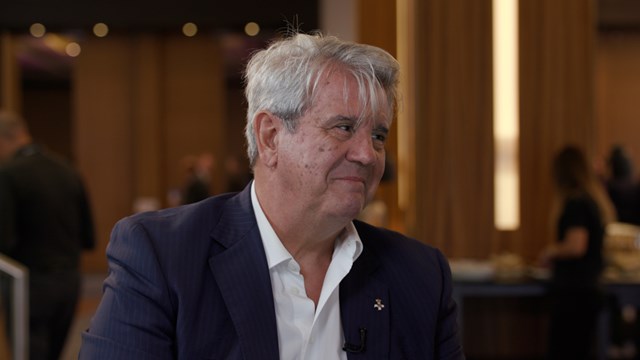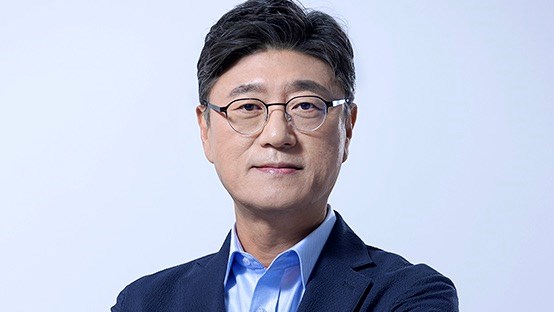
Jung Jai-hun is the new CEO at SK Telecom.
- SK Telecom has reported its third quarter financials
- It covers the first full quarter impacted by costs and customer losses associated with the telco’s major cyberbreach that was first uncovered in April
- The operator has reported a slump in sales and operating profits as well as ongoing attrition to its mobile subscriber base
- A new CEO, Jung Jai-hun, has been appointed, replacing Ryu Young-sang, who moves upstairs to the SK Group’s strategy committee
The impact of the massive cyber breach suffered by SK Telecom earlier this year has been laid bare in the company’s third quarter financial report, which makes for grim reading, as well as the decision of the telco’s parent company, SK Group, to shake up the operator’s management team by appointing a new CEO.
Ryu Young-sang, who was appointed as CEO in late 2021 to spearhead the company’s ‘AI company’ strategy – a strategy that resulted in the unveiling late last year of a new corporate structure to help SKT capitalise on its primary growth opportunities of AI and communications services – has been replaced by Jung Jai-hun (pictured above). A lawyer by trade, Jung was chairman of the governance committee of the SK Supex Council (the SK Group’s highest decision-making body) as well as president of external cooperation at SK Telecom. According to The Korea Herald, as part of the revamp SK Telecom is adopting the “company in company” (CIC) approach and splitting itself into two distinct businesses, one focused on AI and the other on telecom, a move made easier by last year’s change in corporate structure. Han Myung-jin, current CEO of SK Square (SK Group’s tech investment arm), has been appointed to lead the telecom CIC.
“SK Telecom plans to reorganise its previously dispersed companywide AI capabilities into the AI CIC (Company in Company) and accelerate the transition to an AI-centered business structure,” the company noted in its third quarter earnings release.
Ryu Young-sang, meanwhile, has been moved upstairs to head of the SK Supex Council’s AI committee.
The change in CEO comes as SK Telecom reported a net loss for the third quarter.
The operator had taken a slight hit to its numbers in the second quarter, as the final weeks of that financial period were impacted by post-cyberbreach mobile customer churn and costs associated with the incident: As a reminder, SKT reported the major data breach on 19 April, which quickly sent the company into a tailspin and its customers looking for alternative providers. In July it introduced its Accountability and Commitment Program, which includes a $514m investment in new security systems and processes, and in August it was fined by regulators and forced to cancel any contract termination fees until the end of this year for customers that decide to jump ship.
SKT’s third quarter numbers reflect those trends, particularly the loss of almost 840,000 mobile handset customers since April. (Details of some of the costs associated with compensating customers and improving its security measures can be found in the earnings release.)
While the operator’s consolidated revenues (including SK Broadband, its fixed line broadband subsidiary) fell by 12.2% year on year to 3,978bn Korean won ($2.77bn), SKT’s core mobile and AI business reported a 16.8% decline to KW2,665bn ($1.86bn).
Consolidated operating profit fell by 90.9% to KW48bn ($33m), while core SKT recorded an operating loss of KW52bn ($36m) compared with an operating profit of KW457bn ($319m) a year earlier (see chart below).

Naturally, SKT chose to highlight the decent progress being made by its AI units in its third quarter press release – it now has 10.6 million users for its A. (A dot) AI personal assistant application, for example – but the concern will be the ongoing impact of the cyberbreach fallout on the mobile services business that generates the rump of the company’s sales.
SKT ended September with 21.89 million mobile handset subscribers, down from 22.73 million total mobile customers at the end of March. Of its current mobile customers, 17.26 million are 5G users – that number, at least, is heading in the right direction.
Kim Yang-seob, SKT’s CFO, noted in the earnings release that “SK Telecom will prioritise the restoration of customer trust, turn crisis into an opportunity by delivering concrete results in the AI business, and move forward as a stronger company,” but it looks like the road to decent profitability and consumer trust will take some time.
- Ray Le Maistre, Editorial Director, TelecomTV
Email Newsletters
Sign up to receive TelecomTV's top news and videos, plus exclusive subscriber-only content direct to your inbox.